
TPM2.0 Module LPC 14Pin Module with Infineon SLB9665 for ASUS Motherboard Compatible with TPM-M R2.0
Want the best price and purchase timing?
Our AI advisor analyzes real-time pricing across all channels to find you the best deal.
AI Verdict
This 14-pin Infineon SLB9665 module is a budget plug-and-play fix for getting Windows 11 running on older ASUS motherboards that lack built-in firmware TPM.
This is a hyper-specific part that only works for older ASUS motherboards with a physical 14-pin TPM-M R2.0 header. If you have a newer board, you already have firmware TPM. If you have a different brand, the pinout will physically reject or short the module.
Verify your motherboard manual specifically calls for a '14-pin TPM-M R2.0' module before buying, and check if your CPU supports fTPM first,.
Regret Score™
High RiskLower is better — measures purchase-regret risk from real buyer complaints, review credibility, and product maturity
Issues discovered after purchase
Critically weak dimension
Amazon rating vs actual quality
Chance this product isn't for you
Pros
- Uses the genuine Infineon SLB9665 chipset required for official Windows 11 compliance
- Plug-and-play on compatible ASUS boards like the B150MA/M2 with zero BIOS configuration required
- Bypasses the need to use Rufus USB workarounds for Windows 11 installation
- Saves you from buying a whole new motherboard just to pass the Windows 11 security check
Cons
- Zero documentation or manual included in the box
- Only works with ASUS TPM-M R2.0 headers—plugging this into an MSI board can short the header
- Doesn't bypass Microsoft's strict CPU generation requirements for Windows 11
Dimension Scores
Draws standard 3V standby power directly from the motherboard's 14-pin header with no dedicated VRM needed.
Provides full hardware-level TPM 2.0 support and BitLocker compatibility via the Infineon SLB9665 chip.
Occupies your only TPM header and offers zero passthrough or additional connectivity.
Automatically recognized by ASUS BIOSes without requiring manual configuration or driver downloads.
Best For
- Older ASUS motherboards (like Z270 or B150) that predate built-in fTPM,
- Users who want hardware-level BitLocker encryption instead of relying on firmware
- Bypassing Windows 11 installation blocks without using third-party USB tools
Not Recommended For
- MSI, Gigabyte, or ASRock motherboards—the 14-pin layout is wired completely differently
- Modern AMD Ryzen or Intel 8th-Gen+ systems that already have fTPM built into the CPU
Watch Out For
- Pinouts are brand-specific. ASUS puts 3V standby power on a pin where MSI puts a ground—using this on a non-ASUS board will prevent your PC from booting.
- You might not even need this. Check your BIOS for 'PTT' (Intel) or 'fTPM' (AMD) first, as most modern CPUs have TPM 2.0 built-in,.
- Passing the TPM check doesn't guarantee Windows 11 will install if your CPU is older than Intel 8th Gen or AMD Ryzen 2000.
- The module ships with zero instructions, forcing you to hunt down your specific motherboard manual to find the exact header location and orientation.
Full Specifications
| RAM | LPDDR4X |
| ASIN | B09PBJYNP8 |
| Brand | NewHail |
| Item Weight | 1.44 ounces |
| Manufacturer | NewHail |
| Memory Speed | 4600 MHz |
| Compatible Devices | TPM-M R2.0 compatible devices |
| Package Dimensions | 2.68 x 2.2 x 0.98 inches |
| Number of Processors | 1 |
| RAM Memory Technology | LPDDR4X |
| Connectivity Technology | LPC |
| Memory Storage Capacity | 4 GB |
What Buyers Say
Many buyers purchase this module only to discover their CPU already has firmware TPM built-in. For those with older ASUS boards that actually need it, the Infineon SLB9665 chip provides a plug-and-play fix that instantly clears the Windows 11 upgrade checker. The biggest recurring headache is the complete lack of documentation; you have to dig up your old motherboard manual to locate the header. Several PC builders also learned the hard way that 14-pin headers are brand-specific, experiencing boot failures when plugging this ASUS-wired chip into MSI or ASRock boards.
“Bought this to get Win 11 on my old Z270 board, plugged it in and it worked instantly, just wish it came with a manual so I didn't have to guess which way it faced,.”
Common Praise
- Instantly recognized by ASUS BIOS without any manual tweaking
- Successfully clears the Windows 11 PC Health Check app
- Uses the reliable Infineon SLB9665 chip instead of a generic knockoff
- Fits perfectly into the ASUS TPM-M R2.0 header
Common Complaints
- Ships in a bare plastic bag with zero instructions or diagrams
- Causes the PC to fail to POST if installed on a non-ASUS motherboard
- Doesn't solve the CPU generation block in the Windows 11 installer
- The pins are fragile and easily bent if misaligned during installation
Ownership Tips
- Windows BitLocker will automatically utilize this hardware module for encryption once activated
- If you clear your CMOS or update your BIOS, you may need to re-enable the discrete TPM setting
- Removing the module after encrypting your drive will permanently lock you out of your data unless you have the recovery key
Frequently Asked Questions
Do I need this to install Windows 11?
Only if your CPU lacks built-in firmware TPM (fTPM for AMD or PTT for Intel). Check your BIOS settings before buying a physical module.
Will this work on my MSI or Gigabyte motherboard?
No. Even if the 14-pin header looks identical, the wiring is different. ASUS uses a proprietary pinout that can short out other boards.
Does it require any software or drivers?
No. Once physically installed in the correct orientation, Windows 10 and 11 will automatically recognize the Infineon SLB9665 chip,.
Which direction does it plug in?
You have to align the blanked-off pin on the module with the missing pin on your motherboard's header. It only goes in one way.
Will this bypass the Windows 11 CPU requirement?
No. It only solves the TPM 2.0 requirement. If you have an unsupported CPU (like a 7th Gen Intel), Windows 11 will still block the install unless you use a bypass tool like Rufus,.
Buying Guide
Before you buy a physical TPM module, boot into your BIOS and look for 'PTT' (Intel) or 'fTPM' (AMD). Most CPUs made after 2017 already have this tech built-in, making this physical chip completely unnecessary. If you definitely need one, you must match the brand of the module to the brand of your motherboard. A 14-pin ASUS module will not work on a 14-pin MSI board because the wiring is completely different.
14-Pin LPC Interface
This is the physical plug shape. Think of it like a key—it has to perfectly match the 14-pin TPM header on your specific ASUS motherboard to fit.
Infineon SLB9665 Chipset
This is the brain of the module that handles the actual encryption. It's the industry standard chip that Microsoft officially recognizes for Windows 11.
TPM-M R2.0 Compatibility
This is ASUS's specific wiring layout. It ensures the power and data pins line up correctly so you don't fry your motherboard.
Alternatives
If you have an MSI, Gigabyte, or ASRock motherboard, search for a TPM 2.0 module specifically branded for your board manufacturer, or check if your board uses an SPI interface instead of LPC.
You Might Also Like

JetKVM KVM Over IP ATX Extension Board, ATX Power Control Board- Only for Jet KVM Accessories Boot from Shutdown, Crash Recovery
$0-$49This is an ATX form factor power control board designed for JetKVM accessories, enabling remote PC power state management and simultaneous front panel button use.
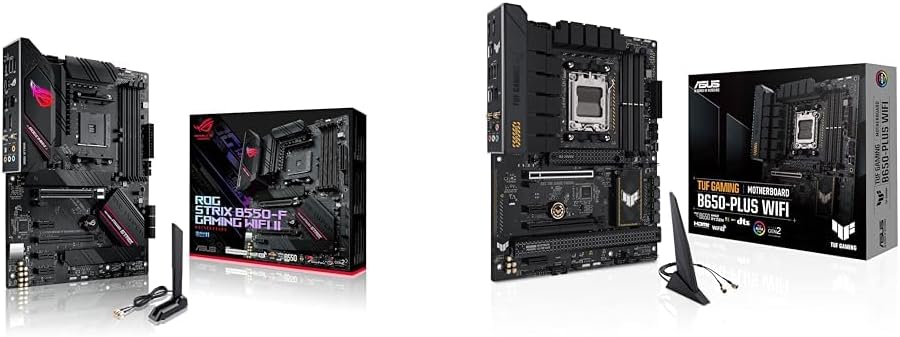
Asus ROG Strix B550-F Gaming WiFi II AMD AM4 (3rd Gen Ryzen) ATX Motherboard & TUF Gaming B650-PLUS WiFi Socket AM5 (LGA 1718) Ryzen 7000 ATX Gaming Motherboard
$150-$299This bundle offers two ATX motherboards: the ROG Strix B550-F Gaming WiFi II for AM4 Ryzen 3000/5000 CPUs with DDR4 RAM, and the TUF Gaming B650-PLUS WiFi for AM5 Ryzen 7000 CPUs with DDR5 RAM.

Game Motherboard Fit for ASROCK B650E PG-ITX WiFi B650 AM5 Motherboard Support Ryzen 7800X3D 7600/X 7950X 7700/X CPU 2xDDR5 128GB Hyper M.2 Mini-ITX
Price range unavailableThis KUETFBVC motherboard listing presents highly contradictory specifications, including a BGA 1023 socket and AMD 480 chipset, making it unsuitable for any modern Ryzen AM5 CPU.

Asus ROG Strix B550-F Gaming WiFi II AMD AM4 (3rd Gen Ryzen) ATX Gaming Motherboard (PCIe 4.0,WiFi 6E, 2.5Gb LAN, BIOS Flashback, HDMI 2.1, Addressable Gen 2 RGB Header and Aura Sync)
This is a premium-feeling AM4 board with beefy VRMs and WiFi 6E, perfect for squeezing the last drop of performance out of a Ryzen 5000 series CPU.