
Asus TPM-SPI Trusted Platform Module (TPM)
Want the best price and purchase timing?
Our AI advisor analyzes real-time pricing across all channels to find you the best deal.
AI Verdict
A tiny, cheap hardware module that adds TPM 2.0 to older Asus motherboards with a 14-1 pin SPI header, strictly for getting past Windows 11 installation blocks.
This module does exactly what it claims, but only if you have the exact 14-1 pin SPI header. Most buyers actually just need a BIOS update to enable their CPU's built-in fTPM, making this hardware redundant for modern rigs.
Check your motherboard manual to confirm if your 14-1 header is SPI or LPC before buying.
Regret Score™
High RiskLower is better — measures purchase-regret risk from real buyer complaints, review credibility, and product maturity
Issues discovered after purchase
Critically weak dimension
Amazon rating vs actual quality
Chance this product isn't for you
Pros
- Uses the Nuvoton NPCT750 chip, which is fully compliant with TPM 2.0 Rev 1.38 specs
- Instantly recognized by Windows 10 and 11 without needing extra drivers
- Meets Common Criteria EAL4+ and FIPS 140-2 certification standards for hardware encryption
- Measures just 16mm x 13mm, so it won't block PCIe slots or large GPUs
Cons
- The 14-1 pin layout has the blank pin on the corner, which won't fit older Asus boards that put the blank pin in the middle
- Does not bypass Microsoft's strict CPU generation requirements for Windows 11
- Requires manual BIOS configuration to switch from firmware TPM to discrete TPM
- Useless if your boot drive is formatted as MBR instead of GPT
Dimension Scores
Draws negligible power directly from the 3.3V SPI header, requiring no dedicated VRM.
Includes EAL4+ and FIPS 140-2 certifications for government-grade hardware encryption.
A single-purpose endpoint module that permanently occupies a proprietary motherboard header.
Integrates perfectly into Asus UEFI BIOS, requiring just a quick toggle from firmware to discrete mode.
Best For
- Older Asus motherboards that have a 14-1 pin SPI header but lack built-in firmware TPM
- Users who prefer a dedicated hardware encryption module over CPU-based fTPM to avoid AMD stuttering bugs
- Enterprise environments requiring FIPS 140-2 certified hardware for BitLocker
Not Recommended For
- Motherboards with a 14-1 pin LPC header because the blank pin is in the wrong spot
- Anyone with a modern CPU that already has fTPM built-in
Watch Out For
- Pin layout mismatch — Asus makes multiple 14-1 pin headers. This SPI version has the blocked pin on the corner, while older LPC versions have it in the middle.
- CPU bottleneck — Buying this won't magically make an unsupported 7th-gen Intel or 1st-gen Ryzen CPU compatible with Windows 11.
- BIOS toggle required — You have to manually enter the BIOS and switch the TPM setting from 'Firmware' to 'Discrete' or it won't be recognized.
- Drive format trap — If your boot drive is MBR, Windows 11 still won't install until you convert the drive to GPT and enable UEFI Secure Boot.
Full Specifications
| RAM | DDR4 |
| ASIN | B08836SG1X |
| Brand | ASUS |
| Color | Black |
| Series | TPM-SPI |
| Platform | Windows |
| CPU Socket | LGA 1151 |
| Model Name | TPM-SPI |
| Item Weight | 0.352 ounces |
| Chipset Type | Nuvoton NPCT750 |
| Manufacturer | Asus |
| Memory Speed | 2666 MHz |
| Wireless Type | Bluetooth |
| Item model number | TPM-SPI |
| Compatible Devices | Personal Computer |
| Memory Clock Speed | 2666 MHz |
| Product Dimensions | 0.6 x 0.6 x 0.4 inches |
| Compatible Processors | [Most modern CPUs] |
| RAM Memory Technology | DDR4 |
| Item Dimensions LxWxH | 0.6 x 0.6 x 0.4 inches |
| Memory Storage Capacity | 8 GB |
| Number of USB 2.0 Ports | 2 |
What Buyers Say
The biggest takeaway from buyers is the sheer amount of confusion over pin layouts. Asus used the '14-1 pin' name for both older LPC headers and newer SPI headers, leading to bent pins and frustrated returns when the blank corner pin doesn't line up. Those who check their motherboard manual first report a flawless, plug-and-play experience in Windows 11. A significant chunk of buyers realized too late that their CPU already had fTPM built-in, making the purchase unnecessary.
“Bought this to get Windows 11 on my older Asus board, but the blank pin is on the corner and my board has the blank pin in the middle so it literally doesn't fit.”
Common Praise
- Instantly recognized by Windows 11 Device Manager after a single reboot
- Fixes the AMD fTPM stuttering issue by offloading encryption to dedicated hardware
- Tiny 16x13mm footprint doesn't interfere with massive graphics cards
- Native BitLocker support without needing third-party drivers
Common Complaints
- The blocked pin is on the corner, making it physically incompatible with older Asus LPC headers
- Doesn't bypass the Windows 11 CPU generation check for older processors
- Requires digging through Asus BIOS menus to manually switch from firmware to discrete TPM
- Throws a 'secure boot state unsupported' error if the boot drive isn't formatted to GPT
Ownership Tips
- If you clear your CMOS or update your BIOS, you might have to re-enable the discrete TPM setting
- BitLocker keys are stored on this physical chip — if the motherboard dies and you move the drive, you need this exact chip to decrypt it
- Windows updates occasionally reset the TPM state, requiring a quick trip back to the BIOS
Frequently Asked Questions
Will this let me install Windows 11 on my older PC?
Only if your CPU is on Microsoft's supported list. This fixes the TPM 2.0 requirement, but it doesn't bypass the CPU generation block.
How do I know if this fits my motherboard?
Look at the 14-1 pin header on your board. If the missing pin is on the edge, this fits. If the missing pin is in the middle, you need an LPC module, not SPI.
Do I need this if I have a Ryzen 3000 or Intel 9th gen CPU?
No. Those CPUs have firmware TPM built-in. Just update your BIOS and enable it.
Why isn't Windows seeing the module after I plugged it in?
You need to boot into your BIOS, go to Advanced > Trusted Computing, and change the TPM state from Firmware to Discrete.
Does this work with BitLocker?
Yes, the Nuvoton NPCT750 chip is fully FIPS 140-2 certified and works natively with Windows BitLocker.
Buying Guide
Before you buy this, check if you actually need it. Most CPUs made after 2018 have TPM 2.0 built right into the processor — you just need to enable it in your BIOS. If you definitely need a physical module, you must check your motherboard's manual to see if your 14-1 pin header is SPI or LPC. If you buy the wrong one, the plastic pins physically will not line up and you'll bend them trying to force it.
SPI vs LPC Interface
It's like trying to plug a USB-C cable into a Micro-USB port. Both are 14-1 pin headers, but the 'blocked' pin is in a different spot. This module is SPI.
TPM 2.0
The strict security standard required by Microsoft to install Windows 11. It acts like a physical vault for your PC's encryption keys.
FIPS 140-2 Certification
A government-grade security rating that ensures the chip can't be easily tampered with if someone steals your computer.
Alternatives
If your Asus motherboard has the blocked pin in the middle of the header, search for an Asus TPM-M R2.0 14-1 Pin LPC module instead.
You Might Also Like

JetKVM KVM Over IP ATX Extension Board, ATX Power Control Board- Only for Jet KVM Accessories Boot from Shutdown, Crash Recovery
$0-$49This is an ATX form factor power control board designed for JetKVM accessories, enabling remote PC power state management and simultaneous front panel button use.
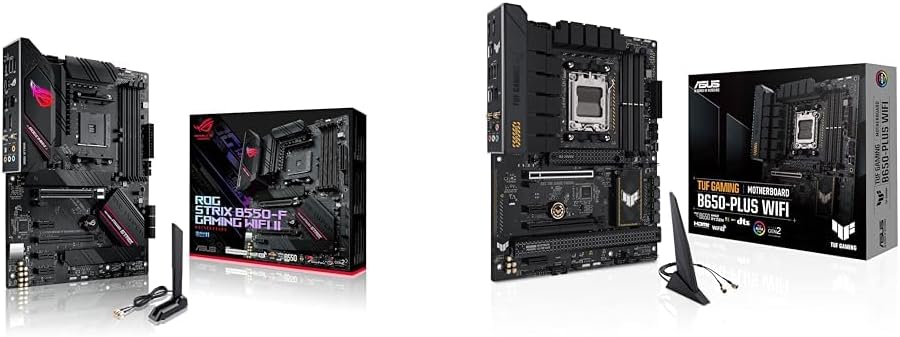
Asus ROG Strix B550-F Gaming WiFi II AMD AM4 (3rd Gen Ryzen) ATX Motherboard & TUF Gaming B650-PLUS WiFi Socket AM5 (LGA 1718) Ryzen 7000 ATX Gaming Motherboard
$150-$299This bundle offers two ATX motherboards: the ROG Strix B550-F Gaming WiFi II for AM4 Ryzen 3000/5000 CPUs with DDR4 RAM, and the TUF Gaming B650-PLUS WiFi for AM5 Ryzen 7000 CPUs with DDR5 RAM.

Game Motherboard Fit for ASROCK B650E PG-ITX WiFi B650 AM5 Motherboard Support Ryzen 7800X3D 7600/X 7950X 7700/X CPU 2xDDR5 128GB Hyper M.2 Mini-ITX
Price range unavailableThis KUETFBVC motherboard listing presents highly contradictory specifications, including a BGA 1023 socket and AMD 480 chipset, making it unsuitable for any modern Ryzen AM5 CPU.

Asus ROG Strix B550-F Gaming WiFi II AMD AM4 (3rd Gen Ryzen) ATX Gaming Motherboard (PCIe 4.0,WiFi 6E, 2.5Gb LAN, BIOS Flashback, HDMI 2.1, Addressable Gen 2 RGB Header and Aura Sync)
This is a premium-feeling AM4 board with beefy VRMs and WiFi 6E, perfect for squeezing the last drop of performance out of a Ryzen 5000 series CPU.