
Raspberry Pi 3 A+ Computer Board For Linux
Want the best price and purchase timing?
Our AI advisor analyzes real-time pricing across all channels to find you the best deal.
AI Verdict
The Raspberry Pi 3 A+ is a stripped-down, 512MB single-board computer perfect for headless IoT projects and lightweight retro gaming where space is tight and Ethernet isn't needed.
This board sacrifices RAM, Ethernet, and USB ports to achieve a smaller 65x56mm footprint and lower price. It excels in headless IoT applications or embedded devices where Wi-Fi is sufficient, but falls flat for desktop computing due to the 512MB memory limit.
If you need to run a desktop GUI, browse the web, or run a media server, upgrade to the Raspberry Pi 4 Model B with at least 2GB of RAM.
Regret Score™
Low RiskLower is better — measures purchase-regret risk from real buyer complaints, review credibility, and product maturity
Issues discovered after purchase
Critically weak dimension
Amazon rating vs actual quality
Chance this product isn't for you
Pros
- Packs the same 1.4GHz 64-bit quad-core Cortex-A53 processor as the larger 3 B+
- Includes dual-band 802.11ac Wi-Fi and Bluetooth 4.2 for wireless connectivity out of the box
- Measures just 65mm x 56mm, saving significant space compared to the 85mm x 56mm B+ footprint
- Retains the standard 40-pin GPIO header, full-size HDMI, and CSI/DSI ports for camera and display
Cons
- Limited to 512MB of LPDDR2 RAM, which chokes on modern web browsing or heavy desktop multitasking
- Only features a single USB 2.0 port, requiring a USB hub if you need a wired keyboard and mouse
- Completely lacks an RJ45 Ethernet port and Power over Ethernet (PoE) support
- The 3.5mm analog audio jack is notorious for producing distorted, screeching sound output
Dimension Scores
Requires a strict 5V/2.5A supply and the polyfuse is easily tripped by GPIO shorts.
Packs dual-band Wi-Fi, Bluetooth 4.2, and a 1.4GHz quad-core CPU into a tiny footprint.
Retains the 40-pin GPIO and camera ports, but the single USB port and lack of Ethernet severely limit plug-and-play expansion.
Flawless compatibility with Raspberry Pi OS and massive community support for headless Linux distributions.
Best For
- Headless home automation servers running lightweight OS distributions like DietPi or Raspberry Pi OS Lite
- Compact retro gaming consoles running RetroPie for PS1 and older 16-bit systems
- Embedded robotics or smart doorbell projects that need Wi-Fi but have strict space constraints
Not Recommended For
- General desktop use or web browsing, as the 512MB RAM will overflow immediately
- Network-heavy applications like a Plex media server that require Gigabit Ethernet
Watch Out For
- Only one USB port — you will need a USB hub or Bluetooth peripherals to connect both a keyboard and a mouse during initial setup.
- RAM bottleneck — half of the 512MB memory is often eaten by the OS, making heavy RetroPie themes or desktop multitasking crash.
- Strict power requirements — using a cheap phone charger instead of a dedicated 5V/2.5A supply will trigger constant undervoltage warnings.
- Fragile power protection — accidentally shorting the 5V pin to ground on the GPIO header will blow the polyfuse or overvoltage protection diode.
Full Specifications
| ASIN | B07KKBCXLY |
| Brand | Raspberry Pi |
| CPU Model | Cortex |
| CPU Speed | 1.4 GHz |
| Resolution | 1920x1080 |
| Item Weight | 0.01 ounces |
| Screen Size | 2.25 Inches |
| Manufacturer | Raspberry |
| Total Usb Ports | 1 |
| Operating System | Linux |
| Item model number | RP-3A+ |
| Product Dimensions | 3.78 x 2.8 x 1.06 inches |
| Graphics Coprocessor | Integrated Graphics |
| Maximum memory speed | 1.4 GHz |
| Memory Storage Capacity | 512 MB |
| Graphics Card Description | Dedicated |
| Ram Memory Installed Size | 512 MB |
| Specific Uses For Product | Multimedia |
| Standing screen display size | 2.25 Inches |
| Personal computer design type | Barebone |
| Is Discontinued By Manufacturer | No |
What Buyers Say
Buyers consistently praise the 3 A+ for delivering the processing power of the 3 B+ in a much smaller, 65x56mm footprint. The built-in dual-band Wi-Fi is a massive upgrade over older A-series boards, making it perfect for headless IoT and robotics projects. The 512MB RAM limit acts as a hard wall for many users, causing crashes when attempting to run desktop environments or heavy web browsers. The single USB port also frustrates buyers during initial setup, forcing them to dig up a USB hub just to plug in a keyboard and mouse simultaneously.
“Great little board for my smart doorbell project but trying to run a desktop GUI on 512mb of ram is pure torture, just use it headless.”
Common Praise
- The 1.4GHz quad-core CPU handles PS1 emulation and object recognition scripts without breaking a sweat
- Built-in 5GHz Wi-Fi eliminates the need for bulky USB networking dongles
- Fits perfectly into tight custom enclosures where the 85mm B+ model is too long
- Runs significantly cooler than the Raspberry Pi 4, often not requiring an active cooling fan
Common Complaints
- 512MB of RAM is instantly consumed by the OS and a single web browser tab
- The single USB 2.0 port makes initial configuration annoying without a USB hub
- The 3.5mm audio jack produces noticeable static and screeching noises
- Lack of Ethernet makes it unsuitable for high-speed network storage projects
Ownership Tips
- You must use a lightweight OS like DietPi or Raspberry Pi OS Lite to leave enough RAM for your actual applications.
- If you short the 5V pin to ground, the board will appear dead, but leaving it unplugged for 24 hours often lets the polyfuse reset.
- Heavy RetroPie themes with video snaps will crash the system due to memory exhaustion.
- The board works fine on a 2A power supply if you don't have power-hungry USB peripherals attached.
Frequently Asked Questions
Can I use this as a basic desktop PC?
No. The 512MB of RAM is too small for modern web browsing and will constantly freeze if you open more than one or two tabs. You need a Pi 4 or Pi 400 for desktop use.
Does it have built-in Wi-Fi?
Yes. It includes dual-band 2.4GHz and 5GHz 802.11ac Wi-Fi, plus Bluetooth 4.2, so you don't need a wireless dongle.
Why is my Pi 3 A+ just showing a blinking red light and not booting?
You likely have an outdated OS image that doesn't support the newer RAM chips used in recent production runs. Download the latest Raspberry Pi OS using the official Imager tool.
Can it run RetroPie smoothly?
It handles 16-bit consoles and PlayStation 1 games perfectly using the same 1.4GHz CPU as the 3 B+. You must use a lightweight menu theme because the 512MB RAM limits graphical overhead.
How do I connect a keyboard and mouse with only one USB port?
You have to use a USB hub, a wireless keyboard/mouse combo that shares a single USB dongle, or connect Bluetooth peripherals after initial setup.
Buying Guide
When buying a single-board computer, RAM and port selection dictate what you can actually build. The Pi 3 A+ gives you a fast 1.4GHz processor but starves it of memory and USB ports to save physical space. If your project runs in the background without a monitor—like a smart home hub or weather station—this board is a perfect, cost-effective fit. If you plan to plug it into a TV to browse the web or use it like a normal PC, the 512MB of RAM will cause constant freezing.
512MB LPDDR2 RAM
RAM is your computer's short-term memory. 512MB is incredibly small by modern standards—like trying to cook a five-course meal on a single hot plate. It's fine for one background task, but terrible for web browsing.
No Ethernet Port
Without a hardwired network jack, you are entirely reliant on Wi-Fi. This is fine for sending small sensor data, but too slow and unstable for streaming large video files across your house.
40-pin GPIO Header
These are the metal pins on the board that let you wire up LEDs, motors, and sensors directly to the computer, making it the brain of custom electronics projects.
Alternatives
If you need to run a desktop environment or a media server, look for a board with at least 2GB of RAM and Gigabit Ethernet. If you need something even smaller for a battery-powered wearable, look for a 'Zero' form factor board.
You Might Also Like

JetKVM KVM Over IP ATX Extension Board, ATX Power Control Board- Only for Jet KVM Accessories Boot from Shutdown, Crash Recovery
$0-$49This is an ATX form factor power control board designed for JetKVM accessories, enabling remote PC power state management and simultaneous front panel button use.
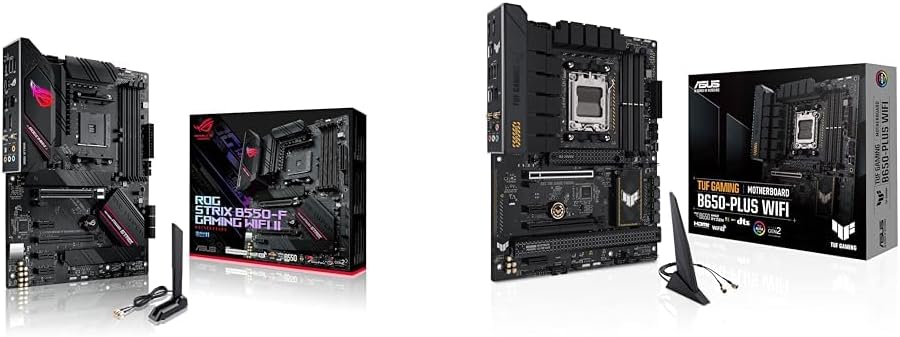
Asus ROG Strix B550-F Gaming WiFi II AMD AM4 (3rd Gen Ryzen) ATX Motherboard & TUF Gaming B650-PLUS WiFi Socket AM5 (LGA 1718) Ryzen 7000 ATX Gaming Motherboard
$150-$299This bundle offers two ATX motherboards: the ROG Strix B550-F Gaming WiFi II for AM4 Ryzen 3000/5000 CPUs with DDR4 RAM, and the TUF Gaming B650-PLUS WiFi for AM5 Ryzen 7000 CPUs with DDR5 RAM.

Game Motherboard Fit for ASROCK B650E PG-ITX WiFi B650 AM5 Motherboard Support Ryzen 7800X3D 7600/X 7950X 7700/X CPU 2xDDR5 128GB Hyper M.2 Mini-ITX
Price range unavailableThis KUETFBVC motherboard listing presents highly contradictory specifications, including a BGA 1023 socket and AMD 480 chipset, making it unsuitable for any modern Ryzen AM5 CPU.

Asus ROG Strix B550-F Gaming WiFi II AMD AM4 (3rd Gen Ryzen) ATX Gaming Motherboard (PCIe 4.0,WiFi 6E, 2.5Gb LAN, BIOS Flashback, HDMI 2.1, Addressable Gen 2 RGB Header and Aura Sync)
This is a premium-feeling AM4 board with beefy VRMs and WiFi 6E, perfect for squeezing the last drop of performance out of a Ryzen 5000 series CPU.