
ASRock TPM2-S TPM Module Motherboard (V2.0)
Want the best price and purchase timing?
Our AI advisor analyzes real-time pricing across all channels to find you the best deal.
AI Verdict
This is a dedicated 17-pin hardware security module for older ASRock motherboards, strictly necessary if you want to install Windows 11 without relying on a potentially stuttery firmware TPM.
This is a highly specific legacy part designed exclusively for ASRock motherboards with a 17-pin LPC header. If you have a newer board with a 14-pin SPI header or a CPU with a perfectly fine built-in fTPM, this is a waste of money.
Check your motherboard manual for the exact TPM header pin count—if it says 14-pin SPI, you need the ASRock TPM-SPI module instead.
Regret Score™
High RiskLower is better — measures purchase-regret risk from real buyer complaints, review credibility, and product maturity
Issues discovered after purchase
Critically weak dimension
Amazon rating vs actual quality
Chance this product isn't for you
Pros
- Uses the Nuvoton NPCT650 chip to fully meet Microsoft's Windows 11 TPM 2.0 requirements
- Plugs directly into the 17-pin header on compatible ASRock boards without needing extra power cables
- Bypasses the micro-stuttering issues reported when using AMD's built-in fTPM on Ryzen systems
- Enables hardware-level BitLocker drive encryption without bogging down your CPU
Cons
- Only fits ASRock motherboards with a specific 17-pin header—it will not work on 14-pin SPI headers
- Requires you to manually disable the CPU's built-in fTPM in the BIOS before the system recognizes it
- ASRock explicitly states this module is not supported on Intel 8 and 9 series chipsets
- Requires converting your boot drive from MBR to GPT before Windows 11 will install
Dimension Scores
It draws a microscopic 150µA in standby, but as a passive security module, it lacks and does not require VRMs.
Fully supports TPM 2.0, BitLocker, and Windows Hello using the Nuvoton NPCT650 chip.
Occupies your single TPM header and offers zero passthrough or additional connectivity.
Integrates seamlessly into ASRock's UEFI, requiring a manual toggle to disable the CPU's firmware TPM first.
Best For
- Upgrading an older ASRock H110, X299, or AM4 motherboard to pass the Windows 11 upgrade checker
- Ryzen gamers trying to eliminate the random micro-stutters caused by AMD's firmware TPM
- Home office setups requiring hardware-level BitLocker encryption for corporate compliance
Not Recommended For
- Anyone with a modern motherboard that already has a flawless built-in firmware TPM
- Owners of non-ASRock motherboards or ASRock boards with the newer 14-pin SPI TPM headers
Watch Out For
- Header mismatch: ASRock makes multiple TPM modules. If your board has a 14-pin SPI header, this 17-pin LPC module will not physically fit.
- BIOS configuration required: Just plugging it in isn't enough. You have to boot into the UEFI, disable the AMD fTPM or Intel PTT, and manually select the discrete TPM.
- Drive format trap: Even after installing this, Windows 11 won't install if your boot drive is formatted as MBR instead of GPT. You need to use the MBR2GPT command line tool.
- CPU bottleneck: If your CPU isn't on Microsoft's officially supported Windows 11 list, adding this TPM module still won't let you upgrade through Windows Update without workarounds.
Full Specifications
| RAM | DDR4 |
| ASIN | B06XPR5943 |
| Brand | ASRock |
| Series | TPM2-S |
| Platform | Windows 10 |
| CPU Model | Core i5-10400 |
| Processor | core_i5_10400 |
| CPU Socket | 370 |
| Model Name | TPM2-S |
| Item Weight | 0.634 ounces |
| Manufacturer | ASRock Rack |
| Memory Speed | 1333 MHz |
| Item model number | TPM2-S |
| Compatible Devices | Personal Computer |
| Memory Clock Speed | 1333 MHz |
| Product Dimensions | 6 x 2 x 0.4 inches |
| Compatible Processors | Intel 10th Generation Core Processors |
| RAM Memory Technology | DDR4 |
| Item Dimensions LxWxH | 6 x 2 x 0.4 inches |
| Memory Storage Capacity | 16 GB |
| Number of USB 2.0 Ports | 1 |
| Is Discontinued By Manufacturer | No |
What Buyers Say
The biggest shock for most buyers is realizing they might not have needed this module in the first place, as modern CPUs already have firmware TPMs built-in. For those with older ASRock boards or Ryzen users plagued by fTPM micro-stutters, this little chip is a lifesaver. Installation is physically simple, but the software side trips people up constantly. You have to dive into the BIOS to disable the onboard TPM, and many users find out the hard way that their boot drive needs to be converted from MBR to GPT. It does exactly what it promises—getting you past the Windows 11 upgrade checker—but only if you buy the right pin layout.
“Bought this to fix the annoying Ryzen fTPM stutter in games, plugged it into my x470 board, switched it in the bios and the stutters are completely gone.”
Common Praise
- Instantly recognized by the Windows 11 PC Health Check app once enabled in BIOS
- Completely eliminates the random micro-stuttering in games caused by AMD's fTPM
- Allows older H110 and X299 motherboards to securely run BitLocker encryption
- Physical installation takes five seconds since it only fits onto the header one way
Common Complaints
- Doesn't fit newer ASRock boards that use the 14-pin SPI header instead of this 17-pin LPC header
- Requires manual BIOS tweaking to disable the CPU's built-in TPM before it works
- Doesn't bypass Microsoft's CPU generation requirements for Windows 11
- Lack of clear instructions in the box leaves users googling for BIOS setup guides
Ownership Tips
- If you ever clear your CMOS or update your BIOS, you will likely have to go back in and re-enable the discrete TPM.
- Make sure to suspend BitLocker before installing this or updating your BIOS, or you'll be locked out of your drive.
- It sits very close to the bottom PCIe slot on some boards, which can be a tight squeeze if you have a massive GPU.
Frequently Asked Questions
Will this work on my Asus or Gigabyte motherboard?
No. The pin layouts and BIOS implementations are proprietary. You must buy the specific TPM module made by your motherboard's manufacturer.
Do I actually need this for Windows 11?
Probably not. Most CPUs made after 2018 (Intel 8th Gen or Ryzen 2000 and newer) have a built-in firmware TPM. You only need this if your CPU lacks it or if you are experiencing fTPM stuttering.
How many pins does this module have?
It uses a 17-pin (18-1) LPC connector. Count the pins on your motherboard's TPM header before buying, as newer ASRock boards use a 14-pin SPI connector.
Why isn't my PC recognizing the module after I plugged it in?
You need to go into your BIOS and disable the built-in firmware TPM (Intel PTT or AMD fTPM) first. Then, select the discrete TPM option and save your settings.
Does this fix the AMD Ryzen fTPM stuttering issue?
Yes. Offloading the cryptographic tasks to this dedicated Nuvoton NPCT650 chip bypasses the latency issues associated with AMD's firmware TPM.
Buying Guide
You are buying a physical security key for your motherboard. Before you add this to your cart, check your CPU. If you have an Intel 8th Gen or Ryzen 2000 series or newer, you already have a TPM built into your processor and do not need this unless you are experiencing specific stuttering bugs. If you do need it, open your PC case and physically count the pins on your motherboard's TPM header. This is a 17-pin module, and if your board has 14 pins, you will bend them trying to force this in.
17-Pin LPC Interface
This is the physical plug. Think of it like a USB-A vs USB-C port; if your motherboard has a 14-pin SPI header, this 17-pin module simply will not fit.
TPM 2.0 Compliance
This is the exact security standard Microsoft demands for Windows 11. Older TPM 1.2 modules will not let you upgrade.
Nuvoton NPCT650 Chip
This is the brain of the module that handles the encryption math, taking the load off your main CPU to prevent system lag.
Alternatives
If your ASRock motherboard has a 14-pin header, search for the 14-pin SPI version instead. If you have a different motherboard brand, you must buy their specific proprietary TPM module.
You Might Also Like

JetKVM KVM Over IP ATX Extension Board, ATX Power Control Board- Only for Jet KVM Accessories Boot from Shutdown, Crash Recovery
$0-$49This is an ATX form factor power control board designed for JetKVM accessories, enabling remote PC power state management and simultaneous front panel button use.
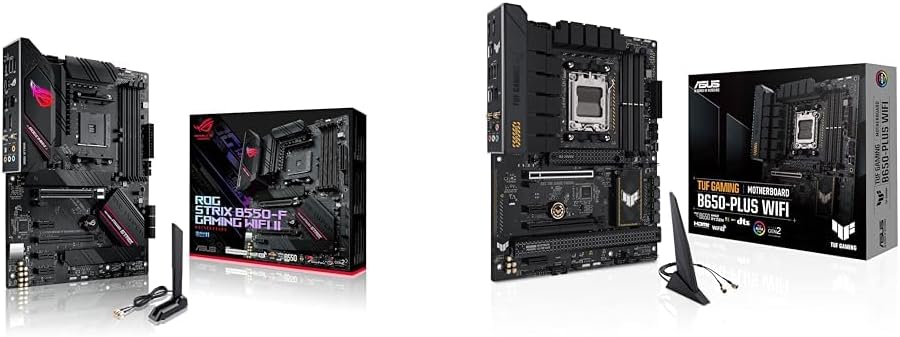
Asus ROG Strix B550-F Gaming WiFi II AMD AM4 (3rd Gen Ryzen) ATX Motherboard & TUF Gaming B650-PLUS WiFi Socket AM5 (LGA 1718) Ryzen 7000 ATX Gaming Motherboard
$150-$299This bundle offers two ATX motherboards: the ROG Strix B550-F Gaming WiFi II for AM4 Ryzen 3000/5000 CPUs with DDR4 RAM, and the TUF Gaming B650-PLUS WiFi for AM5 Ryzen 7000 CPUs with DDR5 RAM.

Game Motherboard Fit for ASROCK B650E PG-ITX WiFi B650 AM5 Motherboard Support Ryzen 7800X3D 7600/X 7950X 7700/X CPU 2xDDR5 128GB Hyper M.2 Mini-ITX
Price range unavailableThis KUETFBVC motherboard listing presents highly contradictory specifications, including a BGA 1023 socket and AMD 480 chipset, making it unsuitable for any modern Ryzen AM5 CPU.

Asus ROG Strix B550-F Gaming WiFi II AMD AM4 (3rd Gen Ryzen) ATX Gaming Motherboard (PCIe 4.0,WiFi 6E, 2.5Gb LAN, BIOS Flashback, HDMI 2.1, Addressable Gen 2 RGB Header and Aura Sync)
This is a premium-feeling AM4 board with beefy VRMs and WiFi 6E, perfect for squeezing the last drop of performance out of a Ryzen 5000 series CPU.