![Arduino Uno Rev3 SMD [A000073] Microcontroller Board - ATmega328P, 16MHz, 32KB Flash, USB & PWM Support, Ideal for DIY Projects, STEM Learning, Robotics, and Prototyping](https://m.media-amazon.com/images/I/61nFCzNYYcL._SL1000_.jpg)
Arduino Uno Rev3 SMD [A000073] Microcontroller Board - ATmega328P, 16MHz, 32KB Flash, USB & PWM Support, Ideal for DIY Projects, STEM Learning, Robotics, and Prototyping
Want the best price and purchase timing?
Our AI advisor analyzes real-time pricing across all channels to find you the best deal.
AI Verdict
This is the classic, rock-solid Arduino Uno with a surface-mounted chip, perfect for permanent installations but risky for beginners prone to frying their microcontrollers.
The SMD version of the Uno Rev3 delivers the exact same 16MHz performance and 14 I/O pins as the standard board, but sacrifices repairability. Because the ATmega328P is soldered flat to the PCB, it fits finalized projects rather than messy breadboard learning where shorts are common.
If you are a beginner prone to wiring mistakes, buy the standard Arduino Uno R3 with the socketed DIP chip so you can swap out a fried microcontroller for $3.
Regret Score™
High RiskLower is better — measures purchase-regret risk from real buyer complaints, review credibility, and product maturity
Issues discovered after purchase
Critically weak dimension
Amazon rating vs actual quality
Chance this product isn't for you
Pros
- Uses the official ATmega16U2 USB-to-serial chip, connecting to the Arduino IDE instantly without hunting for CH340 drivers
- Includes the Rev3 pinout with dedicated SDA, SCL, and IOREF pins for broader shield compatibility
- Features a built-in resettable polyfuse that cuts power if your USB port pulls more than 500mA, saving your computer's motherboard
- Operates on a wide 7-12V recommended input range via the barrel jack, making it easy to power with a standard 9V battery
Cons
- The ATmega328P chip is surface-mounted and soldered directly to the board, so you cannot replace it if you accidentally fry it
- Limited to 32KB of flash memory and 2KB of SRAM, which fills up fast if you run complex displays or web servers
- Relies on the bulky, outdated USB Type-B port instead of a modern USB-C connection
Dimension Scores
The onboard 5V linear regulator handles 7-12V inputs fine but gets extremely hot and can burn out if you pull near the 500mA limit.
Provides the baseline 14 digital and 6 analog pins expected of an Uno, but lacks modern features like Wi-Fi or Bluetooth.
The standardized Rev3 header layout ensures compatibility with thousands of off-the-shelf Arduino shields.
Native integration with the Arduino IDE via the ATmega16U2 chip guarantees a flawless, driver-free setup experience.
Best For
- Permanent DIY electronics projects where the board will be enclosed and untouched
- Classrooms or workshops that need guaranteed plug-and-play compatibility with the official Arduino IDE
- Prototyping sensor arrays using the 6 dedicated analog input pins
- High-vibration robotics projects where a socketed chip might shake loose
Not Recommended For
- Absolute beginners learning to wire circuits who might accidentally short a pin and kill the non-replaceable chip
- Space-constrained wearables or micro-robotics where a Nano or Pro Mini would fit better
- IoT projects requiring native Wi-Fi or Bluetooth connectivity
Watch Out For
- Non-replaceable microcontroller — if you accidentally send 12V to a 5V logic pin and let the magic smoke out, the entire $25 board is trash instead of just a $3 DIP chip.
- Driver conflicts on older OS versions — some users report 'avrdude: ser_open()' errors on Windows 10 requiring manual driver updates from the IDE folder.
- Voltage regulator overheating — measuring 14 ohms between 5V and GND means you shorted the board, and the SMD chip will get dangerously hot when plugged in.
Full Specifications
| ASIN | B007R9TUJE |
| Brand | Arduino |
| Platform | Linux |
| Model Name | Arduino UNO REV3 SMD |
| Item Weight | 1.31 ounces |
| Manufacturer | ARDUINO |
| Item model number | ABX00173 |
| Compatible Devices | Personal Computer |
| Memory Clock Speed | 16 MHz |
| Product Dimensions | 1.24 x 0.9 x 0.36 inches |
| Compatible Processors | ATmega328P, ATmega16U2 |
| RAM Memory Technology | DDR |
| Graphics Card Interface | Integrated |
| Memory Storage Capacity | 32 KB |
| Main Power Connector Type | 2.1mm Barrel Jack |
| Is Discontinued By Manufacturer | No |
What Buyers Say
The biggest shock for buyers expecting a standard Uno is discovering the main chip is permanently soldered to the board, making it impossible to replace if shorted. Experienced makers actually prefer this SMD layout for high-vibration environments like robotics, as the chip cannot vibrate loose from a socket. Setup is universally praised because the official ATmega16U2 USB controller bypasses the driver nightmares associated with cheap CH340 clones. A recurring complaint involves the voltage regulator burning out instantly if users accidentally reverse polarity on the barrel jack. Once that regulator blows, the SMD chip overheats rapidly and the board is bricked.
“Fried my first one by accidentally sending 12v to a digital pin, and since the chip is soldered flat you can't just swap it out like the old ones, but it works perfectly out of the box with no driver headaches.”
Common Praise
- Flawless plug-and-play recognition in the Arduino IDE without downloading third-party drivers
- SMD chip profile allows certain tight-fitting shields to sit lower without hitting the microcontroller
- Polyfuse successfully protects computer USB ports from accidental 500mA+ current spikes
- Build quality and soldering are visibly cleaner than $5 knock-off boards
Common Complaints
- Accidentally frying the 5V logic ruins the entire board since the chip isn't socketed
- The bulky USB Type-B connector feels outdated for modern projects
- Voltage regulator runs dangerously hot if powering multiple servos directly from the 5V pin
- Occasional 'Code 43' USB recognition errors on Windows 10 requiring manual driver selection
Ownership Tips
- Measuring resistance between the 5V and GND pins is the fastest way to check if you killed the board; anything under 800 ohms means the regulator is shorted.
- The 'L' LED on pin 13 will only flash if your specific sketch tells it to, unlike the factory blink test.
- If the main chip gets scalding hot the second you plug in USB power, the board is permanently dead.
Frequently Asked Questions
What is the difference between this SMD version and the regular Uno R3?
The standard Uno R3 uses a large, removable DIP (Dual Inline Package) microcontroller socketed into the board. This SMD (Surface Mount Device) version has the exact same ATmega328P chip, but it is soldered permanently to the PCB.
Do I need to install CH340 drivers to use this?
No. Because this is an official board, it uses the ATmega16U2 chip for USB-to-serial communication. It will be recognized natively by Windows, Mac, and Linux right out of the box.
Can I power this with a 9V battery?
Yes, you can plug a 9V battery into the 2.1mm center-positive barrel jack. The onboard voltage regulator will step the 7-12V input down to the required 5V operating voltage.
Why am I getting an 'avrdude: ser_open()' error when uploading a sketch?
This usually means the Arduino IDE cannot communicate with the COM port. Check that you have the correct port selected in the Tools menu, and ensure your USB Type-B cable supports data transfer, not just charging.
Can I use standard Arduino shields with the SMD version?
Yes. The pin layout is identical to the standard Uno Rev3, including the added SDA, SCL, and IOREF pins, so all standard shields will line up perfectly.
Buying Guide
When buying an Arduino Uno, you are choosing the brain for your electronics project. The 'SMD' in this specific model means the main processor is soldered flat to the board rather than sitting in a removable plastic socket. This makes the board slightly more durable against vibrations, but it removes your safety net. If you wire something backward and fry the chip, you have to throw the whole board away. Buy this version only if you are confident in your wiring or building a permanent installation.
ATmega328P Microcontroller
This is the actual brain doing the math and running your code. It runs at 16MHz, which is plenty fast for reading sensors and moving motors, but too slow for processing video or heavy audio.
32KB Flash Memory
This is your hard drive space for code. It holds about 32,000 characters of instructions, which is massive for basic tasks but will fill up instantly if you try to load custom fonts for an OLED screen.
ATmega16U2 USB Controller
This acts as the translator between your computer's USB port and the main brain. Having this official chip means your computer recognizes the board instantly, saving you from downloading sketchy drivers from random forums.
Alternatives
If you want a safety net for learning, search for the 'Arduino Uno R3 DIP' which has a removable, replaceable chip. If you need Wi-Fi or Bluetooth for IoT projects, look for an 'ESP32 development board' or the 'Arduino Uno R4 WiFi'.
You Might Also Like

JetKVM KVM Over IP ATX Extension Board, ATX Power Control Board- Only for Jet KVM Accessories Boot from Shutdown, Crash Recovery
$0-$49This is an ATX form factor power control board designed for JetKVM accessories, enabling remote PC power state management and simultaneous front panel button use.
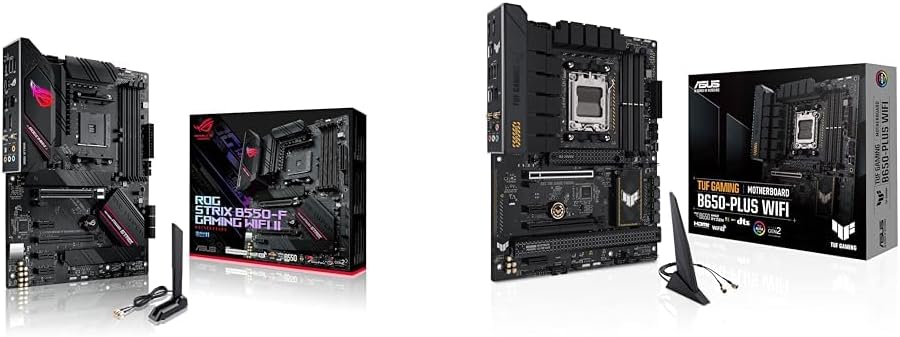
Asus ROG Strix B550-F Gaming WiFi II AMD AM4 (3rd Gen Ryzen) ATX Motherboard & TUF Gaming B650-PLUS WiFi Socket AM5 (LGA 1718) Ryzen 7000 ATX Gaming Motherboard
$150-$299This bundle offers two ATX motherboards: the ROG Strix B550-F Gaming WiFi II for AM4 Ryzen 3000/5000 CPUs with DDR4 RAM, and the TUF Gaming B650-PLUS WiFi for AM5 Ryzen 7000 CPUs with DDR5 RAM.

Game Motherboard Fit for ASROCK B650E PG-ITX WiFi B650 AM5 Motherboard Support Ryzen 7800X3D 7600/X 7950X 7700/X CPU 2xDDR5 128GB Hyper M.2 Mini-ITX
Price range unavailableThis KUETFBVC motherboard listing presents highly contradictory specifications, including a BGA 1023 socket and AMD 480 chipset, making it unsuitable for any modern Ryzen AM5 CPU.

Asus ROG Strix B550-F Gaming WiFi II AMD AM4 (3rd Gen Ryzen) ATX Gaming Motherboard (PCIe 4.0,WiFi 6E, 2.5Gb LAN, BIOS Flashback, HDMI 2.1, Addressable Gen 2 RGB Header and Aura Sync)
This is a premium-feeling AM4 board with beefy VRMs and WiFi 6E, perfect for squeezing the last drop of performance out of a Ryzen 5000 series CPU.