
Ring Floodlight Cam Wired Pro, Home or business security, Retinal 2K Video, Color Night Vision and Two-Way Talk with Audio+, Graphite
Want the best price and purchase timing?
Our AI advisor analyzes real-time pricing across all channels to find you the best deal.
AI Verdict
This is a wired 2K security camera with 4000 lumens of floodlighting and 3D Motion Detection, best for homeowners needing active deterrence in large outdoor areas.
This camera is a strong contender if you need powerful floodlighting and advanced motion detection in a wired package, and you're okay with Ring's subscription model. The 2K video and 4000-lumen lights are genuinely useful for deterrence and monitoring large areas. However, inconsistent video quality and audio performance reported by users, alongside the mandatory subscription for recordings, make it a situational choice.
If 2K resolution isn't cutting it for detail, look for cameras with true 4K sensors and robust local storage options to avoid subscription fees.
Regret Score™
Medium RiskLower is better — measures purchase-regret risk from real buyer complaints, review credibility, and product maturity
Issues discovered after purchase
Critically weak dimension
Amazon rating vs actual quality
Chance this product isn't for you
Pros
- Captures video at 2K resolution, providing more detail than 1080p cameras.
- Features two 2000-lumen LED floodlights, totaling 4000 lumens, to illuminate large outdoor spaces.
- Includes 3D Motion Detection and Bird's Eye View for precise motion tracking and event mapping.
- Equipped with a 110 dB security siren for immediate deterrence.
- Offers Color Night Vision when floodlights are active, alongside black-and-white infrared night vision.
- Supports dual-band Wi-Fi (2.4GHz and 5.0GHz) for flexible network connectivity.
Cons
- Requires a Ring Protect subscription to access video recordings and advanced AI alerts.
- Audio quality is frequently reported as muffled and unclear by users.
- Lacks support for Apple HomeKit and Google Assistant, limiting smart home integration options.
- Some users experience pixelated or blurry video, even with strong Wi-Fi signals.
- No local storage option, meaning all recordings are cloud-dependent.
Dimension Scores
The 3D Motion Detection and Bird's Eye View features offer precise motion tracking and mapping, which is above average for security cameras.
While it supports dual-band Wi-Fi (2.4GHz and 5.0GHz), numerous user reports indicate issues with 5GHz connectivity or being limited to 2.4GHz, leading to inconsistent performance.
The Ring app is generally user-friendly and integrates well within the Ring ecosystem and with Alexa, but it lacks support for HomeKit and Google Assistant.
The camera features an IP65 weather-resistant housing, indicating strong protection against dust and water for outdoor use.
Best For
- Homeowners replacing existing wired floodlights who want integrated security features.
- Securing large driveways or backyards that require significant illumination.
- Users already invested in the Ring ecosystem and Alexa-compatible smart home devices.
- Properties where precise motion detection and tracking across a wide area are priorities.
Not Recommended For
- Anyone unwilling to pay for a monthly subscription to view recorded video history.
- Users prioritizing local video storage over cloud-based solutions.
- Homes with weak or inconsistent outdoor Wi-Fi coverage, despite dual-band support.
- Individuals who need seamless integration with Apple HomeKit or Google Assistant.
Watch Out For
- Video quality can be inconsistent, with users reporting pixelation and blurriness even with strong Wi-Fi, making it hard to discern details like license plates from 20 feet away.
- Despite advertised dual-band Wi-Fi, some users report the device only connecting via 2.4 GHz or experiencing poor 5 GHz performance, leading to connectivity issues.
- Recordings can have 'grey or black artifacts' where parts of the screen are missing, even with a stable Wi-Fi signal strength (e.g., RSSI of 60).
- The 'Audio+' feature doesn't prevent user complaints of muffled, unclear, and barely understandable two-way audio.
- The 3D Motion Detection and Bird's Eye View features are considered 'gimmicky' and 'useless' by some users, despite being premium offerings.
What Buyers Say
The most surprising finding is the widespread user frustration with video and audio quality, despite the 'Pro' moniker and 'Retinal 2K' claims; many report pixelated footage and muffled audio, even with strong Wi-Fi signals. Users also frequently complain about recordings having missing sections or artifacts. The dual-band Wi-Fi is a listed spec, but several users find their units are stuck on 2.4 GHz or perform poorly on 5 GHz. The 3D Motion Detection and Bird's Eye View, while advanced, are often dismissed as 'gimmicks' by those who've used them.
“Honestly, I paid for 'Pro' and got video that looks like it's from 2010, and the audio? Forget about it, sounds like someone talking through a sock. Plus, I gotta pay monthly just to see what happened? What a rip-off.”
Common Praise
- The 4000 lumens from the two floodlights effectively illuminate large outdoor areas.
- The 110 dB siren is loud enough to attract attention and deter unwanted visitors.
- Color Night Vision provides clearer images when the floodlights are activated.
- Installation is straightforward for those comfortable with basic electrical wiring.
- The Ring app offers extensive customization for motion zones and light settings.
Common Complaints
- Video quality is often pixelated, blurry, or inconsistent, failing to meet expectations for a 2K camera.
- Audio quality for two-way talk is frequently described as muffled, unclear, and difficult to understand.
- Recordings sometimes show 'grey or black artifacts' or missing sections of footage.
- Despite dual-band Wi-Fi, some units struggle with 5GHz connections or are limited to 2.4GHz, impacting performance.
- The requirement for a paid Ring Protect subscription to view recorded video is a significant drawback for many.
Ownership Tips
- The 'Retinal 2K' video often doesn't translate to sharp, detailed footage in real-world use, especially at a distance.
- Wi-Fi signal strength (RSSI) can appear stable, but video and audio quality still suffer, suggesting internal processing or network handling issues.
- The 3D Motion Detection and Bird's Eye View, while technically advanced, don't always provide practical benefits over simpler motion zones for many users.
- Without the Ring Protect subscription, the camera's utility is severely limited, acting mostly as a live-view device with floodlights.
- The floodlights are genuinely bright and effective for illuminating dark areas, often exceeding user expectations for lighting.
Frequently Asked Questions
Does the Ring Floodlight Cam Wired Pro record continuously?
No, it records upon motion detection. To access and review these recordings, you need a Ring Protect subscription, which is sold separately.
Can I use this camera without a Wi-Fi connection?
No, the Ring Floodlight Cam Wired Pro requires a Wi-Fi connection (2.4GHz or 5.0GHz) to function, send alerts, and allow live viewing.
Is the installation difficult since it's wired?
Installation involves connecting to your home's AC wiring, replacing an existing floodlight. Ring provides tools and instructions, but if you're not comfortable with electrical work, it's recommended to consult a professional electrician.
Does it have a battery backup?
No, this camera is hardwired and does not have a battery backup. It relies entirely on your home's AC power.
What is 'Retinal 2K Video'?
Retinal 2K Video refers to the camera's ability to capture footage at 2K resolution, which is 2560x1440 pixels, offering more clarity than standard 1080p.
Can I turn the floodlights on and off manually?
Yes, you can control the motion-activated floodlights through the Ring app, including turning them on or off manually, adjusting brightness, and setting schedules.
Buying Guide
When you're looking at a floodlight camera like this, you need to think about two main things: how well it sees and how well it scares stuff away. 'Seeing' means clear video, even at night, and 'scaring stuff away' means bright lights and a loud siren. Don't just look at the resolution number; real-world clarity and consistent performance are what actually matter for identifying faces or license plates. Also, figure out if you're okay with paying a monthly fee to actually save and review your video clips, because many cameras don't include that for free.
Resolution (e.g., 2K)
This is how many pixels the camera captures. Higher numbers like 2K (2560x1440) or 4K mean more detail, like a sharper photo. It's crucial for identifying people or objects from a distance, but a high number doesn't always guarantee clear video if the camera's processing or lens isn't up to par.
Lumen Output (e.g., 4000 lumens)
This measures the brightness of the floodlights. More lumens mean a wider and brighter area illuminated, which is key for deterring intruders and getting clear color night vision. Think of it like the brightness of a car's headlights – more lumens light up more of the road.
3D Motion Detection
This advanced tech uses radar to detect motion and measure distance, creating a 'bird's eye view' map of movement. It's supposed to give you more precise alerts by distinguishing between, say, a car driving by on the street and someone walking up your driveway. It's like having a smart sensor that knows exactly where things are moving in 3D space.
Wired vs. Battery
Wired cameras, like this one, get continuous power, so you never have to charge batteries and they can often record longer clips or more frequently. Battery cameras are easier to install anywhere but require recharging and might have shorter recording times to conserve power. If you have existing wiring, wired is usually more reliable.
Alternatives
If you need more consistent video clarity and don't want a subscription, look for cameras with 4K resolution and built-in local storage options like an SD card slot. For better smart home integration beyond Alexa, search for models that explicitly support Google Assistant or Apple HomeKit.
You Might Also Like

Ring Wired Doorbell Elite (newest model), Native Power over Ethernet, Retinal 4K video, Remote Gate Access, 10x Enhanced Zoom, and Low-Light Sight
$300-$599A 4K PoE doorbell with 10x zoom and remote gate control, built for properties needing robust, wired security and advanced motion detection.

Blink Doorbell Mount, 2nd Gen Anti-Theft Blink Doorbell Camera Mount No Drilling with Rain Cover, Fit for Blink Video Doorbell 1st & 2nd Gen, No Block Sensor & Night Vision
$0-$49This is a no-drilling, anti-theft mount with a rain cover designed for Blink Video Doorbells (1st and 2nd Gen) on inward-opening doors 0.8-1.9 inches thick.
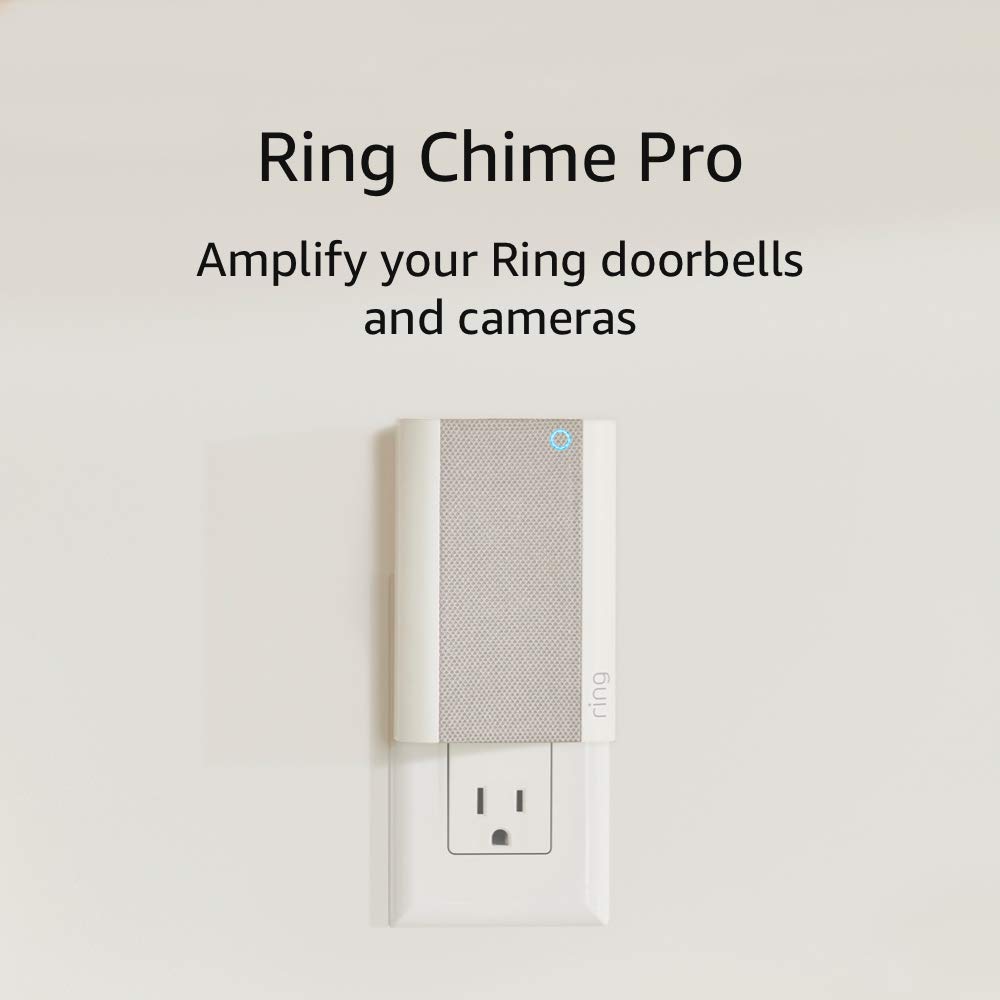
Ring Chime Pro
A plug-in chime and Wi-Fi extender for Ring devices, it provides audible alerts and a limited 2000 sq. ft. signal boost for Ring cameras and doorbells.
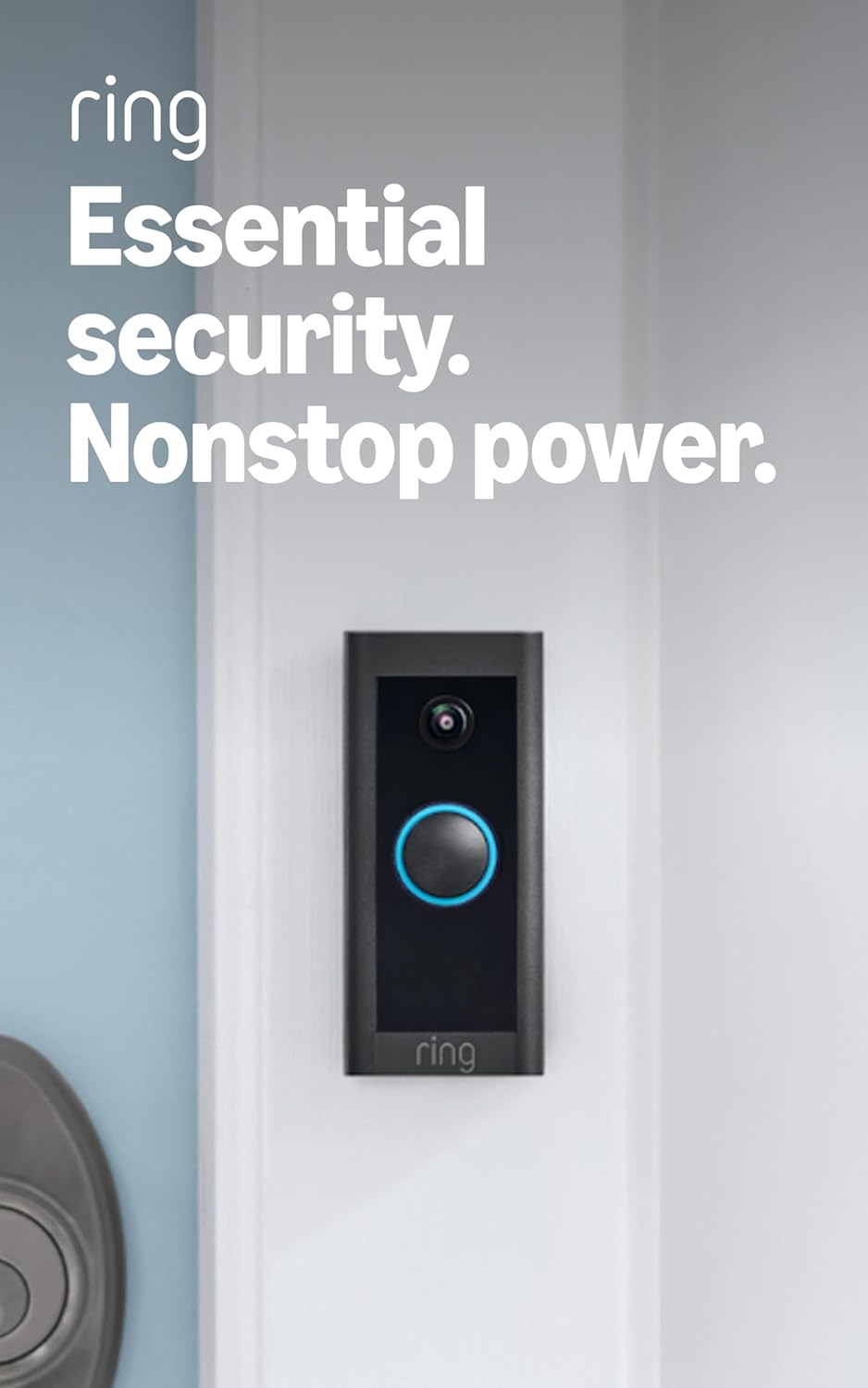
Ring Video Wired Doorbell (newest model), Home or business security, Two-Way Talk, advanced motion detection, HD camera and real-time alerts to monitor your front door (wiring required)
This 1080p wired doorbell delivers real-time alerts and two-way talk for front door monitoring, requiring existing wiring.