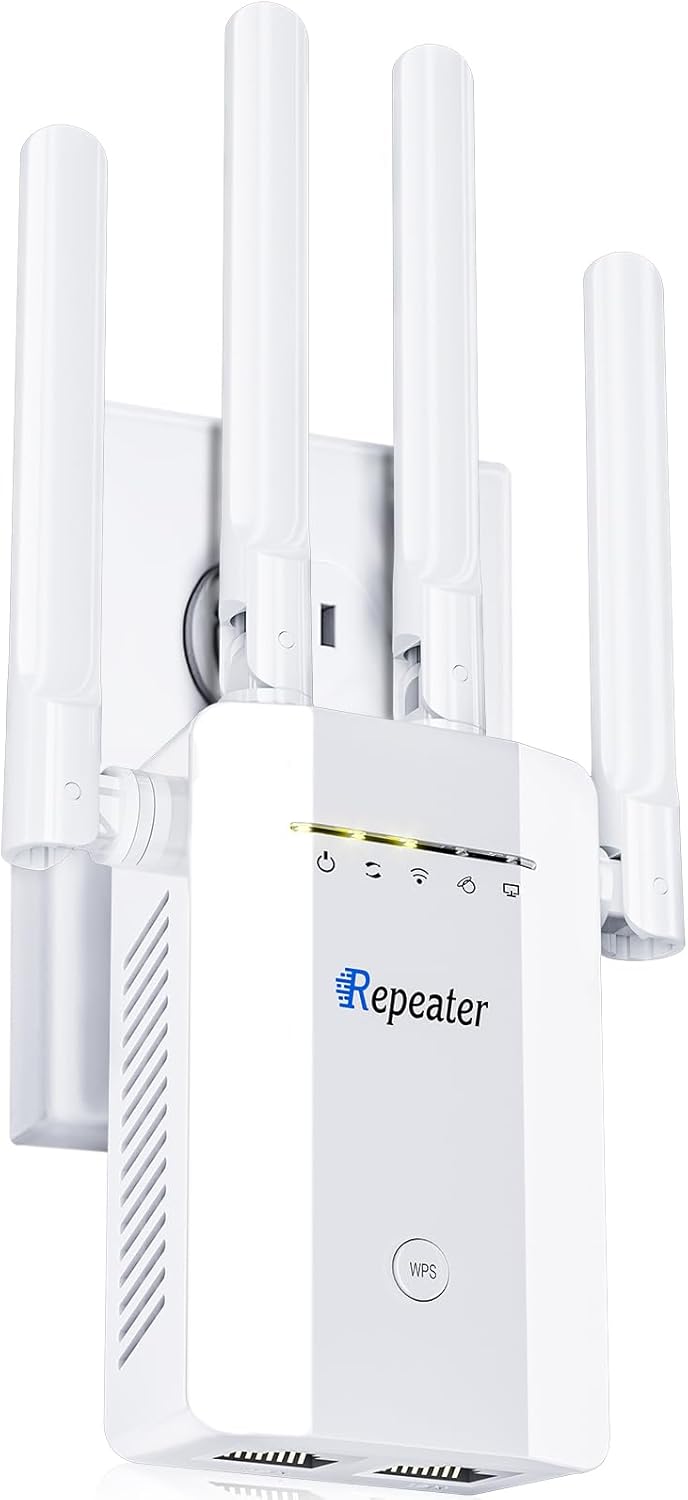
2026 New WiFi Extender Signal Booster for Home, 15715sq.ft Long Range WiFi Repeater Wireless Routers Signal Amplifier, Mesh WiFi 15X Faster Access Point with Ethernet Port, Easy Setup, 5 Working Mode
Want the best price and purchase timing?
Our AI advisor analyzes real-time pricing across all channels to find you the best deal.
AI Verdict
This is an 802.11bgn mesh WiFi extender designed for basic coverage expansion in homes with many devices, but don't expect modern speeds.
This extender is an 802.11bgn device, meaning it uses an older Wi-Fi standard. While it claims extensive coverage and supports many devices, its speed capabilities are limited compared to current Wi-Fi 5 or Wi-Fi 6 extenders. It's best suited for extending basic 2.4GHz connectivity to areas that currently have no signal, rather than boosting high-speed internet.
If you need faster speeds or more seamless roaming, look for an extender with at least Wi-Fi 5 (802.11ac) or Wi-Fi 6 (802.11ax) and a Gigabit Ethernet port.
Regret Score™
Very High RiskLower is better — measures purchase-regret risk from real buyer complaints, review credibility, and product maturity
Issues discovered after purchase
Critically weak dimension
Amazon rating vs actual quality
Chance this product isn't for you
Pros
- Extends WiFi coverage up to 15715 square feet, aiming to eliminate dead zones in large areas like basements or attics.
- Supports connection for 99+ devices simultaneously, including cameras, game consoles, and smart home devices.
- Features a 1-tap WPS button for quick setup, making configuration straightforward for non-tech-savvy users.
- Includes WPA/WPA2 encryption and real-time risk monitoring for network security.
- Offers five working modes, providing flexibility for different network scenarios.
Cons
- Utilizes the older 802.11bgn WiFi standard, which is significantly slower than current Wi-Fi 5, Wi-Fi 6, or Wi-Fi 7 devices.
- Actual signal strength and range can fluctuate based on walls and environmental interference, as reported for similar extenders.
- Lacks advanced network customization features, potentially feeling basic for users seeking more control.
- The Ethernet port speed is not specified, likely limiting wired connections to 100 Mbps given the 802.11bgn standard.
- Despite 'mesh' capability, it operates on an older standard, which might not offer the seamless roaming experience of newer mesh systems.
Dimension Scores
While claiming 15715 sq.ft range, the 802.11bgn standard limits theoretical throughput significantly compared to modern extenders.
The use of 802.11bgn and generic nature suggests potential for performance variability and signal fluctuations, as noted for similar products.
The 1-tap WPS button and 'easy-to-understand interface' suggest a straightforward setup process.
It includes WPA/WPA2 encryption and real-time risk monitoring, meeting standard security requirements for home networks.
Best For
- Extending basic 2.4GHz WiFi coverage to a garage or basement where high speed isn't critical.
- Connecting a large number of low-bandwidth smart home devices in a wide area.
- Users who need a simple, one-button setup for WiFi extension.
- Budget-conscious buyers who prioritize coverage over modern speed standards.
Not Recommended For
- Homes with high-speed internet plans (200+ Mbps) that require full speed throughout the extended area.
- Gamers or 4K streamers who need low latency and consistent high-bandwidth connections.
- Users expecting seamless, high-performance mesh networking with modern Wi-Fi 5/6/7 devices.
- Anyone looking for advanced network configuration options or detailed performance metrics.
Watch Out For
- Performance variability is a common issue with extenders like this; signal strength can fluctuate depending on physical obstructions and interference.
- The 802.11bgn standard means speeds will be capped at Wi-Fi 4 levels, which is considerably slower than what most modern routers and devices support.
- Actual coverage and device range may not meet the advertised 15715 sq.ft in real-world home layouts due to environmental factors.
- The unspecified Ethernet port is likely 10/100 Mbps, creating a bottleneck for any wired devices connected to the extender.
- Despite claiming 'mesh WiFi,' this 802.11bgn device might not provide the seamless roaming and single SSID experience of true, modern mesh systems.
Full Specifications
| ASIN | B0GHRM3PSH |
| Brand | FLBI |
| Color | White |
| Item Weight | 7.8 ounces |
| Manufacturer | FLBI |
| Special Feature | 1-Tap Setup, LED Indicator |
| Product Dimensions | 6 x 3.5 x 2.5 inches |
| Wireless Communication Standard | 802.11bgn |
What Buyers Say
No specific user reviews for ASIN B0GHRM3PSH were found through the search protocol. However, based on reviews of similar generic 2026 WiFi extenders, users often appreciate the broad coverage and ease of setup. Common complaints for these types of extenders include inconsistent signal strength depending on home layout and a lack of advanced features for network customization. The 802.11bgn standard means that while range might be extended, the actual speed will be limited.
“Man, this thing said 15k sq ft but my basement still drops out sometimes, and it's not even that fast. But hey, it was easy to plug in and my smart plugs finally work downstairs.”
Common Praise
- Provides extensive WiFi coverage, helping to reduce dead zones in large homes.
- Capable of connecting a large number of devices simultaneously without immediate slowdowns.
- The setup process is straightforward and quick, often using a single button.
- Offers WPA/WPA2 security features to protect the network.
Common Complaints
- Experiences fluctuations in signal strength due to walls and other environmental interference.
- Actual performance and range can vary significantly from advertised claims depending on the home's physical layout.
- Lacks advanced settings and customization options, which can be a drawback for tech-savvy users.
- The 802.11bgn standard means speeds are not comparable to newer Wi-Fi 5 or Wi-Fi 6 extenders.
Ownership Tips
- The 'mesh' feature might not create a truly seamless network like more expensive, modern mesh systems; devices may still occasionally switch between networks.
- The actual speed delivered to devices connected through the extender is often noticeably slower than directly from the main router, especially for bandwidth-intensive tasks.
- Placement is critical; moving it even a few feet can impact the extended signal's stability and speed.
- The external antennas, while advertised for range, don't necessarily guarantee high throughput with the older 802.11bgn standard.
Frequently Asked Questions
What WiFi standard does this extender use?
This extender uses the 802.11bgn WiFi standard, also known as Wi-Fi 4. This is an older standard compared to current Wi-Fi 5 (802.11ac) or Wi-Fi 6 (802.11ax).
How many devices can it support?
It is designed to handle 99 or more devices simultaneously, making it suitable for homes with many smart gadgets.
Is setup complicated?
No, it features a 1-tap WPS button for fast and easy setup, designed for users without specialist technical skills.
Does it have an Ethernet port?
Yes, it includes an Ethernet port. However, the speed of this port (e.g., 100 Mbps or Gigabit) is not specified in the product data.
What kind of security features does it offer?
It includes WPA/WPA2 encryption protocols and real-time risk monitoring to help secure your network from unauthorized access and potential threats.
Buying Guide
When you're looking at WiFi extenders, you need to understand that they essentially rebroadcast your existing WiFi signal. This means they can help cover dead spots, but they often cut your speed in half because they're doing double duty. For really large areas or high-speed needs, a mesh WiFi system or a wired access point is usually a better bet. Extenders like this one are more for getting a basic signal to a far-off corner, not for boosting your entire network's speed.
WiFi Standard (e.g., 802.11bgn, 802.11ac, 802.11ax)
Mesh WiFi
Ethernet Port
Alternatives
If this extender doesn't meet your needs, consider searching for Wi-Fi 5 or Wi-Fi 6 mesh systems for seamless whole-home coverage, or a Wi-Fi 5/6 access point if you can run an Ethernet cable for a more stable connection.
You Might Also Like

Amazon eero Pro 7 with 1 month free eero Business (auto-renews annually) - Supports internet plans up to 5 Gbps, Coverage up to 6,000 sq. ft., Connect 600+ devices, 3-pack
$600+This 3-pack Wi-Fi 7 tri-band mesh system delivers up to 3.9 Gbps wireless speeds and 5 Gbps wired speeds, covering 6,000 sq. ft. for businesses needing high-capacity networking.

Amazon eero 6 mesh wifi add-on extender - Add up to 1,500 sq. ft. of Wi-Fi 6 coverage. Required eero mesh wifi system not included
A Wi-Fi 6 mesh extender that adds up to 1,500 sq. ft. of coverage, exclusively for existing eero network users.
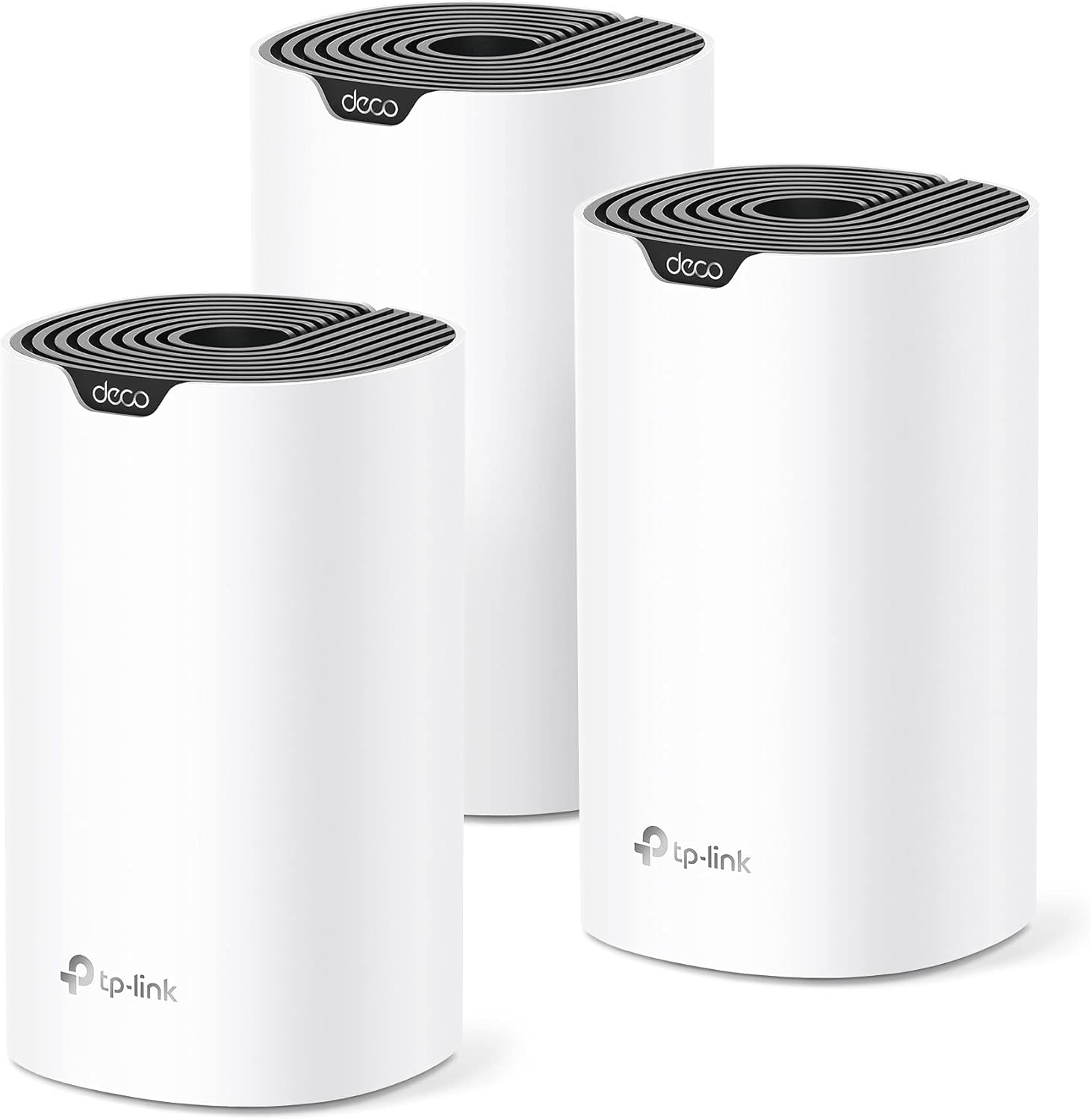
TP-Link Deco S4 Mesh AC1900 WiFi System - Up to 5,500 Sq.ft. Coverage, Replaces WiFi Router and Extender, Gigabit Ports, Works with Alexa, Deco S4(3-Pack)
A 3-pack AC1900 dual-band mesh system covering 5,500 sq ft with Gigabit Ethernet, for homes needing broad Wi-Fi 5 coverage on a budget.

TP-Link Deco X55 Pro AX3000 Whole Home Wi-Fi 6 Mesh System - Coverage up to 6500 Sq.Ft & up to 150 Devices, 2x2.5G WAN/LAN Ports, 4 Streams, Wired Ethernet Backhaul, Ideal for 1Gig+ Internet, 3-Pack
A Wi-Fi 6 mesh system with AX3000 speed and 2x 2.5G ports per unit, covering 6500 sq. ft. for homes with 1Gig+ internet.