
Gen 3 Wi-Fi Router
Want the best price and purchase timing?
Our AI advisor analyzes real-time pricing across all channels to find you the best deal.
AI Verdict
A Wi-Fi 6, tri-band router with two Ethernet ports and Starlink mesh capability, best for Starlink users needing an upgrade or basic home coverage.
This router is a solid upgrade for Starlink users, bringing Wi-Fi 6 and much-needed Ethernet ports. However, its range can be inconsistent for some users, and its proprietary mesh system means you're locked into Starlink's hardware for expansion, which might not be enough for larger or more complex home layouts. Many users find themselves needing to add more mesh nodes or bypass it entirely for a third-party system.
If you need more than two wired connections or broader, more consistent Wi-Fi coverage across a large or challenging space, look for routers with more LAN ports or a more robust, non-proprietary mesh system.
Regret Score™
Very High RiskLower is better — measures purchase-regret risk from real buyer complaints, review credibility, and product maturity
Issues discovered after purchase
Critically weak dimension
Amazon rating vs actual quality
Chance this product isn't for you
Pros
- Features 802.11ax (Wi-Fi 6) technology for faster speeds and better range compared to previous generations.
- Offers tri-band frequency, which improves mesh performance by dedicating a channel for backhaul.
- Includes two latching Ethernet LAN ports with removable covers, addressing a common complaint from Gen 2 users.
- IP56 rated for water resistance, allowing for more flexible placement options.
- Compatible with other Starlink routers (Gen 2, Gen 3, Router Mini, Starlink Mini Kit) for mesh expansion.
- Reported to provide strong Wi-Fi signal up to 120 feet away in a metal shop for some users.
Cons
- User experiences with Wi-Fi range are inconsistent, with some reporting 'awful range' especially with blockages.
- Not compatible with third-party mesh systems, limiting options for advanced or existing non-Starlink setups.
- Only two Ethernet LAN ports, which can be restrictive for users with multiple wired devices.
- Some users find the router 'very basic' and opt to bypass it for more feature-rich third-party routers.
- Requires a Starlink Ethernet Adapter for wired connection to a Gen 2 router, adding an extra cost.
Dimension Scores
It features Wi-Fi 6 and tri-band for better throughput and is claimed to cover 2000 sq ft, but user reports on actual range are mixed, with some finding it 'awful'.
While some users report consistent performance, others experience issues with range and signal consistency, sometimes requiring mesh nodes or bypassing the router.
Users generally find the setup user-friendly, and it integrates well within the Starlink app ecosystem.
The router supports WPA2 security, but advanced features like built-in VPN clients, anti-malware tools, or robust parental controls are not specified.
Best For
- Existing Starlink users upgrading from Gen 1 or Gen 2 routers who need Wi-Fi 6 and wired connectivity.
- Homes requiring basic mesh networking within the Starlink ecosystem for coverage up to 2000 square feet per router.
- Users in rural areas where Starlink is the primary internet provider and a water-resistant router is beneficial.
- Individuals who value a user-friendly setup and app experience.
Not Recommended For
- Large homes or buildings with thick walls that require extensive, high-performance mesh coverage beyond 2000 square feet per node.
- Users who already own or prefer third-party mesh Wi-Fi systems, as this router does not integrate with them.
- Power users needing more than two Ethernet LAN ports for wired connections or advanced router features like VPN clients or extensive QoS.
Watch Out For
- Wi-Fi range can be 'pretty damn awful' with blockages, leading some users to need additional mesh nodes or bypass the router entirely.
- Only two Ethernet LAN ports are available, which might necessitate an external switch for multiple wired devices.
- Not compatible with third-party mesh systems, forcing users to stick with Starlink's proprietary mesh or bypass the router.
- Some devices may require separating the 2.4 GHz and 5 GHz Wi-Fi networks for proper functionality.
- Performance can vary depending on location and gateway assignment, impacting overall speed and reliability.
Full Specifications
| ASIN | B0F2Y91QZL |
| Brand | Starlink |
| Color | White |
| Series | STARLINK Gen 3 Mesh Wi-Fi 6 Router |
| Model Name | STARLINK Gen 3 Mesh Wi-Fi 6 Router |
| Item Weight | 1.25 pounds |
| Manufacturer | STARLINK |
| Wireless Type | 802.11ax |
| Special Feature | Internet Security, Parental Control |
| Operating System | Linux |
| Item model number | 02633001 |
| Compatible Devices | Gaming Console, Personal Computer, Smart Television, Smartphone, Tablet |
| Product Dimensions | 14.25 x 6 x 4 inches |
| Included Components | 60W Power Supply Unit and Cable, Ethernet Cable, Gen 3 Router, Port Plug (2X) |
| Frequency Band Class | Tri-Band |
| Item Dimensions LxWxH | 14.25 x 6 x 4 inches |
| Connectivity Technology | Wi-Fi |
| Recommended Uses For Product | Business, Gaming, Home |
| Wireless Communication Standard | 802.11ax |
What Buyers Say
The Gen 3 Wi-Fi Router has sparked mixed reactions among Starlink users, primarily due to inconsistent Wi-Fi range despite its Wi-Fi 6 and tri-band capabilities. Many appreciate the return of two Ethernet ports, a notable improvement over the Gen 2 model. However, a significant number of users find themselves needing to supplement or entirely replace the Starlink router with third-party mesh systems to achieve satisfactory whole-home coverage, especially in larger or older homes with thick walls.
“Honestly, I got this 'cause my old Starlink router was struggling, and the Wi-Fi 6 is faster, but I still had to buy another mesh system for my whole house, the range just isn't cutting it through all these walls.”
Common Praise
- The inclusion of two Ethernet LAN ports is a welcome addition for wired connections.
- Improved Wi-Fi speeds and performance over previous Gen 1 and Gen 2 Starlink routers.
- Easy and straightforward setup process through the Starlink app.
- Wi-Fi 6 and tri-band support provide a more modern and efficient wireless experience.
- Some users report surprisingly good range, even reaching outside their homes or into metal buildings.
Common Complaints
- Inconsistent and sometimes 'awful' Wi-Fi range, particularly when obstructions are present.
- Many users resort to bypassing the Starlink router for third-party mesh systems to get adequate coverage.
- The router is considered 'very basic' in terms of advanced features compared to dedicated networking hardware.
- Limited to only two Ethernet ports, which can be insufficient for power users.
- Some devices may struggle to connect unless the 2.4 GHz and 5 GHz bands are manually separated.
Ownership Tips
- You might need to invest in additional Starlink mesh nodes or a separate mesh system if your home is large or has many obstructions.
- Consider separating the 2.4 GHz and 5 GHz Wi-Fi bands in the settings if you encounter connectivity issues with older smart home devices.
- For optimal performance, a wired connection to the router is recommended, especially for devices like gaming consoles or PCs.
- If you have a Gen 2 router and want a wired connection, you'll need to purchase the Starlink Ethernet Adapter separately.
Frequently Asked Questions
Does the Gen 3 Wi-Fi Router have Ethernet ports?
Yes, it comes with two latching Ethernet LAN ports with removable covers.
What Wi-Fi standard does the Gen 3 Router use?
It uses the latest 802.11ax (Wi-Fi 6) standard, offering improved speeds and efficiency.
Can I use this router with my existing mesh Wi-Fi system?
No, the Gen 3 Router is only compatible with other Starlink mesh systems (Gen 2, Gen 3, Router Mini, and Starlink Mini Kit), not third-party mesh systems.
What kind of Wi-Fi frequency does it support?
It supports tri-band frequency, which helps with data transmission and mesh performance.
Is the Gen 3 Router water resistant?
Yes, it is IP56 rated for water resistance.
What is the typical Wi-Fi coverage area?
The router is stated to cover around 2000 square feet (185 square meters) per router, though actual user experiences with range can vary.
Buying Guide
When you're looking at a Wi-Fi router, especially for a satellite internet system like Starlink, you're basically buying the brain of your home network. You need to think about how far the Wi-Fi signal needs to reach, how many devices will connect, and if you have anything that needs a super-fast, stable wired connection. Don't just look at the speed numbers; consider how well it handles your specific home layout and device count.
Wi-Fi Standard (802.11ax / Wi-Fi 6)
This is like the highway your data travels on. Wi-Fi 6 is the newest, fastest standard, meaning more lanes and higher speed limits for your devices. It's better at handling lots of devices at once without slowing down, like a well-managed freeway during rush hour.
Frequency (Tri-Band)
Think of this as having three separate radio channels instead of two. One channel is often dedicated to the router talking to its mesh nodes, leaving the other two free for your devices. This reduces congestion and makes your Wi-Fi feel faster and more responsive, especially in a mesh setup.
Mesh Capability
If your house is big or has dead spots, mesh is your friend. It lets you add more 'access points' that all work together under one Wi-Fi name, like having multiple small Wi-Fi stations seamlessly covering every corner of your home, instead of just one strong signal from a single point.
Ethernet Ports
These are physical plugs for network cables. Anything you can connect with a cable (like a gaming PC, smart TV, or network storage) will get the fastest, most stable connection possible, bypassing any Wi-Fi interference. More ports mean more devices can get this premium connection.
Alternatives
If this router doesn't cut it, look for models with more than two Ethernet ports, or consider a dedicated mesh Wi-Fi system that offers broader coverage and more advanced features, even if it means bypassing the Starlink router.
You Might Also Like

Amazon eero Pro 7 with 1 month free eero Business (auto-renews annually) - Supports internet plans up to 5 Gbps, Coverage up to 6,000 sq. ft., Connect 600+ devices, 3-pack
$600+This 3-pack Wi-Fi 7 tri-band mesh system delivers up to 3.9 Gbps wireless speeds and 5 Gbps wired speeds, covering 6,000 sq. ft. for businesses needing high-capacity networking.

Amazon eero 6 mesh wifi add-on extender - Add up to 1,500 sq. ft. of Wi-Fi 6 coverage. Required eero mesh wifi system not included
A Wi-Fi 6 mesh extender that adds up to 1,500 sq. ft. of coverage, exclusively for existing eero network users.
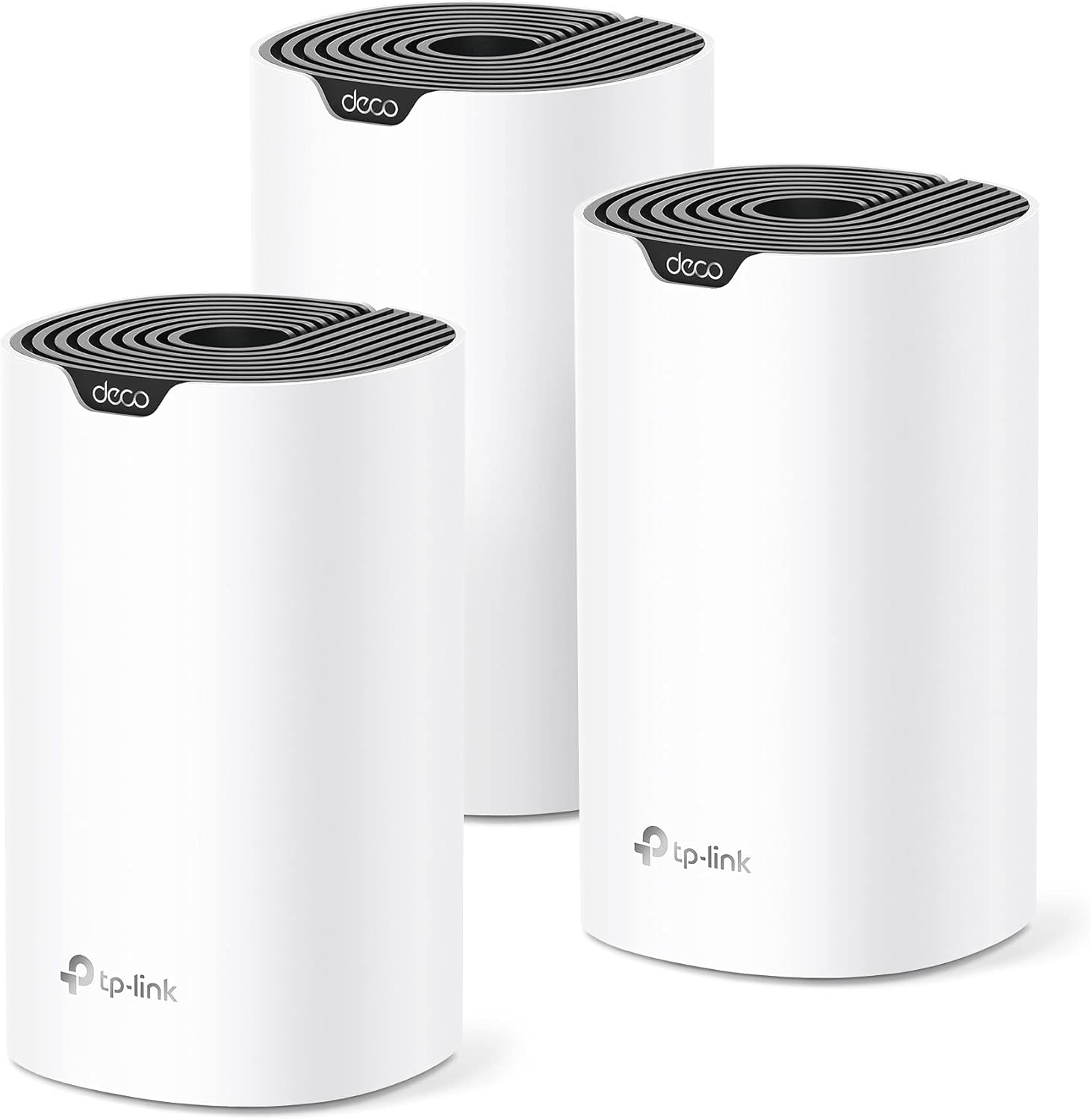
TP-Link Deco S4 Mesh AC1900 WiFi System - Up to 5,500 Sq.ft. Coverage, Replaces WiFi Router and Extender, Gigabit Ports, Works with Alexa, Deco S4(3-Pack)
A 3-pack AC1900 dual-band mesh system covering 5,500 sq ft with Gigabit Ethernet, for homes needing broad Wi-Fi 5 coverage on a budget.

TP-Link Deco X55 Pro AX3000 Whole Home Wi-Fi 6 Mesh System - Coverage up to 6500 Sq.Ft & up to 150 Devices, 2x2.5G WAN/LAN Ports, 4 Streams, Wired Ethernet Backhaul, Ideal for 1Gig+ Internet, 3-Pack
A Wi-Fi 6 mesh system with AX3000 speed and 2x 2.5G ports per unit, covering 6500 sq. ft. for homes with 1Gig+ internet.