
New TravlFi JourneyGo LTE RV WiFi Hotspot | RV Internet with Multiple Networks, Pay As You Go and No Contracts | Portable Internet for Travel, Motorhomes and Campers
Want the best price and purchase timing?
Our AI advisor analyzes real-time pricing across all channels to find you the best deal.
AI Verdict
This 802.11n, single-band LTE hotspot offers 16-hour battery life and pay-as-you-go internet for up to 10 devices, best for casual travelers.
This hotspot is a situational fit for travelers who prioritize portability and flexible data plans over cutting-edge speed and Wi-Fi standards. Its 802.11n single-band Wi-Fi and reported network-sticking issues mean it won't deliver top-tier performance, but the multi-network capability and 16-hour battery life are useful for intermittent use on the go.
If you need faster speeds, dual-band Wi-Fi, or more consistent network switching, look for hotspots with 802.11ac/ax Wi-Fi and explicit 5G support.
Regret Score™
High RiskLower is better — measures purchase-regret risk from real buyer complaints, review credibility, and product maturity
Issues discovered after purchase
Critically weak dimension
Amazon rating vs actual quality
Chance this product isn't for you
Pros
- Automatically connects to the strongest available cellular signal across multiple major networks, like AT&T, T-Mobile, and US Cellular.
- Offers flexible pay-as-you-go data plans from 2 GB to unlimited, without contracts or activation fees.
- Features a 16-hour battery life, allowing for extended use without needing to recharge frequently.
- Supports connectivity for up to 10 devices simultaneously, including PCs, smartphones, and smart TVs.
- Compact design fits in a pocket or hand, making it highly portable for travel.
- Can function as a portable power bank to charge other devices.
Cons
- Uses older 802.11n Wi-Fi standard and is single-band, which limits potential speeds and can be prone to interference [Product Data].
- Some users report the device can stick to a weaker network (like T-Mobile LTE) even when a stronger carrier signal is available, resulting in download speeds below 5 Mbps.
- Real-world average download speeds are around 20 Mbps, which may not be sufficient for heavy streaming or large file uploads.
- Not designed for full-time RV living or heavy internet users who require consistently high speeds or 5G connectivity.
- Some users have reported battery life closer to 8 hours in real-world use, despite advertised 16 hours.
Dimension Scores
The device uses older 802.11n single-band Wi-Fi and averages around 20 Mbps download speed, which is below current category averages for performance [Product Data, cite: 3].
While it aims for multi-network coverage, user reports indicate it can sometimes stick to weaker networks, leading to inconsistent and slow connections.
Setup is reported as easy, with e-SIM technology eliminating physical SIM cards and offering flexible, commitment-free data plan management.
It provides a personal, private Wi-Fi network, which is a significant security advantage over relying on public Wi-Fi connections [Product Data].
Best For
- Weekend campers needing internet for basic browsing and email.
- RV travelers who use internet occasionally for navigation and light streaming.
- Families on road trips needing to connect multiple devices for entertainment.
- Individuals seeking a private Wi-Fi network to avoid public hotspots [Product Data].
Not Recommended For
- Full-time RVers or digital nomads requiring consistent, high-speed internet for demanding work tasks or gaming.
- Users in extremely remote areas with no cellular signal, as the device requires a cellular connection to function [Product Data, cite: 4].
- Anyone expecting 5G speeds or the latest Wi-Fi 6/6E standards.
Watch Out For
- The device can get stuck on a specific cellular network, like T-Mobile, even when other carriers offer better signal strength, leading to download speeds as low as 5 Mbps.
- Some users have experienced device malfunctions where it displays a solid light and vibrates every 6-7 seconds, becoming unresponsive.
- While advertised with a 16-hour battery life, some real-world tests show it lasting closer to 8 hours, which might not cover a full day of heavy use.
- Despite multi-network claims, one user reported the device never connected to US Cellular during a trip, limiting its network flexibility.
Full Specifications
| ASIN | B0F2TS9JG4 |
| Brand | TravlFi |
| Color | Grey |
| Model Name | JourneyGo |
| Item Weight | 9.9 ounces |
| Manufacturer | TravlFi |
| Special Feature | LED Indicator |
| Item model number | 700-023 |
| Compatible Devices | Personal Computer, Smart Television, Smartphone, Tablet |
| Package Dimensions | 5.98 x 4.76 x 1.81 inches |
| Included Components | Hotspot, USB cable |
| Frequency Band Class | Single-Band |
| Connectivity Technology | LTE, Wi-Fi |
| Recommended Uses For Product | Business, Home, Travel |
| Wireless Communication Standard | 802.11n |
What Buyers Say
The TravlFi JourneyGo gets a lot of buzz for its promise of multi-network coverage, but some users have found it doesn't always live up to that, occasionally clinging to a weak T-Mobile signal even when other carriers are stronger, leading to frustratingly slow speeds under 5 Mbps. However, its portability and the flexibility of pay-as-you-go data plans are frequently praised, making it a convenient option for those who don't need constant, high-bandwidth internet. The 16-hour battery life is a big plus for long days on the road, though some have noted it can be closer to 8 hours in practice.
“Man, I bought this thing thinking I'd have internet everywhere, but it just sits on T-Mobile sometimes even when my phone on AT&T has full bars and this thing is barely loading a webpage. The pay-as-you-go is cool, but what's the point if it's so slow? I just needed it for emails and maps, but even that's a struggle sometimes.”
Common Praise
- Easy setup and activation process.
- Ability to choose from a variety of pay-as-you-go data plans, including unlimited options.
- Compact size that fits easily in a pocket or bag, making it highly portable.
- Provides a private Wi-Fi network, avoiding the security risks of public Wi-Fi [Product Data].
- Can connect up to 10 devices simultaneously.
- Functions as a power bank to charge other devices.
Common Complaints
- Device sometimes fails to switch to the strongest available network, sticking to a weaker one like T-Mobile, resulting in very slow speeds.
- Not suitable for heavy internet usage, such as extensive streaming or gaming, due to limited speeds and older Wi-Fi standard.
- Some users reported battery life being closer to 8 hours instead of the advertised 16 hours.
- Occasional device malfunctions, such as continuous vibrating and unresponsiveness.
Ownership Tips
- The actual battery life can vary significantly based on usage and signal strength, often falling short of the 16-hour claim.
- You might need to manually restart the device or move to a different location to encourage it to switch to a stronger cellular network if speeds are slow.
- While it supports multiple networks, its internal logic for switching isn't always optimal, potentially leaving you on a weaker signal.
- The 802.11n Wi-Fi standard means you won't get the fastest local network speeds, even if the cellular connection is strong [Product Data].
Frequently Asked Questions
What kind of data plans are available for the TravlFi JourneyGo?
You can choose from pay-as-you-go data plans ranging from 2 GB up to unlimited data, with no contracts or long-term commitments.
How does the TravlFi JourneyGo get internet coverage?
It uses e-SIM technology to automatically connect to the strongest available signal across multiple nationwide cellular networks in the U.S. [Product Data, cite: 2, 5].
Can I use this device to charge my phone?
Yes, the TravlFi JourneyGo can also function as a portable power bank to charge other devices like your smartphone.
What kind of Wi-Fi standard does it use?
The device uses the 802.11n Wi-Fi standard and operates on a single band [Product Data].
How many devices can connect to the hotspot at once?
The TravlFi JourneyGo can connect up to 10 devices simultaneously, including personal computers, smartphones, tablets, and smart televisions [cite: 1, 2, Product Data].
Buying Guide
When you're looking at a portable hotspot like this, you need to think about how you'll actually use it. It's not about having 'internet everywhere' but having 'internet where there's a good cellular signal.' The big deal here is the 'multi-network' feature, which means it can hop between different cellular providers to find the best signal, but sometimes it doesn't do that perfectly. Also, 'pay-as-you-go' is awesome because you're not locked into a contract, so you only pay when you need it.
LTE Connectivity
This is how the hotspot gets its internet from cell towers, just like your phone. LTE is 4G, so it's fast enough for most basic tasks but not as blazing as 5G.
802.11n Wi-Fi Standard
This is how your devices connect to the hotspot. 802.11n is an older Wi-Fi standard, like an older highway. It works, but it's not as fast or efficient as newer standards like 802.11ac or 802.11ax (Wi-Fi 6), especially if you have many devices connected.
Single-Band Frequency
This means the hotspot only broadcasts on the 2.4 GHz Wi-Fi frequency. Think of it as a single lane on that highway. It has a longer range but can get congested easily, especially in crowded areas, leading to slower speeds for your connected devices.
Alternatives
If you need faster speeds, look for hotspots with 5G cellular connectivity and at least 802.11ac (Wi-Fi 5) or 802.11ax (Wi-Fi 6) dual-band Wi-Fi for better performance and less interference.
You Might Also Like

Amazon eero Pro 7 with 1 month free eero Business (auto-renews annually) - Supports internet plans up to 5 Gbps, Coverage up to 6,000 sq. ft., Connect 600+ devices, 3-pack
$600+This 3-pack Wi-Fi 7 tri-band mesh system delivers up to 3.9 Gbps wireless speeds and 5 Gbps wired speeds, covering 6,000 sq. ft. for businesses needing high-capacity networking.

Amazon eero 6 mesh wifi add-on extender - Add up to 1,500 sq. ft. of Wi-Fi 6 coverage. Required eero mesh wifi system not included
A Wi-Fi 6 mesh extender that adds up to 1,500 sq. ft. of coverage, exclusively for existing eero network users.
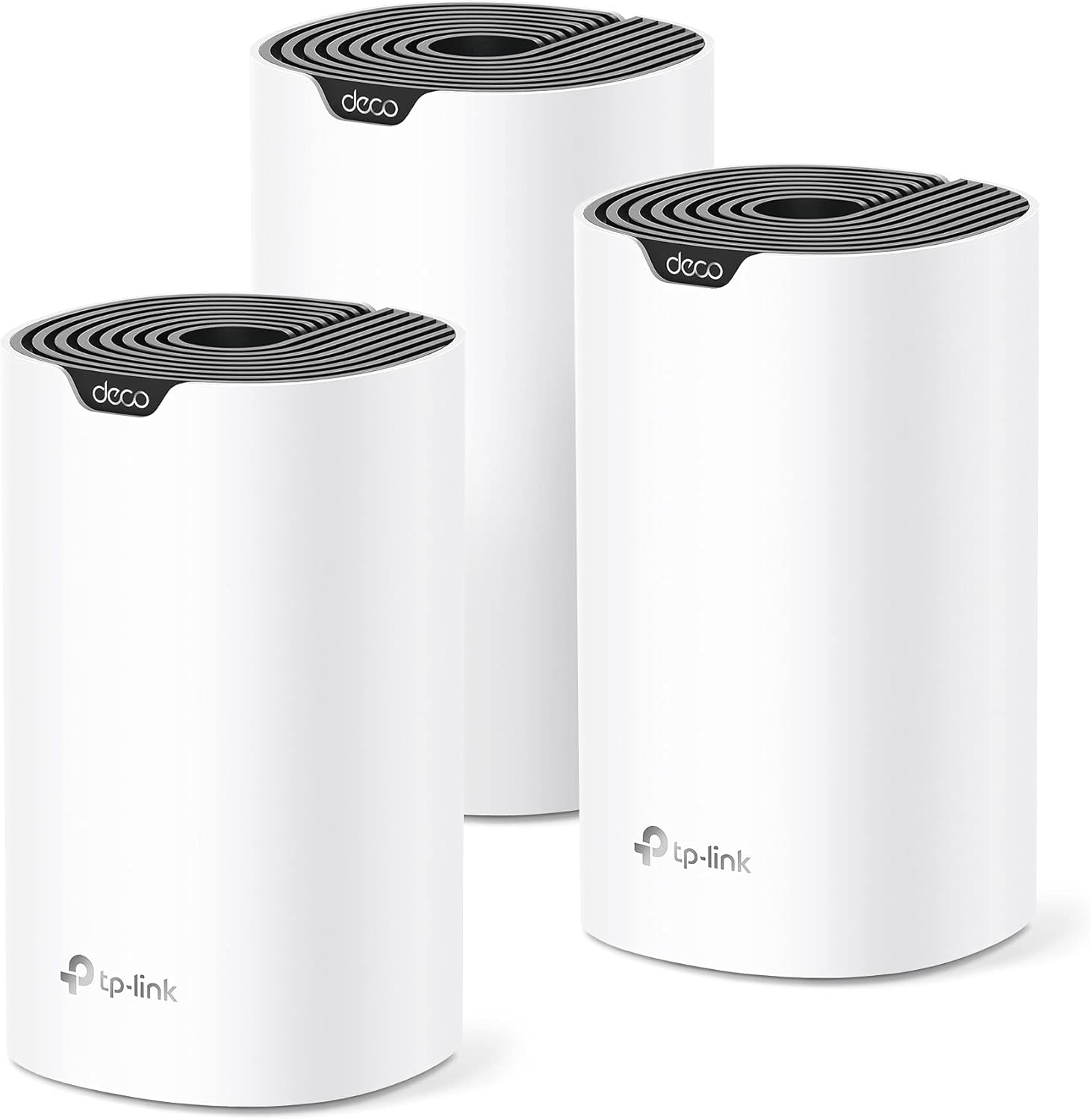
TP-Link Deco S4 Mesh AC1900 WiFi System - Up to 5,500 Sq.ft. Coverage, Replaces WiFi Router and Extender, Gigabit Ports, Works with Alexa, Deco S4(3-Pack)
A 3-pack AC1900 dual-band mesh system covering 5,500 sq ft with Gigabit Ethernet, for homes needing broad Wi-Fi 5 coverage on a budget.

TP-Link Deco X55 Pro AX3000 Whole Home Wi-Fi 6 Mesh System - Coverage up to 6500 Sq.Ft & up to 150 Devices, 2x2.5G WAN/LAN Ports, 4 Streams, Wired Ethernet Backhaul, Ideal for 1Gig+ Internet, 3-Pack
A Wi-Fi 6 mesh system with AX3000 speed and 2x 2.5G ports per unit, covering 6500 sq. ft. for homes with 1Gig+ internet.