
NETGEAR RS300-100NAR Nighthawk RS300 Tri-Band WiFi 7 Router, Wireless Speed Up to 9.3 Gbps, Covers Up to 2500 Sq. Ft., Black - Certified Refurbished
Want the best price and purchase timing?
Our AI advisor analyzes real-time pricing across all channels to find you the best deal.
AI Verdict
A Tri-Band WiFi 7 router with 9.3 Gbps speed and 2.5 Gbps WAN/LAN ports, best for single-floor homes up to 2,500 sq. ft. needing high-speed wired and wireless connectivity.
This router is a situational fit because its 9.3 Gbps WiFi 7 speeds and 2.5 Gbps wired ports are compelling for high-bandwidth use cases in smaller spaces. However, its lack of mesh expandability and reported firmware instability make it less suitable for larger homes or users prioritizing ease of use and consistent software experience.
If you need broader coverage or mesh capabilities, look for a WiFi 7 system that explicitly supports mesh networking.
Regret Score™
High RiskLower is better — measures purchase-regret risk from real buyer complaints, review credibility, and product maturity
Issues discovered after purchase
Critically weak dimension
Amazon rating vs actual quality
Chance this product isn't for you
Pros
- Achieves up to 9.3 Gbps wireless speeds across its Tri-Band (2.4GHz, 5GHz, 6GHz) configuration.
- Features one 2.5 Gbps WAN port and two 2.5 Gbps LAN ports for multi-gigabit wired connections.
- Provides WiFi coverage up to 2,500 sq. ft. with four internal antennas.
- Includes WPA3 encryption, guest WiFi, VPN support, and automatic firmware updates for network security.
- Equipped with a quad-core 2.0GHz processor for handling up to 100 devices.
- The 6GHz band maintains its range effectively across a single floor.
Cons
- Lacks mesh expandability, preventing the addition of access points for wider coverage.
- The 5GHz band experiences speed degradation at longer distances from the router.
- Does not include any 10 Gigabit Ethernet ports, limiting future-proofing for ultra-high-speed wired networks.
- Users report inconsistent performance from the Nighthawk app during setup and daily use.
- Firmware updates have been reported to brick devices for some users.
Dimension Scores
It delivers excellent top speeds up to 9.3 Gbps and covers 2,500 sq. ft., but the 5GHz band's range drops at longer distances.
Some users reported constant drops and lag after a few weeks, and firmware updates have been known to brick devices.
Setup is generally easy with the Nighthawk app, but the app itself can be inconsistent, and band steering can complicate device connections.
It includes WPA3, guest WiFi, VPN support, and automatic firmware updates, but one user reported issues with a 'Protection feature'.
Best For
- Single-floor apartments or homes up to 2,500 sq. ft. requiring high-speed WiFi 7 connectivity.
- Households with multiple devices simultaneously streaming 4K/8K video or engaging in online gaming.
- Users with multi-gigabit internet service plans (e.g., 2.5 Gbps) who want to maximize wired and wireless speeds.
- Connecting high-demand wired devices like gaming PCs or network-attached storage via 2.5 Gbps LAN ports.
Not Recommended For
- Multi-level homes or properties larger than 2,500 sq. ft. needing seamless whole-home WiFi coverage without dead zones.
- Users who require 10 Gigabit Ethernet ports for extreme wired network speeds.
- Those who prefer separate 2.4GHz and 5GHz network names, as this router combines them by default.
Watch Out For
- Firmware updates can render the device inoperable for some users, requiring factory resets or returns.
- The 5GHz WiFi band's performance drops significantly when devices are far from the router.
- The Nighthawk app used for setup and management is described as having inconsistent performance.
- The router does not allow individual DNS configurations for each WiFi network, which can be annoying for some users.
- One user reported that the 'Protection feature' (likely NETGEAR Armor) caused WiFi disconnections until disabled.
Full Specifications
| ASIN | B0F18YBPWP |
| Brand | NETGEAR |
| Color | black or white |
| Model Name | RS300 |
| Item Weight | 3.45 pounds |
| Antenna Type | Fixed |
| Manufacturer | Netgear |
| Special Feature | Guest Network, MU-MIMO, OFDMA, VPN, WPA3 |
| Item model number | RS300 |
| Compatible Devices | Personal Computer |
| Product Dimensions | 10.8 x 7.2 x 7 inches |
| Frequency Band Class | Tri-Band |
| Connectivity Technology | Ethernet, Wi-Fi |
| Wireless Communication Standard | 802.11ax |
What Buyers Say
This Nighthawk RS300, despite its promising WiFi 7 speeds, has some real-world quirks that make it a bit of a gamble. While it's fast for gaming and streaming, especially with its 2.5 Gbps wired ports, the 5GHz band struggles with distance, and the lack of mesh support is a bummer for larger spaces. The Nighthawk app isn't always reliable, and there are concerning reports of firmware updates bricking units. It's not a set-it-and-forget-it device for everyone.
“Man, this thing is fast when it works, but I swear the 5GHz drops off a cliff in my bedroom, and I almost bricked it with a firmware update last week. It's a headache sometimes, but the speeds are there.”
Common Praise
- Achieves very high wireless speeds, particularly for multi-gig internet connections.
- The 2.5 Gbps WAN and LAN ports provide fast wired connectivity for high-bandwidth devices.
- Handles multiple 4K streaming devices and large file transfers without issue.
- The 6GHz band offers effective range within a single floor.
- The physical design is compact and fanless.
Common Complaints
- The 5GHz WiFi signal weakens considerably when devices are further away from the router.
- The Nighthawk mobile app used for configuration and management is reported to be inconsistent.
- Some users experienced the router becoming unresponsive or 'bricked' after firmware updates.
- Lack of mesh WiFi capability means it can't be expanded for wider coverage.
- Does not allow for separate DNS settings per WiFi network.
Ownership Tips
- The combined 2.4GHz and 5GHz network name can cause older devices to struggle with connecting or choosing the optimal band.
- You might need to disable certain 'protection features' if you experience intermittent WiFi disconnections.
- The web interface for advanced settings feels dated and less intuitive than expected for a premium router.
- Even with WiFi 7, some devices might not fully utilize the speeds if they lack compatible hardware.
- Consider a wired connection for critical gaming or streaming devices to bypass potential WiFi inconsistencies.
Frequently Asked Questions
Does this router support mesh WiFi?
No, the NETGEAR RS300 does not support mesh expandability, meaning you cannot add satellite units to extend its coverage.
What kind of Ethernet ports does it have?
It has one 2.5 Gbps internet (WAN) port, two 2.5 Gbps LAN ports, and two 1 Gbps LAN ports for wired connections.
What is the maximum wireless speed?
The router offers wireless speeds up to 9.3 Gbps across its Tri-Band WiFi 7 configuration.
How much area does it cover?
It is designed to cover up to 2,500 sq. ft., making it suitable for apartments, condos, or smaller homes.
Can I separate the 2.4GHz and 5GHz WiFi bands?
By default, the router combines the 2.4GHz and 5GHz bands under a single network name, which can be problematic for devices expecting separate networks.
Buying Guide
When you're looking at a router like this, you need to think about your internet speed, your home's size, and how many devices you're connecting. A router's job is to take your internet connection and spread it around your home, both wirelessly and through cables. The 'Certified Refurbished' part means it's been inspected and repaired, but it's not brand new, so some minor cosmetic imperfections or past issues might be present.
WiFi 7 (802.11ax)
This is the latest WiFi standard, like getting the newest highway for your data. It means faster theoretical speeds up to 9.3 Gbps and better handling of many devices at once, but your devices also need to support WiFi 7 to get the full benefit.
Tri-Band
Think of this as having three separate lanes on that data highway (2.4GHz, 5GHz, and 6GHz). This helps reduce congestion, especially if you have a lot of devices, by letting them use different lanes. The 6GHz band is the newest and fastest, but has shorter range.
2.5 Gbps Ethernet Ports
These are faster wired connections than standard 1 Gbps ports. If you have a multi-gig internet plan (like 2 Gbps) or devices that can use more than 1 Gbps (like a high-end PC or NAS), these ports let you get the full speed potential, like a wider on-ramp to your data highway.
Alternatives
If you need whole-home coverage for a larger or multi-story house, look for a WiFi 7 mesh system. If you need even faster wired speeds for a home server or workstation, search for routers with 10 Gigabit Ethernet ports.
You Might Also Like

Amazon eero Pro 7 with 1 month free eero Business (auto-renews annually) - Supports internet plans up to 5 Gbps, Coverage up to 6,000 sq. ft., Connect 600+ devices, 3-pack
$600+This 3-pack Wi-Fi 7 tri-band mesh system delivers up to 3.9 Gbps wireless speeds and 5 Gbps wired speeds, covering 6,000 sq. ft. for businesses needing high-capacity networking.

Amazon eero 6 mesh wifi add-on extender - Add up to 1,500 sq. ft. of Wi-Fi 6 coverage. Required eero mesh wifi system not included
A Wi-Fi 6 mesh extender that adds up to 1,500 sq. ft. of coverage, exclusively for existing eero network users.
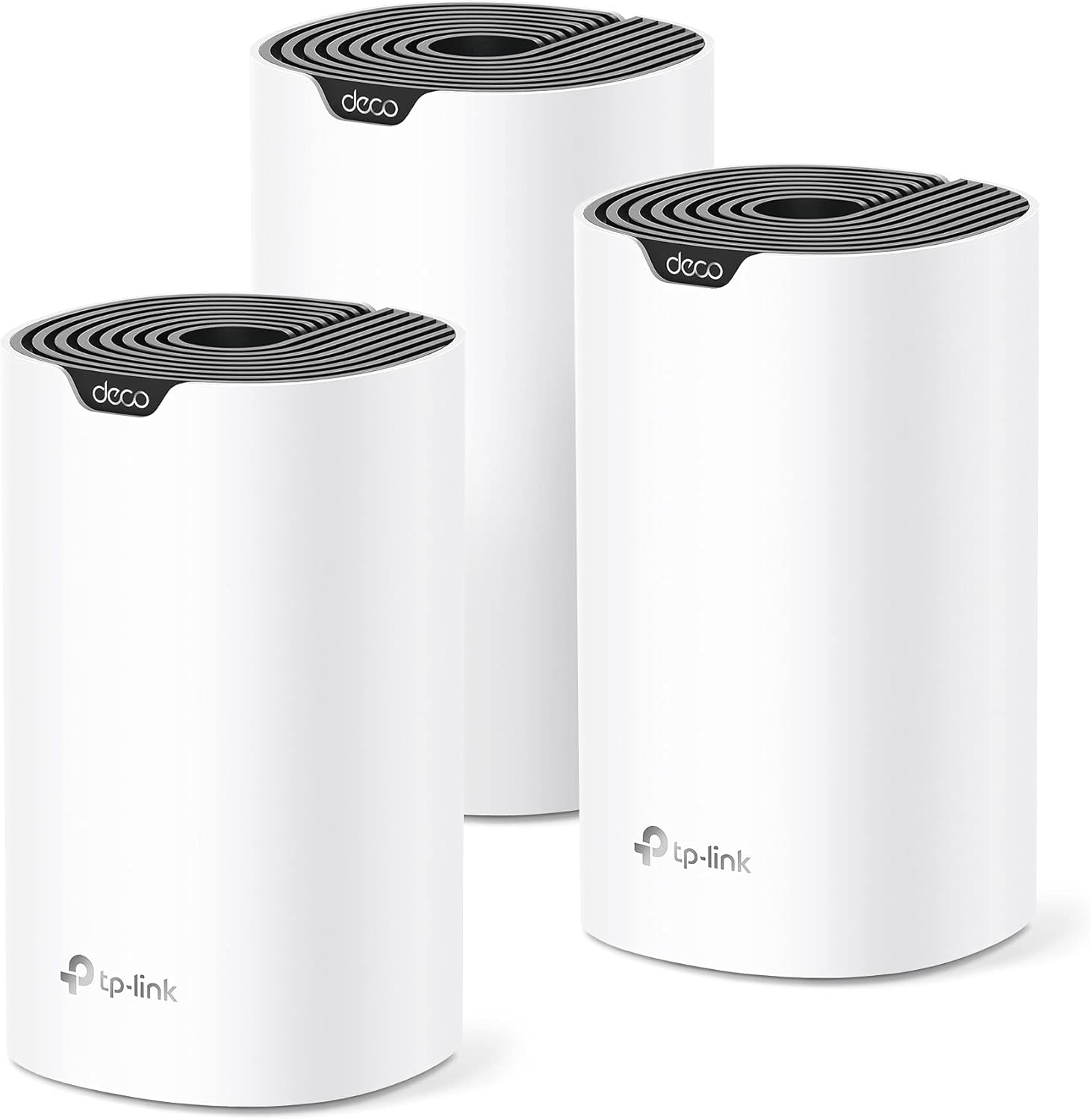
TP-Link Deco S4 Mesh AC1900 WiFi System - Up to 5,500 Sq.ft. Coverage, Replaces WiFi Router and Extender, Gigabit Ports, Works with Alexa, Deco S4(3-Pack)
A 3-pack AC1900 dual-band mesh system covering 5,500 sq ft with Gigabit Ethernet, for homes needing broad Wi-Fi 5 coverage on a budget.

TP-Link Deco X55 Pro AX3000 Whole Home Wi-Fi 6 Mesh System - Coverage up to 6500 Sq.Ft & up to 150 Devices, 2x2.5G WAN/LAN Ports, 4 Streams, Wired Ethernet Backhaul, Ideal for 1Gig+ Internet, 3-Pack
A Wi-Fi 6 mesh system with AX3000 speed and 2x 2.5G ports per unit, covering 6500 sq. ft. for homes with 1Gig+ internet.