
TP-Link Archer BE6500 Dual-Band Wi-Fi 7 Router (Archer BE400) | Dual 2.5 Gbps Ports USB 3.0 | Covers up to 2,400 Sq. ft and 90 Devices | Quad-core CPU| HomeShield, Private IoT, Free Expert Support
Want the best price and purchase timing?
Our AI advisor analyzes real-time pricing across all channels to find you the best deal.
AI Verdict
This is a dual-band Wi-Fi 7 router with dual 2.5 Gbps ports and 6.5 Gbps total bandwidth, covering up to 2,400 sq. ft. for future-proofing your home network.
This router is a strong contender for those specifically looking to future-proof their network with Wi-Fi 7 and leverage multi-gig wired connections. Its 2.5 Gbps ports are a step up from standard gigabit, but they don't fully unlock the theoretical 5GHz Wi-Fi 7 speeds, creating a slight bottleneck for the most demanding wireless-to-wired transfers.
If you need to fully utilize the 5764 Mbps 5GHz Wi-Fi 7 speeds for wired connections, look for a router with 10 Gbps LAN ports.
Regret Score™
Low RiskLower is better — measures purchase-regret risk from real buyer complaints, review credibility, and product maturity
Issues discovered after purchase
Critically weak dimension
Amazon rating vs actual quality
Chance this product isn't for you
Pros
- Supports the latest Wi-Fi 7 standard with MLO, Multi-RUs, and 4K-QAM for optimized performance on new devices like the iPhone 16 Pro and Samsung Galaxy S24 Ultra.
- Offers 6.5 Gbps total bandwidth (5764 Mbps on 5GHz, 688 Mbps on 2.4 GHz) across 6 streams for demanding tasks like 4K/8K streaming and AR/VR gaming.
- Features dual 2.5 Gbps ports (1 WAN, 1 LAN) and three 1 Gbps LAN ports, allowing for multi-gig internet connections and high-speed wired device integration.
- Provides up to 2,400 sq. ft. max coverage for up to 90 devices, utilizing 6 high-performance antennas and Beamforming technology for reliable connections.
- Includes HomeShield security, Private IoT protection, and is a signatory of the CISA Secure-by-Design pledge, prioritizing network security.
- Easy setup and management via the TP-Link Tether app, making network configuration straightforward.
Cons
- The 2.5 Gbps wired ports can bottleneck the theoretical 5GHz Wi-Fi speed of 5764 Mbps, meaning you won't experience the full potential of the 5GHz band over a single wired connection.
- The 2.4 GHz band is noticeably slower compared to the 5 GHz band, which is typical but might impact performance for older devices or those further away.
- The USB 3.0 port is located on the side, which some users might find impractical depending on router placement.
- While Wi-Fi 7 is future-ready, many current devices do not yet support the standard, limiting immediate full utilization of its advanced features.
Dimension Scores
Offers 6.5 Gbps total bandwidth with 5764 Mbps on 5GHz and covers up to 2,400 sq. ft. for up to 90 devices using 6 antennas and Beamforming.
Multi-Link Operation (MLO) technology enhances throughput, lowers latency, and improves reliability by simultaneously transferring data across frequency bands.
Setup is described as easy and manageable through the TP-Link Tether app, with clear instructions for beginners.
Includes HomeShield, Private IoT protection, and adheres to the CISA Secure-by-Design pledge, indicating a strong commitment to cybersecurity.
Best For
- Homes with gigabit-plus internet plans looking to break the 1 Gbps wired bottleneck with 2.5 Gbps WAN/LAN ports.
- Early adopters of Wi-Fi 7 devices (like upcoming smartphones and laptops) wanting to maximize their wireless performance.
- Households with numerous connected devices (up to 90) and a need for broad Wi-Fi coverage up to 2,400 sq. ft.
- Users focused on enhanced network security for their smart home devices and overall network traffic through HomeShield and Private IoT features.
Not Recommended For
- Users with only 1 Gbps internet service and no plans to upgrade, as the multi-gig ports would be underutilized.
- Those primarily using older Wi-Fi 5 or Wi-Fi 6 devices who won't benefit from the Wi-Fi 7 specific enhancements.
- Budget-conscious buyers who don't need cutting-edge Wi-Fi 7 and could save money with a high-performance Wi-Fi 6E router.
Watch Out For
- The 2.5 Gbps LAN ports limit the real-world throughput for the 5GHz band, which theoretically offers up to 5764 Mbps, preventing full utilization of the wireless speed over a single wired connection.
- The USB 3.0 port's side placement can be awkward for cable management or if the router is in a tight space.
- Despite being Wi-Fi 7, the 2.4 GHz band still operates at a maximum of 688 Mbps, which is slower than the 5 GHz band and typical for this type of router.
- If you need 6GHz band support, this dual-band router won't provide it; you'd need to consider other models.
Full Specifications
| ASIN | B0DVBP5L6Y |
| Brand | TP-Link |
| Color | Black |
| Model Name | Archer BE400 |
| Item Weight | 1.37 pounds |
| Manufacturer | TP-Link |
| Special Feature | Access Point Mode, Guest Mode, Internet Security, Parental Control, QoS |
| Item model number | Archer BE400 |
| Compatible Devices | Gaming Console, Personal Computer, Security Camera, Smart Television, Smartphone |
| Package Dimensions | 13.58 x 10.59 x 4.49 inches |
| Included Components | 1 * Power Adapter, 1 * QIG, 1 * RJ45 Ethernet Cable, Wi-Fi 7 Router Archer BE230 |
| Frequency Band Class | Dual-Band |
| Connectivity Technology | Ethernet, USB, Wi-Fi |
| Recommended Uses For Product | Home |
| Wireless Communication Standard | 802.11.be, 802.11ac, 802.11ax, 802.11g, 802.11n |
What Buyers Say
Users are generally positive about the Archer BE6500's future-proofing with Wi-Fi 7 and its ability to handle multiple devices without lag. Many highlight the ease of setup using the Tether app, even for those less tech-savvy. The dual 2.5 Gbps ports are a frequently mentioned advantage for faster wired connections, though some professional reviews point out the 2.5 Gbps bottleneck for the theoretical 5GHz Wi-Fi speeds. The router's physical design, including good ventilation and wall-mounting options, also gets mentions.
“Man, this thing is fast, especially on 5GHz, but seriously, why put 2.5Gbps ports when the Wi-Fi can do way more? Still, my new phone flies on it, so I guess I can't complain too much.”
Common Praise
- Wi-Fi 7 technology makes the network feel future-proof, ready for upcoming devices.
- The 5GHz band delivers consistently fast speeds, even for Wi-Fi 6 devices, outperforming older routers.
- Setup is straightforward and quick using the TP-Link Tether app, even for non-experts.
- Handles many connected devices (up to 90) simultaneously without noticeable slowdowns or latency issues.
- The dual 2.5 Gbps WAN/LAN ports are a significant upgrade for multi-gig internet plans and fast local transfers.
- The physical design includes good ventilation, keeping the router cool even under heavy load.
Common Complaints
- The 2.5 Gbps wired ports don't allow the full theoretical 5764 Mbps of the 5GHz Wi-Fi 7 band to be realized over a single wired connection.
- The 2.4 GHz band is noticeably slower, as expected, but can be a point of frustration for devices relying solely on it.
- The USB 3.0 port's placement on the side can be inconvenient for cable management.
- Some users might find the router's size a bit large, though it does offer wall-mounting options.
Ownership Tips
- Even with many devices connected, the router stays cool thanks to its effective ventilation design.
- The Tether app makes managing guest networks and parental controls surprisingly easy after the initial setup.
- The range is genuinely wide; I get a usable signal in parts of my house where my old router completely dropped out.
- The HomeShield features actually block some suspicious traffic without me having to tinker with complex settings.
- The 2.5 Gbps LAN port is a game-changer for my NAS, finally getting those faster local transfers I wanted.
Frequently Asked Questions
Does this router support the 6GHz band for Wi-Fi 7?
No, the TP-Link Archer BE6500 (BE400) is a dual-band router, operating on the 2.4 GHz and 5 GHz bands only. It does not support the 6 GHz band.
What kind of wired speeds can I expect with this router?
You can expect up to 2.5 Gbps wired speeds through its dedicated WAN and LAN 2.5 Gbps ports. It also has three additional 1 Gbps LAN ports for other devices.
Is this router compatible with older Wi-Fi devices?
Yes, the Archer BE6500 is backward compatible with older Wi-Fi standards like 802.11ax (Wi-Fi 6), 802.11ac (Wi-Fi 5), 802.11n, and 802.11g, so your existing devices will connect.
Can I use this router to create a mesh Wi-Fi system?
Yes, this router is EasyMesh compatible, allowing you to expand your network coverage by adding other EasyMesh-compatible devices.
How many devices can this router handle?
The router is designed to cover up to 2,400 sq. ft. and support up to 90 devices simultaneously, making it suitable for large households with many connected gadgets.
Buying Guide
When you're looking at a router like this, you're really thinking about future-proofing and raw speed. Wi-Fi 7 is the newest standard, offering features like Multi-Link Operation (MLO) that let your devices use multiple bands at once for better performance. This means less lag and faster downloads, especially if you're into AR/VR gaming or 8K streaming. You also need to consider your internet plan; if you have gigabit-plus service, those 2.5 Gbps ports are crucial for getting your money's worth.
Wi-Fi 7 (802.11be)
This is the latest Wi-Fi standard, like getting the newest highway for your data. It's designed for much higher speeds, lower latency, and better efficiency, especially for devices that support it, ensuring your network is ready for the next generation of tech.
Dual 2.5 Gbps Ports
Think of these as super-wide lanes on your data highway. A standard gigabit port is like a single lane. These 2.5 Gbps ports allow your internet connection (WAN) and high-speed wired devices (LAN) to transfer data more than twice as fast as typical 1 Gbps ports, breaking through common speed bottlenecks.
6.5 Gbps Total Bandwidth
This is the combined speed capacity across all the Wi-Fi bands (2.4 GHz and 5 GHz). It's like the total number of cars that can be on all your highways at once. More bandwidth means more devices can stream, game, and download simultaneously without slowing each other down.
Multi-Link Operation (MLO)
This Wi-Fi 7 feature is like having a smart traffic controller that can send your data over two different Wi-Fi bands at the same time. If one band gets congested, your data can still flow smoothly on the other, leading to more stable and faster connections, especially for demanding applications.
Alternatives
If this router doesn't quite fit, look for models with 10 Gbps LAN ports if you need to fully utilize the highest Wi-Fi 7 speeds, or consider a tri-band Wi-Fi 7 router if you require the additional 6GHz band for less interference.
You Might Also Like

Amazon eero Pro 7 with 1 month free eero Business (auto-renews annually) - Supports internet plans up to 5 Gbps, Coverage up to 6,000 sq. ft., Connect 600+ devices, 3-pack
$600+This 3-pack Wi-Fi 7 tri-band mesh system delivers up to 3.9 Gbps wireless speeds and 5 Gbps wired speeds, covering 6,000 sq. ft. for businesses needing high-capacity networking.

Amazon eero 6 mesh wifi add-on extender - Add up to 1,500 sq. ft. of Wi-Fi 6 coverage. Required eero mesh wifi system not included
A Wi-Fi 6 mesh extender that adds up to 1,500 sq. ft. of coverage, exclusively for existing eero network users.
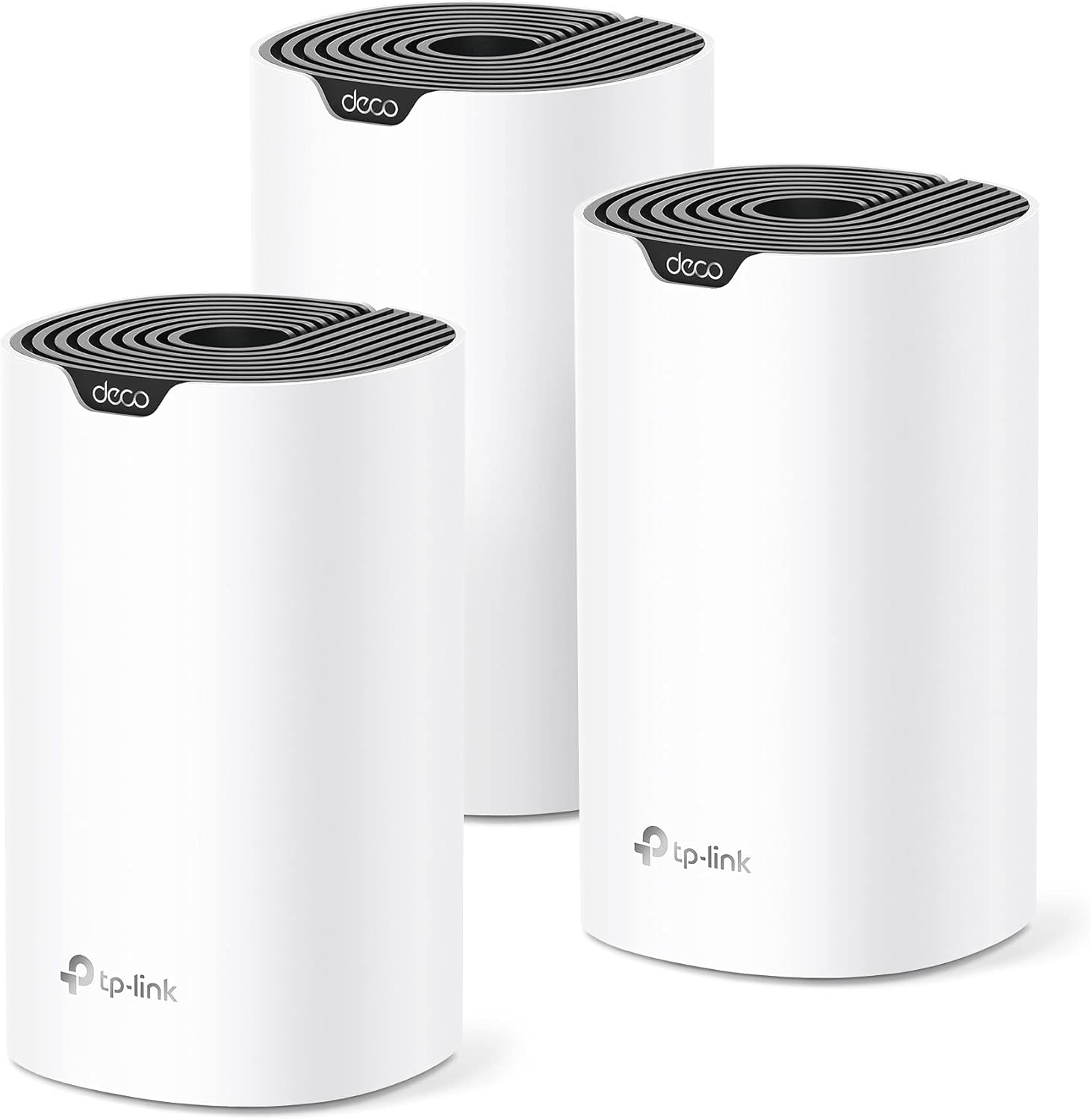
TP-Link Deco S4 Mesh AC1900 WiFi System - Up to 5,500 Sq.ft. Coverage, Replaces WiFi Router and Extender, Gigabit Ports, Works with Alexa, Deco S4(3-Pack)
A 3-pack AC1900 dual-band mesh system covering 5,500 sq ft with Gigabit Ethernet, for homes needing broad Wi-Fi 5 coverage on a budget.

TP-Link Deco X55 Pro AX3000 Whole Home Wi-Fi 6 Mesh System - Coverage up to 6500 Sq.Ft & up to 150 Devices, 2x2.5G WAN/LAN Ports, 4 Streams, Wired Ethernet Backhaul, Ideal for 1Gig+ Internet, 3-Pack
A Wi-Fi 6 mesh system with AX3000 speed and 2x 2.5G ports per unit, covering 6500 sq. ft. for homes with 1Gig+ internet.