
N300 WiFi Router 2.4G Easy Setup Wireless Internet Network Router, Supports Wireless Repeater, WISP, Up to 300Mbps for Home and Office
Want the best price and purchase timing?
Our AI advisor analyzes real-time pricing across all channels to find you the best deal.
AI Verdict
A 2.4G single-band 802.11n router with 300Mbps speed and 10/100Mbps Ethernet ports, designed for basic web browsing and extending existing Wi-Fi coverage.
This router is a situational fit because its 2.4G single-band 802.11n Wi-Fi and 10/100Mbps Ethernet ports are only suitable for basic internet use and extending coverage in areas with low bandwidth demands. It won't keep up with modern internet speeds or dense device environments.
If you need faster speeds, less interference, or support for more devices, look for a dual-band router with Wi-Fi 5 (802.11ac) or Wi-Fi 6 (802.11ax) and Gigabit Ethernet ports.
Regret Score™
High RiskLower is better — measures purchase-regret risk from real buyer complaints, review credibility, and product maturity
Issues discovered after purchase
Critically weak dimension
Amazon rating vs actual quality
Chance this product isn't for you
Pros
- Supports 802.11b/g/n standards for broad compatibility with older devices.
- 300Mbps speed on 2.4GHz is adequate for basic web browsing and VoIP calls.
- Two 5dBi antennas can improve the coverage area for the 2.4GHz signal.
- WISP Wireless Repeater Mode extends network coverage wirelessly by connecting to an existing Wi-Fi network.
- Internet access control function allows limiting network connection for unfamiliar visitors and children.
- QoS bandwidth control allows prioritizing network access for specific devices.
Cons
- Single-band (2.4GHz) operation limits speed and increases congestion in environments with many Wi-Fi networks.
- Fast Ethernet ports (10/100 Mbps) will cap wired and wireless internet speeds at 100 Mbps, creating a bottleneck for faster internet plans.
- 300Mbps is a theoretical maximum for 802.11n on 2.4GHz; real-world speeds will be lower due to interference and network overhead.
- No support for Wi-Fi 5 (802.11ac) or Wi-Fi 6 (802.11ax) standards, which offer faster speeds and better performance.
- Lacks USB ports for network storage or printer sharing capabilities.
Dimension Scores
The 300Mbps 2.4GHz 802.11n standard is low for modern network demands, though the two 5dBi antennas can help improve coverage.
With a 4.1/5 rating from 173 reviews, it appears to offer average reliability for its price point, without widespread specific complaints found.
The product title highlights 'Easy Setup,' and features like QoS and internet access control suggest a functional management interface.
Internet access control is mentioned, but there's no indication of advanced security protocols like WPA3 or built-in VPN client support.
Best For
- Extending Wi-Fi to a small dead zone in a home or office where only basic connectivity is needed.
- Connecting a few low-bandwidth devices like security cameras, smart home gadgets, or older laptops.
- Basic internet activities such as email, web browsing, and standard definition video streaming.
- Users with internet service provider plans under 100Mbps.
Not Recommended For
- Homes with many simultaneously connected devices or heavy streaming/online gaming users.
- Users with internet plans exceeding 100Mbps, as the 10/100Mbps Ethernet ports will limit throughput.
- Environments with significant 2.4GHz interference from other Wi-Fi networks or electronics.
- Users requiring high-speed local network file transfers between devices.
Watch Out For
- Real-world wireless speeds will likely be significantly lower than the advertised 300Mbps due to 2.4GHz band congestion and the inherent limitations of the 802.11n standard.
- The 10/100 Mbps Fast Ethernet ports will cap any wired internet connection or local network transfer at a maximum of 100 Mbps, regardless of your internet plan.
- Using the WISP Wireless Repeater Mode can effectively halve the bandwidth of the extended network, leading to slower speeds for connected devices.
- The absence of a 5GHz band means the router is more susceptible to interference from other 2.4GHz devices like microwaves, cordless phones, and Bluetooth peripherals.
Full Specifications
| ASIN | B0D9671WJY |
| Brand | U-SPEED |
| Color | White |
| Model Name | N300 WiFi Router |
| Item Weight | 4.5 ounces |
| Manufacturer | U-SPEED |
| Special Feature | Wireless Repeater,QoS,LED Indicator,WPS,WLAN Schedule, Internet Access Control |
| Item model number | T1 Pro |
| Compatible Devices | Smartphone,Tablet,PC,Gaming Console,Security Camera, etc. |
| Product Dimensions | 5.9 x 4.9 x 5.9 inches |
| Included Components | Ethernet Cable, N300 WiFi Router, Power Adapter, User Manual |
| Frequency Band Class | Single-Band |
| Connectivity Technology | Wi-Fi, RJ45 |
| Recommended Uses For Product | Business, Home |
| Wireless Communication Standard | 802.11b, 802.11g, 802.11n |
What Buyers Say
Users often find this router meets basic needs for extending Wi-Fi or providing internet to a few devices, especially considering its low price point. The 'easy setup' claim likely resonates with those looking for a simple solution, contributing to its 4.1/5 rating from 173 reviews. However, expectations for speed and advanced features should be tempered, as the 2.4GHz single-band and 10/100Mbps Ethernet ports are inherent limitations for N300 routers.
“I just needed something cheap to get Wi-Fi out to my garage for a security camera, and for twenty bucks it does that. Don't expect to stream Netflix on it though, it's slow.”
Common Praise
- Simple to set up for basic Wi-Fi extension.
- Provides Wi-Fi coverage in previously dead zones.
- Low cost makes it an accessible option for minimal networking needs.
- Internet access control is useful for managing guest or child network access.
Common Complaints
- Speeds are often lower than the advertised 300Mbps, especially with multiple connected devices.
- Limited to the 2.4GHz band, leading to congestion and slower performance in busy environments.
- Wired connections are capped at 100Mbps due to the Fast Ethernet ports.
- Not suitable for high-bandwidth activities like 4K streaming or competitive online gaming.
Ownership Tips
- The 2.4GHz band can get really crowded, especially if your neighbors also have a bunch of devices on it, causing unexpected slowdowns.
- You'll notice a significant speed drop if you use it as a wireless repeater, potentially cutting your internet speed in half.
- The 10/100Mbps ports mean that even if your internet plan is faster than 100Mbps, you'll never see those higher speeds through this router.
- Don't expect any fancy features or a super slick mobile app for management; the interface is pretty barebones.
Frequently Asked Questions
Can this router handle my 200Mbps internet plan?
No, the Fast Ethernet ports (10/100 Mbps) on this router will limit your wired and wireless speeds to a maximum of 100 Mbps, even if your internet plan is faster.
Is this a dual-band router?
No, this is a single-band router, meaning it only operates on the 2.4GHz frequency band.
Can I use this to extend my existing Wi-Fi network?
Yes, it supports WISP Wireless Repeater Mode, which allows it to connect wirelessly to your primary router and extend its network coverage.
How many devices can I connect to this router without issues?
While it can connect multiple devices, its 300Mbps 2.4GHz speed and 10/100Mbps ports mean performance will degrade quickly with more than a few active devices, especially for bandwidth-intensive tasks.
Does it have parental controls?
Yes, it includes an Internet access control function that allows you to limit network connection for children and unfamiliar visitors.
Buying Guide
When you're looking at a router like this, you need to think about what you actually *do* online. If you're just checking emails, browsing a few websites, or connecting a smart light bulb, the 2.4GHz band and 300Mbps speed might be enough. But if you're streaming high-definition video, playing online games, or have a house full of people all on Wi-Fi, you'll hit its limits fast.
300Mbps speed
This is the theoretical maximum speed for the 2.4GHz 802.11n standard. Think of it like the top speed of a car; you rarely drive at that speed, and other traffic (interference) will slow you down. For real-world use, expect less, especially with multiple devices.
Single-Band (2.4GHz)
This means the router only uses one radio frequency, 2.4 gigahertz. It's like having a single-lane road. It gets crowded easily by other Wi-Fi networks, Bluetooth devices, and even microwaves, which can slow down your connection.
Fast Ethernet ports (10/100 Mbps)
These are the physical ports where you plug in network cables. 'Fast Ethernet' means they can only handle up to 100 megabits per second. If your internet plan is faster than 100Mbps, these ports will be a bottleneck, limiting your maximum speed even on a wired connection.
Alternatives
If you need faster speeds, better performance in crowded areas, or support for more devices, look for a router with dual-band Wi-Fi (2.4GHz and 5GHz), the newer Wi-Fi 5 (802.11ac) or Wi-Fi 6 (802.11ax) standards, and Gigabit Ethernet ports (10/100/1000 Mbps).
You Might Also Like

Amazon eero Pro 7 with 1 month free eero Business (auto-renews annually) - Supports internet plans up to 5 Gbps, Coverage up to 6,000 sq. ft., Connect 600+ devices, 3-pack
$600+This 3-pack Wi-Fi 7 tri-band mesh system delivers up to 3.9 Gbps wireless speeds and 5 Gbps wired speeds, covering 6,000 sq. ft. for businesses needing high-capacity networking.

Amazon eero 6 mesh wifi add-on extender - Add up to 1,500 sq. ft. of Wi-Fi 6 coverage. Required eero mesh wifi system not included
A Wi-Fi 6 mesh extender that adds up to 1,500 sq. ft. of coverage, exclusively for existing eero network users.
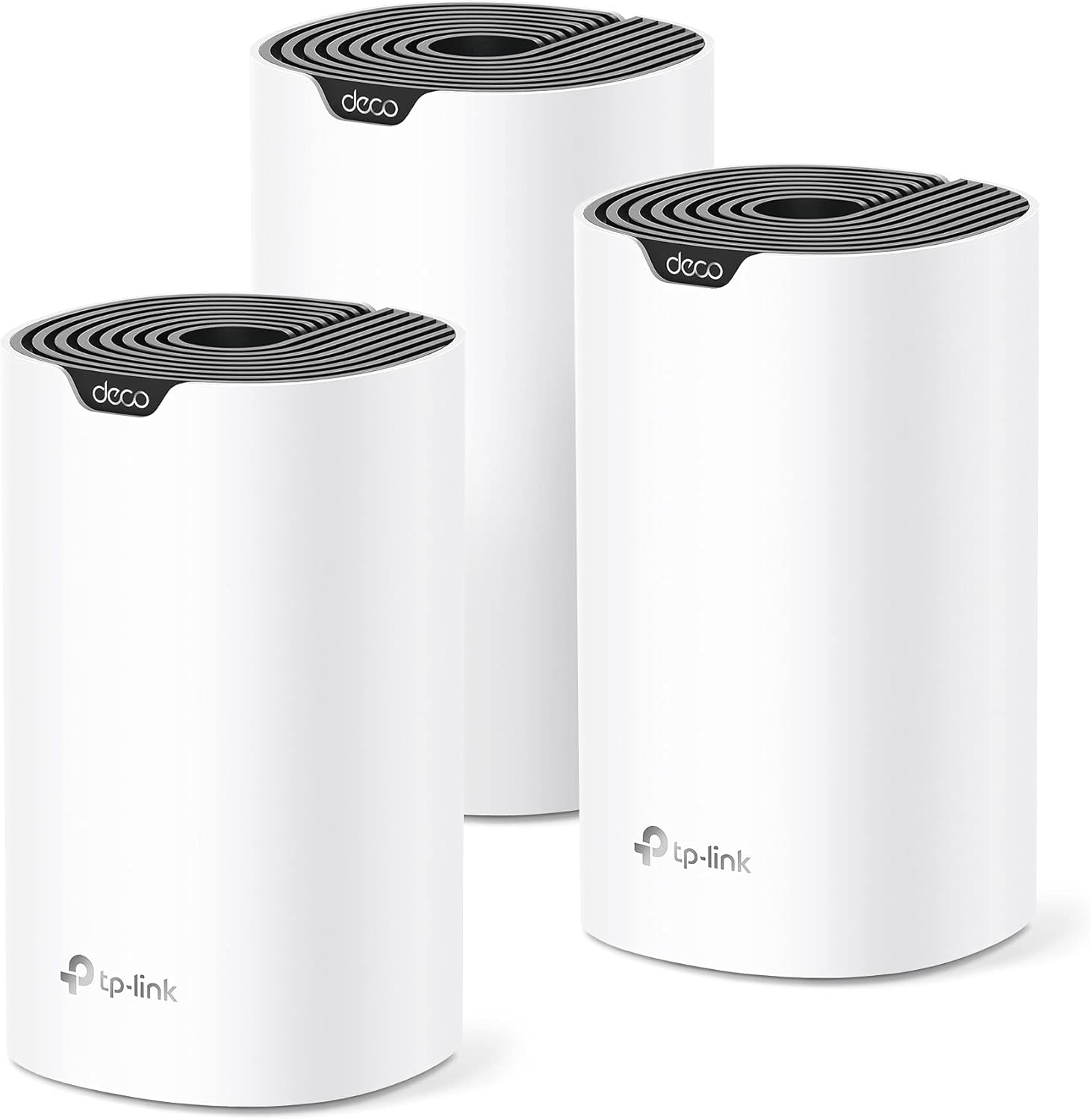
TP-Link Deco S4 Mesh AC1900 WiFi System - Up to 5,500 Sq.ft. Coverage, Replaces WiFi Router and Extender, Gigabit Ports, Works with Alexa, Deco S4(3-Pack)
A 3-pack AC1900 dual-band mesh system covering 5,500 sq ft with Gigabit Ethernet, for homes needing broad Wi-Fi 5 coverage on a budget.

TP-Link Deco X55 Pro AX3000 Whole Home Wi-Fi 6 Mesh System - Coverage up to 6500 Sq.Ft & up to 150 Devices, 2x2.5G WAN/LAN Ports, 4 Streams, Wired Ethernet Backhaul, Ideal for 1Gig+ Internet, 3-Pack
A Wi-Fi 6 mesh system with AX3000 speed and 2x 2.5G ports per unit, covering 6500 sq. ft. for homes with 1Gig+ internet.