
TP-Link Tri-Band BE9300 WiFi 7 Router (Archer BE550) - 6-Stream, Full 2.5G Ports w/ 6 Internal Antennas, Up to 2,000 Sq Ft, Add Easy-Mesh Device for Extended Coverage, VPN and Free Expert Support
Want the best price and purchase timing?
Our AI advisor analyzes real-time pricing across all channels to find you the best deal.
AI Verdict
A Tri-Band Wi-Fi 7 router with 9.2 Gbps speeds and five 2.5G ports, suited for users upgrading to Wi-Fi 7 or with multi-gigabit internet.
This router offers cutting-edge Wi-Fi 7 technology with 9.2 Gbps speeds and five 2.5G ports, making it suitable for users with multi-gigabit internet and Wi-Fi 7 devices. However, early firmware issues and reports of instability suggest it might require some troubleshooting or waiting for updates.
If you need more consistent performance out of the box and don't require the absolute latest Wi-Fi 7 features immediately, look for a Wi-Fi 6E router with a proven track record for stability.
Regret Score™
Low RiskLower is better — measures purchase-regret risk from real buyer complaints, review credibility, and product maturity
Issues discovered after purchase
Critically weak dimension
Amazon rating vs actual quality
Chance this product isn't for you
Pros
- Offers Tri-Band Wi-Fi 7 with 5760 Mbps (6 GHz), 2880 Mbps (5 GHz), and 574 Mbps (2.4 GHz) speeds.
- Equipped with one 2.5G WAN port and four 2.5G LAN ports for multi-gigabit wired connections.
- EasyMesh compatibility allows for seamless whole-home network expansion.
- Utilizes Multi-Link Operation (MLO), Multi-RUs, 4K-QAM, and 320 MHz channels for enhanced efficiency.
- TP-Link HomeShield provides comprehensive network protection and parental controls.
- Six internal antennas with Beamforming technology concentrate Wi-Fi signals for coverage up to 2,000 sq ft.
Cons
- Some advanced HomeShield security features require a separate subscription.
- Indicator lights are bright and can be distracting, though dimmable via the Tether app.
- Early firmware versions had issues with simultaneous VLAN and QoS functionality.
- Reports from some users indicate constant reboots, occurring every few hours.
- The USB 3.0 port functionality has been reported as not working well by some users.
Dimension Scores
It offers 9.2 Gbps Tri-Band Wi-Fi 7 speeds across 6 GHz (5760 Mbps), 5 GHz (2880 Mbps), and 2.4 GHz (574 Mbps) bands, covering up to 2,000 sq ft with internal antennas and Beamforming.
While offering advanced Wi-Fi 7 features, some users reported constant reboots and early firmware issues with VLAN/QoS, impacting consistent performance.
The TP-Link Tether app provides a guided, straightforward setup process and unified management for EasyMesh networks.
TP-Link HomeShield offers comprehensive network protection, parental controls, and IoT security, though some advanced features require a subscription.
Best For
- Homes with 2.5 Gbps internet service or faster for full utilization of wired ports.
- Users with multiple Wi-Fi 7 compatible devices seeking optimal wireless performance.
- Gamers and streamers requiring low latency and high bandwidth for 4K/8K content.
- Expanding Wi-Fi coverage in larger homes by adding EasyMesh-compatible devices.
Not Recommended For
- Users unwilling to pay for a HomeShield Pro subscription for full security features.
- Users who need advanced VLAN and QoS features without waiting for potential firmware updates.
- Small apartments with basic internet needs, as its capabilities might be excessive.
Watch Out For
- Some units experienced constant reboots, not staying online for more than four hours.
- Early firmware versions prevented simultaneous use of VLAN and QoS features, requiring a beta firmware update to resolve.
- The USB 3.0 port functionality has been reported as not working well by some users.
- The bright indicator lights can be distracting if the router is placed in a visible area, though they can be dimmed or turned off via the Tether app.
Full Specifications
| ASIN | B0CJSNSVMR |
| Brand | TP-Link |
| Color | Black |
| Series | Archer BE550 |
| Voltage | 12 Volts |
| Model Name | Archer BE550 |
| Item Weight | 2.45 pounds |
| Manufacturer | TP-Link |
| Wireless Type | 802.11ad |
| Special Feature | Access Point Mode, Guest Mode, QoS, Remote Access, WPS |
| Operating System | IOS, Android, Windows, Mac OS |
| Item model number | Archer BE550 |
| Compatible Devices | Gaming Console, Personal Computer, Smart Television, Smartphone, Tablet |
| Product Dimensions | 9.12 x 2.99 x 7.99 inches |
| Included Components | Power Adapter, Quick Installation Guide, RJ45 Ethernet Cable, Wi-Fi 7 Router Archer BE550 |
| Frequency Band Class | Tri-Band |
| Item Dimensions LxWxH | 9.12 x 2.99 x 7.99 inches |
| Connectivity Technology | Wi-Fi (802.11ac, 802.11ax, 802.11n, 802.11g, 802.11be), Ethernet, USB |
| Recommended Uses For Product | Gaming, Home |
| Wireless Communication Standard | 802.11ad |
What Buyers Say
Many users upgrading to the Archer BE550 report a significant speed increase, especially with its 2.5G ports, making it a noticeable upgrade from older Wi-Fi 5 or 6 routers. However, some early adopters encountered frustrating issues like frequent reboots and firmware limitations regarding VLAN and QoS functionality. The design is often praised for its vertical form factor and internal antennas, but the bright indicator lights can be a minor annoyance for some.
“I bought this for the Wi-Fi 7 and 2.5G ports, and the speeds are insane when it works, but man, those random reboots are driving me crazy, hope they fix it with an update!”
Common Praise
- Achieves speeds over 2 Gbps with compatible internet plans and devices.
- All five Ethernet ports support 2.5 Gbps, eliminating the 1 Gigabit bottleneck.
- EasyMesh compatibility allows for seamless whole-home Wi-Fi expansion.
- Setup is quick and guided using the TP-Link Tether mobile app.
- The vertical design with internal antennas is space-saving.
Common Complaints
- Some units experienced constant reboots, not staying online for more than a few hours.
- Early firmware versions had issues using VLAN and QoS simultaneously.
- The USB 3.0 port functionality was reported as not working well by some.
- Bright indicator lights can be distracting, even if dimmable.
- Advanced HomeShield security features require a separate subscription.
Ownership Tips
- The Tether app allows dimming or turning off the bright indicator lights.
- Firmware updates might be necessary to resolve initial bugs, such as VLAN/QoS conflicts.
- The router has a larger footprint than some older models but is narrow for placement.
- The included Ethernet cable is flat and supports up to 10 Gbps.
Frequently Asked Questions
What Wi-Fi standard does the Archer BE550 use?
It uses the latest Wi-Fi 7 (802.11be) standard, offering features like Multi-Link Operation, 4K-QAM, and 320 MHz channels.
What are the maximum speeds of this router?
The Archer BE550 provides speeds of 5760 Mbps on the 6 GHz band, 2880 Mbps on the 5 GHz band, and 574 Mbps on the 2.4 GHz band, totaling 9.2 Gbps.
Can I expand the Wi-Fi coverage with this router?
Yes, it is EasyMesh-compatible, allowing you to add other EasyMesh routers or range extenders to create a seamless whole-home mesh Wi-Fi system.
How many Ethernet ports does it have and what are their speeds?
It has one 2.5G WAN port and four 2.5G LAN ports, breaking the 1 Gigabit bottleneck for wired connections.
Does it include security features?
Yes, it comes with TP-Link HomeShield, which offers comprehensive network protection, parental controls, and real-time IoT security. Some advanced features require a subscription.
Is setup complicated?
Setup is managed through the TP-Link Tether app, which guides you through the process step-by-step and is generally considered easy to use.
Does it have external antennas?
No, the Archer BE550 features six internal antennas with Beamforming technology to optimize Wi-Fi signals.
Buying Guide
When buying a Wi-Fi 7 router like this, you're investing in the latest wireless technology, which means faster speeds and better efficiency, especially if you have devices that support Wi-Fi 7. Pay attention to the Ethernet port speeds; having 2.5G or faster ports means your wired devices can also take advantage of high-speed internet. Consider if you need mesh capabilities for larger homes, as this model supports EasyMesh to extend coverage without dead zones.
Wi-Fi 7 (802.11be)
This is the newest Wi-Fi standard, offering higher theoretical speeds (up to 9.2 Gbps here) and new technologies like Multi-Link Operation (MLO) that combine bands for better performance, like having multiple lanes on a highway to reduce traffic.
Tri-Band (2.4 GHz, 5 GHz, 6 GHz)
This means the router broadcasts Wi-Fi on three separate frequency bands. The 6 GHz band is like a brand new, uncongested highway for your newest devices, while 5 GHz and 2.4 GHz handle older devices and provide broader range respectively.
2.5G Ports
These are Ethernet ports that can handle data transfers at 2.5 Gigabits per second, which is 2.5 times faster than standard Gigabit Ethernet ports. If your internet plan is faster than 1 Gbps or you have a fast local network (like a NAS), these ports are crucial to avoid bottlenecks.
Alternatives
If this router doesn't fit, look for Wi-Fi 6E routers with at least one 2.5G WAN port and multiple 1G LAN ports for a more established, potentially more stable option, or a higher-end Wi-Fi 7 model with 10G ports if you need even more future-proofing.
You Might Also Like

Amazon eero Pro 7 with 1 month free eero Business (auto-renews annually) - Supports internet plans up to 5 Gbps, Coverage up to 6,000 sq. ft., Connect 600+ devices, 3-pack
$600+This 3-pack Wi-Fi 7 tri-band mesh system delivers up to 3.9 Gbps wireless speeds and 5 Gbps wired speeds, covering 6,000 sq. ft. for businesses needing high-capacity networking.

Amazon eero 6 mesh wifi add-on extender - Add up to 1,500 sq. ft. of Wi-Fi 6 coverage. Required eero mesh wifi system not included
A Wi-Fi 6 mesh extender that adds up to 1,500 sq. ft. of coverage, exclusively for existing eero network users.
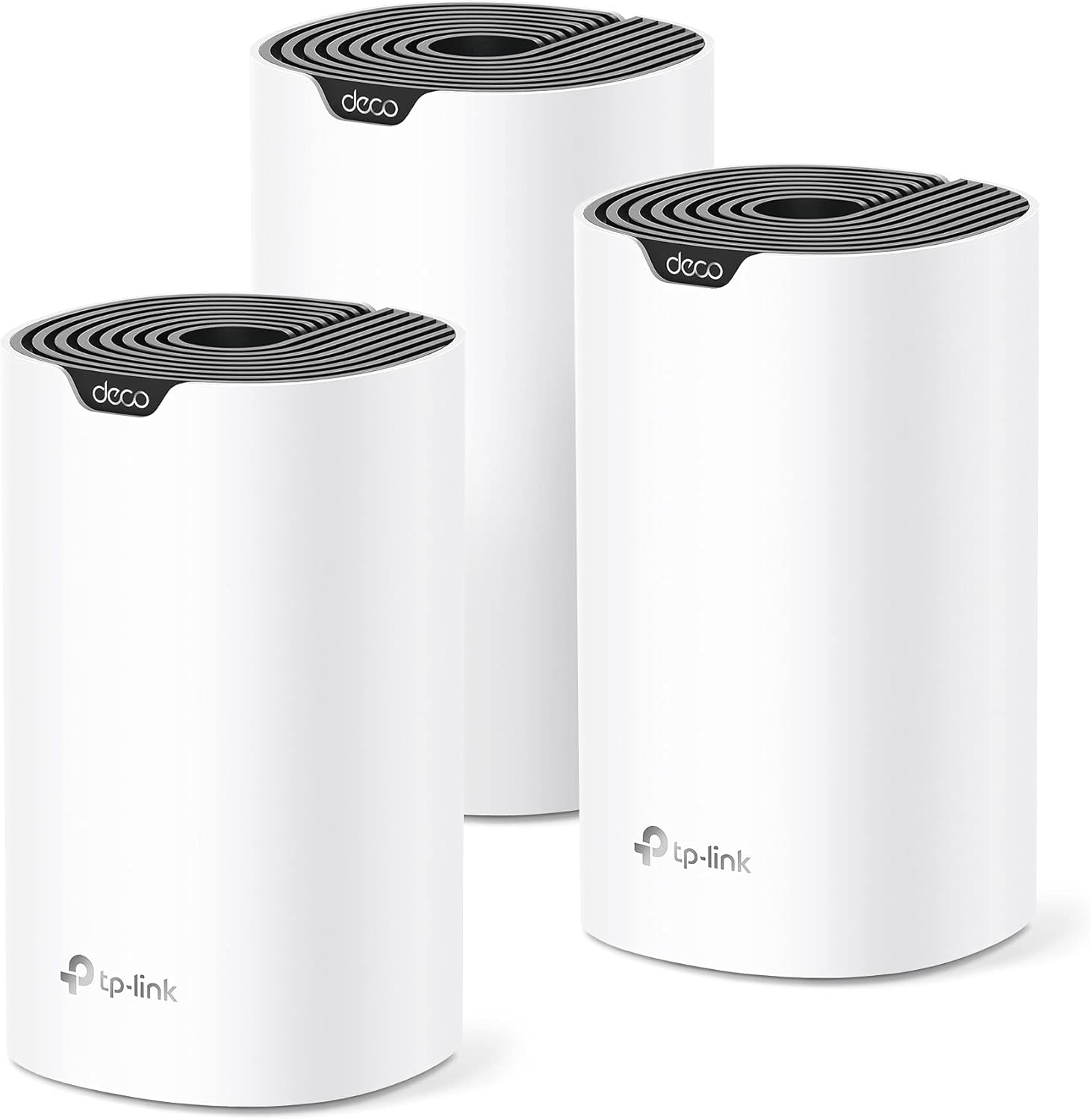
TP-Link Deco S4 Mesh AC1900 WiFi System - Up to 5,500 Sq.ft. Coverage, Replaces WiFi Router and Extender, Gigabit Ports, Works with Alexa, Deco S4(3-Pack)
A 3-pack AC1900 dual-band mesh system covering 5,500 sq ft with Gigabit Ethernet, for homes needing broad Wi-Fi 5 coverage on a budget.

TP-Link Deco X55 Pro AX3000 Whole Home Wi-Fi 6 Mesh System - Coverage up to 6500 Sq.Ft & up to 150 Devices, 2x2.5G WAN/LAN Ports, 4 Streams, Wired Ethernet Backhaul, Ideal for 1Gig+ Internet, 3-Pack
A Wi-Fi 6 mesh system with AX3000 speed and 2x 2.5G ports per unit, covering 6500 sq. ft. for homes with 1Gig+ internet.