
TP-Link EAP610, Omada Business WiFi 6 AX1800 Wireless Gigabit Access Point, Support Mesh, OFDMA, Seamless Roaming & MU-MIMO, SDN Integrated, Cloud Access & Omada App, PoE+ Powered, White
Want the best price and purchase timing?
Our AI advisor analyzes real-time pricing across all channels to find you the best deal.
AI Verdict
This is an AX1800 dual-band WiFi 6 access point with Omada SDN integration and PoE+ power, best for expanding business or advanced home networks needing centralized management.
This access point is a strong fit for anyone already invested in or planning to adopt the TP-Link Omada SDN ecosystem, offering WiFi 6 speeds and centralized management. Its PoE+ capability and compact design make it ideal for professional installations where multiple APs are managed from a single interface.
If you need to support a very high number of simultaneous clients or demand the absolute highest throughput, look for an Omada AP with 512 MB of RAM and 160MHz channel support.
Regret Score™
Very Low RiskLower is better — measures purchase-regret risk from real buyer complaints, review credibility, and product maturity
Issues discovered after purchase
Critically weak dimension
Amazon rating vs actual quality
Chance this product isn't for you
Pros
- Supports WiFi 6 with 1024-QAM and Long OFDM Symbol for up to 1775 Mbps total speed (574 Mbps on 2.4 GHz, 1201 Mbps on 5 GHz).
- Integrates into TP-Link's Omada SDN platform for centralized cloud management via web UI or app.
- Features Omada Mesh technology and seamless roaming for uninterrupted client connections across multiple APs.
- Powered by PoE+ (802.3at) or Passive PoE, simplifying installation by eliminating the need for a power outlet nearby.
- Compact design with a Φ160 mm × 33.6 mm profile, making it less obtrusive for ceiling mounting.
- Includes WPA3 security for enhanced network protection.
Cons
- Some users report that WiFi coverage/performance can be inconsistent, particularly in environments with concrete walls.
- Requires an Omada controller (hardware, software, or cloud) to fully leverage advanced features like seamless roaming and centralized management.
- The EAP610 has 256 MB of RAM, which is half of what higher-end models like the EAP620 offer, potentially limiting performance in very high-density client environments.
- Channel bandwidth is limited to 80MHz, which might not be optimal for maximum theoretical speeds in uncongested 5GHz environments.
Dimension Scores
It offers AX1800 WiFi 6 speeds (1775 Mbps total) and decent range, but some users report inconsistent coverage, especially through obstacles like concrete walls.
The Omada platform generally provides stable operation, and the device supports features like seamless roaming to maintain connections.
Setup is straightforward, and management via the Omada SDN controller (cloud, software, or hardware) offers extensive control and monitoring capabilities.
It includes WPA3 encryption and integrates with Omada's secure guest network options, offering a robust security suite.
Best For
- Small to medium businesses deploying a managed WiFi 6 network with multiple access points.
- Homes with existing Omada SDN setups looking to upgrade to WiFi 6 or expand coverage with mesh capabilities.
- Installations requiring discreet ceiling-mounted access points with PoE+ power.
- Users needing centralized control and monitoring of their wireless network via an app or cloud.
Not Recommended For
- Individuals seeking a standalone, plug-and-play access point without any controller management.
- Environments with extremely high client density (e.g., large auditoriums) that might benefit from APs with more RAM or higher channel bandwidth.
- Users prioritizing raw throughput over network management features, who might find similar speed specs in simpler, less integrated devices.
Watch Out For
- You might find the WiFi coverage to be less than expected, with some users on Reddit reporting disappointment in signal strength, especially through concrete walls.
- Setting up advanced features like seamless roaming and mesh requires an Omada controller, which is an additional purchase (hardware) or software installation.
- If you're upgrading from an older EAP model, ensure you're getting the V2 or later for the smaller, more compact casing, as the V1 was significantly larger.
- The included DC adapter might not be useful if you plan to power it via PoE+, which is the primary method for ceiling mounts, potentially leaving you with unused hardware.
Full Specifications
| ASIN | B09XM74VQL |
| Brand | TP-Link |
| Color | white |
| Series | EAP610 V2 |
| Voltage | 12 Volts |
| Model Name | EAP610 V2 |
| Item Weight | 13.7 ounces |
| Manufacturer | TP-Link |
| Wireless Type | 802.11ax |
| Special Feature | WPS |
| Operating System | Open Wrt OS |
| Item model number | EAP610 |
| Compatible Devices | Personal Computer |
| Product Dimensions | 6.3 x 6.3 x 1.32 inches |
| Included Components | 12V / 1.5A DC Power Adapter, Ceiling/Wall Mounting Kits, EAP610 V2, Installation Guide |
| Frequency Band Class | Dual-Band |
| Item Dimensions LxWxH | 6.3 x 6.3 x 1.32 inches |
| Connectivity Technology | Ethernet |
| Recommended Uses For Product | Business, Home |
| Wireless Communication Standard | 802.11ax |
What Buyers Say
Many users are drawn to the EAP610 for its WiFi 6 capabilities and integration with the Omada ecosystem, particularly for business or advanced home setups. However, a recurring theme in user feedback is the actual WiFi coverage and performance, with some finding it less robust than anticipated, especially when dealing with physical obstructions. The need for an Omada controller for full functionality is also a point of discussion, though many appreciate the flexibility it offers.
“Man, I bought this EAP610 thinking it'd blast WiFi everywhere, but my concrete walls just eat the signal, seriously bummed about the range in some spots, guess I need more of these or something stronger.”
Common Praise
- Easy integration into an existing Omada SDN network for unified management.
- Supports PoE+ power, simplifying installation and reducing cable clutter.
- Provides WiFi 6 speeds, noticeably improving performance for compatible devices.
- Compact and discreet design, making it suitable for ceiling mounting without being an eyesore.
- Seamless roaming functionality works effectively when multiple APs are deployed with a controller.
Common Complaints
- WiFi coverage and signal strength can be disappointing, particularly in homes with concrete interior walls.
- Requires an Omada controller (hardware or software) to unlock advanced features like mesh and seamless roaming, which is an additional cost or setup.
- Some users expected better raw throughput or range compared to other WiFi 6 APs in similar price brackets.
- The 256 MB of RAM is less than higher-tier Omada APs, potentially limiting its capacity in very dense environments.
Ownership Tips
- After a few weeks, you'll realize that while it works standalone, the real power of this AP comes from pairing it with an Omada controller for proper network management and mesh.
- The compact size of the V2 model is a huge plus for ceiling mounting, it practically disappears.
- You might find yourself tweaking channel settings more than expected to optimize performance, especially in congested areas.
- The PoE+ power is a game-changer for installation flexibility, avoiding the need for power outlets at every AP location.
Frequently Asked Questions
Does the EAP610 require an Omada controller to function?
No, you can configure and manage a single EAP610 directly via its web interface without an Omada controller. However, features like mesh, seamless roaming, and centralized management for multiple APs do require a controller.
What kind of power does the EAP610 use?
The EAP610 supports both PoE+ (802.3at) and Passive PoE, and it also comes with a DC power adapter. PoE+ is generally preferred for ceiling installations as it simplifies cabling.
Is the EAP610 suitable for outdoor use?
No, the EAP610 is designed for indoor use. While it shares some internal components with the EAP610-Outdoor, it lacks the IP67-rated weather-resistant casing required for outdoor deployment.
What is the difference between the EAP610 V1 and V2?
The EAP610 V2 has the same core specifications as the V1 but features a significantly smaller and more compact physical design. If size is a concern, ensure you purchase a V2 or later model.
Does this access point support WPA3 security?
Yes, the TP-Link EAP610 supports WPA3 security, providing enhanced encryption and protection for your wireless network.
Buying Guide
When you're looking at access points like this, you need to think about how you'll manage your network and what kind of coverage you actually need. This isn't just a simple router; it's designed to be part of a larger, managed system. You'll get the most out of it if you plan to use multiple access points and want to control them all from one place, like with the Omada controller. Don't expect one of these to cover a huge, multi-story house with concrete walls on its own.
WiFi 6 (802.11ax)
This is the latest generation of WiFi, meaning it's faster and more efficient, especially when many devices are connected. Think of it like upgrading from a two-lane road to a four-lane highway – more cars (devices) can travel at higher speeds without traffic jams.
AX1800 Dual-Band
AX1800 indicates the theoretical maximum combined speed (1800 Mbps) across both the 2.4 GHz and 5 GHz frequency bands. Dual-band means it broadcasts two separate WiFi networks, allowing newer devices to use the faster 5 GHz band while older devices or those needing longer range can use the 2.4 GHz band.
Omada SDN Integrated
SDN (Software Defined Networking) means you can manage all your compatible network devices (like this AP, switches, and routers) from a single interface, either locally or through the cloud. It's like having a central command center for your entire network, making setup and maintenance much simpler for larger deployments.
PoE+ Powered
Power over Ethernet Plus (PoE+) allows the access point to receive both power and data through a single Ethernet cable. This is super handy for ceiling or wall mounts where power outlets might not be available, simplifying installation and reducing clutter.
Alternatives
If this doesn't fit, look for an access point with higher RAM capacity and 160MHz channel support for demanding environments, or a simpler, standalone WiFi 6 router if you only need a single device for a smaller space.
You Might Also Like

Amazon eero Pro 7 with 1 month free eero Business (auto-renews annually) - Supports internet plans up to 5 Gbps, Coverage up to 6,000 sq. ft., Connect 600+ devices, 3-pack
$600+This 3-pack Wi-Fi 7 tri-band mesh system delivers up to 3.9 Gbps wireless speeds and 5 Gbps wired speeds, covering 6,000 sq. ft. for businesses needing high-capacity networking.

Amazon eero 6 mesh wifi add-on extender - Add up to 1,500 sq. ft. of Wi-Fi 6 coverage. Required eero mesh wifi system not included
A Wi-Fi 6 mesh extender that adds up to 1,500 sq. ft. of coverage, exclusively for existing eero network users.
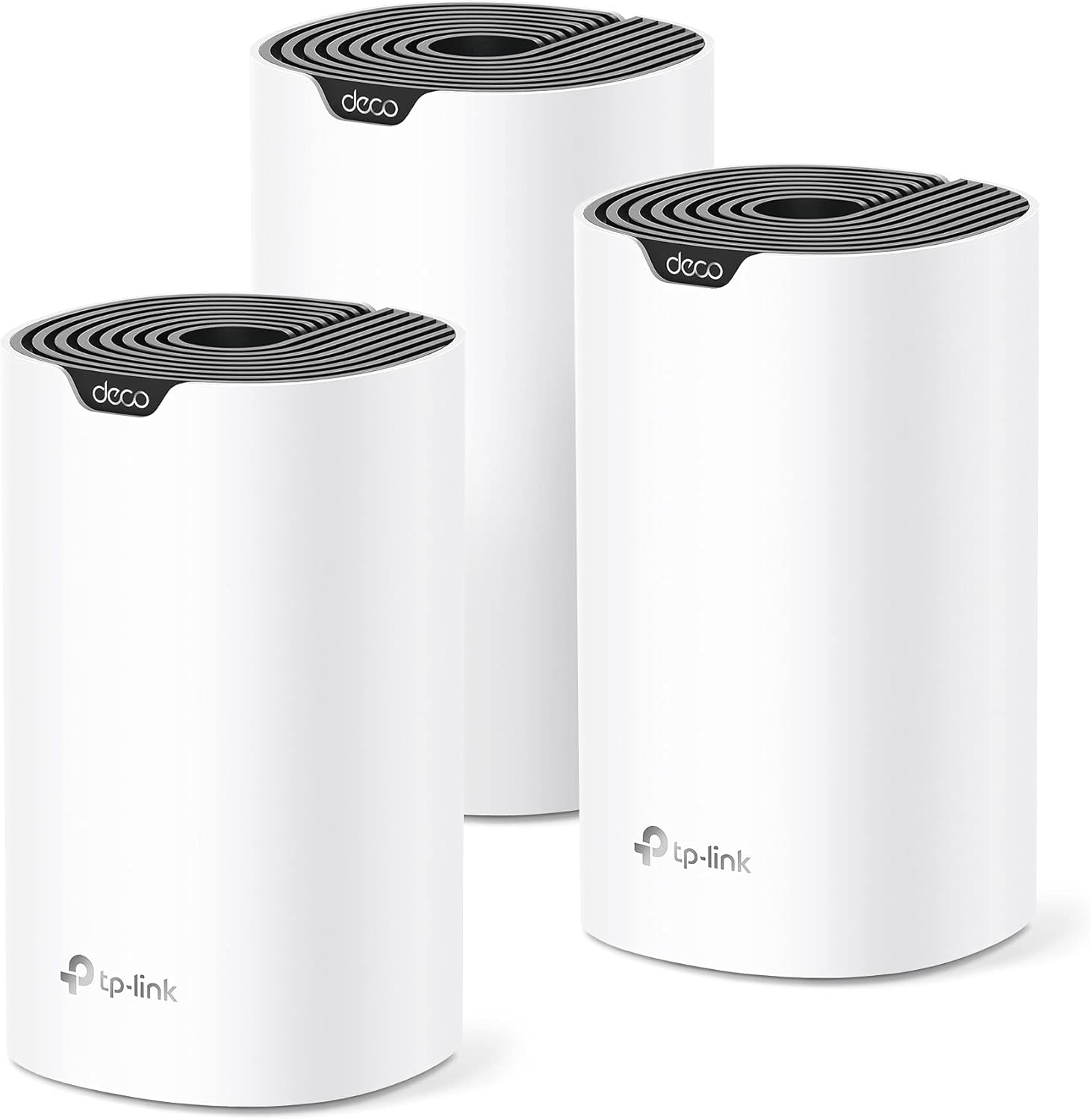
TP-Link Deco S4 Mesh AC1900 WiFi System - Up to 5,500 Sq.ft. Coverage, Replaces WiFi Router and Extender, Gigabit Ports, Works with Alexa, Deco S4(3-Pack)
A 3-pack AC1900 dual-band mesh system covering 5,500 sq ft with Gigabit Ethernet, for homes needing broad Wi-Fi 5 coverage on a budget.

TP-Link Deco X55 Pro AX3000 Whole Home Wi-Fi 6 Mesh System - Coverage up to 6500 Sq.Ft & up to 150 Devices, 2x2.5G WAN/LAN Ports, 4 Streams, Wired Ethernet Backhaul, Ideal for 1Gig+ Internet, 3-Pack
A Wi-Fi 6 mesh system with AX3000 speed and 2x 2.5G ports per unit, covering 6500 sq. ft. for homes with 1Gig+ internet.