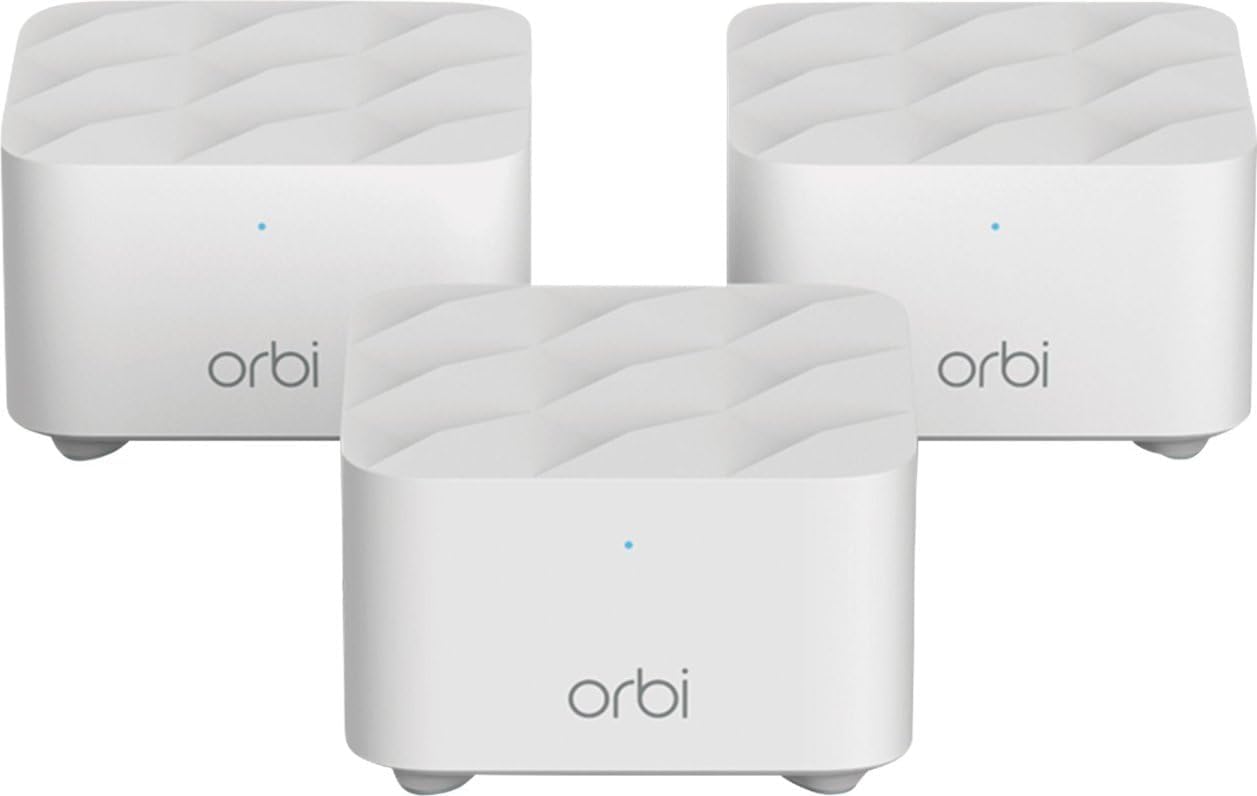
Netgear RBK13-100NAR Orbi RBK13 AC1200 Whole Home Mesh WiFi System Router (Renewed)
Want the best price and purchase timing?
Our AI advisor analyzes real-time pricing across all channels to find you the best deal.
AI Verdict
This is a renewed AC1200 dual-band mesh WiFi system covering 4,500 sq ft, best for budget-conscious users needing basic whole-home coverage without advanced features.
This renewed Orbi RBK13 system is a situational fit for those who need to cover a large area up to 4,500 square feet with basic AC1200 dual-band Wi-Fi. Its budget price point means sacrificing features like dedicated backhaul and satellite Ethernet ports, which can impact performance for demanding users. It's a trade-off for expanded coverage.
If you need faster speeds, more consistent performance, or wired connections at every point, look for a tri-band mesh system or one with Wi-Fi 6 (802.11ax).
Regret Score™
High RiskLower is better — measures purchase-regret risk from real buyer complaints, review credibility, and product maturity
Issues discovered after purchase
Critically weak dimension
Amazon rating vs actual quality
Chance this product isn't for you
Pros
- Provides whole-home mesh Wi-Fi coverage up to 4,500 square feet, eliminating dead zones.
- Compatible with any internet provider, including cable, satellite, fiber, and DSL.
- Includes one Gigabit Ethernet port on the router for a wired connection to a device.
- Supports wireless speeds up to 1.2 Gbps for streaming HD video and internet surfing.
- Setup is designed to be quick via the Orbi app, allowing management of settings and speed monitoring.
Cons
- Satellite units lack Ethernet ports, limiting wired connections away from the main router.
- Operates on dual-band Wi-Fi without a dedicated backhaul, which can reduce speeds as devices share bandwidth with the router-satellite communication.
- The system combines 2.4GHz and 5GHz bands into a single network name, without an option to separate them for specific devices.
- Advanced parental controls and network security features like Netgear Armor require a paid subscription after a 30-day trial.
- No USB ports on any unit for connecting external storage or other peripherals.
Dimension Scores
Offers coverage up to 4,500 square feet, which is good for the price, but AC1200 dual-band limits maximum throughput compared to higher-end systems.
While capable of stable connections for basic use, user reports indicate potential for disconnections and firmware-related instability.
The Orbi app aims for easy setup, but many users report significant initial setup difficulties and limited advanced management options.
Netgear Armor is included, but its full functionality and unlimited VPN require a paid subscription after a short trial period.
Best For
- Large homes or apartments with Wi-Fi dead zones and an existing modem.
- Households with basic internet usage like HD video streaming and web browsing on multiple devices.
- Users prioritizing wide Wi-Fi coverage on a limited budget.
Not Recommended For
- Gamers or users requiring consistent low-latency wired connections throughout the home.
- Households with many smart home devices that perform better on a dedicated 2.4GHz network.
- Users who need advanced network controls, QoS settings, or built-in USB sharing features.
Watch Out For
- Initial setup can be frustrating, with users reporting issues like the app not detecting the router or satellites not connecting properly, sometimes requiring multiple resets and firmware updates.
- Firmware updates have been known to cause instability or brick devices, and auto-updates can fail, necessitating manual intervention.
- Some users experience disconnections or interruptions when moving between the main router and satellite coverage areas.
- Netgear Armor's free VPN offers only 200MB of encrypted data per day, per device, making the full security suite effectively a paid add-on.
Full Specifications
| ASIN | B08SKML5C9 |
| Brand | NETGEAR |
| Color | white |
| Model Name | RBK13 |
| Item Weight | 3.19 pounds |
| Manufacturer | Netgear |
| Item model number | RBK13-100NAS-cr |
| Compatible Devices | Personal Computer |
| Package Dimensions | 10.2 x 8.11 x 4.57 inches |
| Included Components | Orbi Mesh Wi-Fi System |
| Frequency Band Class | Dual-Band |
| Connectivity Technology | Ethernet |
| Recommended Uses For Product | Home |
| Wireless Communication Standard | 802.11ac |
What Buyers Say
Many users found the initial setup process for this renewed Orbi RBK13 system to be a real headache, with the app often failing to detect the router or satellites, leading to hours of troubleshooting, resets, and firmware updates. Once it's finally up and running, the system generally provides wide Wi-Fi coverage, effectively eliminating dead zones in larger homes, but don't expect blazing speeds or advanced features. The lack of Ethernet ports on the satellites is a recurring point of frustration for those wanting wired connections away from the main unit.
“Honestly, this thing was a pain to set up, took me like 6 hours and a bunch of reboots, but now that it's working, I finally have Wi-Fi in my garage, so I guess it's fine for the price.”
Common Praise
- Provides wide Wi-Fi coverage, reaching areas where previous routers failed.
- Eliminates Wi-Fi dead zones in large homes or multi-story buildings.
- Once configured, the connection is generally stable for everyday internet use.
- The system is compatible with various internet service providers.
Common Complaints
- Frustrating and time-consuming initial setup, often requiring multiple resets and firmware updates.
- Satellites do not have any Ethernet ports for wired devices.
- Performance can be limited by the dual-band design and lack of a dedicated backhaul.
- The Orbi app offers limited advanced configuration options.
- Disconnections or signal drops can occur when roaming between the router and satellites.
Ownership Tips
- You'll likely need to update the firmware immediately after setup, and some users report that auto-updates can fail or cause issues.
- The single Wi-Fi network name means some older 2.4GHz-only devices might struggle to connect or perform optimally.
- Don't expect to plug in any wired devices to the satellite units; they are strictly wireless extenders.
- The 'free' security features are quite limited without paying for the full Netgear Armor subscription.
Frequently Asked Questions
Does this Orbi system have a dedicated backhaul band?
No, the RBK13 is a dual-band system, meaning it uses the same 5GHz band for both device communication and backhaul between the router and satellites, which can lead to speed reductions.
Can I separate the 2.4GHz and 5GHz Wi-Fi bands?
No, the Orbi app creates a single, combined network name for both 2.4GHz and 5GHz bands, without an option to separate them.
Are there Ethernet ports on the satellite units?
No, only the main router unit has a Gigabit Ethernet port. The satellite units do not have any LAN ports.
What security features are included?
It includes Netgear Armor, which offers a 30-day free trial. After that, advanced security features and unlimited VPN usage require a yearly subscription.
Is this system suitable for heavy online gaming?
While it provides coverage, the dual-band AC1200 speed and lack of dedicated backhaul or QoS settings mean it's not ideal for heavy online gaming, which benefits from lower latency and higher, more consistent speeds.
Buying Guide
When you're looking at mesh Wi-Fi, you're essentially buying a system that blankets your home with a single, strong Wi-Fi signal, unlike traditional routers that often leave dead zones. This means you can walk from room to room without your device dropping and reconnecting. The 'renewed' part means it's been inspected and restored to working order, usually at a lower price.
wifi_standard: 802.11ac
This is an older Wi-Fi standard, also known as Wi-Fi 5. It's fast enough for most streaming and browsing, but newer Wi-Fi 6 (802.11ax) offers better performance, especially in congested environments with many devices.
frequency: Dual-Band
This means it uses two radio bands: 2.4GHz (better for range, slower speeds) and 5GHz (faster speeds, shorter range). Crucially, in a dual-band mesh, the 5GHz band has to handle both your devices' traffic AND the communication between the router and satellites, which can slow things down. Tri-band systems have a dedicated third band for this 'backhaul' communication.
speed: 1.2 Gbps
This is the theoretical maximum combined speed across both bands. In real-world use, especially with a dual-band mesh, you'll see much lower speeds. Think of it like the top speed of a car; you rarely drive that fast, and road conditions (like shared bandwidth) affect your actual speed.
Alternatives
If you need faster speeds, more consistent performance for gaming or 4K streaming, or wired connections at every mesh point, look for systems with 'tri-band' technology or the newer 'Wi-Fi 6' standard.
You Might Also Like

Amazon eero Pro 7 with 1 month free eero Business (auto-renews annually) - Supports internet plans up to 5 Gbps, Coverage up to 6,000 sq. ft., Connect 600+ devices, 3-pack
$600+This 3-pack Wi-Fi 7 tri-band mesh system delivers up to 3.9 Gbps wireless speeds and 5 Gbps wired speeds, covering 6,000 sq. ft. for businesses needing high-capacity networking.

Amazon eero 6 mesh wifi add-on extender - Add up to 1,500 sq. ft. of Wi-Fi 6 coverage. Required eero mesh wifi system not included
A Wi-Fi 6 mesh extender that adds up to 1,500 sq. ft. of coverage, exclusively for existing eero network users.
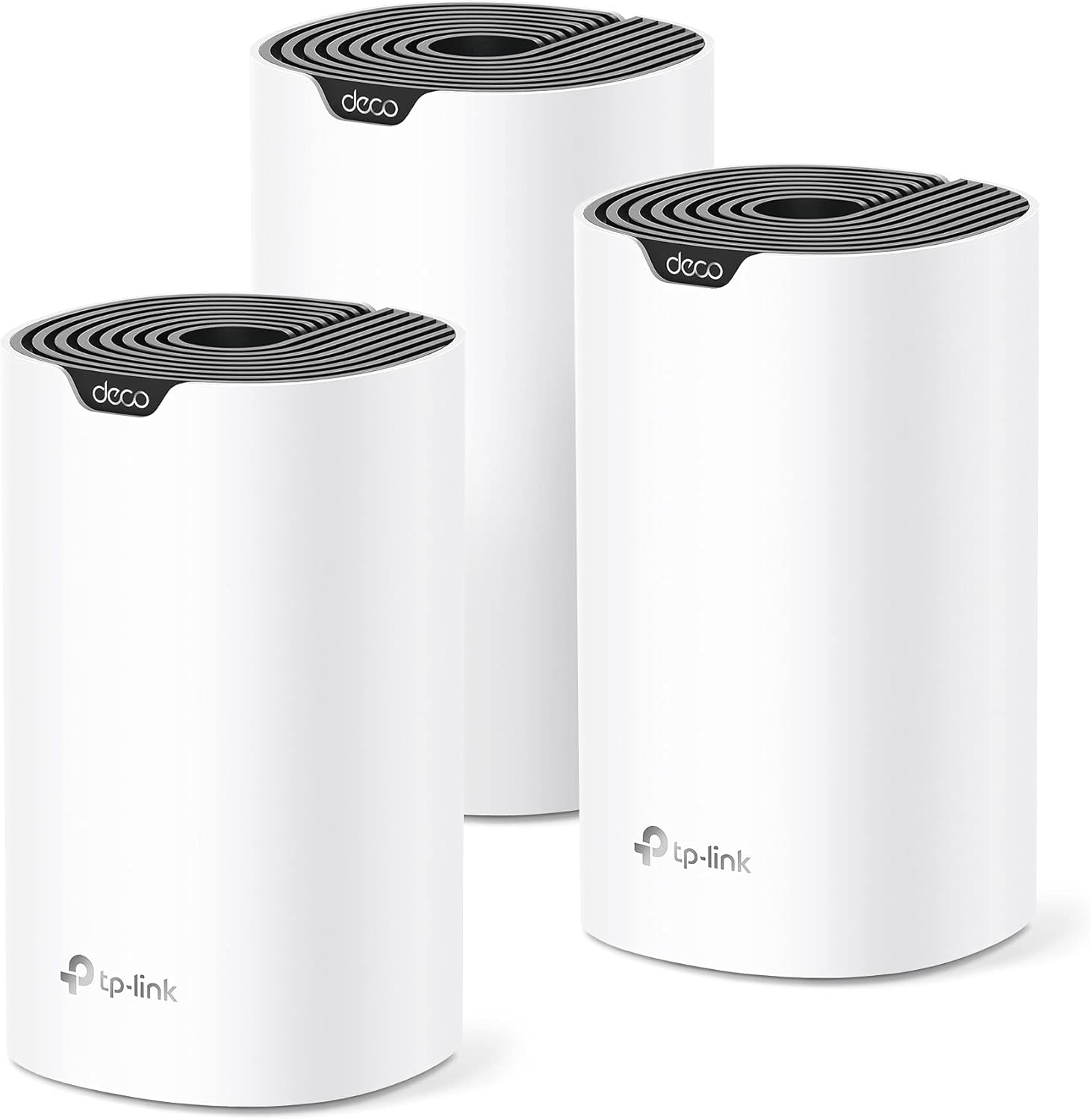
TP-Link Deco S4 Mesh AC1900 WiFi System - Up to 5,500 Sq.ft. Coverage, Replaces WiFi Router and Extender, Gigabit Ports, Works with Alexa, Deco S4(3-Pack)
A 3-pack AC1900 dual-band mesh system covering 5,500 sq ft with Gigabit Ethernet, for homes needing broad Wi-Fi 5 coverage on a budget.

TP-Link Deco X55 Pro AX3000 Whole Home Wi-Fi 6 Mesh System - Coverage up to 6500 Sq.Ft & up to 150 Devices, 2x2.5G WAN/LAN Ports, 4 Streams, Wired Ethernet Backhaul, Ideal for 1Gig+ Internet, 3-Pack
A Wi-Fi 6 mesh system with AX3000 speed and 2x 2.5G ports per unit, covering 6500 sq. ft. for homes with 1Gig+ internet.