
Cudy AC1200 Dual Band Unlocked 4G LTE Modem Router with SIM Card Slot, 1200Mbps Mesh WiFi, 5dBi High Gain Antennas, DDNS, VPN, Cloudflare, LT500
Want the best price and purchase timing?
Our AI advisor analyzes real-time pricing across all channels to find you the best deal.
AI Verdict
This is a 4G LTE Cat 4 modem router with 150Mbps download, 1200Mbps dual-band Wi-Fi, and VPN client support.
This router is a situational fit for those specifically needing 4G LTE internet access where traditional broadband isn't available or as a failover. Its 150Mbps 4G download speed and 10/100Mbps Ethernet ports mean it won't keep up with modern high-speed internet plans, but it's functional for basic browsing and streaming over 4G.
If you need faster 4G LTE speeds or Gigabit wired connectivity, look for a router with a Cat 6 (or higher) LTE modem and Gigabit Ethernet ports.
Regret Score™
Low RiskLower is better — measures purchase-regret risk from real buyer complaints, review credibility, and product maturity
Issues discovered after purchase
Critically weak dimension
Amazon rating vs actual quality
Chance this product isn't for you
Pros
- Accepts a Nano SIM card for 4G LTE internet access up to 150Mbps download speeds.
- Provides 867Mbps Wi-Fi on the 5GHz band for faster local network transfers.
- Includes four 5dBi high-gain detachable antennas to boost 4G LTE and Wi-Fi signal sensitivity.
- Features built-in PPTP/L2TP/OpenVPN/WireGuard VPN clients for encrypted connections.
- Offers WAN/WISP/4G connection backup for network redundancy.
- Setup is quick, with many users reporting getting online in minutes after inserting a SIM and entering a PIN.
Cons
- 4G LTE download speed is capped at 150Mbps (Cat 4), which is slower than newer LTE categories.
- Equipped with 10/100 Mbps Fast Ethernet ports, not Gigabit, limiting wired network speeds.
- Some users report difficulty with setup for specific SIM cards or carriers, often requiring manual APN and TTL settings.
- Actual internet speeds can be slower than expected, especially compared to higher-category modems.
- Wi-Fi range might not extend far outside the immediate area, with one user noting connection drops outside their home.
Dimension Scores
The 4G LTE modem is Cat 4 with 150Mbps download, and Wi-Fi is AC1200 (867Mbps 5GHz), which is average for an entry-level device, but 10/100Mbps Ethernet ports limit wired throughput.
Users generally report stable performance once configured, but some experience issues with specific SIM cards or signal drops outside the immediate area.
Initial setup is often described as plug-and-play with a SIM card, but advanced settings like APN and TTL for certain carriers can be complex.
It includes WPA/WPA2/WPA3 encryption, SPI Firewall, DoS protection, parental controls, and multiple VPN client protocols (PPTP/L2TP/OpenVPN/WireGuard).
Best For
- Providing internet in rural areas with limited broadband options, relying on 4G LTE.
- Temporary internet setups for events, RVs, or construction sites.
- As a backup internet solution for homes or small offices when primary WAN fails.
- Users needing basic secure remote access via built-in VPN clients.
Not Recommended For
- High-bandwidth households requiring consistent speeds above 150Mbps for multiple users or 4K streaming.
- Users expecting Gigabit wired network speeds for local file transfers or NAS connections.
- Large homes or complex layouts needing a multi-node mesh Wi-Fi system for seamless coverage.
Watch Out For
- The 4G LTE modem is Category 4, meaning maximum theoretical download speeds are 150Mbps; many users find real-world speeds are lower than this.
- Ethernet ports are 10/100 Mbps, not Gigabit, which means wired devices will be limited to 100Mbps even if your internet connection is faster.
- Setting up with certain carriers like T-Mobile or Visible often requires manually adjusting APN and TTL settings to avoid hotspot data caps or connectivity issues.
- Despite 5dBi antennas, one user experienced significant Wi-Fi signal degradation when moving outside their home, suggesting limited outdoor range.
Full Specifications
| ASIN | B089JW8H4N |
| Brand | Cudy |
| Color | Black |
| Model Name | LT500 |
| Item Weight | 10.9 ounces |
| Manufacturer | Shenzhen Cudy Technology Co., Ltd. |
| Special Feature | WPS |
| Item model number | LT500 |
| Compatible Devices | Personal Computer, Security Camera, Smart Television, Smartphone, Tablet |
| Product Dimensions | 9.84 x 5.48 x 1.42 inches |
| Included Components | Ethernet Cable, Installation Guide, LT500, Power Adapter |
| Frequency Band Class | Dual-Band |
| Connectivity Technology | 4G, 3G, Wi-Fi, Ethernet |
| Recommended Uses For Product | Business, Gaming, Home |
| Is Discontinued By Manufacturer | No |
| Wireless Communication Standard | 802.11a/b/g/n/ac |
What Buyers Say
Many users find this Cudy router to be a functional solution for getting internet via a SIM card, especially in areas with limited traditional broadband. The setup is often straightforward, though some carriers require digging into APN and TTL settings. While the 4G speeds are capped at 150Mbps, it's enough for basic use, but don't expect fiber-like performance. The 10/100Mbps Ethernet ports are a recurring point of frustration for those expecting faster wired connections.
“Look, if you need internet where there's no cable and you're fine with 100-ish Mbps, this thing works, but seriously, those slow Ethernet ports are a pain!”
Common Praise
- Easy to set up and get online quickly with a SIM card.
- Provides internet access in rural locations where other options are scarce.
- Works with various North American 4G carriers like T-Mobile and Verizon.
- The 5GHz Wi-Fi band offers 867Mbps for faster wireless connections.
- VPN client support is a useful addition for secure browsing.
Common Complaints
- Actual 4G LTE speeds are often lower than the advertised 150Mbps maximum.
- The Ethernet ports are 10/100 Mbps, not Gigabit, which bottlenecks wired speeds.
- Requires manual configuration of APN and TTL settings for specific SIM cards to avoid issues like hotspot data usage.
- Wi-Fi range can be limited, with some users experiencing signal drops even with the high-gain antennas.
- Compatibility issues with certain service providers or SIM cards can make initial setup frustrating.
Ownership Tips
- You'll likely need to update the firmware right away for better stability and feature access.
- Positioning the router optimally is key; some users suggest wall-mounting for better signal distribution.
- Be prepared to manually configure APN and TTL settings if you're using a carrier like T-Mobile or Visible to ensure proper data usage.
- The 'mesh WiFi' feature seems to refer to its dual-band capability, not a multi-unit mesh system, so don't expect to expand coverage with satellite nodes.
Frequently Asked Questions
Does this router work with any SIM card?
It works with major 4G providers in North America, including Verizon, T-Mobile, and Visible. However, some carriers might require manual configuration of APN and TTL settings to function correctly.
What kind of SIM card does it use?
The Cudy LT500 uses a Nano SIM card.
Can I use this as my main home internet router?
You can, especially if you're in a rural area without other broadband options. It provides 4G LTE internet up to 150Mbps download, which is suitable for basic home use, but it's not as fast as fiber or cable internet.
Are the antennas removable?
Yes, the four 5dBi high-gain antennas are detachable, allowing for potential upgrades or external antenna connections.
Does it support VPN?
Yes, it has built-in VPN clients for PPTP, L2TP, OpenVPN, and WireGuard, allowing the router to connect to a VPN server.
Buying Guide
When you're looking at a 4G LTE router like this, you're essentially getting a mobile hotspot that can power your whole home network. You'll need a SIM card with a data plan, just like your phone. The biggest thing to understand is that your internet speed will be limited by both your cellular signal strength and the router's internal modem category. Don't expect fiber speeds, but it can be a lifesaver if you're in a dead zone for traditional internet.
4G LTE Category (e.g., Cat 4)
This number tells you the maximum theoretical speed the modem can achieve over the cellular network. A Cat 4 modem, like this one, maxes out at 150Mbps download, which is like a decent DSL connection. Higher categories (Cat 6, Cat 12) offer faster speeds by combining multiple cellular bands, similar to how a highway with more lanes moves traffic faster.
Wi-Fi Standard (e.g., 802.11ac or Wi-Fi 5)
This dictates your local wireless network speed. 802.11ac (Wi-Fi 5) is common and provides good speeds for most devices, especially on the 5GHz band. It's like the speed limit on your local roads; even if your internet is fast, your Wi-Fi needs to keep up to deliver that speed to your devices.
Ethernet Port Speed (e.g., 10/100 Mbps)
This is crucial for any devices you connect with a cable, like a desktop computer or a smart TV. 10/100 Mbps ports are 'Fast Ethernet' and limit wired speeds to 100Mbps. If your internet connection is faster than that, or if you transfer large files between wired devices on your network, you'll want 'Gigabit Ethernet' (1000 Mbps) ports.
Alternatives
If you need faster cellular internet, look for routers with a Cat 6 LTE modem or higher. For faster wired connections, ensure the router has Gigabit Ethernet ports.
You Might Also Like

Amazon eero Pro 7 with 1 month free eero Business (auto-renews annually) - Supports internet plans up to 5 Gbps, Coverage up to 6,000 sq. ft., Connect 600+ devices, 3-pack
$600+This 3-pack Wi-Fi 7 tri-band mesh system delivers up to 3.9 Gbps wireless speeds and 5 Gbps wired speeds, covering 6,000 sq. ft. for businesses needing high-capacity networking.

Amazon eero 6 mesh wifi add-on extender - Add up to 1,500 sq. ft. of Wi-Fi 6 coverage. Required eero mesh wifi system not included
A Wi-Fi 6 mesh extender that adds up to 1,500 sq. ft. of coverage, exclusively for existing eero network users.
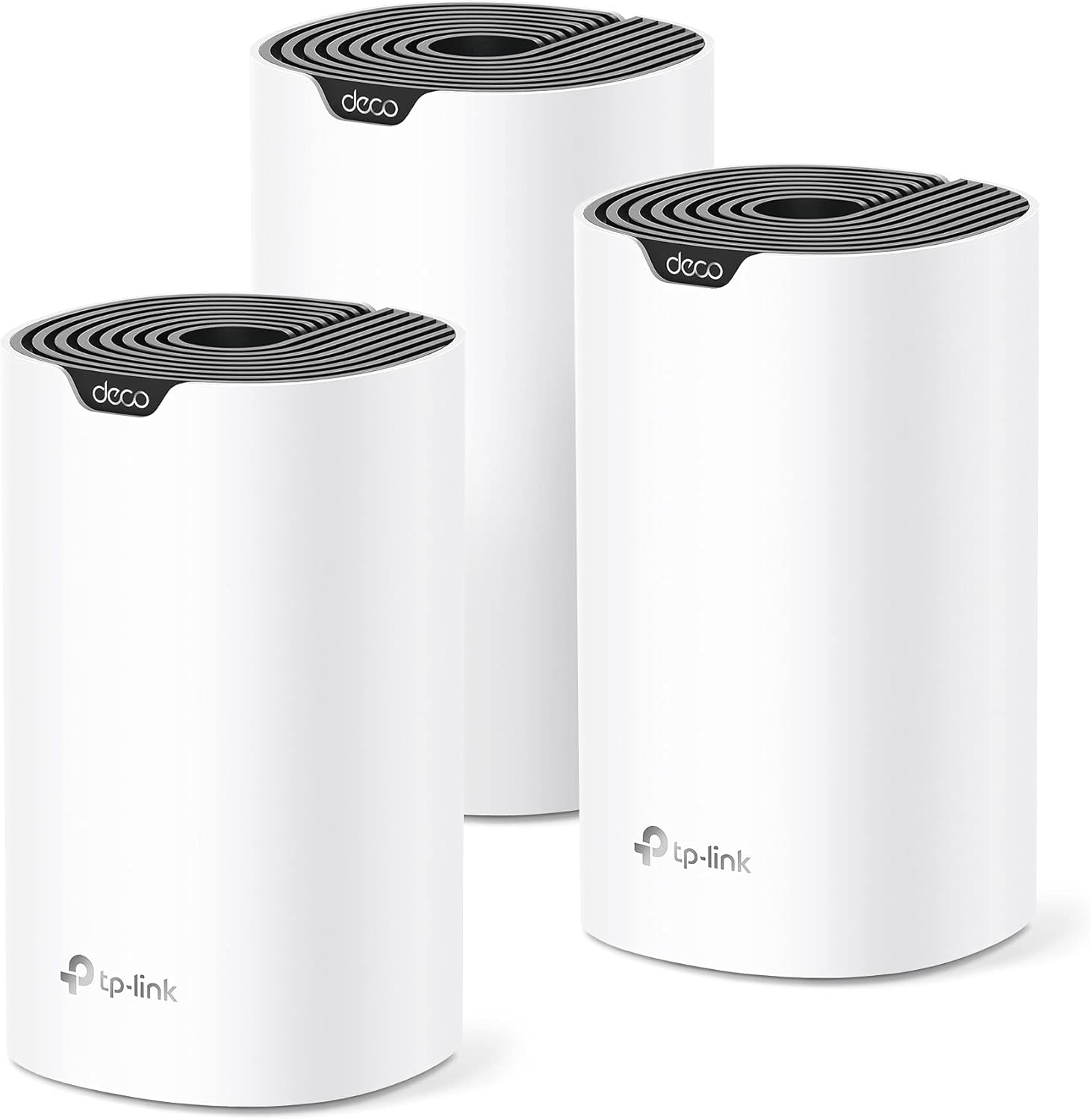
TP-Link Deco S4 Mesh AC1900 WiFi System - Up to 5,500 Sq.ft. Coverage, Replaces WiFi Router and Extender, Gigabit Ports, Works with Alexa, Deco S4(3-Pack)
A 3-pack AC1900 dual-band mesh system covering 5,500 sq ft with Gigabit Ethernet, for homes needing broad Wi-Fi 5 coverage on a budget.

TP-Link Deco X55 Pro AX3000 Whole Home Wi-Fi 6 Mesh System - Coverage up to 6500 Sq.Ft & up to 150 Devices, 2x2.5G WAN/LAN Ports, 4 Streams, Wired Ethernet Backhaul, Ideal for 1Gig+ Internet, 3-Pack
A Wi-Fi 6 mesh system with AX3000 speed and 2x 2.5G ports per unit, covering 6500 sq. ft. for homes with 1Gig+ internet.