
NETGEAR WiFi Mesh Range Extender (EX5000) - Covers up to 1,000 sq.ft. and 15 Devices with AC1200 Dual Band Wireless Signal Booster & Repeater (up to 1200 Mbps Speed) – Compact Wall Plug Design
Want the best price and purchase timing?
Our AI advisor analyzes real-time pricing across all channels to find you the best deal.
AI Verdict
This AC1200 dual-band Wi-Fi extender claims 1000 sq ft coverage for 15 devices, but user experiences frequently report inconsistent performance and significant speed drops.
Regret Score™
Very High RiskLower is better — measures purchase-regret risk from real buyer complaints, review credibility, and product maturity
Issues discovered after purchase
Critically weak dimension
Amazon rating vs actual quality
Chance this product isn't for you
Pros
- Provides dual-band AC1200 Wi-Fi speeds up to 1200 Mbps.
- Advertised to add Wi-Fi range coverage up to 1000 sq ft.
- Can connect up to 15 devices like laptops, smartphones, and IoT devices.
- Works with any standard wireless router, gateway, or cable modem with Wi-Fi.
- Features a WPS button for simplified connection to your router.
- Compact wall-plug design minimizes clutter.
Cons
- Many users report frequent disconnections and random performance drops after initial setup.
- Reported speed reduction can be as much as half or worse when connected through the extender.
- The 'mesh' functionality often doesn't behave like a true mesh system, requiring manual reconnection to the extender's network.
- Setup can be frustrating for many, with WPS failing and the device not appearing.
- Actual signal strength boost is often barely noticeable, contradicting the advertised range.
Dimension Scores
Advertised 1200 Mbps and 1000 sq ft are often not realized in practice, with users reporting weak signal and significant speed drops.
Frequent complaints about random disconnections and performance degradation make it an unreliable device for many users.
While WPS is offered, many users find the setup process frustrating and report issues with the device not showing up or connecting properly.
It supports WEP and WPA/WPA2, which are standard but lack the newer, more robust WPA3 protocol.
Best For
- Extending basic Wi-Fi to a single, small dead zone where no signal exists.
- Connecting a few low-bandwidth IoT devices in close proximity to the extender.
- Users with very basic Wi-Fi needs who are tolerant of inconsistent connectivity.
Not Recommended For
- Large homes or areas with multiple Wi-Fi dead zones.
- High-bandwidth activities such as 4K video streaming or competitive online gaming.
- Users expecting a seamless, true mesh Wi-Fi experience.
- Anyone requiring stable, consistent, and fast Wi-Fi connectivity.
Watch Out For
- Many users report the extender 'works well until it doesn't,' with performance dropping or disconnecting randomly after a few days.
- Speed gets cut in half or worse once devices connect through the extender.
- The 'mesh' feature is often just a fancy word; users frequently have to manually reconnect to the extender's network.
- Setup can be a pain, with WPS failing and the device not showing up for many buyers.
- The signal boost is often barely noticeable, despite the 1000 sq ft coverage claim.
Full Specifications
| ASIN | B083R46CV8 |
| Brand | NETGEAR |
| Item Weight | 5.4 ounces |
| Manufacturer | Netgear |
| Special Feature | High speed |
| Item model number | EX5000-1AZNAS |
| Data Transfer Rate | 1200 Megabits Per Second |
| Product Dimensions | 2.55 x 2.85 x 2.85 inches |
| Frequency Band Class | Dual-Band |
| Wireless Communication Standard | 802.11ac |
What Buyers Say
The most striking finding from user feedback is the inconsistency: many report it works initially, then suffers from frequent disconnections and significant speed drops, making its long-term reliability questionable. Despite claims of 1000 sq ft coverage, users often find the signal boost barely noticeable, and the 'mesh' functionality frequently falls short of a seamless experience, often requiring manual network switching.
“Honestly, this thing just drops out all the time, I'm constantly having to reconnect my phone or reboot it, what a headache.”
Common Praise
- Compact wall-plug design is convenient for placement.
- WPS setup is straightforward for some users.
- Can extend basic Wi-Fi to a previously uncovered spot.
- Works with existing routers without compatibility issues.
Common Complaints
- Random disconnections and unexpected performance drops are common.
- Internet speed is often cut in half or worse when connected through the extender.
- The 'mesh' feature doesn't provide seamless roaming, requiring manual network switching.
- Setup can be confusing and the device may not appear during the process.
- The actual signal strength boost is often minimal, not living up to coverage claims.
Ownership Tips
- You'll likely need to experiment with placement to find a spot where it doesn't constantly disconnect.
- Expect to manually switch between your main Wi-Fi and the extender's network if you move around your home.
- Don't expect the full 1200 Mbps speed; real-world speeds are significantly lower.
- It might work fine for a few days, then start acting up, requiring frequent reboots to restore connectivity.
Frequently Asked Questions
Does the NETGEAR EX5000 work with any router?
Yes, it is designed to work with any standard wireless router, gateway, or cable modem that has Wi-Fi.
How do I set up the EX5000?
You can set it up by pressing the WPS button on both the extender and your router, or by using the NETGEAR WiFi Analyzer app for optimal placement and configuration.
Will this extender slow down my internet speed?
Many users report significant speed drops, sometimes cutting speeds in half or more, when devices are connected through the extender.
Is the EX5000 a true mesh Wi-Fi system?
While marketed with 'mesh,' many users report it does not behave like a true mesh system, often requiring manual reconnection to the extender's network.
What wireless security protocols does it support?
It supports WEP and WPA/WPA2 wireless security protocols.
Buying Guide
When you're looking at Wi-Fi extenders, you're trying to stretch your existing Wi-Fi signal further. Don't expect it to magically make your internet faster; it's just repeating the signal, and that process usually introduces some speed loss. The goal is to get a usable signal where you currently have none, not to boost performance for demanding tasks.
wifi_standard (802.11ac)
This refers to the generation of Wi-Fi technology. 802.11ac is an older standard; newer ones like 802.11ax (Wi-Fi 6) offer faster speeds and better efficiency, especially when many devices are connected.
data_rate (1200 Megabits Per Second)
This is the theoretical maximum speed the extender can handle. Think of it like the top speed of a car; you rarely hit it in real-world driving conditions, and extenders often cut this speed significantly due to how they operate.
frequency (Dual-Band)
This means it uses both the 2.4 GHz and 5 GHz Wi-Fi bands. The 2.4 GHz band travels further but is slower, while 5 GHz is faster but has less range. Dual-band helps balance range and speed, but doesn't guarantee both simultaneously.
mesh (Mesh)
In a true mesh system, all devices work together as one seamless network. For extenders, 'mesh' often just means it creates a network with a similar name, but your devices might not automatically switch to the strongest signal, leading to manual reconnections.
Alternatives
If this extender doesn't cut it, look for extenders with Wi-Fi 6 (802.11ax) for better efficiency and speed, or consider a full mesh Wi-Fi system for seamless whole-home coverage and more consistent performance.
You Might Also Like

Amazon eero Pro 7 with 1 month free eero Business (auto-renews annually) - Supports internet plans up to 5 Gbps, Coverage up to 6,000 sq. ft., Connect 600+ devices, 3-pack
$600+This 3-pack Wi-Fi 7 tri-band mesh system delivers up to 3.9 Gbps wireless speeds and 5 Gbps wired speeds, covering 6,000 sq. ft. for businesses needing high-capacity networking.

Amazon eero 6 mesh wifi add-on extender - Add up to 1,500 sq. ft. of Wi-Fi 6 coverage. Required eero mesh wifi system not included
A Wi-Fi 6 mesh extender that adds up to 1,500 sq. ft. of coverage, exclusively for existing eero network users.
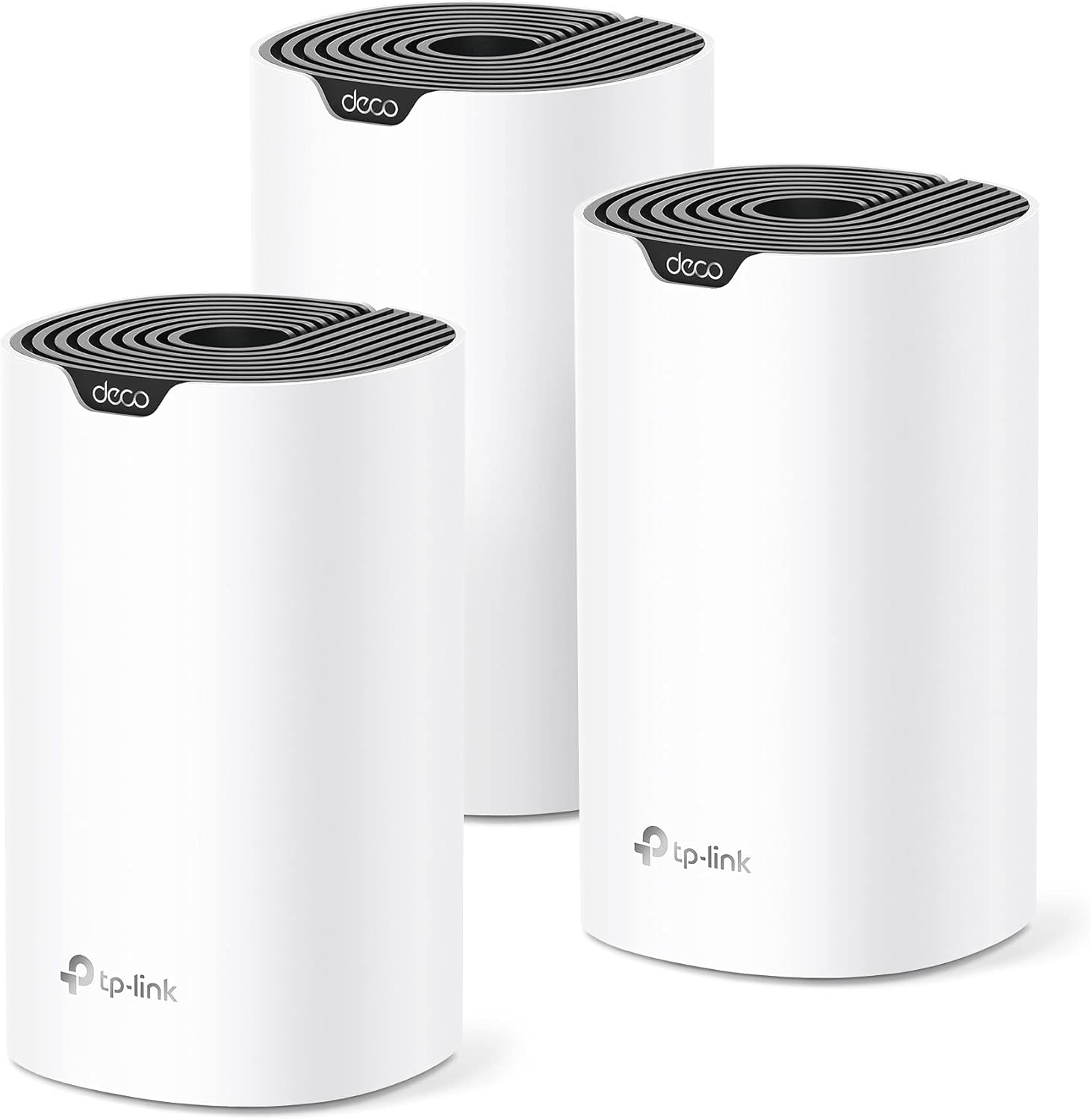
TP-Link Deco S4 Mesh AC1900 WiFi System - Up to 5,500 Sq.ft. Coverage, Replaces WiFi Router and Extender, Gigabit Ports, Works with Alexa, Deco S4(3-Pack)
A 3-pack AC1900 dual-band mesh system covering 5,500 sq ft with Gigabit Ethernet, for homes needing broad Wi-Fi 5 coverage on a budget.

TP-Link Deco X55 Pro AX3000 Whole Home Wi-Fi 6 Mesh System - Coverage up to 6500 Sq.Ft & up to 150 Devices, 2x2.5G WAN/LAN Ports, 4 Streams, Wired Ethernet Backhaul, Ideal for 1Gig+ Internet, 3-Pack
A Wi-Fi 6 mesh system with AX3000 speed and 2x 2.5G ports per unit, covering 6500 sq. ft. for homes with 1Gig+ internet.