
TP-Link EAP225 Omada AC1350 Gigabit Wireless Access Point Business WiFi Solution w/Mesh Support, Seamless Roaming & MU-MIMO PoE Powered SDN Integrated Cloud Access & Omada App White
Want the best price and purchase timing?
Our AI advisor analyzes real-time pricing across all channels to find you the best deal.
AI Verdict
A dual-band 802.11ac Wi-Fi 5 access point with 1350 Mbps speed and PoE, best for extending wired networks in small to medium businesses.
This access point is a strong contender if you have Ethernet wiring and need to expand Wi-Fi coverage with a managed solution, especially within the Omada ecosystem. Its 802.11ac speeds and PoE support make it practical for many business and prosumer setups. However, the reliance on a controller for advanced features means it's not a simple standalone mesh solution.
If you need faster speeds or better performance in dense environments, look for an access point with Wi-Fi 6 (802.11ax) and higher combined throughput ratings.
Regret Score™
Low RiskLower is better — measures purchase-regret risk from real buyer complaints, review credibility, and product maturity
Issues discovered after purchase
Critically weak dimension
Amazon rating vs actual quality
Chance this product isn't for you
Pros
- Delivers dual-band Wi-Fi speeds up to 1350 Mbps using 802.11ac Wave 2 MU-MIMO technology.
- Supports both 802.3af/at PoE and Passive PoE, with a PoE adapter included for flexible installation.
- Integrates into TP-Link's Omada SDN platform for centralized cloud management via app or controller.
- Offers a secure guest network with SMS/Voucher authentication and captive portal functionality.
- Functions as a standalone access point without requiring an Omada controller for basic operation.
- Supports Mesh WiFi and Seamless Roaming when used with an Omada SDN controller.
Cons
- Requires an Omada SDN controller (hardware or software) for advanced features like seamless roaming and mesh.
- Uses Wi-Fi 5 (802.11ac) technology, not the newer Wi-Fi 6 or 7 standards.
- Maximum theoretical speed of 1350 Mbps is split between 450 Mbps on 2.4 GHz and 867 Mbps on 5 GHz.
- Some users report devices not always connecting to the closest mesh node without careful configuration.
Dimension Scores
It offers 1350 Mbps combined dual-band Wi-Fi 5 speeds, which is adequate for many scenarios but not top-tier compared to Wi-Fi 6/7 devices.
Users generally report stable connections, especially when properly configured within the Omada ecosystem, though mesh handoff can be inconsistent without a controller.
Standalone setup is straightforward, and the Omada app and SDN platform offer flexible and centralized management options.
Includes business-focused features like a secure guest network with captive portal and multiple authentication options.
Best For
- Adding Wi-Fi coverage to specific areas in a small office or home with existing Ethernet wiring.
- Businesses needing a managed Wi-Fi solution with guest authentication features.
- Users already invested in the TP-Link Omada SDN ecosystem.
- Extending a wired network with a dedicated access point rather than a wireless extender.
Not Recommended For
- Users expecting Wi-Fi 6 or Wi-Fi 7 speeds and features for future-proofing.
- Large, complex environments requiring extensive mesh coverage without a dedicated Omada controller.
- Anyone looking for a simple plug-and-play Wi-Fi extender without any configuration.
Watch Out For
- Seamless roaming and mesh functionality are locked behind the Omada SDN controller, which is an additional purchase or requires a dedicated PC running software.
- While it supports 1350 Mbps, this is a combined theoretical speed, with the 2.4 GHz band limited to 450 Mbps and 5 GHz to 867 Mbps.
- Some users report that devices don't always switch to the strongest mesh signal automatically, requiring manual intervention or fine-tuning.
- The EAP225 is a Wi-Fi 5 device, meaning it won't leverage the speed or efficiency improvements of newer Wi-Fi 6/7 clients.
Full Specifications
| ASIN | B0781YXFBT |
| Brand | TP-Link |
| Color | PVC |
| Model Name | EAP225 |
| Item Weight | 1.1 pounds |
| Manufacturer | TP-Link |
| Special Feature | Access Point Mode |
| Item model number | EAP225 |
| Compatible Devices | Personal Computer |
| Product Dimensions | 8.09 x 7.15 x 1.47 inches |
| Frequency Band Class | Dual-Band |
| Connectivity Technology | Wi-Fi |
| Recommended Uses For Product | Business |
| Is Discontinued By Manufacturer | No |
| Wireless Communication Standard | 802.11ac |
What Buyers Say
People really dig the Omada ecosystem, saying it makes managing multiple access points way less of a headache than other systems. The included PoE injector is a huge win, saving you from buying extra gear just to power it up. Some users, though, found that getting the mesh to work perfectly, with devices actually switching to the closest AP, took some tweaking or a dedicated controller. It's a solid choice if you're already running Ethernet, but don't expect it to magically solve all your Wi-Fi woes in a huge house without some extra Omada hardware.
“Man, I just needed some Wi-Fi in the garage and this thing delivered, but I had to buy the controller later to get my phone to stop connecting to the main house AP when I was literally standing next to this one. Still, for the price, it's pretty sweet.”
Common Praise
- Easy to set up in standalone mode, often taking only a few minutes.
- The Omada app simplifies management and configuration.
- PoE support, especially with the included adapter, makes installation flexible.
- Provides good Wi-Fi coverage for its price point in many home and small business setups.
- Guest network features with captive portal are useful for business environments.
Common Complaints
- Full mesh and seamless roaming require an Omada controller, which isn't always clear upfront.
- Devices sometimes stick to a weaker signal from a distant AP instead of switching to a closer mesh node.
- It's Wi-Fi 5, so it's not the fastest option if you have Wi-Fi 6/7 devices or very high internet speeds.
- Range can be limited compared to higher-end or more powerful access points in very large or obstructed spaces.
Ownership Tips
- The Omada controller, even the software version, needs to be running constantly for seamless roaming and mesh to function as intended.
- Mounting hardware for wall or ceiling installation is included, which is a nice touch.
- The device can be surprisingly compact, making it easy to blend into environments.
- While it's 'business solution,' it works perfectly fine for advanced home users who want more control than a typical router offers.
Frequently Asked Questions
Does the TP-Link EAP225 work as a standalone access point?
Yes, it works as a standalone access point without needing an Omada controller for basic Wi-Fi broadcasting.
Do I need an Omada controller for mesh and seamless roaming?
Yes, for true seamless roaming and mesh Wi-Fi functionality, you need to integrate the EAP225 into the Omada SDN platform with a hardware or software controller.
What Wi-Fi standard does the EAP225 use?
The EAP225 uses the 802.11ac (Wi-Fi 5) standard, offering dual-band connectivity.
How is the EAP225 powered?
It supports both 802.3af/at PoE and Passive PoE, and a Passive PoE adapter is included in the box for power.
Can I manage the EAP225 from my phone?
Yes, you can manage the EAP225 using the Omada app, which provides centralized cloud management.
Buying Guide
When you're looking at access points like this, you're basically adding Wi-Fi to a wired network. Think of it as a speaker for your internet signal. You run an Ethernet cable to it, and it broadcasts Wi-Fi. This is different from a router, which usually combines a modem, router, and Wi-Fi into one box. Access points are for extending coverage or creating separate Wi-Fi networks in different areas.
802.11ac (Wi-Fi 5)
This is the generation of Wi-Fi technology it uses. 802.11ac is still common, but newer devices use 802.11ax (Wi-Fi 6) or 802.11be (Wi-Fi 7) for faster speeds and better performance with many connected devices. If your internet is super fast or you have lots of new gadgets, you might want a newer standard.
Dual-Band (2.4 GHz & 5 GHz)
This means it broadcasts Wi-Fi on two different radio frequencies. The 2.4 GHz band travels further and through walls better but is slower. The 5 GHz band is faster but has a shorter range. Having both lets your devices pick the best connection.
MU-MIMO
Multi-User, Multiple-Input, Multiple-Output. This tech lets the access point talk to several devices at once, instead of one at a time. It's like a cashier serving multiple customers simultaneously, making your Wi-Fi feel faster when many devices are active.
PoE (Power over Ethernet)
This is how the access point gets power and data through a single Ethernet cable. It's super handy because you don't need a separate power outlet near where you install the AP, making placement much more flexible.
Alternatives
If this doesn't quite fit, look for access points with Wi-Fi 6 or Wi-Fi 7 for higher speeds and better performance in congested areas, or models with integrated controllers if you want advanced mesh features without separate hardware.
You Might Also Like

Amazon eero Pro 7 with 1 month free eero Business (auto-renews annually) - Supports internet plans up to 5 Gbps, Coverage up to 6,000 sq. ft., Connect 600+ devices, 3-pack
$600+This 3-pack Wi-Fi 7 tri-band mesh system delivers up to 3.9 Gbps wireless speeds and 5 Gbps wired speeds, covering 6,000 sq. ft. for businesses needing high-capacity networking.

Amazon eero 6 mesh wifi add-on extender - Add up to 1,500 sq. ft. of Wi-Fi 6 coverage. Required eero mesh wifi system not included
A Wi-Fi 6 mesh extender that adds up to 1,500 sq. ft. of coverage, exclusively for existing eero network users.
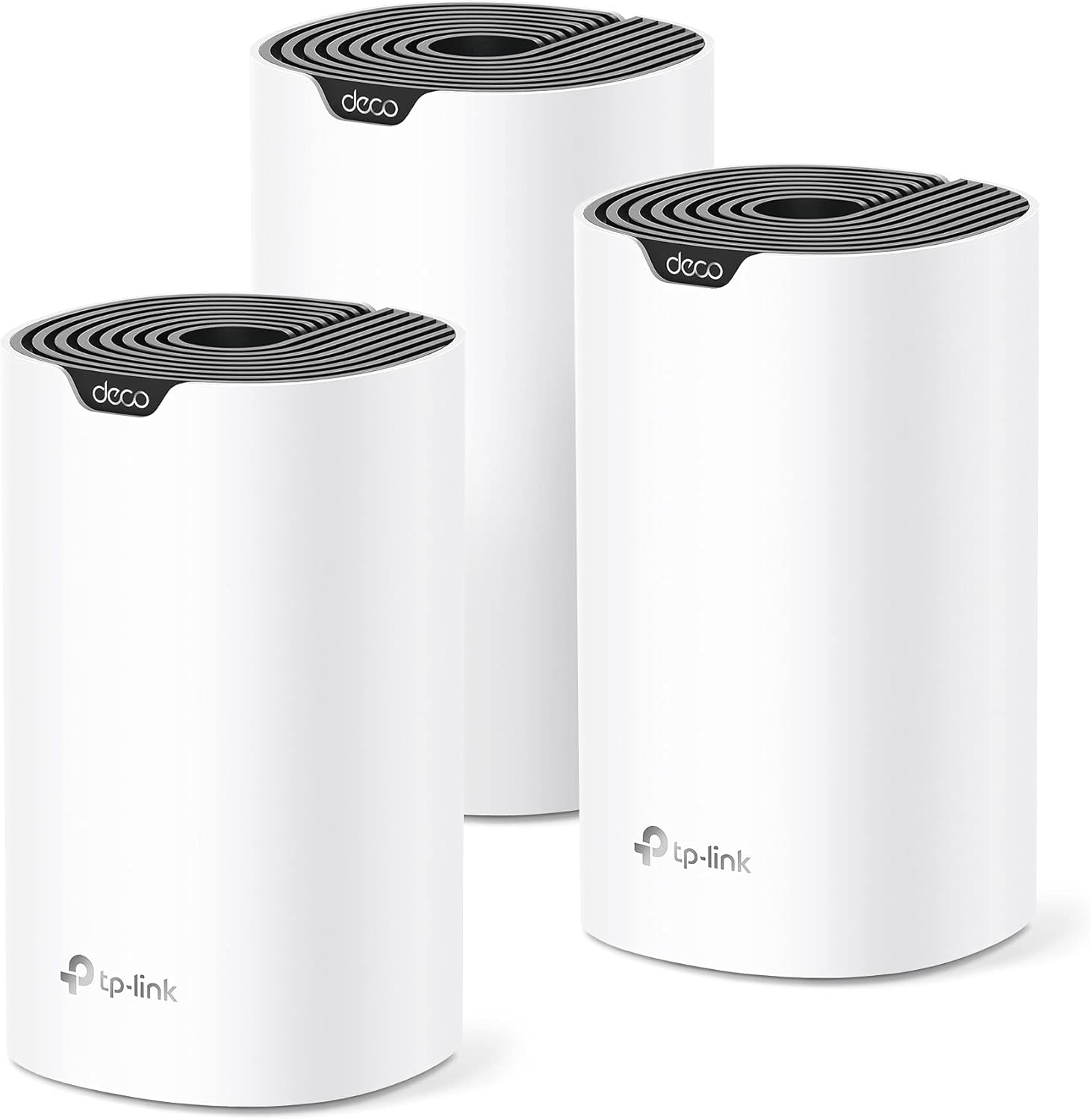
TP-Link Deco S4 Mesh AC1900 WiFi System - Up to 5,500 Sq.ft. Coverage, Replaces WiFi Router and Extender, Gigabit Ports, Works with Alexa, Deco S4(3-Pack)
A 3-pack AC1900 dual-band mesh system covering 5,500 sq ft with Gigabit Ethernet, for homes needing broad Wi-Fi 5 coverage on a budget.

TP-Link Deco X55 Pro AX3000 Whole Home Wi-Fi 6 Mesh System - Coverage up to 6500 Sq.Ft & up to 150 Devices, 2x2.5G WAN/LAN Ports, 4 Streams, Wired Ethernet Backhaul, Ideal for 1Gig+ Internet, 3-Pack
A Wi-Fi 6 mesh system with AX3000 speed and 2x 2.5G ports per unit, covering 6500 sq. ft. for homes with 1Gig+ internet.