
GL.iNet GL-AR300M16-Ext Portable Mini Travel Wireless Pocket Router - WiFi Router | OpenWrt | 2 x Ethernet Ports | OpenVPN/Wireguard VPN for Public & Hotel Wi-Fi | USB 2.0 Port | 2 x External Antennas
Want the best price and purchase timing?
Our AI advisor analyzes real-time pricing across all channels to find you the best deal.
AI Verdict
This 39g, 2.4 GHz, single-band OpenWrt router with 2x 10/100 Ethernet ports is for securing basic travel Wi-Fi with pre-installed VPN.
This router is a situational fit for travelers prioritizing security and portability over raw speed. Its 39g weight, USB power, and pre-installed VPN client are perfect for hotel Wi-Fi, but the single-band 2.4 GHz and 10/100 Ethernet ports mean it won't handle demanding tasks.
If you need faster speeds or 5 GHz Wi-Fi, look for a travel router with dual-band Wi-Fi and Gigabit Ethernet ports.
Regret Score™
Medium RiskLower is better — measures purchase-regret risk from real buyer complaints, review credibility, and product maturity
Issues discovered after purchase
Critically weak dimension
Amazon rating vs actual quality
Chance this product isn't for you
Pros
- OpenWrt is pre-installed and the device is programmable, offering extensive customization options.
- OpenVPN and Wireguard VPN client and server are pre-installed, compatible with over 30 VPN service providers for secure connections.
- It weighs only 39g (1.41 Oz) and is pocket-friendly, making it easy to carry.
- Features dual Ethernet ports for wired connections.
- Can be powered by any laptop USB port or power banks, increasing portability.
- External antennas can provide a stronger connection to weaker Wi-Fi networks.
Cons
- Operates only on the 2.4 GHz frequency, limiting Wi-Fi speeds compared to dual-band routers.
- The two Ethernet ports are 10/100 Mbps, not Gigabit, which caps wired transfer speeds.
- Uses a Micro USB port for power, which is an older standard compared to USB-C.
- External antennas are not designed to fold in, making them susceptible to damage when packed for travel.
- The 128MB RAM can be a limitation for installing many additional OpenWrt packages or future firmware updates without external storage.
Dimension Scores
The single-band 2.4 GHz Wi-Fi and 10/100 Mbps Ethernet ports limit maximum throughput, though external antennas can help with range.
Users report it works as described for its intended purpose, providing stable connections for basic tasks.
OpenWrt is pre-installed and the web UI is functional, but some users find the initial setup process can be tricky.
Pre-installed OpenVPN/Wireguard client and server, a strong firewall, and DNS over TLS with Cloudflare offer robust security for its class.
Best For
- Converting public or hotel wired/wireless networks into a private Wi-Fi network for multiple devices.
- Securing internet access on public Wi-Fi using its pre-installed OpenVPN/Wireguard client.
- Connecting devices that only have an Ethernet port to a Wi-Fi network.
- Remote monitoring setups, like astrophotography, within a 50 ft range.
Not Recommended For
- High-bandwidth activities such as streaming multiple 4K videos or frequent large file transfers.
- Users requiring faster 5 GHz Wi-Fi speeds for local network performance.
- Replacing a primary home router for a household with many users or demanding network needs.
Watch Out For
- The external antennas are not collapsible, which means they can be flimsy and prone to damage when packed in a bag.
- Download speeds in extender mode can be significantly lower than the main network's typical performance.
- Initial software loading can be slow, and some users find the setup process tricky at first.
- The 128MB RAM might restrict the installation of advanced OpenWrt packages like Samba v4 or limit future OpenWrt updates without external USB storage.
- Only supporting 2.4 GHz Wi-Fi means you're stuck with slower speeds and more potential interference compared to dual-band options.
Full Specifications
| ASIN | B07794JRC5 |
| Brand | GL.iNet |
| Color | Black |
| Model Name | Shadow |
| Item Weight | 0.704 ounces |
| Manufacturer | GL Technologies |
| Special Feature | Access Point Mode, Internet Security, Remote Access |
| Item model number | GL-AR300M16-Ext |
| Compatible Devices | Laptop |
| Product Dimensions | 2.28 x 2.28 x 0.98 inches |
| Included Components | GL-AR300M16-Ext mini router, USB cable, Ethernet cable, and user manual |
| Frequency Band Class | Single-Band |
| Connectivity Technology | Ethernet, USB, Wi-Fi |
| Recommended Uses For Product | Bussiness, Monitoring, Security, Travel |
| Is Discontinued By Manufacturer | No |
| Wireless Communication Standard | 2.4 GHz Radio Frequency |
What Buyers Say
The biggest takeaway from users is how this tiny router excels at securing public Wi-Fi, especially with its pre-installed VPN, but don't expect blazing speeds. Many travelers love its ability to handle hotel login pages and create a private network for all their devices. However, the 2.4 GHz only Wi-Fi and 10/100 Ethernet ports are frequently mentioned as speed bottlenecks. The external antennas, while helpful for signal, are also a point of concern for durability when packed.
“Dude, this thing is tiny and saved my butt in so many hotel rooms with sketchy Wi-Fi, but don't even think about streaming 4K on it, it's just not built for that speed.”
Common Praise
- It's incredibly small and lightweight (39g), making it easy to carry.
- Effectively handles hotel and public Wi-Fi captive portals, creating a private network.
- The pre-installed OpenWrt firmware offers significant flexibility and customization.
- Built-in OpenVPN and Wireguard client/server functionality is a major plus for security.
- Can be powered conveniently via USB from a laptop or power bank.
- Useful for connecting wired-only devices to a Wi-Fi network.
Common Complaints
- Only supports 2.4 GHz Wi-Fi, which results in slower speeds and more interference.
- The Ethernet ports are limited to 10/100 Mbps, not Gigabit.
- Uses an older Micro USB port for power instead of the more modern USB-C.
- The external antennas are fragile and can be easily damaged during travel.
- Performance in extender mode can be significantly slower than the main network.
- The 128MB RAM can be limiting for advanced OpenWrt users or installing many packages.
Ownership Tips
- Once configured for a new location, connected devices automatically reconnect without further changes.
- Requires some comfort with networking settings to fully utilize its advanced features.
- Can be repurposed as a Wi-Fi adapter for industrial machinery that only has Ethernet connectivity.
- Firmware upgrades are crucial; specifically, upgrading to v4.3.7 is necessary before installing the newest versions for optimal performance.
- Its small size means it's easy to misplace or forget in a hotel room.
Frequently Asked Questions
Can this router handle hotel captive portals for Wi-Fi login?
Yes, it is designed to handle web-page logins common in hotels and public Wi-Fi networks, creating a private network for your devices.
What kind of VPN speeds can I expect with this device?
You can expect up to 15Mbps for OpenVPN and up to 50Mbps for WireGuard when operating in client mode.
Can I power this router using a power bank?
Yes, the router can be powered by any laptop USB port or standard 5V power banks.
Does this router support 5GHz Wi-Fi?
No, this model only supports the 2.4 GHz Wi-Fi frequency.
Is the setup process complicated for a beginner?
While some users find the initial setup a bit tricky, it's generally straightforward for its intended use, and the company provides documentation.
Can I use this router to stream media or backup files without an internet connection?
Yes, with a USB drive for extended storage, you can use it to stream media via uPNP/miniDLNA or backup photos via Samba, even offline.
Buying Guide
When looking at a travel router like this, you're buying a personal Wi-Fi bubble for when you're away from home. It takes whatever internet connection you can find – a hotel's Ethernet, their Wi-Fi, or even your phone's data – and turns it into your own secure, private Wi-Fi network. This is super handy for keeping all your devices connected and safe, especially on public networks where security is usually non-existent.
wifi_standard: 2.4 GHz Radio Frequency
This is the older, more common Wi-Fi band. Think of it like a smaller, slower road that reaches further. It's better at going through walls and has a longer range, but it's more prone to interference from other devices and won't give you the fastest speeds, especially if many devices are using it.
frequency: Single-Band
This means the router only operates on the 2.4 GHz frequency. Many modern routers are 'dual-band' or 'tri-band,' offering 5 GHz (and sometimes 6 GHz) as well. The 5 GHz band is like a wider, faster highway, but it doesn't travel as far or through obstacles as well. Single-band means you're limited to the slower, more congested option.
OpenWrt
This is a highly customizable, open-source operating system for routers. Imagine your phone running a custom version of Android that lets you tweak almost anything. OpenWrt gives you a ton of control and advanced features that standard router software doesn't, but it can be more complex to set up and manage if you're not tech-savvy.
OpenVPN/Wireguard VPN
These are like secure, encrypted tunnels for your internet traffic. When you're on public Wi-Fi, your data is often exposed. With a VPN client built into your router, all your devices connected to it get instant encryption, protecting your privacy and security from snoopers. Wireguard is generally faster than OpenVPN.
Alternatives
If this router feels too slow or limited, look for travel routers with dual-band Wi-Fi (2.4 GHz and 5 GHz) for faster speeds, and Gigabit Ethernet ports for quicker wired connections.
You Might Also Like

Amazon eero Pro 7 with 1 month free eero Business (auto-renews annually) - Supports internet plans up to 5 Gbps, Coverage up to 6,000 sq. ft., Connect 600+ devices, 3-pack
$600+This 3-pack Wi-Fi 7 tri-band mesh system delivers up to 3.9 Gbps wireless speeds and 5 Gbps wired speeds, covering 6,000 sq. ft. for businesses needing high-capacity networking.

Amazon eero 6 mesh wifi add-on extender - Add up to 1,500 sq. ft. of Wi-Fi 6 coverage. Required eero mesh wifi system not included
A Wi-Fi 6 mesh extender that adds up to 1,500 sq. ft. of coverage, exclusively for existing eero network users.
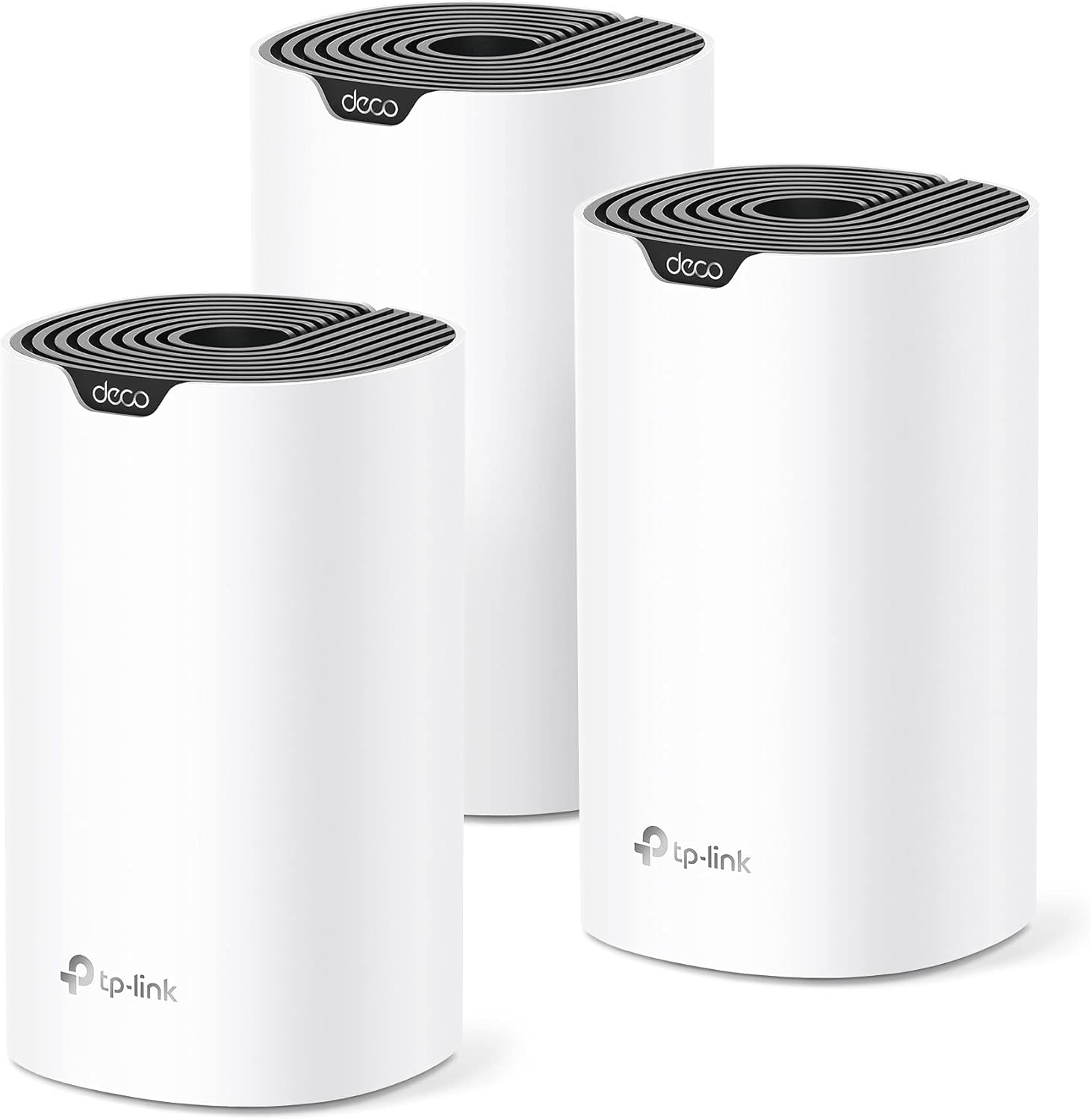
TP-Link Deco S4 Mesh AC1900 WiFi System - Up to 5,500 Sq.ft. Coverage, Replaces WiFi Router and Extender, Gigabit Ports, Works with Alexa, Deco S4(3-Pack)
A 3-pack AC1900 dual-band mesh system covering 5,500 sq ft with Gigabit Ethernet, for homes needing broad Wi-Fi 5 coverage on a budget.

TP-Link Deco X55 Pro AX3000 Whole Home Wi-Fi 6 Mesh System - Coverage up to 6500 Sq.Ft & up to 150 Devices, 2x2.5G WAN/LAN Ports, 4 Streams, Wired Ethernet Backhaul, Ideal for 1Gig+ Internet, 3-Pack
A Wi-Fi 6 mesh system with AX3000 speed and 2x 2.5G ports per unit, covering 6500 sq. ft. for homes with 1Gig+ internet.