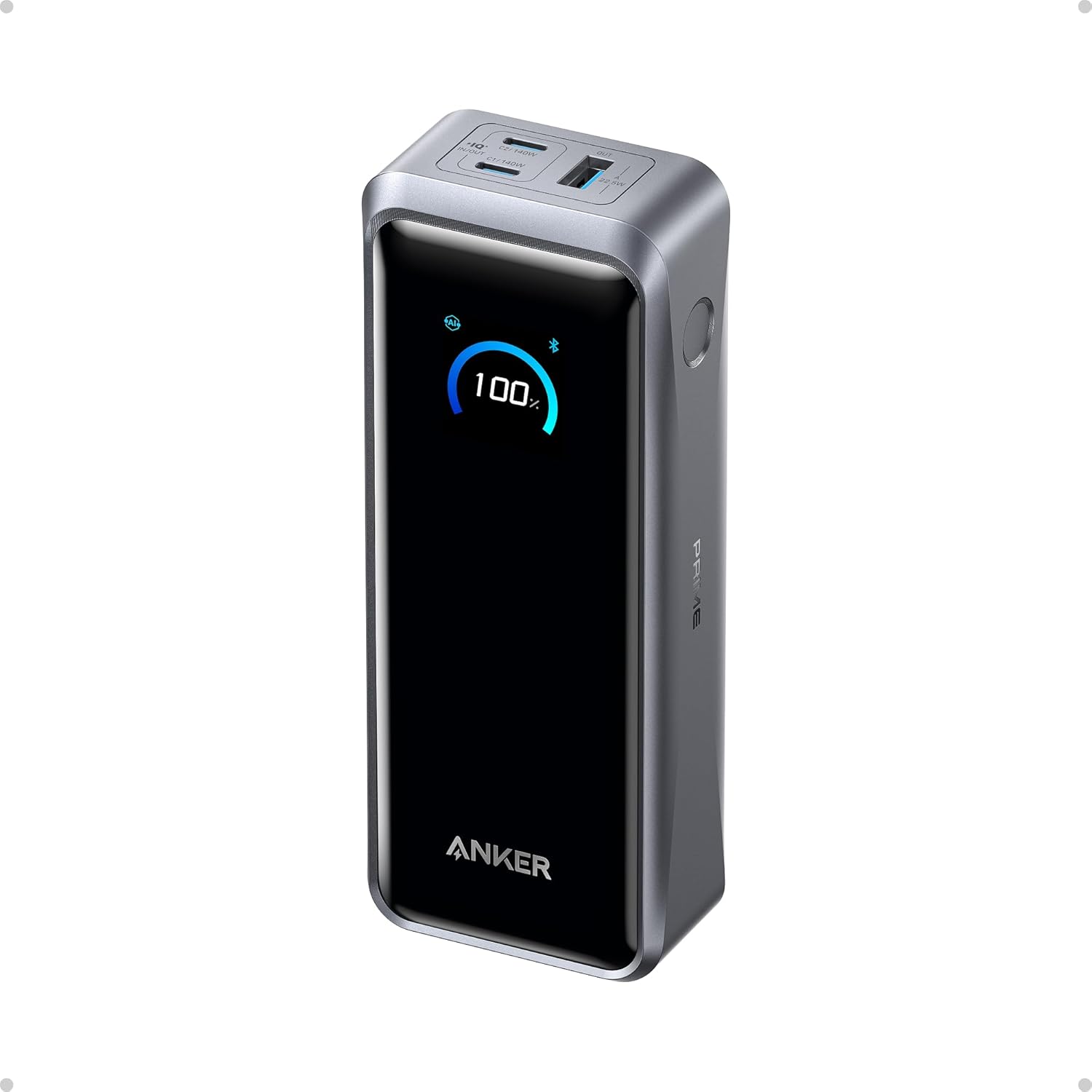
Anker Prime Power Bank, 26,250mAh 3-Port Portable Charger with 300W Max Output, Two-Way Charging, TSA-Approved, App Control, for MacBook, iPhone 17/16 Series, and More (Base Not Included)
Want the best price and purchase timing?
Our AI advisor analyzes real-time pricing across all channels to find you the best deal.
AI Verdict
This 26,250mAh power bank delivers 300W max output across three ports and recharges at 250W, ideal for users needing to rapidly charge multiple high-power devices like laptops and phones.
This power bank is a strong contender for users who absolutely need 300W total output and 140W single-port charging for demanding devices like MacBook Pros, especially given its 26,250mAh TSA-approved capacity. However, the reported throttling after 60% capacity and potential issues with the included cable mean it's not a perfect fit for everyone expecting sustained peak performance without additional purchases.
If sustained high-wattage output is critical, look for power banks with verified consistent output curves beyond 60% capacity, or consider models with higher individual port ratings that don't share power.
Regret Score™
Medium RiskLower is better — measures purchase-regret risk from real buyer complaints, review credibility, and product maturity
Issues discovered after purchase
Critically weak dimension
Amazon rating vs actual quality
Chance this product isn't for you
Pros
- Provides 300W total output across two USB-C and one USB-A port, capable of powering two MacBook Pros simultaneously.
- Delivers up to 140W fast charging to a single device, charging a MacBook Pro (M4 Pro) to 50% in 27 minutes.
- Recharges to 50% in 13 minutes and fully in 60 minutes with 250W max input using dual USB-C ports.
- Features a 26,250mAh (99.75Wh) capacity, which is TSA-approved for air travel.
- Includes a smart display and app control for monitoring detailed charging information and adjusting output power.
- Incorporates ActiveShield 4.0 for temperature monitoring 120 times per second, enhancing safety.
Cons
- Users report charging speed drops significantly after 60% capacity, with output potentially falling from 250W to 75W.
- The advertised 300W performance is not consistently achieved across all ports simultaneously, with some users finding only one USB-C port works at full power.
- The included USB-C cable may limit charging output, reportedly capping at 60W, requiring users to purchase a separate 240W cable.
- Bluetooth connectivity, while offering app control, can drain the battery if left on and may automatically reactivate.
- Some users have experienced firmware instability, charging bugs, and overheating during use.
Dimension Scores
Offers 140W max fast charging for devices and 250W max input for self-recharge, but user reports indicate significant throttling after 60% capacity.
Described as sturdy and durable with internal thermal management, though some users reported DOA units and overheating.
Features two USB-C and one USB-A port with 300W total output, supporting a wide range of devices including MacBook Pro and iPhone 17/16 series.
With a 26,250mAh capacity, it's TSA-approved for flights, but its size and weight are noted as being quite large by some users.
Best For
- Professionals needing to power multiple high-wattage laptops and smartphones on the go.
- Travelers requiring a high-capacity, TSA-approved power source for long flights or remote work.
- Individuals who prioritize rapid recharging of the power bank itself for quick turnarounds.
- Tech enthusiasts who want detailed control and monitoring of charging parameters via a smartphone app.
Not Recommended For
- Budget-conscious buyers, as its price point is considered high by many users.
- Users who need consistent 300W output across all ports for extended periods, due to reported throttling.
- Those seeking a lightweight, compact power bank for minimal daily charging needs.
Watch Out For
- Charging speed can drop from 250W to 75W after the power bank reaches 60% capacity, impacting sustained high-power delivery.
- The included USB-C cable might only support 60W, forcing users to buy a separate 240W cable to achieve maximum charging speeds.
- Bluetooth connectivity, while enabling app control, has been reported to drain the power bank's battery if not manually disabled, and can reactivate automatically.
- Some buyers received incorrect items or empty boxes from Amazon, leading to order cancellations and replacement issues.
- Firmware instability and charging bugs have been reported, with some units experiencing difficulty charging below 5% or inconsistent power management.
Full Specifications
| ASIN | B0F66LNB8D |
| Brand | Anker |
| Color | Phantom Gray |
| Batteries | 1 Lithium Ion batteries required. |
| Item Weight | 1.32 pounds |
| Manufacturer | Anker |
| Connector Type | USB Type A, USB Type C |
| Special Feature | Digital Display, Fast Charging |
| Battery Capacity | 26250 Milliamp Hours |
| Special features | Digital Display, Fast Charging |
| Item model number | A110A |
| Product Dimensions | 6.3 x 2.5 x 1.5 inches |
| Other display features | Wireless |
What Buyers Say
The Anker Prime Power Bank is a powerhouse on paper, boasting 300W total output and 140W single-port charging, but user experiences reveal some significant caveats. Many buyers are frustrated by the power bank's tendency to throttle charging speeds dramatically once it drops below 60% capacity, often falling from 250W to 75W. There are also recurring complaints about the included USB-C cable potentially limiting output to 60W, forcing users to buy a separate, higher-wattage cable to unlock the full advertised speeds. Firmware instability and issues with Bluetooth draining the battery are also common themes, alongside reports of overheating and even receiving faulty units upon delivery.
“Man, this thing is fast when it works, but why does it slow down so much after 60%? And I had to buy a new cable just to get the full speed, what a rip-off.”
Common Praise
- Provides 300W total output across its three ports, allowing simultaneous charging of multiple devices.
- Achieves 140W fast charging for laptops, powering a MacBook Pro (M4 Pro) to 50% in 27 minutes.
- Recharges itself to 50% in 13 minutes and fully in 60 minutes with 250W input.
- The 26,250mAh capacity is sufficient for multiple device charges and is TSA-approved for air travel.
- The smart display and app control offer detailed real-time charging information and output adjustments.
- The power bank is built sturdy and durable, with effective thermal management.
Common Complaints
- Charging speed drops significantly after the power bank's capacity falls below 60%, with output reducing from 250W to 75W.
- The included USB-C cable may only support 60W, requiring an additional purchase for full 140W charging.
- Bluetooth connectivity can drain the battery if left on, and it may automatically re-enable itself.
- Users report firmware instability, charging bugs, and difficulty charging devices below 5%.
- Overheating during charging and reports of Dead On Arrival (DOA) units are present.
- The price is considered high, especially given the reported performance inconsistencies.
Ownership Tips
- You'll likely need to invest in a separate, higher-wattage USB-C cable to consistently achieve the advertised 140W output.
- Keep an eye on the power bank's charge level; expect a noticeable drop in charging speed once it dips below 60%.
- Be mindful of the Bluetooth setting; it can drain the battery if not manually turned off, and it sometimes reactivates on its own.
- Monitor for overheating during intensive charging sessions, especially with multiple devices.
- The app provides useful data, but be prepared for potential firmware quirks or occasional charging inconsistencies.
Frequently Asked Questions
Is this power bank approved for air travel?
Yes, its 26,250mAh (99.75Wh) capacity is within the TSA limits for carry-on luggage.
Can it charge multiple laptops at full speed?
It offers 300W total output across two USB-C and one USB-A port, capable of keeping two MacBook Pros running. However, sustained 140W output on both USB-C ports simultaneously might be affected by throttling after 60% capacity.
How fast does the power bank itself recharge?
It can recharge to 50% in 13 minutes and fully in 60 minutes when using both USB-C ports with a 250W max input.
Does it come with a cable that supports its maximum output?
It includes a 3.3 ft USB-C to USB-C charging cable rated for 240W. However, some users report the included cable might cap output at 60W, potentially requiring a separate purchase for full 140W charging.
What kind of information does the smart display show?
The smart display provides detailed charging information, including the power bank's charge level, the speed at which each port is charging, and temperature information.
Buying Guide
When you're looking at a power bank like this, don't just focus on the 'max output' number. That 300W is a total across all ports, and the real-world sustained output for a single device, especially a laptop, is what matters most. Pay attention to the capacity (26,250mAh here) to understand how many full charges you'll get for your devices, and check the input wattage if you hate waiting for the power bank itself to recharge. Also, always verify if the included cables actually support the advertised speeds.
300W Max Output
This is the total power the power bank can deliver across all its ports combined. Think of it like the total horsepower of a car; it tells you the maximum potential, but not necessarily how fast it goes in every situation or how many devices it can push at their individual max speeds simultaneously.
26,250mAh (99.75Wh) Battery Capacity
This number indicates how much energy the power bank stores. A higher mAh means more charges for your phone or laptop. The 99.75Wh is important because it's just under the 100Wh limit for TSA approval, meaning you can take it on a plane.
250W Max Input
This tells you how quickly the power bank itself can be recharged. A high input wattage means you can fill it up much faster, like filling a car's gas tank with a high-flow pump, which is crucial if you need to top it off quickly between uses.
Alternatives
If this power bank doesn't quite fit, look for models with a lower total wattage if you only charge phones, or higher sustained single-port output if you need consistent maximum power for one laptop without throttling. Consider power banks with different port configurations if you don't need a USB-A port, or if you require specific fast-charging protocols like SuperVOOC.
You Might Also Like

Fast Wireless Charger, NANAMI Qi Certified Wireless Charging Stand Compatible iPhone 17/17 Air/16/15/15 Pro/15 Plus/15 Pro Max/14/13/12, for Samsung Galaxy S25/S24/S23/S22/S21 and Qi-Enabled Phone
A budget Qi-certified wireless charging stand with dual coils and up to 15W output, best for overnight charging of compatible iPhones and Samsung Galaxy devices.
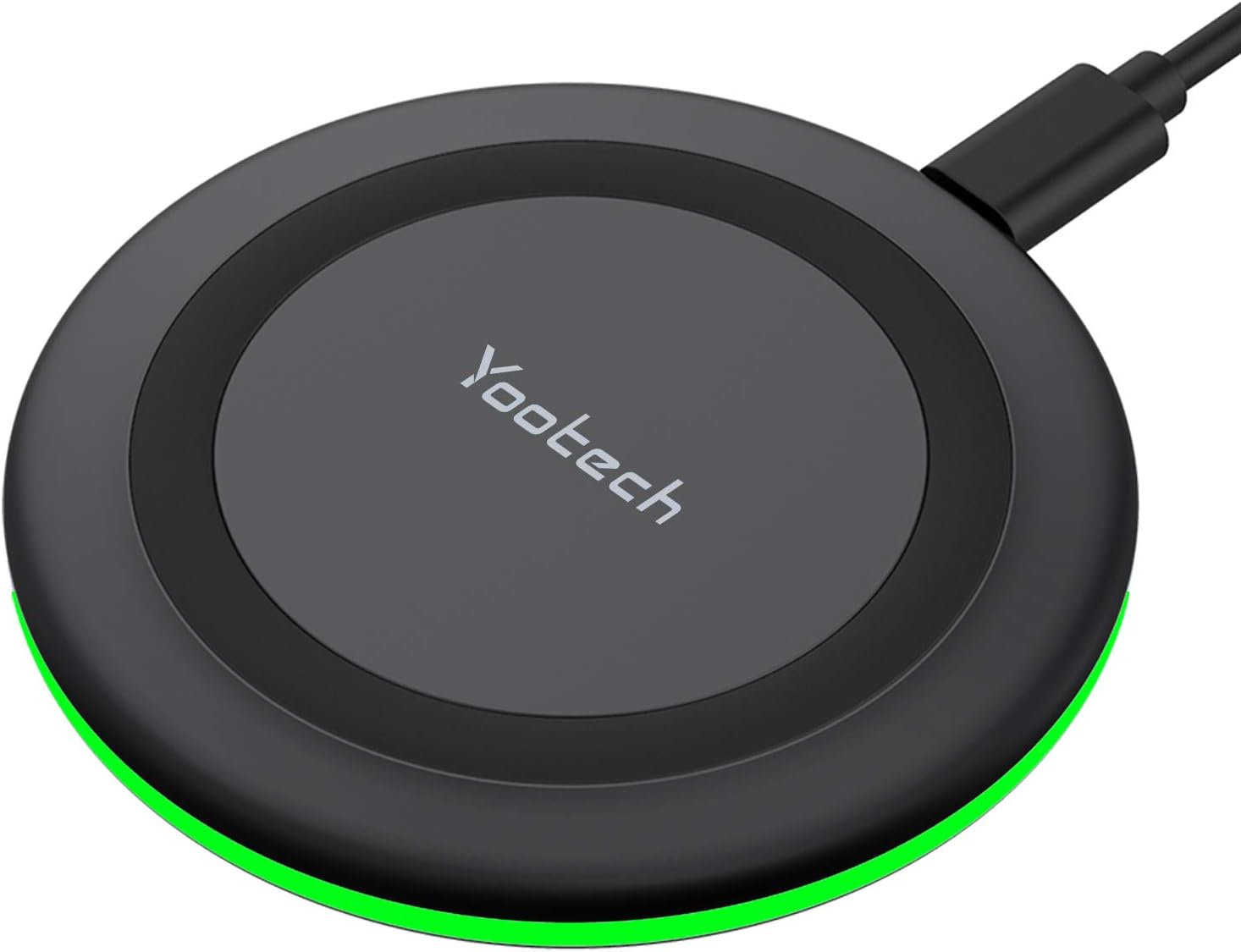
Yootech Wireless Charger,10W Max Wireless Charging Pad Compatible with iPhone 17/17 Pro/17 Pro Max/Air/16/15/14/13/SE 2022/12/11,Samsung Galaxy S25/S24/S23,for AirPods Pro 3(No AC Adapter)
This 10W wireless charging pad offers 7.5W for iPhones and 10W for Samsung Galaxy devices, but requires a separate QC 2.0/3.0 adapter for optimal speeds.
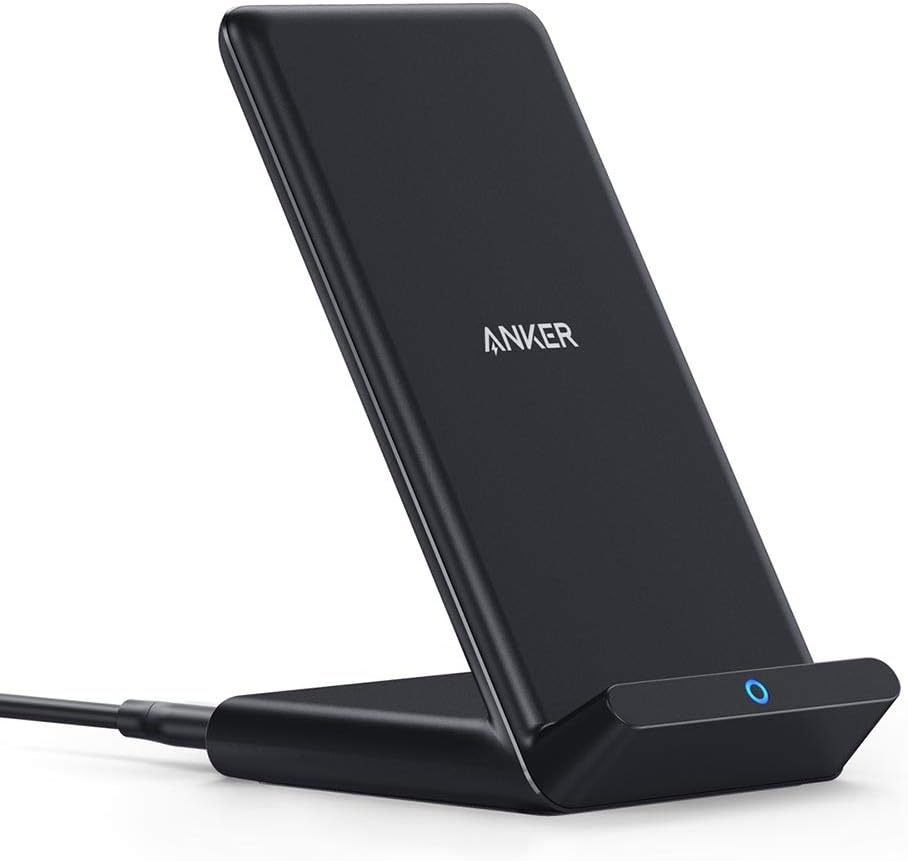
Anker 313 Wireless Charger (Stand), Qi-Certified for iPhone 17/17/17 Pro/17 Pro Max/15/14/13, 10W Fast-Charging Galaxy S23 S22 S21(No AC Adapter)
This is a 10W Qi-certified stand charger with Micro USB input, designed for convenient upright charging of iPhones and Galaxy phones.

VANMASS【85+LBS Strongest Suction & Military-Grade 2026 Ultimate Car Phone Mount【Patent & Safety Certs】 Cell Phone Holder Truck for Dashboard Windshield Vent for iPhone 17 Pro Max 16 15 for Samsung
This is a dual-mount phone holder with 85LBS suction and a 0.7-inch deep cradle, built for extreme temperatures and large phones.