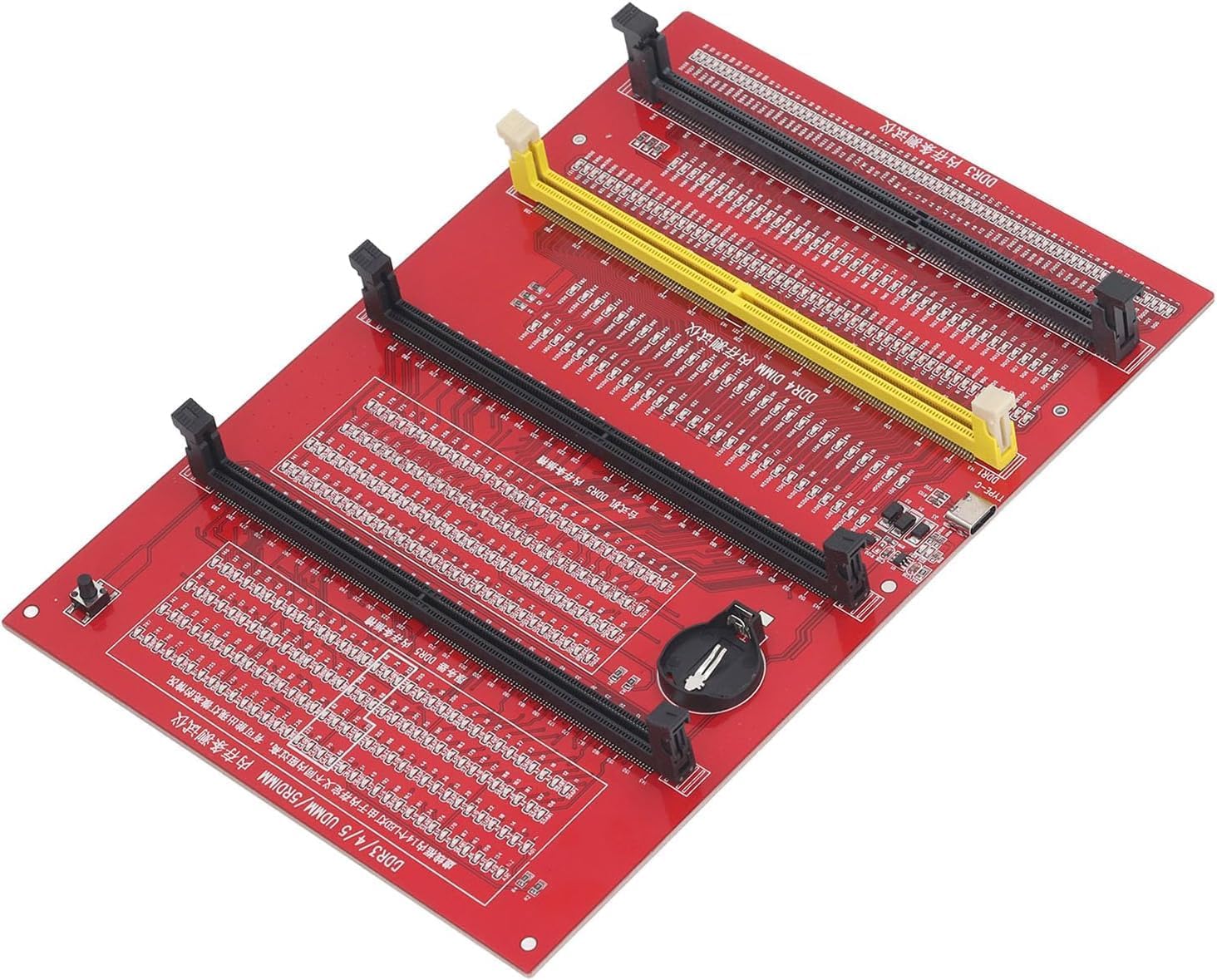
4-in-1 DDR3/DDR4/DDR5UDMM/DDR5RDIMM Memory Diagnostic Tester Card Universal RAM Module & Motherboard Slot Analyzer Kit for Desktop, Laptop, and Server Computer Maintenance Repair
Want the best price and purchase timing?
Our AI advisor analyzes real-time pricing across all channels to find you the best deal.
AI Verdict
This is a budget 4-in-1 memory diagnostic tester for DDR3, DDR4, DDR5 UDIMM, and DDR5 RDIMM modules, powered by Type-C or LIR2032 battery, for basic hardware fault detection.
This tester is a situational fit because its broad compatibility with DDR3, DDR4, and DDR5 UDIMM/RDIMM modules makes it useful for basic hardware fault detection across many systems. However, the lack of advanced diagnostic capabilities means it's only suitable for identifying clear physical issues, not complex memory errors.
If you need more detailed memory analysis beyond basic circuit checks, look for testers that integrate with software diagnostics or provide specific error codes for different types of memory failures.
Regret Score™
Very High RiskLower is better — measures purchase-regret risk from real buyer complaints, review credibility, and product maturity
Issues discovered after purchase
Critically weak dimension
Amazon rating vs actual quality
Chance this product isn't for you
Pros
- Tests four memory types: DDR3, DDR4, DDR5 UDIMM, and DDR5 RDIMM, offering broad compatibility for desktop, laptop, and server modules.
- Features dual power input options via Type-C cable or an LIR2032 battery, allowing flexible use in various environments.
- LED indicators quickly identify hardware faults like open/short circuits or poor contact, with consistent brightness for functional circuits and flashing/unlit LEDs for issues.
- Includes numerical indicators to help pinpoint faulty pins, simplifying fault isolation.
- Comes with a USB cable for setup and has a compact size for portability for field repairs.
- Designed with patch assembly construction, minimizing injury risks during handling.
Cons
- LIR2032 battery is not included, requiring a separate purchase for battery-powered operation.
- The 'speed: 2666 MHz' specification is ambiguous for a tester; it's unclear if this is a maximum testing speed or a general operating frequency.
- Lacks advanced diagnostic features beyond basic circuit and contact fault detection, such as detailed error codes or software integration.
- No reported user feedback is available due to the product's future release date of May 2, 2025, making real-world performance and durability unknown.
Dimension Scores
The 'speed: 2666 MHz' is listed, but for a diagnostic tool, this refers to the maximum speed of RAM it can test, which is average for current DDR4 but below current DDR5 speeds.
It supports DDR3, DDR4, DDR5 UDIMM, and DDR5 RDIMM, covering a very broad range of desktop, laptop, and server memory types.
This is a diagnostic tool for hardware faults, not a performance component, and has no relevance to overclocking headroom.
Reliability is unknown as the product has not yet been released (Date First Available: May 2, 2025), so there is no user feedback or long-term testing data.
Best For
- Technicians needing a basic tool to quickly identify physical memory module faults across multiple DDR generations.
- Hobbyists or repair shops diagnosing boot failures or system crashes related to memory hardware.
- Verifying the integrity of memory modules (worn gold fingers, PCB circuit breaks) before system installation.
- On-site computer maintenance where portability and dual power options are beneficial.
Not Recommended For
- Users requiring in-depth memory analysis, timing checks, or software-based error reporting.
- Diagnosing intermittent memory issues that are not clear-cut hardware faults.
- Professionals needing a robust, high-throughput memory testing solution for large batches of modules.
- Anyone looking for a product with established user reviews and real-world performance validation.
Watch Out For
- No user-reported pitfalls are available as the product's 'Date First Available' is May 2, 2025, meaning it has not yet been released or reviewed by consumers.
Full Specifications
| RAM | 1 DDR3 |
| ASIN | B0F79SVQLW |
| Brand | Hopoint |
| Series | Hopoint Base Series |
| Item Weight | 8.1 ounces |
| Manufacturer | Hopoint |
| Memory Speed | 2666 MHz |
| Compatible Devices | Desktop, Laptop, Server |
| Product Dimensions | 10.24 x 8.27 x 2.36 inches |
| Computer Memory Size | 1 |
| RAM Memory Technology | DDR3, DDR4, DDR5 |
| Item Dimensions LxWxH | 10.24 x 8.27 x 2.36 inches |
What Buyers Say
As of March 29, 2026, there are no user reviews available for the Hopoint 4-in-1 DDR3/DDR4/DDR5UDMM/DDR5RDIMM Memory Diagnostic Tester Card (ASIN B0F79SVQLW) because its 'Date First Available' is listed as May 2, 2025. Therefore, real-world user experiences, common praise, complaints, or long-term ownership notes cannot be provided at this time.
“No user reviews available yet, product not released.”
Frequently Asked Questions
What types of RAM modules can this tester check?
This tester supports DDR3, DDR4, DDR5 UDIMM, and DDR5 RDIMM memory modules, making it compatible with a wide range of desktop, laptop, and server RAM.
How does this tester identify memory faults?
It uses LED indicators to show the status of memory data lines. Consistent brightness means the circuit is functional, while flashing or unlit LEDs pinpoint specific issues like open/short circuits or poor contact.
What are the power options for this device?
You can power the tester using a Type-C cable, which is included, or with an LIR2032 battery, which is not included. It also has a charging indicator.
Can this tester be used for both desktop and server memory?
Yes, it is designed for universal compatibility across desktop, laptop, and server computer maintenance and repair.
What kind of issues can this tester help diagnose?
It helps diagnose hardware faults such as worn gold fingers, PCB circuit breaks, open/short circuits, and poor contact, which can cause graphics performance drops, boot failures, or system crashes.
Buying Guide
When you're looking at memory testers like this, you're trying to figure out if a RAM stick itself is physically broken, not if it's causing software glitches. This tool lights up LEDs to show you if the electrical connections are good. It's for pinpointing issues like a bent pin or a cracked circuit board on the RAM module, which can save you from buying new RAM when the old one just needs a clean or a reseat.
Compatible RAM Types (DDR3, DDR4, DDR5 UDIMM/RDIMM)
This tells you which generations and form factors of RAM the tester can actually check. If you only work with DDR4 desktop RAM, a tester that handles all four types is more future-proof, but if you only have one type, you might find a simpler, cheaper tool. This one covers a lot, which is handy if you deal with various systems.
Power Options (Type-C, LIR2032 battery)
How you power the device affects where and how you can use it. Type-C is common and convenient for workshop use, but battery power means you can take it on-site without needing an outlet, like a portable multimeter.
Fault Detection Method (LED indicators, numerical pins)
This is how the tester communicates problems. Simple LED indicators are easy to understand (light on = good, off/flashing = bad). Numerical indicators for pins help you locate the exact faulty contact, which is like having a map to the problem area on the RAM stick.
Alternatives
If this tester doesn't offer enough detail, look for memory diagnostic tools that include software integration for deeper error logging, or dedicated memory testing motherboards for more comprehensive functional testing.
You Might Also Like

Crucial 32GB DDR4 RAM Kit (2x16GB), 3200MHz (PC4-25600) CL22 Laptop Memory, SODIMM 260-Pin, Downclockable to 2933/2666MHz, Compatible with 13th Gen Intel Core and AMD Ryzen 7000 - CT2K16G4SFRA32A
A 32GB (2x16GB) DDR4 3200MHz CL22 SODIMM kit operating at 1.2V, designed for laptops needing a significant boost in multitasking and system responsiveness.
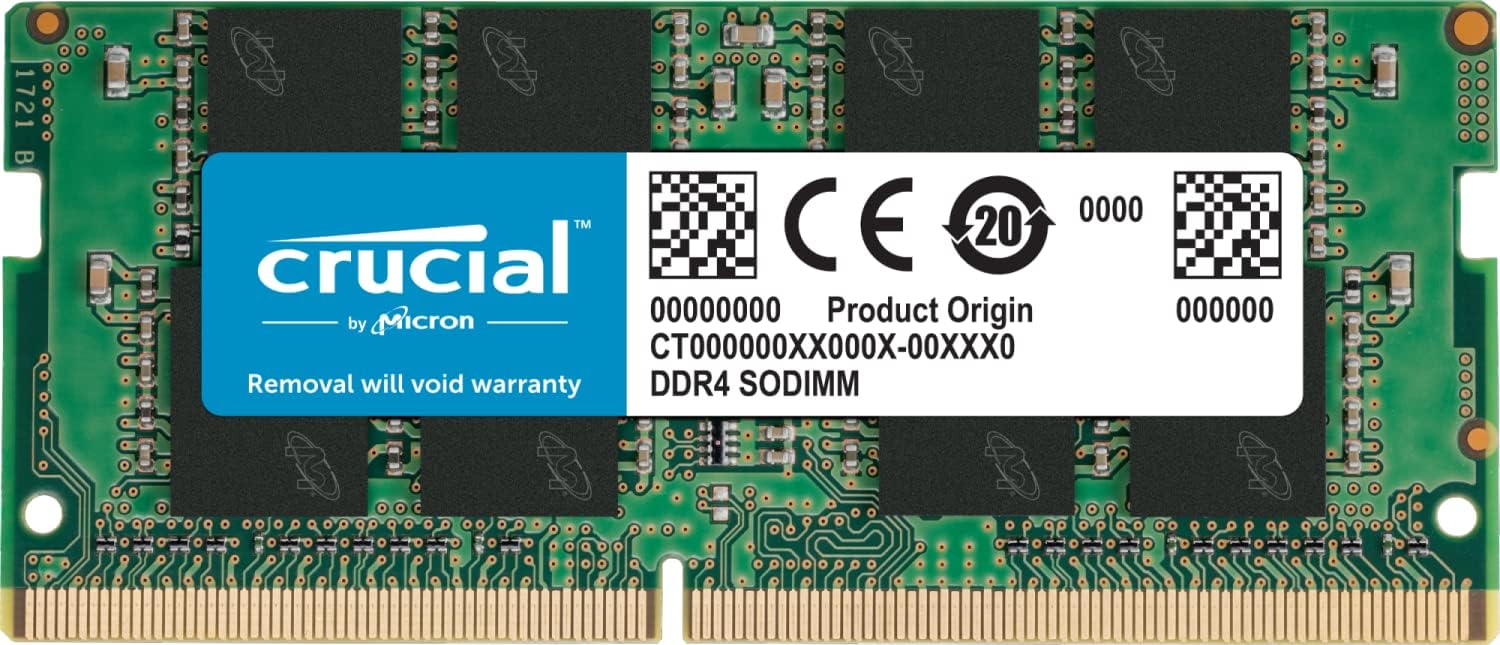
Crucial 16GB DDR4 RAM, 3200MHz CL22 (or 2933MHz or 2666MHz) Laptop Memory, SODIMM 260-Pin, Compatible with 13th Gen Intel Core and AMD Ryzen 7000 - CT16G4SFRA32A
This 16GB DDR4 SODIMM 260-pin module at 3200MHz CL22 is for laptop owners needing a straightforward performance boost for multitasking and application loading.

Corsair Vengeance LPX DDR4 RAM 16GB (2x8GB) 3200MHz CL16-18-18-36 1.35V Intel AMD Desktop Computer Memory - Black (CMK16GX4M2B3200C16)
This 16GB (2x8GB) DDR4 3200MHz CL16 RAM kit offers 1.35V operation and a 34mm low-profile design for most Intel and AMD desktop builds.

Crucial 8GB DDR4 RAM 3200MHz (PC4-25600), Downclockable to 2933/2666MHz Laptop Memory, SODIMM 260-Pin CL22, Compatible with 13th Gen Intel Core and AMD Ryzen 7000 - CT8G4SFRA32A
This 8GB DDR4 3200MHz CL22 SODIMM is a budget-friendly upgrade for laptops needing a performance bump for everyday tasks and light multitasking.