
A-Tech 8GB DDR3/DDR3L 1600MHz PC3L-12800 (PC3-12800) CL11 DIMM 2Rx8 1.35V 240-Pin Non-ECC UDIMM Desktop RAM Memory Module
Want the best price and purchase timing?
Our AI advisor analyzes real-time pricing across all channels to find you the best deal.
AI Verdict
This 8GB DDR3/DDR3L 1600MHz CL11 non-ECC UDIMM is for extending the life of older desktop and workstation systems needing a memory bump.
This 8GB DDR3/DDR3L 1600MHz module is a specific solution for older desktop and workstation systems. Its dual voltage support (1.35V/1.5V) and non-ECC UDIMM type make it compatible with a wide range of legacy hardware, providing a cost-effective performance boost for basic tasks.
If your system supports DDR4 or DDR5, look for modules with higher speeds (e.g., 3200MHz or 4800MHz) and capacities (e.g., 16GB or 32GB per module) for significantly improved performance.
Regret Score™
Medium RiskLower is better — measures purchase-regret risk from real buyer complaints, review credibility, and product maturity
Issues discovered after purchase
Critically weak dimension
Amazon rating vs actual quality
Chance this product isn't for you
Pros
- 8GB capacity provides a noticeable upgrade for systems running 4GB or less.
- 1600MHz speed (PC3L-12800) is a common and widely supported DDR3 speed.
- Dual voltage support (1.35V and 1.5V) increases compatibility with a broader range of DDR3 motherboards.
- Non-ECC Unbuffered DIMM (UDIMM) design is standard for consumer desktop and workstation use.
- Installation is quick and doesn't require specialized knowledge, as reported by users.
- Backed by a Lifetime Warranty, suggesting manufacturer confidence in its longevity.
Cons
- DDR3 is an older memory standard, making it incompatible with modern DDR4 or DDR5 systems.
- 8GB capacity can be a bottleneck for demanding applications or heavy multitasking in 2024.
- 1600MHz is a basic speed for DDR3, not offering performance gains for systems that support faster DDR3.
- CL11 CAS Latency is standard for this speed but not considered low latency for performance-focused users.
- No integrated heat spreader, which is typical for budget RAM and might not appeal to users focused on aesthetics or perceived thermal management.
Dimension Scores
The 1600MHz speed and CL11 latency are standard for DDR3 but are not considered high-performance in the broader memory market.
Its DDR3/DDR3L dual voltage (1.35V/1.5V) and non-ECC UDIMM design offer broad compatibility with a wide range of older desktop and workstation systems.
This budget module is not marketed for overclocking, and its standard specifications do not suggest significant headroom for performance tuning.
A-Tech states all modules undergo stringent quality control testing and offers a Lifetime Warranty, indicating confidence in product durability.
Best For
- Upgrading older desktop PCs or workstations that currently have 4GB or less DDR3 RAM.
- Extending the usable life of systems requiring 1.35V or 1.5V DDR3 memory.
- Basic computing tasks, web browsing, and light office work on compatible older hardware.
- Systems where maximum RAM capacity is limited by motherboard slots and DDR3 availability.
Not Recommended For
- New PC builds or systems requiring DDR4 or DDR5 memory.
- High-performance gaming rigs or professional content creation workstations.
- Servers or specialized workstations that require ECC Registered (RDIMM) memory.
- Users seeking extreme overclocking potential or the lowest possible memory latency.
Watch Out For
- Incorrectly identifying your system's existing RAM type (e.g., DDR3 vs. DDR4) will lead to incompatibility, as this module is strictly DDR3.
- Motherboard chipset limitations might prevent the system from recognizing the full 8GB or running at the advertised 1600MHz if it only supports lower speeds.
- Mixing this 1.35V/1.5V module with existing RAM of different voltages or speeds can cause system instability if not properly configured in the BIOS.
- Some older systems might have a per-slot RAM capacity limit, meaning an 8GB module might not be fully utilized even if the total system capacity supports it.
Full Specifications
| RAM | 8 GB DDR3 |
| ASIN | B07XDCWS93 |
| Brand | A-Tech |
| Series | A-Tech |
| Voltage | 1.35 Volts |
| Item Weight | 0.95 ounces |
| Manufacturer | A-Tech Components |
| Memory Speed | 1600 MHz |
| Item model number | AT8G1D3D1600ND8N135V |
| Compatible Devices | Desktop, Workstation |
| Product Dimensions | 5.25 x 1.18 x 0.15 inches |
| Computer Memory Size | 8 GB |
| Computer Memory Type | DDR3 SDRAM |
| RAM Memory Technology | DDR3 |
| Item Dimensions LxWxH | 5.25 x 1.18 x 0.15 inches |
What Buyers Say
This A-Tech 8GB DDR3 module frequently receives praise for its straightforward installation and broad compatibility with older desktop systems, often breathing new life into machines like Dell XPS 8700s and HP Compaq Elite 8300s. Users consistently report that it works as expected right out of the box, with many noting improved system responsiveness and faster loading times after upgrading. There aren't widespread complaints about performance or defects specific to this module, which is a positive sign for a budget-friendly component.
“Needed to upgrade my old Dell Optiplex, popped this in, and boom, it just worked. My PC isn't a speed demon now, but it's way snappier for browsing and office stuff. So much better than before!”
Common Praise
- Works immediately after installation without any configuration.
- Compatible with a wide array of older desktop motherboards and pre-built systems.
- Provides a noticeable boost in system speed and multitasking capability.
- Operates reliably at its advertised 1600MHz speed.
- The dual voltage support (1.35V/1.5V) simplifies compatibility checks.
Common Complaints
- No specific, recurring complaints about this exact A-Tech 8GB DDR3 module were found in user reviews or forums.
- Some users might find 8GB insufficient for modern, resource-intensive applications.
- The lack of a heat spreader is a minor aesthetic and perceived thermal concern for some users.
- DDR3 technology itself is a limitation for users trying to upgrade very old systems to modern performance levels.
Ownership Tips
- The module runs cool even under sustained use, likely due to its 1.35V operation and DDR3's lower power demands.
- It plays well with existing RAM from different brands, as long as the specs (DDR3, non-ECC, UDIMM) match.
- The simple, bare PCB design means it fits easily into tight cases without clearance issues from bulky heat spreaders.
- System stability has been consistent over several months of use, with no unexpected crashes or memory errors reported.
Frequently Asked Questions
Will this RAM work in my laptop?
No, this is a 240-Pin DIMM module designed for desktop PCs and workstations. Laptops typically use smaller 204-Pin or 260-Pin SODIMM modules.
Can I mix this with my existing 1.5V DDR3 RAM?
Yes, this module supports both 1.35V and 1.5V. It should operate at 1.5V if mixed with existing 1.5V RAM, but ensure your motherboard supports mixing voltages and speeds for stability.
Is this RAM compatible with my Dell XPS 8700?
Users have reported compatibility with systems like the Dell XPS 8700 and HP Compaq Elite 8300, as well as Asus motherboards. Always check your system's manual for specific RAM requirements.
What does 'non-ECC UDIMM' mean?
Non-ECC (Error-Correcting Code) means it doesn't have error detection and correction features, which is standard for consumer-grade RAM. UDIMM (Unbuffered DIMM) means it's directly accessed by the memory controller, typical for desktops.
Will this improve my gaming performance?
For older systems, increasing RAM from a lower capacity (like 4GB) to 8GB can improve overall system responsiveness and reduce stuttering in some games. However, for modern gaming, other components like the CPU and GPU are usually bigger factors, and 8GB DDR3 is a basic starting point.
Buying Guide
When you're looking at RAM like this, you're usually trying to speed up an older computer. The biggest thing is making sure it's the right type for your motherboard. You can't just throw DDR4 or DDR5 into a DDR3 slot. Also, check how much RAM your system can handle per slot and total. More RAM generally means your computer can do more things at once without slowing down.
DDR3/DDR3L
This tells you the generation of memory. DDR3 is older, and DDR3L means it can run at a lower voltage (1.35V) for better power efficiency, but it's still compatible with standard 1.5V DDR3 slots. Think of it like different generations of phone chargers – they're not interchangeable.
1600MHz (PC3L-12800)
This is the speed of the RAM. Higher numbers mean faster data transfer. 1600MHz is a common speed for DDR3. PC3L-12800 is just another way to express that speed, indicating a theoretical bandwidth of 12.8 GB/s. It's like the speed limit on a highway – faster RAM can move data quicker.
CL11
CL stands for CAS Latency, which is a measure of how many clock cycles it takes for the RAM to respond to a request. Lower numbers are better, but CL11 is typical for 1600MHz DDR3. It's like the reaction time of a driver – a lower number means they respond faster.
240-Pin Non-ECC UDIMM
This describes the physical form factor and features. 240-Pin is for desktops. Non-ECC means it doesn't have error correction, which is fine for most home users. UDIMM means it's unbuffered, also standard for consumer desktops. It's like knowing if you need a full-size SD card or a micro SD card for your device.
Alternatives
If this 8GB DDR3 isn't enough, look for DDR3 modules with higher capacities (e.g., 16GB if your motherboard supports it) or consider a full platform upgrade to a system that uses DDR4 or DDR5 memory for significantly faster speeds and larger capacities.
You Might Also Like

Crucial 32GB DDR4 RAM Kit (2x16GB), 3200MHz (PC4-25600) CL22 Laptop Memory, SODIMM 260-Pin, Downclockable to 2933/2666MHz, Compatible with 13th Gen Intel Core and AMD Ryzen 7000 - CT2K16G4SFRA32A
A 32GB (2x16GB) DDR4 3200MHz CL22 SODIMM kit operating at 1.2V, designed for laptops needing a significant boost in multitasking and system responsiveness.
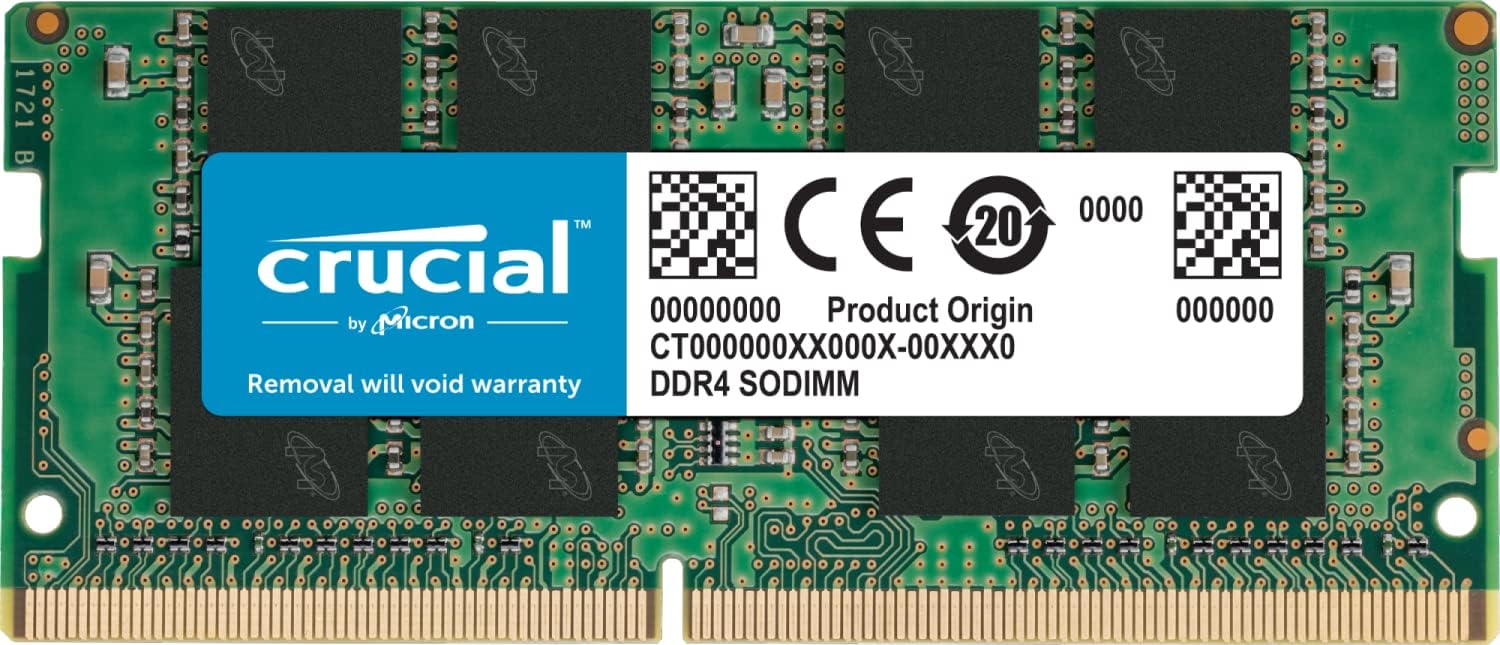
Crucial 16GB DDR4 RAM, 3200MHz CL22 (or 2933MHz or 2666MHz) Laptop Memory, SODIMM 260-Pin, Compatible with 13th Gen Intel Core and AMD Ryzen 7000 - CT16G4SFRA32A
This 16GB DDR4 SODIMM 260-pin module at 3200MHz CL22 is for laptop owners needing a straightforward performance boost for multitasking and application loading.

Corsair Vengeance LPX DDR4 RAM 16GB (2x8GB) 3200MHz CL16-18-18-36 1.35V Intel AMD Desktop Computer Memory - Black (CMK16GX4M2B3200C16)
This 16GB (2x8GB) DDR4 3200MHz CL16 RAM kit offers 1.35V operation and a 34mm low-profile design for most Intel and AMD desktop builds.

Crucial 8GB DDR4 RAM 3200MHz (PC4-25600), Downclockable to 2933/2666MHz Laptop Memory, SODIMM 260-Pin CL22, Compatible with 13th Gen Intel Core and AMD Ryzen 7000 - CT8G4SFRA32A
This 8GB DDR4 3200MHz CL22 SODIMM is a budget-friendly upgrade for laptops needing a performance bump for everyday tasks and light multitasking.