
Crucial RAM 16GB Kit (2x8GB) DDR3 1600 MHz CL11 Desktop Memory CT2K102464BD160B
Want the best price and purchase timing?
Our AI advisor analyzes real-time pricing across all channels to find you the best deal.
AI Verdict
This 16GB (2x8GB) DDR3L 1600 MHz CL11 kit is for desktop PCs, best for extending the life of older systems that support 1.35V or 1.5V DDR3.
This 16GB (2x8GB) DDR3L 1600 MHz CL11 kit is a strong fit for extending the lifespan of older desktop PCs. Its dual voltage (1.35V/1.5V) and standard 1600 MHz speed make it broadly compatible with many systems from the early to mid-2010s, offering a noticeable boost in responsiveness for users upgrading from lower capacities.
If your system supports it, look for DDR3 RAM with a lower CL (CAS Latency) number, like CL9 or CL10 at 1600 MHz, for a slight edge in responsiveness.
Regret Score™
Medium RiskLower is better — measures purchase-regret risk from real buyer complaints, review credibility, and product maturity
Issues discovered after purchase
Critically weak dimension
Amazon rating vs actual quality
Chance this product isn't for you
Pros
- Significantly improves system responsiveness and multitasking on compatible older desktops.
- Easy, 'plug and play' installation without requiring computer skills.
- Operates at a lower 1.35V, reducing heat compared to 1.5V DDR3 modules.
- Broad compatibility with many older desktop motherboards and systems.
- Micron quality and reliability, backed by component and module level testing.
Cons
- Limited to DDR3 systems, incompatible with newer DDR4 or DDR5 motherboards.
- CL11 latency is standard but not the lowest available for DDR3 1600 MHz.
- Some users reported module failure within a few months of use.
- Not designed for overclocking beyond its rated 1600 MHz speed.
Dimension Scores
1600 MHz CL11 was a common speed for DDR3, but not the fastest or lowest latency available within the DDR3 generation.
The dual voltage 1.35V/1.5V operation and UDIMM form factor ensure broad compatibility with a wide range of older DDR3 desktop motherboards.
This memory is standard JEDEC specification and not marketed or designed for overclocking beyond its rated 1600 MHz speed.
Micron's reputation and component testing suggest a generally reliable product, though one user reported a module failure within two months.
Best For
- Upgrading older desktop PCs that currently have 4GB or 8GB DDR3 RAM.
- Users looking to improve multitasking and application load times on a budget.
- Extending the usable life of systems with motherboards supporting 1600 MHz DDR3L.
- Revitalizing office or light-gaming desktop computers from the early 2010s.
Not Recommended For
- New PC builds or systems requiring DDR4 or DDR5 memory.
- Users seeking extreme performance or competitive gaming with modern titles.
- Overclockers aiming for speeds beyond 1600 MHz or tighter timings.
Watch Out For
- One user reported a module failing within two months, requiring replacement.
- Incorrectly assuming compatibility with laptop systems, as this is a UDIMM desktop module.
- Attempting to install in motherboards that only support 1.5V DDR3 without DDR3L compatibility, potentially leading to instability.
- Purchasing for a system that already has 16GB of 1600MHz DDR3, as performance gains would be minimal.
Full Specifications
| RAM | 16 GB DDR3 |
| ASIN | B0091LG13O |
| Brand | Micron |
| Color | Multicolor |
| Series | 2-8GB DDR3-1600 UDIMM 1.35V CL=11 |
| Voltage | 1.35 Volts |
| Item Weight | 1.12 ounces |
| Manufacturer | CRUCIAL TECHNOLOGY |
| Memory Speed | 1600 MHz |
| Item model number | CT2K102464BD160B |
| Compatible Devices | Desktop |
| Product Dimensions | 5.28 x 0.03 x 1.23 inches |
| Computer Memory Size | 16 GB |
| Computer Memory Type | DDR3 SDRAM |
| Number of Processors | 1 |
| RAM Memory Technology | DDR3 |
| Item Dimensions LxWxH | 5.28 x 0.03 x 1.23 inches |
| Is Discontinued By Manufacturer | No |
What Buyers Say
Many users upgrading older desktop systems report a noticeable boost in performance, making their computers feel much more responsive and capable of handling more applications simultaneously. The installation process is consistently praised for its simplicity, often described as a quick 'plug and play' upgrade. While most experiences are positive, a few users did encounter issues, including one specific report of a module failing after just two months of use. The low 1.35V operation is a frequently mentioned benefit, contributing to cooler system temperatures.
“Dude, my old Dell was crawling, but I popped this in, and it actually feels usable again, like for real, but one stick did die on me after a bit, so watch out for that.”
Common Praise
- System responsiveness and multitasking capabilities significantly improved after installation.
- Installation is quick and easy, often described as 'plug and play'.
- Compatible with a wide range of older desktop motherboards, including specific Dell Optiplex models.
- Operates at a lower 1.35V, which can help reduce heat output.
- Provides a cost-effective way to extend the life of an aging PC.
Common Complaints
- One user reported a module failing within two months of purchase.
- Not compatible with newer DDR4 or DDR5 systems, limiting upgrade paths.
- Some confusion existed regarding 'for Mac' versions versus the desktop variant.
Ownership Tips
- The 1.35V operation can lead to slightly lower power consumption and heat compared to standard 1.5V DDR3.
- Performance gains are most apparent when upgrading from 4GB or 8GB, not necessarily when replacing existing 16GB.
- Compatibility checks with the motherboard's QVL (Qualified Vendor List) or Crucial's system scanner are crucial for older systems.
- Even with 'plug and play' installation, ensuring proper seating in the DIMM slots is key to avoiding boot issues.
Frequently Asked Questions
Is this RAM compatible with my older desktop PC?
Yes, this 16GB (2x8GB) DDR3L 1600 MHz kit is designed for older desktop systems that use DDR3 UDIMM memory. You should check your motherboard's specifications to confirm it supports DDR3L (1.35V) or 1.5V DDR3 at 1600 MHz.
What's the difference between DDR3 and DDR3L?
DDR3L is a low-voltage version of DDR3, operating at 1.35V, while standard DDR3 operates at 1.5V. This Crucial kit is DDR3L but is dual voltage, meaning it can operate at either 1.35V or 1.5V, offering broader compatibility.
Will this RAM make my computer faster?
If you're upgrading from a lower amount of RAM (e.g., 4GB or 8GB), you'll likely see a significant improvement in system responsiveness and multitasking capabilities. If you already have 16GB of 1600 MHz DDR3, the performance gain will be minimal.
Is this memory difficult to install?
No, installation is generally straightforward and described as 'plug and play' by many users. You typically just need to open your computer case and snap the modules into the RAM slots.
Can I use this with a laptop?
No, this is a UDIMM (Unbuffered DIMM) module designed for desktop computers. Laptop memory uses SODIMM (Small Outline DIMM) modules, which are physically smaller.
Buying Guide
When you're looking at RAM like this, you need to know it's all about matching your existing computer's generation. This isn't for brand new builds; it's for giving an older desktop a new lease on life. You're basically adding more workspace for your computer to run programs and switch between tasks without slowing down.
DDR3
This tells you the generation of memory. Think of it like different generations of phone chargers – a USB-C charger won't fit an old micro-USB phone. DDR3 only works with motherboards designed for DDR3, not newer DDR4 or DDR5.
1600 MHz
This is the speed at which the memory operates. Higher numbers usually mean faster data processing, but your motherboard has a maximum speed it can support. If your motherboard only supports 1333 MHz, this 1600 MHz RAM will run at 1333 MHz.
CL11 (CAS Latency)
This is a measure of how many clock cycles it takes for the RAM to respond to a request. Lower numbers are faster. For 1600 MHz DDR3, CL11 is pretty standard, but a CL9 or CL10 would be slightly quicker.
1.35 Volts (DDR3L)
This is the operating voltage. DDR3L (the 'L' stands for low voltage) runs at 1.35V, which can mean less heat and power consumption than standard 1.5V DDR3. This kit is dual voltage, so it's more flexible.
Alternatives
If your system supports newer memory, you should look for DDR4 or DDR5 RAM with higher speeds (e.g., 3200 MHz or 4800 MHz) and lower latencies (e.g., CL16 or CL30) for significantly improved performance.
You Might Also Like

Crucial 32GB DDR4 RAM Kit (2x16GB), 3200MHz (PC4-25600) CL22 Laptop Memory, SODIMM 260-Pin, Downclockable to 2933/2666MHz, Compatible with 13th Gen Intel Core and AMD Ryzen 7000 - CT2K16G4SFRA32A
A 32GB (2x16GB) DDR4 3200MHz CL22 SODIMM kit operating at 1.2V, designed for laptops needing a significant boost in multitasking and system responsiveness.
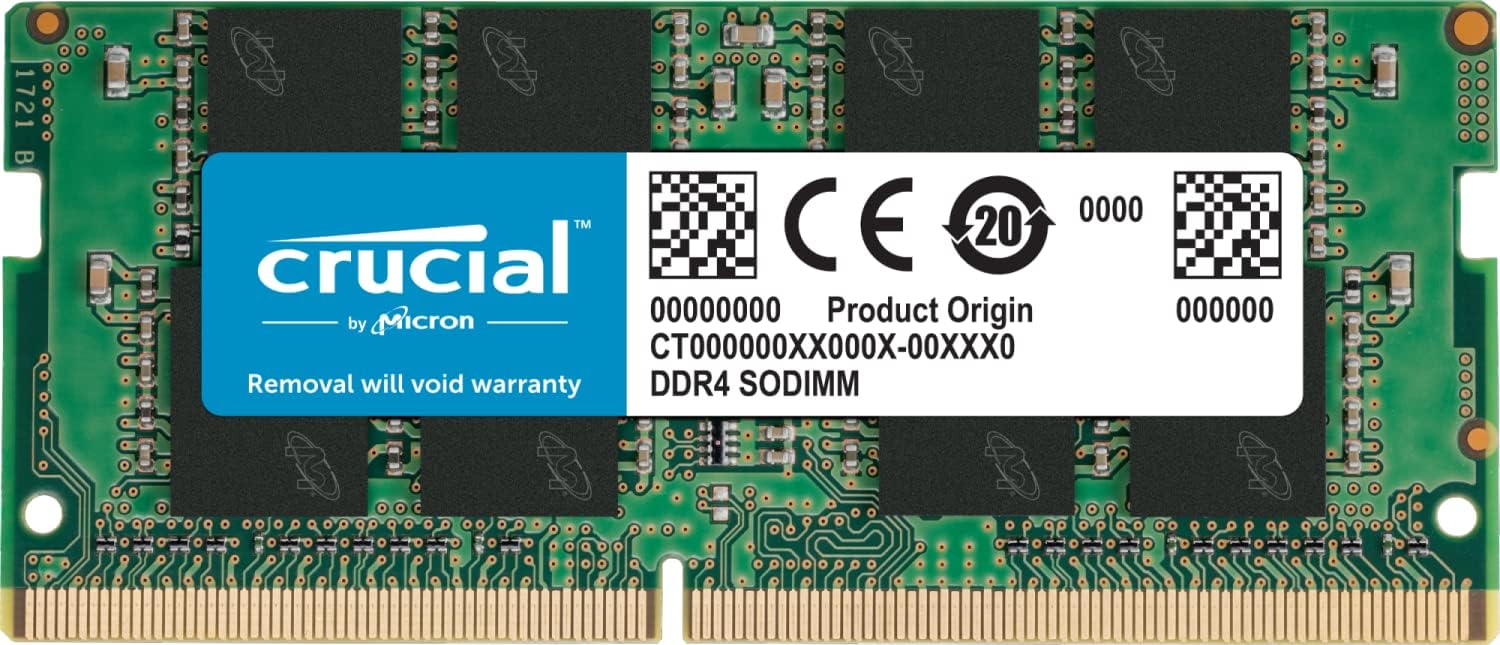
Crucial 16GB DDR4 RAM, 3200MHz CL22 (or 2933MHz or 2666MHz) Laptop Memory, SODIMM 260-Pin, Compatible with 13th Gen Intel Core and AMD Ryzen 7000 - CT16G4SFRA32A
This 16GB DDR4 SODIMM 260-pin module at 3200MHz CL22 is for laptop owners needing a straightforward performance boost for multitasking and application loading.

Corsair Vengeance LPX DDR4 RAM 16GB (2x8GB) 3200MHz CL16-18-18-36 1.35V Intel AMD Desktop Computer Memory - Black (CMK16GX4M2B3200C16)
This 16GB (2x8GB) DDR4 3200MHz CL16 RAM kit offers 1.35V operation and a 34mm low-profile design for most Intel and AMD desktop builds.

Crucial 8GB DDR4 RAM 3200MHz (PC4-25600), Downclockable to 2933/2666MHz Laptop Memory, SODIMM 260-Pin CL22, Compatible with 13th Gen Intel Core and AMD Ryzen 7000 - CT8G4SFRA32A
This 8GB DDR4 3200MHz CL22 SODIMM is a budget-friendly upgrade for laptops needing a performance bump for everyday tasks and light multitasking.