
Crucial RAM 8GB DDR3 1600 MHz CL11 Laptop Memory CT102464BF160B
Want the best price and purchase timing?
Our AI advisor analyzes real-time pricing across all channels to find you the best deal.
AI Verdict
A single 8GB DDR3L 1600 MHz CL11 SODIMM module, operating at 1.35V or 1.5V, for extending the functional life of older laptops.
This 8GB DDR3L 1600 MHz CL11 module is a perfect fit for older laptops (typically pre-2016) that still rely on DDR3 SODIMM memory and can benefit from a capacity upgrade. Its dual voltage support (1.35V/1.5V) increases its compatibility range, but it's entirely irrelevant for any system built in the last several years.
If your laptop supports DDR4, look for a DDR4 SODIMM module with a higher speed (e.g., 2400 MHz or 3200 MHz) and lower CL latency for a more noticeable performance boost.
Regret Score™
Very High RiskLower is better — measures purchase-regret risk from real buyer complaints, review credibility, and product maturity
Issues discovered after purchase
Critically weak dimension
Amazon rating vs actual quality
Chance this product isn't for you
Pros
- 1.35V low voltage operation, also compatible with 1.5V systems.
- 204-pin SODIMM form factor fits a wide range of laptops requiring DDR3 memory.
- Installation is a simple plug-and-play process, requiring no complex configuration.
- Increases system responsiveness and multitasking capabilities in older laptops.
- Broad compatibility with various laptop brands and models, including older MacBooks.
Cons
- DDR3 technology is not compatible with laptops requiring DDR4 or DDR5 memory.
- Single 8GB module limits dual-channel performance unless paired with another identical stick.
- CL11 latency, while standard for DDR3 1600MHz, is slower than modern DDR4/DDR5 modules.
- Some users report receiving "new" modules with cosmetic signs of age or minor wear.
Dimension Scores
1600 MHz CL11 was standard for DDR3, but it's significantly slower than current DDR4/DDR5 modules.
Dual voltage (1.35V/1.5V) and SODIMM form factor ensure broad compatibility with a large range of older DDR3 laptops.
This is standard JEDEC memory with no advertised overclocking features or XMP profiles.
Users consistently report stable operation and long-term performance, with a high overall rating across tens of thousands of reviews.
Best For
- Extending the lifespan of 2010-2015 era laptops with DDR3 SODIMM slots.
- Improving performance for basic multitasking, web browsing, and office applications on older machines.
- Upgrading laptops with 4GB or less DDR3 memory to 8GB or 16GB total.
Not Recommended For
- Laptops manufactured after 2015 that typically require DDR4 or newer memory.
- High-performance gaming rigs or workstations needing faster memory speeds and lower latencies.
- Systems with soldered RAM that do not have upgradeable SODIMM slots.
Watch Out For
- Some users received modules described as "new" but with slightly faded labels, greyish chips, or minor contact marks, suggesting old stock or light handling.
- Laptop manufacturers sometimes falsely report max RAM support; a laptop listed with 8GB max might actually support 16GB (2x8GB).
- Crucial's own website might list a different part number for a compatible model even if specs match, causing confusion for buyers.
- The module is not compatible with any laptop requiring DDR4 or newer memory, which includes most systems from the last 8 years.
Full Specifications
| RAM | 8 GB DDR3L 1600 |
| ASIN | B006YG8X9Y |
| Brand | Micron |
| Color | Multi-Colour |
| Series | Crucial DDR3/DDR3L 1600 MT/s SODIMM Memory |
| Voltage | 1.35 Volts |
| Department | Default Category |
| Item Weight | 0.32 ounces |
| Manufacturer | Crucial |
| Memory Speed | 1600 MHz |
| Flash Memory Size | 8 |
| Item model number | CT102464BF160B |
| Compatible Devices | Laptop |
| Product Dimensions | 2.87 x 1.18 x 0.08 inches |
| Computer Memory Size | 8 GB |
| Computer Memory Type | SODIMM |
| Number of Processors | 1 |
| RAM Memory Technology | DDR3L 1600 |
| Item Dimensions LxWxH | 2.87 x 1.18 x 0.08 inches |
| Is Discontinued By Manufacturer | No |
What Buyers Say
Many users upgrading older laptops report a noticeable increase in speed and responsiveness, making their machines feel usable again for everyday tasks. The installation process is frequently highlighted as simple, often taking just minutes. While the technology is older, its continued availability and performance for its intended purpose are appreciated.
“My old Acer was crawling with 4GB, but after popping this 8GB stick in, it's actually usable again for browsing and emails, feels like a new machine for twenty bucks, totally worth it!”
Common Praise
- Laptops boot faster and applications launch quicker after installation.
- Multitasking with multiple browser tabs or programs becomes smoother.
- Installation is described as "plug-and-play" and "easy".
- Works without issues in a wide array of older laptop brands like Dell, HP, Lenovo, and Mac.
- Maintains cool operation even under extended use.
Common Complaints
- Not suitable for any modern laptop that requires DDR4 or newer memory.
- Some buyers received modules that appeared cosmetically used or aged despite being sold as new.
- Confusion regarding specific laptop model compatibility, even with Crucial's own tools.
Ownership Tips
- Systems that previously struggled with 4GB RAM show a significant and sustained performance improvement.
- The module runs stably for years, even in machines used 24/7.
- Some users found that their laptops could handle more RAM than manufacturer specs indicated (e.g., 16GB instead of 8GB max).
- The low 1.35V operation contributes to less heat and potentially better battery life in compatible systems.
Frequently Asked Questions
Is this RAM compatible with my laptop?
This 8GB DDR3L 1600 MHz CL11 SODIMM module is designed for laptops that use DDR3 memory and have 204-pin SODIMM slots. It supports both 1.35V and 1.5V systems.
Can I use this with my existing RAM?
Yes, you can often use this module alongside another DDR3 SODIMM stick, but for optimal performance, it's best to match the speed, capacity, and latency of your existing RAM.
What's the difference between DDR3 and DDR3L?
DDR3L is a low-voltage version of DDR3, operating at 1.35V compared to standard DDR3's 1.5V. This module is dual voltage, meaning it can work in systems requiring either 1.35V or 1.5V.
Will this work in a MacBook Pro?
It is compatible with many non-Retina MacBook Pro models from 2010 and newer that use DDR3 SODIMM memory. Always verify your specific model's RAM requirements.
Is installation difficult?
Installation is generally straightforward, often described as a simple plug-and-play process requiring no special computer skills. Crucial provides guides if you need assistance.
Buying Guide
When you're looking at laptop memory, you're basically giving your computer more space to think and work on multiple things at once. More RAM means less waiting for programs to load or switching between tasks. For older laptops, this is often the cheapest and most impactful upgrade you can make to extend its useful life.
Capacity (8GB)
This is how much temporary workspace your laptop has. Think of it like your desk size; an 8GB desk lets you have more books, papers, and coffee cups open at once without having to put things away.
Type (DDR3L)
This is the generation of memory. It's like trying to fit a DVD into a Blu-ray player – they're different. DDR3L is specifically for older laptops, and it's also a low-voltage version, which is a plus for battery life.
Speed (1600 MHz)
This is how fast the memory can process information. Higher numbers mean quicker operations, but your laptop's motherboard also needs to support that speed. It's like the speed limit on a highway; your car can go faster, but the road might not allow it.
Latency (CL11)
This is the delay before the memory responds to a request. Lower numbers are better, meaning less waiting. It's like how quickly a waiter takes your order after you call them – a lower CL means they're more responsive.
Alternatives
If your laptop is newer or you need more performance, search for DDR4 or DDR5 SODIMM modules with higher speeds (e.g., 2400 MHz, 3200 MHz, or 4800 MHz) and lower CL latencies, ensuring they match your system's voltage requirements.
You Might Also Like

Crucial 32GB DDR4 RAM Kit (2x16GB), 3200MHz (PC4-25600) CL22 Laptop Memory, SODIMM 260-Pin, Downclockable to 2933/2666MHz, Compatible with 13th Gen Intel Core and AMD Ryzen 7000 - CT2K16G4SFRA32A
A 32GB (2x16GB) DDR4 3200MHz CL22 SODIMM kit operating at 1.2V, designed for laptops needing a significant boost in multitasking and system responsiveness.
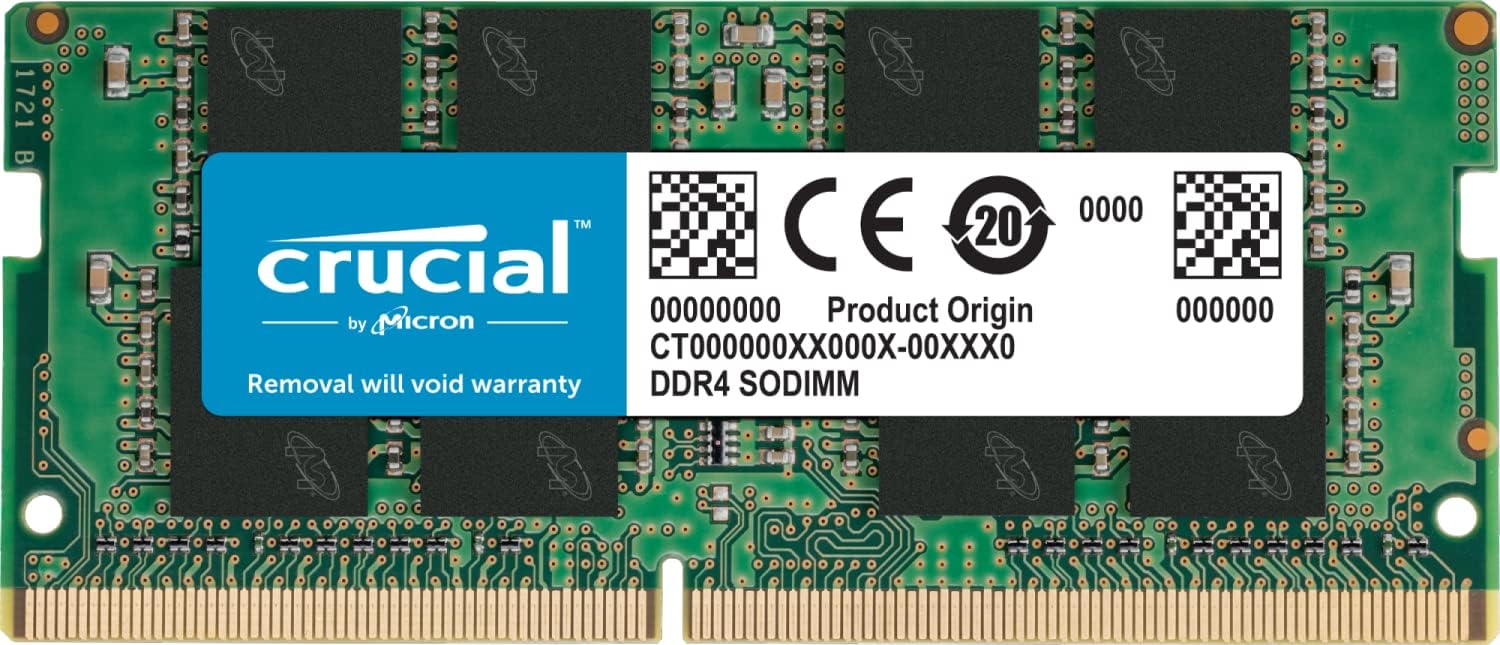
Crucial 16GB DDR4 RAM, 3200MHz CL22 (or 2933MHz or 2666MHz) Laptop Memory, SODIMM 260-Pin, Compatible with 13th Gen Intel Core and AMD Ryzen 7000 - CT16G4SFRA32A
This 16GB DDR4 SODIMM 260-pin module at 3200MHz CL22 is for laptop owners needing a straightforward performance boost for multitasking and application loading.

Corsair Vengeance LPX DDR4 RAM 16GB (2x8GB) 3200MHz CL16-18-18-36 1.35V Intel AMD Desktop Computer Memory - Black (CMK16GX4M2B3200C16)
This 16GB (2x8GB) DDR4 3200MHz CL16 RAM kit offers 1.35V operation and a 34mm low-profile design for most Intel and AMD desktop builds.

Crucial 8GB DDR4 RAM 3200MHz (PC4-25600), Downclockable to 2933/2666MHz Laptop Memory, SODIMM 260-Pin CL22, Compatible with 13th Gen Intel Core and AMD Ryzen 7000 - CT8G4SFRA32A
This 8GB DDR4 3200MHz CL22 SODIMM is a budget-friendly upgrade for laptops needing a performance bump for everyday tasks and light multitasking.