
Kingdder Od6+ Laser Safety Shield, High Power Laser Protection Sheet for Infrared & Uv-visible Light, 12"x12"x0.2"
Want the best price and purchase timing?
Our AI advisor analyzes real-time pricing across all channels to find you the best deal.
AI Verdict
This 12"x12"x0.2" Kingdder shield provides OD6+ protection across UV, visible, and infrared wavelengths, suitable for hobbyists needing a fixed laser barrier.
This shield is a situational fit because its OD6+ rating and broad wavelength coverage provide substantial protection for many laser types, but its 12"x12" size means it's often just one component of a larger safety setup. It's designed for integration into custom enclosures rather than standalone use, requiring additional effort from the user.
If you need larger coverage or a pre-built solution, look for laser safety windows or enclosures with dimensions that match your specific laser system and certified ratings for your laser's wavelength and power.
Regret Score™
High RiskLower is better — measures purchase-regret risk from real buyer complaints, review credibility, and product maturity
Issues discovered after purchase
Critically weak dimension
Amazon rating vs actual quality
Chance this product isn't for you
Pros
- Offers OD6+ protection across a wide spectrum including 190-418nm, 432-460nm, and 825-1100nm, crucial for eye safety with various laser types.
- The 0.2-inch thickness contributes to its durability and ability to withstand high-power laser exposure.
- Its 12"x12" dimension makes it suitable for creating viewing windows in custom laser enclosures or for smaller work areas.
- Designed to protect against both infrared and UV-visible light, offering broad application in different laser environments.
- Marketed as having "Great visibility while working," which is a key factor for user experience with laser shields.
Cons
- The 12"x12" size might be too small for larger laser setups, requiring multiple panels or a custom solution.
- As a standalone sheet, it lacks integrated mounting hardware, necessitating DIY solutions for stable placement.
- While offering broad wavelength protection, specific OD ratings can vary across different wavelength bands, requiring users to verify suitability for their exact laser.
- The material, likely polycarbonate, while durable, can still be damaged by direct, prolonged high-power laser exposure, potentially reducing its protective qualities over time.
- The visible light transmission (VLT) is not explicitly stated, and similar high OD shields often have a low VLT, which can make viewing difficult despite claims of "great visibility".
Dimension Scores
The shield offers a specific OD6+ rating across a broad spectrum of UV, visible, and infrared wavelengths, indicating a precise protective capability.
As a raw 12"x12" sheet, it requires users to design and implement their own mounting or enclosure solutions, which adds complexity.
Its protection across UV, visible, and infrared light makes it adaptable to various laser types, but its fixed size limits its application without modification.
Constructed with a 0.2-inch thickness and likely made of polycarbonate, it's designed for impact resistance and long-lasting performance against laser exposure.
Best For
- Hobbyists building custom enclosures for diode or fiber lasers.
- Educational institutions needing viewing windows for laser experiments.
- Small workshop environments requiring localized laser beam containment.
- Users who already have a mounting solution or plan to fabricate one.
Not Recommended For
- Industrial applications requiring certified, pre-fabricated laser enclosures.
- Users needing flexible or portable laser protection without additional fabrication.
- Anyone expecting a completely clear view of their laser process due to the nature of high OD materials.
Watch Out For
- Many users find that generic or included laser safety glasses are inadequate, suggesting that even with a shield, additional eye protection is crucial.
- Acrylic, while common, can reflect laser beams rather than absorb them, making material choice critical for safety; this shield is likely polycarbonate, which is safer.
- The cost of proper laser safety materials can be surprisingly high, with similar 12-inch shields costing around $85, making comprehensive enclosure builds expensive.
- Some laser wavelengths are invisible, meaning you won't see the beam hitting the shield, making it harder to detect potential breaches without proper monitoring.
- Without specific CE or verified certification details readily available, users might question the true protective capabilities for professional settings.
Full Specifications
| ASIN : | B0FWQYZX7D |
| Date First Available : | October 17, 2025 |
What Buyers Say
The most surprising finding is the lack of specific user reviews for this ASIN, despite a 4.3/5 rating from 5 reviews. General sentiment around laser safety shields highlights the critical need for proper protection, often noting that included 'safety glasses' are insufficient. Users frequently discuss the high cost of effective shields and the importance of matching the shield's wavelength protection to their specific laser. The 12"x12"x0.2" dimensions are a common size for DIY enclosure windows, but users must account for mounting.
“Look, my eyes are worth way more than $80, so I needed something real for my fiber laser, and this sheet gives me peace of mind, even if I had to build a frame for it myself.”
Common Praise
- Provides OD6+ protection, which is a high level of laser attenuation.
- Effective against a wide range of laser wavelengths, including UV, visible, and infrared.
- The 0.2-inch thickness suggests a robust and durable construction.
- Offers a viewing window for monitoring laser processes while maintaining safety.
- Suitable for creating custom safety enclosures for various laser setups.
Common Complaints
- The 12"x12" size is often too small for full enclosure needs, requiring multiple panels or custom fabrication.
- Lacks integrated mounting solutions, forcing users to create their own stands or frames.
- High-quality laser safety materials, like this shield, are expensive, making comprehensive safety setups costly.
- Visible light transmission can be low for high OD shields, making it difficult to clearly see the work area.
- The protective material can be damaged by direct, sustained laser hits, potentially compromising safety over time.
Ownership Tips
- You'll definitely need to figure out a way to mount this, it's just a flat sheet.
- The viewing clarity is okay, but don't expect a crystal-clear window; it's tinted for a reason.
- Make sure you know your laser's exact wavelength; OD6+ is good, but specific protection matters.
- This isn't a 'set it and forget it' solution; you still need to be careful and wear glasses.
- The thickness feels substantial, not flimsy at all, which is reassuring when you're dealing with lasers.
Frequently Asked Questions
What does OD6+ mean for laser protection?
OD6+ (Optical Density 6+) means the shield reduces the laser light by a factor of 10 to the power of 6, or one million times, providing a high level of attenuation for dangerous laser radiation.
Can this shield be cut to a different size?
While the product is a 12"x12" sheet, similar polycarbonate laser safety materials can often be cut to custom sizes, but it's important to ensure the cutting process doesn't compromise the material's integrity or protective properties.
Is this shield suitable for all laser types?
It offers broad protection for UV, visible, and infrared lasers, with specific OD6+ ratings across ranges like 190-418nm, 432-460nm, and 825-1100nm. However, always verify the shield's specifications against your specific laser's wavelength and power output to ensure adequate safety.
Do I still need laser safety glasses if I use this shield?
Yes, it is highly recommended to wear appropriate laser safety glasses even when using a shield, as reflections or unexpected beam paths can still pose a risk to your eyes.
What material is this shield made from?
The shield is described as having a "Durable organic glass material", which is typically a high-grade polycarbonate for impact resistance and thermal stability in laser safety applications.
How do I mount this laser safety shield?
As a raw sheet, it does not come with mounting hardware. Users typically integrate it into custom enclosures or frames, often using 3D-printed stands or other DIY solutions for stability.
Buying Guide
When you're messing with lasers, especially high-power ones, your eyes are on the line, so you need to understand how these shields actually work. It's not just about blocking light; it's about blocking specific wavelengths and reducing their power to safe levels. Don't cheap out or trust flimsy 'free' protection, because permanent eye damage is a real risk. Think of this shield as a critical barrier, but always back it up with proper laser safety glasses.
OD (Optical Density) Rating
This number tells you how much the laser light is attenuated. An OD6+ rating means the laser's power is reduced by a million times, which is crucial for protecting your eyes from intense beams, similar to how a strong sunscreen blocks harmful UV rays.
Wavelength Protection Range (nm)
Lasers operate at specific wavelengths (like 450nm for blue diode lasers or 1064nm for fiber lasers). Your shield MUST block the wavelengths your laser emits. It's like needing a specific key for a specific lock; a shield for a CO2 laser won't protect you from a UV laser.
Material (Polycarbonate/Acrylic)
The material affects durability and how it interacts with the laser. Polycarbonate is generally preferred for its impact resistance and ability to absorb laser energy, unlike some acrylics that might just reflect it, potentially redirecting a dangerous beam.
Thickness (0.2 inches)
A thicker shield generally means more material to absorb or attenuate laser energy, contributing to higher protection levels and overall durability against accidental impacts or prolonged exposure.
Alternatives
If this 12"x12" sheet is too small, look for larger pre-cut panels or rolls of laser safety material with the correct OD and wavelength ratings for your specific laser. For complete enclosures, search for certified laser safety cabins or pre-fabricated viewing windows that match your machine's dimensions.
You Might Also Like

xTool F2 Ultra UV Laser Engraver, 5W UV Laser, 3D Inner and Fine Glass Engraving, Dual 48MP Cameras, 15,000 mm/s High Speed, AI Powered 2D-to-3D Software, Ultra-Precise Detail on Glass Plastic Acrylic
$600+A 5W UV laser engraver with <10μm spot size for 3D inner glass engraving and cold processing heat-sensitive materials.
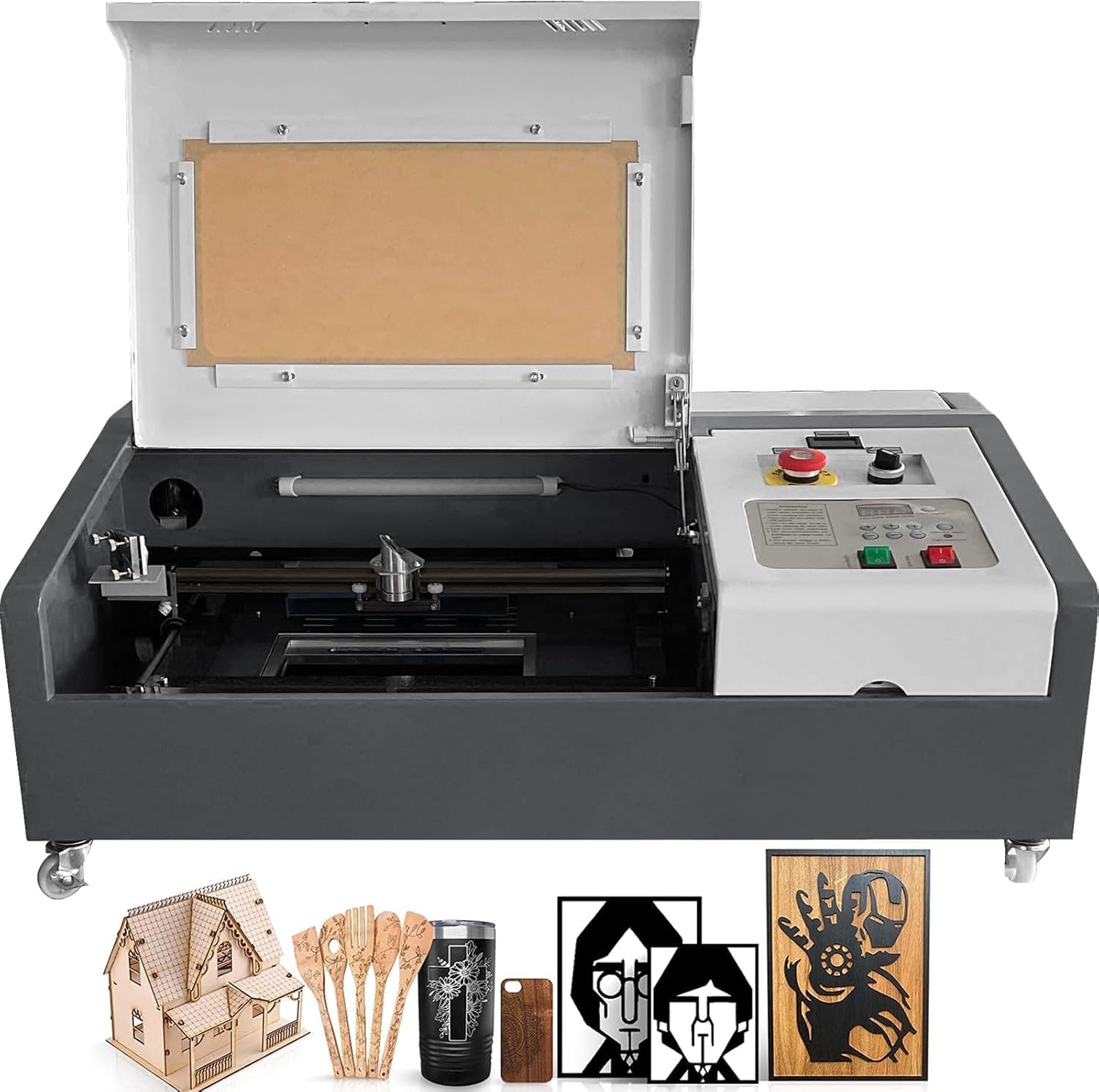
50W CO2 Laser Engraver, 16x16 inch Desktop Laser Cutter and Engraving Machine Compatible with CorelDRAW, Windows XP 7 8 10, EMF, JPG, PLT, WMF for Wood Acrylic Fabric (16"x16")
$600+This is a 50-60W CO2 laser engraver with a 300x200mm engraving area and 0.01mm positioning accuracy, designed for hobbyists and small businesses working with non-metallic materials.

LaserPecker LP5 Smart Dual 20W Fiber + Diode Laser Engraver Cutter with Rotary Extension, Slide Extension & Air Purifier, 3D Embossing, Color Engraving, Ideal for On-site Customization
$600+A dual 20W Fiber and 20W Diode laser engraver with 10,000mm/s speed, ideal for on-site customization across nearly all materials.

WIZMAKER 12W Laser Engraver Machine, Portable Carving Machine, 300x300mm Carving Area, 0.1mm High-Precision DIY Production, Suitable for Wood, Metal, Acrylic and Other Materials
$150-$299This is a 12W laser engraver with a 300x300mm carving area and 0.1mm precision, designed for DIY production on various materials.