
DEEPLEE PLA+ 2.0 Filament 1.75mm, Stronger Toughness 3D Printer Filament, White 1KG, Upgrade PLA Plus 3D Printer Filament, High Speed PLA+ Filament for Most FDM 3D Drucker
Want the best price and purchase timing?
Our AI advisor analyzes real-time pricing across all channels to find you the best deal.
AI Verdict
This is a budget-friendly 1.75mm PLA+ filament designed for high-speed FDM printing, offering improved toughness over standard PLA.
This Deeplee PLA+ 2.0 filament is a strong fit for budget-conscious makers who need a high-speed PLA+ with improved toughness and good print quality. Its ability to handle fast FDM printers and provide strong layer adhesion at a low price point makes it a compelling option for many projects.
If you need higher heat resistance or impact strength for functional parts, look for PETG or ABS filament with a glass transition temperature above 80 °C.
Regret Score™
Medium RiskLower is better — measures purchase-regret risk from real buyer complaints, review credibility, and product maturity
Issues discovered after purchase
Critically weak dimension
Amazon rating vs actual quality
Chance this product isn't for you
Pros
- Offers higher impact resistance and reduced brittleness compared to standard PLA.
- Achieves an ultra-smooth surface finish and smooth printing flow.
- Maintains a precise diameter of 1.75mm ±0.02mm for consistent extrusion.
- Handles high printing speeds up to 300mm/s without major stringing or ringing.
- Provides strong layer adhesion, making it suitable for functional parts and snap-fit enclosures.
- Often available at a lower price point, making it an affordable high-speed PLA option.
Cons
- Some users reported inconsistent spool winding, potentially leading to tangles.
- Requires dialing in volumetric speed for optimal high-speed printing on some machines to match premium filaments.
- PLA+ still has poor heat resistance, deforming at temperatures around 45 °C under stress.
- One user experienced a 'one roll per customer' limit, hindering bulk purchases.
- Brand quality control for filament diameter has been questioned for other Deeplee PLA types.
Dimension Scores
The filament boasts an ultra-precise diameter of 1.75mm ±0.02mm and delivers ultra-smooth surface finishes, though some brand-level QC concerns for diameter have been noted [Feature Highlights, 15].
It's easy to use with better layer adhesion and a higher printing success rate, running well with generic PLA profiles with minimal tweaking [Feature Highlights, 14].
Compatible with most FDM 3D printers and suitable for high-speed printing, but its PLA base limits its use in high-temperature or extreme impact applications [Feature Highlights, 26].
Offers stronger toughness and higher impact resistance than standard PLA, with printed parts showing impressive tensile strength of 100-110 MPa [Feature Highlights, 15].
Best For
- Makers needing an affordable PLA+ for high-speed FDM printers.
- Printing functional parts and snap-fit enclosures requiring increased toughness.
- Users looking for a smooth surface finish and reliable layer adhesion.
- Everyday prototyping and decorative prints where heat resistance isn't critical.
Not Recommended For
- Applications requiring high heat resistance, as PLA deforms around 45 °C.
- Critical parts where absolute diameter consistency is paramount, due to reported brand QC issues.
- Users who need to purchase large quantities at once and may be limited by purchase restrictions.
Watch Out For
- Spool winding can be inconsistent, with some users finding it 'horribly wound' partway through the roll.
- Achieving advertised high speeds (up to 300mm/s) might require manual calibration of volumetric speed on your specific printer.
- The brand has faced criticism for diameter inconsistencies on other PLA types, suggesting potential quality control variations.
- You might run into 'one roll per customer' limits when trying to buy multiple spools.
- Despite being PLA+, it still has poor heat resistance and will deform at temperatures as low as 45 °C.
Full Specifications
| ASIN | B0F66GT71R |
| Brand | Deeplee |
| Color | 1kg*white |
| Material | Polylactic Acid |
| Item Weight | 2.2 pounds |
| Manufacturer | DEEPLEE |
| Item Diameter | 1.75 Millimeters |
| Material Type | Polylactic Acid |
| Number of Items | 1 |
| Item model number | US-SO-DP-SPP002 |
| Package Dimensions | 8.39 x 8.27 x 2.72 inches |
| Manufacturer Part Number | US-SO-DP-SPP002 |
What Buyers Say
Users are generally surprised by the quality and performance of Deeplee PLA+ 2.0, especially considering its budget price point. Many report no issues with stringing, sagging, or layer adhesion, even when printing at higher speeds. The filament is often compared favorably to more expensive brands, with some noting its suitability for functional parts due to its improved toughness. However, some isolated reports mention inconsistent spool winding and potential brand-level quality control issues with diameter, though these don't seem to be widespread for this specific product.
“Dude, for the price, this Deeplee PLA+ is legit. My prints are coming out super clean and strong, even when I crank up the speed. Only bummer was the weird spool winding on one roll, but no tangles yet, so I'm not complaining too much. Definitely buying more if they let me!”
Common Praise
- Prints without issues like stringing or sagging, even at high speeds.
- Provides a smooth, glossy finish and good print quality with defined layer lines.
- Offers improved toughness and durability over standard PLA, making it suitable for functional prints.
- Adhesion is strong, even for white filament which can be problematic for other brands.
- Considered a highly affordable option for high-speed PLA+.
Common Complaints
- Some spools were reported to be horribly wound, leading to potential feeding problems.
- May require manual calibration of volumetric speed for optimal high-speed printing on specific machines.
- One user noted a 'one roll per customer' purchasing limit.
- Concerns about overall brand quality control regarding filament diameter have been raised, though not specifically for this product.
Ownership Tips
- The 'high-speed' claim is real, but you might need to tweak your printer's volumetric speed settings to get the absolute fastest prints.
- Despite claims of perfect winding, keep an eye on the spool as some users have reported messy winding that could cause issues.
- This PLA+ is tougher than regular PLA, but it's still PLA – don't expect it to hold up in hot environments like a car dashboard.
- The white color seems to adhere well, which is a plus since some white filaments can be tricky.
- It's often compared to Elegoo filament, with some speculating it might be a sub-brand, suggesting a similar quality profile.
Frequently Asked Questions
What are the recommended printing temperatures for this filament?
Deeplee recommends a nozzle temperature of 200-230 °C and a bed temperature of 35-65 °C for optimal printing results [Feature Highlights].
Is this filament compatible with all FDM 3D printers?
Yes, DEEPLEE PLA+ 2.0 is rigorously tested for flawless compatibility with most FDM 3D printers [Feature Highlights].
How does PLA+ 2.0 differ from standard PLA?
Compared to standard PLA, PLA+ 2.0 offers higher impact resistance, reduced brittleness, and better adhesion between layers, leading to a higher printing success rate [Feature Highlights, 14].
Can this filament be used for high-speed printing?
Yes, it's designed for high-speed printing, supporting print speeds from 30-300 mm/s, and has been noted to handle accelerated profiles cleanly on printers like Bambu Lab [Feature Highlights, 14].
Does this filament tangle easily?
While the product claims flawless feeding and perfect winding, some users have reported inconsistent spool winding that could potentially lead to tangles [Feature Highlights, 11, 15].
Buying Guide
When you're looking at 3D printer filament, especially PLA+, you need to think about what you're actually printing. This Deeplee PLA+ 2.0 is designed to be tougher and print faster than basic PLA, which is awesome for everyday stuff and even some functional parts. But remember, it's still PLA at its core, so don't expect it to survive in a hot car or take a beating like PETG or ABS would. Its budget price means you're getting a lot of bang for your buck in terms of speed and strength for typical PLA uses.
Material: Polylactic Acid (PLA+)
PLA+ is an upgraded version of standard PLA. It's still made from renewable resources, making it easy to print and generally odorless, but the 'plus' means it's been modified to be more resistant to breaking and deforming under impact, kind of like a stronger plastic cup compared to a flimsy one.
Diameter: 1.75 Millimeters (±0.02mm)
This is the thickness of the filament strand. Most consumer 3D printers use 1.75mm. The ±0.02mm tolerance is crucial because a consistent diameter ensures smooth feeding into your printer's hotend, preventing clogs and inconsistent extrusion, which would mess up your print quality [Feature Highlights, 14].
Weight: 2.2 pounds (1KG)
This is the standard amount of filament on a spool. 1 kilogram is enough for many small to medium-sized prints. Knowing the weight helps you estimate how many prints you can get out of a single spool before needing to buy more.
Recommended Print Speed: 30-300 mm/s
This range tells you how fast you can push your printer. A higher maximum speed means your prints will finish quicker, which is a huge time-saver. Filaments designed for high speed, like this one, are formulated to melt and flow faster without sacrificing print quality [Feature Highlights, 14].
Alternatives
If this filament doesn't quite fit, look for PETG for better heat resistance and flexibility, or ABS for even higher temperature resistance and strength, but be prepared for more challenging printing conditions.
You Might Also Like

xTool F2 Ultra UV Laser Engraver, 5W UV Laser, 3D Inner and Fine Glass Engraving, Dual 48MP Cameras, 15,000 mm/s High Speed, AI Powered 2D-to-3D Software, Ultra-Precise Detail on Glass Plastic Acrylic
$600+A 5W UV laser engraver with <10μm spot size for 3D inner glass engraving and cold processing heat-sensitive materials.
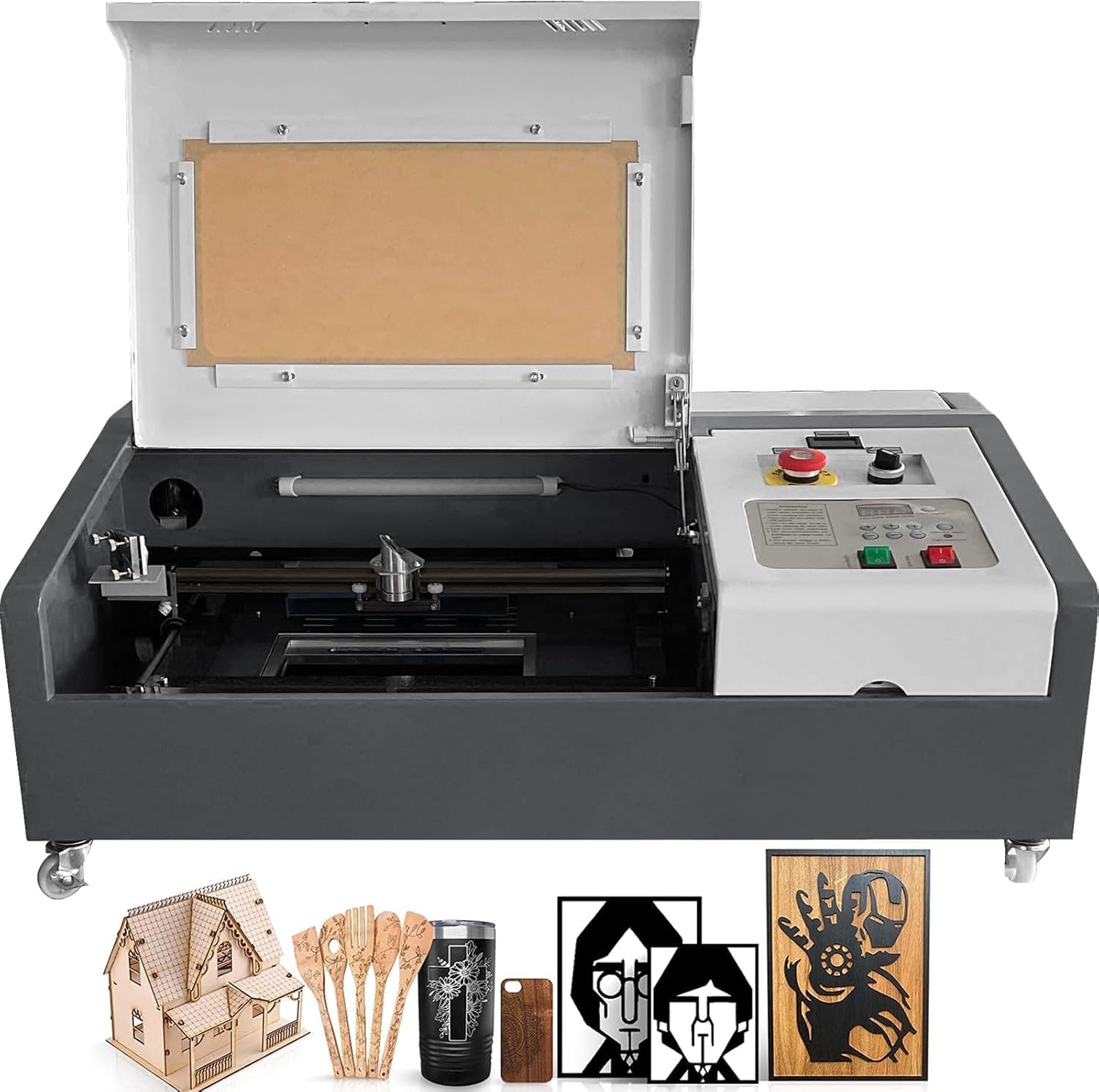
50W CO2 Laser Engraver, 16x16 inch Desktop Laser Cutter and Engraving Machine Compatible with CorelDRAW, Windows XP 7 8 10, EMF, JPG, PLT, WMF for Wood Acrylic Fabric (16"x16")
$600+This is a 50-60W CO2 laser engraver with a 300x200mm engraving area and 0.01mm positioning accuracy, designed for hobbyists and small businesses working with non-metallic materials.

LaserPecker LP5 Smart Dual 20W Fiber + Diode Laser Engraver Cutter with Rotary Extension, Slide Extension & Air Purifier, 3D Embossing, Color Engraving, Ideal for On-site Customization
$600+A dual 20W Fiber and 20W Diode laser engraver with 10,000mm/s speed, ideal for on-site customization across nearly all materials.

WIZMAKER 12W Laser Engraver Machine, Portable Carving Machine, 300x300mm Carving Area, 0.1mm High-Precision DIY Production, Suitable for Wood, Metal, Acrylic and Other Materials
$150-$299This is a 12W laser engraver with a 300x300mm carving area and 0.1mm precision, designed for DIY production on various materials.