
Polymaker HT-PLA Filament 1.75mm Black, High Temp PLA for 3D Printing, Heat Stable Up to 150°C, Easy to Print, Works with Most FDM Printers, 1kg Spool
Want the best price and purchase timing?
Our AI advisor analyzes real-time pricing across all channels to find you the best deal.
AI Verdict
This 1.75mm Polylactic Acid filament offers 150°C heat stability and prints like standard PLA, making it suitable for parts in hot environments.
This HT-PLA filament is a situational fit because its core strength is its 150°C heat stability, which is a significant upgrade over standard PLA for specific thermal applications. However, user reports of warping, poor adhesion, and brittleness, coupled with the caveat that high heat stability is for unloaded parts, mean it's not a universal replacement for all PLA uses. It excels where heat is the primary concern and mechanical stress is low.
If you need higher impact resistance or rigidity for functional parts, look for glass fiber reinforced HT-PLA-GF or high-impact PLA Pro filaments.
Regret Score™
Medium RiskLower is better — measures purchase-regret risk from real buyer complaints, review credibility, and product maturity
Issues discovered after purchase
Critically weak dimension
Amazon rating vs actual quality
Chance this product isn't for you
Pros
- Withstands temperatures up to 150°C without warping or deforming, even without post-processing.
- Prints with the same ease as standard PLA, supporting speeds up to 300 mm/s.
- Achieves a clean satin surface finish with minimal post-processing required.
- Maintains structural stability during storage and transport due to thermal resistance and low shrinkage.
- Features a rigid recycled cardboard spool with reinforced rims for smooth feeding in AMS and dry box systems.
- Non-abrasive, so it won't wear down brass nozzles like glass fiber reinforced filaments.
Cons
- Some users report issues with warping and poor bed adhesion, contradicting claims of effortless printing.
- Lower impact resistance and increased brittleness compared to other PLA variants like PLA Pro or PLA+.
- The 150°C heat stability is primarily for prints not under significant load, as prints can still sag when stressed in hot conditions.
- Not as stiff or as heat-resistant as the glass fiber reinforced HT-PLA-GF version.
Dimension Scores
Prints achieve a clean satin look and users report smooth printing with no visible layer lines.
It prints with standard PLA settings and at high speeds (up to 300 mm/s), but some users report issues with warping and bed adhesion.
Offers high heat stability for specific applications, but its lower impact resistance and potential brittleness limit its use for highly functional or stressed parts.
Withstands temperatures up to 150°C, a significant improvement over standard PLA, but it can be brittle and sag under load in hot conditions.
Best For
- 3D prints placed in hot environments like sunny windowsills, patios, or car dashboards.
- Decorative items, design models, props, and display pieces where surface finish is important.
- Planters, garden decor, and indoor parts exposed to heat.
- Rapid prototyping where heat resistance is needed without complex printing.
Not Recommended For
- Functional parts requiring extreme stiffness or high impact resistance.
- Applications where prints will be under significant mechanical load in hot environments.
- Outdoor tools or parts needing high UV endurance, as it performs similarly to standard PLA in this regard.
Watch Out For
- Despite claims of easy printing, some users experience warping and poor bed adhesion, even with recommended settings.
- The filament can be more brittle and have poorer layer adhesion than standard PLA or PLA+ variants, which is a concern for structural parts.
- One user reported tangles on the roll, leading to failed prints, though Polymaker suggests this is not typical for their auto-wound spools.
- The advertised 150°C heat stability applies to prints not under load; parts can still deform or sag under stress in high temperatures.
Full Specifications
| ASIN | B0DZNT3CBG |
| Brand | POLYMAKER |
| Color | 111 - 1.75mm Black (Hex Code: #070707) |
| Material | Polylactic Acid |
| Item Weight | 2.2 pounds |
| Manufacturer | Polymaker |
| Special Feature | High Temperature Resistance (up to 150°C) |
| Item model number | PA17001 |
| Product Dimensions | 7.87 x 7.87 x 2.36 inches |
What Buyers Say
Many users are impressed with this filament's high temperature resistance, noting that prints hold up well in hot environments like car dashboards. It's often praised for printing as easily as standard PLA, with some highlighting its smooth finish and minimal layer lines. However, some buyers have reported issues with warping and poor bed adhesion, even when using recommended settings. There are also concerns about its brittleness and lower impact resistance compared to other PLA types, which can be a drawback for certain functional prints.
“I bought this for parts in my car and it actually holds up to the heat, but man, it's a bit finicky to get to stick to the bed sometimes, and if I drop a print, it just shatters.”
Common Praise
- Prints hold up well in high temperatures, like car dashboards.
- Easy to print with settings similar to standard PLA.
- Achieves a smooth, satin finish with minimal visible layer lines.
- Maintains structural integrity during storage and shipping.
Common Complaints
- Experiences with warping and poor bed adhesion for some users.
- Lower impact resistance and increased brittleness compared to other PLA filaments.
- The 150°C heat resistance is less effective when prints are under mechanical load, leading to sagging.
- One user reported tangles on the roll, causing print failures.
Ownership Tips
- Prints can still sag under load in hot environments, despite the high heat stability rating.
- The UV resistance appears better than regular PLA, with less dulling over time when exposed to sunlight.
- Layer adhesion can be a weakness, contributing to brittleness, especially compared to other PLA variants.
- The cardboard spool design generally works well with AMS and dry box systems, but occasional tangles have been reported.
Frequently Asked Questions
Does Polymaker HT-PLA require special printer settings?
No, it's designed to print with the same ease and settings as standard PLA, and can even support speeds up to 300 mm/s.
Can prints made with Polymaker HT-PLA be used in a hot car?
Yes, its 150°C heat stability makes it suitable for prints in hot environments like car dashboards, as long as the part isn't under significant mechanical load.
Is this filament abrasive to my printer's nozzle?
No, Polymaker HT-PLA is non-abrasive. The glass fiber reinforced version, HT-PLA-GF, is abrasive and requires a hardened nozzle.
Do I need to anneal Polymaker HT-PLA for heat resistance?
Polymaker states HT-PLA delivers heat stability up to 150°C right off the print bed without post-processing. However, some sources suggest annealing for maximum heat resistance, especially for the GF variant.
How does Polymaker HT-PLA compare to standard PLA in terms of strength?
While it offers significantly higher heat resistance, some users report that HT-PLA has lower impact resistance and increased brittleness compared to standard PLA or PLA+ variants.
Buying Guide
When you're looking at filament like this, the 'High Temp' part is the big deal. It means your printed stuff won't melt or warp in places that get hot, like a sunny windowsill or inside your car. But don't confuse 'heat stable' with 'indestructible' – if you put a lot of weight on a print in the heat, it might still sag. Also, while it prints easily, some people find it a bit more brittle than regular PLA, so think about what kind of knocks your finished part might take.
Heat Stable Up to 150°C
This tells you the maximum temperature your printed object can handle before it starts to deform. For comparison, standard PLA usually softens around 50-60°C, so 150°C is a huge jump, letting you print parts for much hotter environments.
Easy to Print
This means you can likely use your existing PLA settings on your 3D printer without much tweaking. It's like baking with a familiar recipe – you don't need to learn a whole new set of temperatures or speeds to get a good result.
1kg Spool
This is the amount of filament you get. A 1kg spool is standard for most projects and gives you a good amount of material to work with before needing a refill. Think of it like a standard roll of paper towels – enough for a lot of uses.
Alternatives
If you need more rigidity or impact resistance, look for filaments explicitly labeled 'PLA Pro' or 'glass fiber reinforced PLA'. If you need extreme strength under load at high temperatures, consider engineering filaments like ABS or ASA.
You Might Also Like

xTool F2 Ultra UV Laser Engraver, 5W UV Laser, 3D Inner and Fine Glass Engraving, Dual 48MP Cameras, 15,000 mm/s High Speed, AI Powered 2D-to-3D Software, Ultra-Precise Detail on Glass Plastic Acrylic
$600+A 5W UV laser engraver with <10μm spot size for 3D inner glass engraving and cold processing heat-sensitive materials.
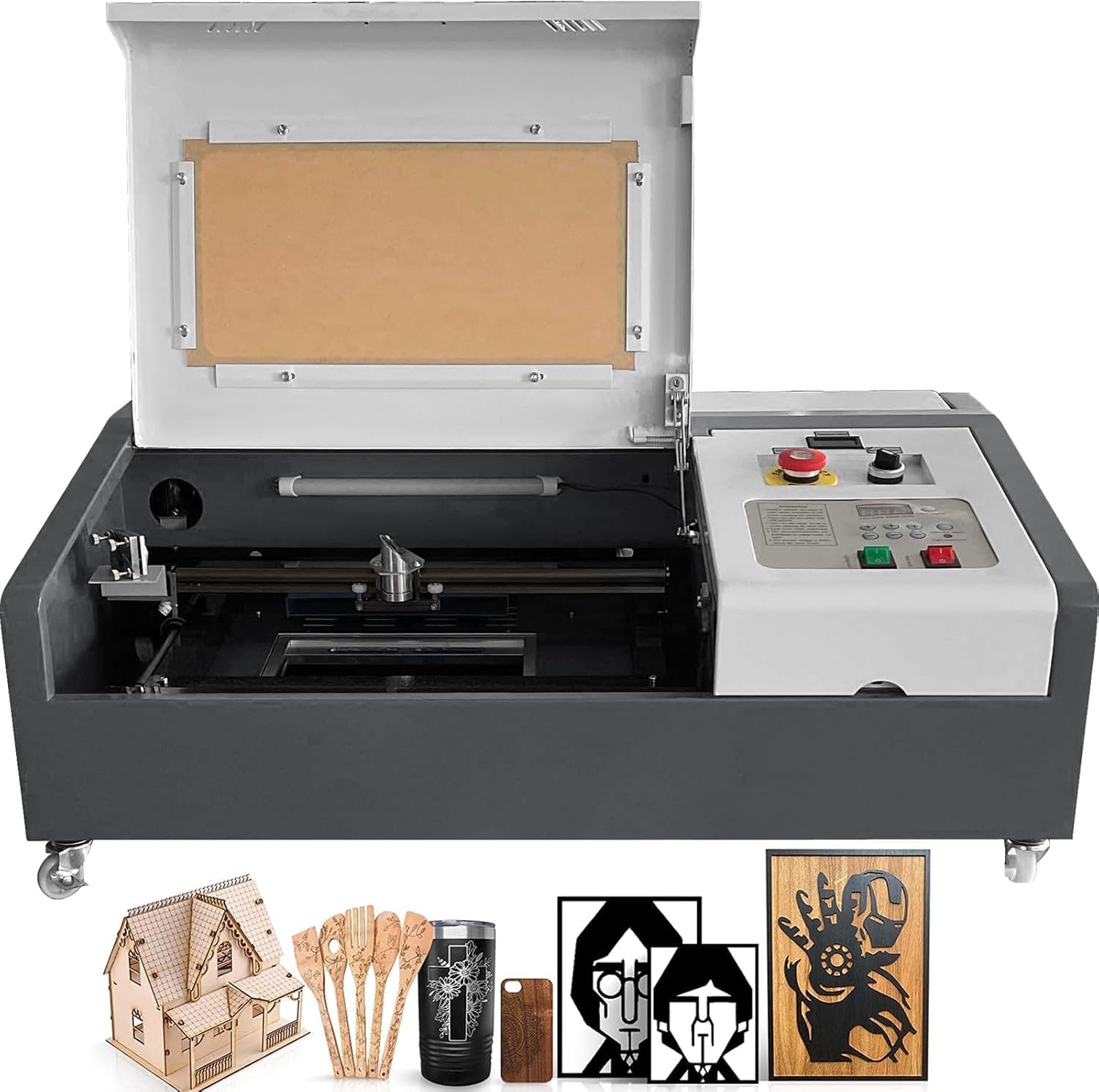
50W CO2 Laser Engraver, 16x16 inch Desktop Laser Cutter and Engraving Machine Compatible with CorelDRAW, Windows XP 7 8 10, EMF, JPG, PLT, WMF for Wood Acrylic Fabric (16"x16")
$600+This is a 50-60W CO2 laser engraver with a 300x200mm engraving area and 0.01mm positioning accuracy, designed for hobbyists and small businesses working with non-metallic materials.

LaserPecker LP5 Smart Dual 20W Fiber + Diode Laser Engraver Cutter with Rotary Extension, Slide Extension & Air Purifier, 3D Embossing, Color Engraving, Ideal for On-site Customization
$600+A dual 20W Fiber and 20W Diode laser engraver with 10,000mm/s speed, ideal for on-site customization across nearly all materials.

WIZMAKER 12W Laser Engraver Machine, Portable Carving Machine, 300x300mm Carving Area, 0.1mm High-Precision DIY Production, Suitable for Wood, Metal, Acrylic and Other Materials
$150-$299This is a 12W laser engraver with a 300x300mm carving area and 0.1mm precision, designed for DIY production on various materials.