
FLASHFORGE AD5M 3D Printer Fully Auto Calibration Print with 1-Click Max 600mm/s Speed, All-Metal CoreXY Structure Precise Printing, Easy-Maintenance Quick-Swap Nozzle, Print Size 220x220x220mm
Want the best price and purchase timing?
Our AI advisor analyzes real-time pricing across all channels to find you the best deal.
AI Verdict
A 220x220x220mm CoreXY 3D printer with 600mm/s max speed and 1-click auto-leveling, for beginners and those prioritizing print speed.
This printer is a strong fit for users prioritizing print speed and ease of use, with its 600mm/s max speed and 1-click auto-leveling system. The quick-swap nozzle system and material compatibility (PLA, PETG, TPU, CF variants) also cater to those wanting to experiment with various filaments without complex maintenance.
If a larger build volume is critical for your projects, look for printers with a 300x300x300mm or larger print area.
Regret Score™
Low RiskLower is better — measures purchase-regret risk from real buyer complaints, review credibility, and product maturity
Issues discovered after purchase
Critically weak dimension
Amazon rating vs actual quality
Chance this product isn't for you
Pros
- Achieves 600mm/s max printing speed and 20,000mm/s² acceleration for rapid project completion.
- Features a fully automatic one-click leveling system, ensuring consistent first layers without manual calibration.
- Quick-release nozzle system allows tool-free swaps in 3 seconds for 0.25mm, 0.4mm, 0.6mm, and 0.8mm nozzles.
- The all-metal CoreXY structure provides stability and reduces vibration during high-speed printing.
- Supports PLA, SILK, PETG, TPU, PLA-CF, and PETG-CF filaments with its 280°C direct drive extruder.
- Offers remote monitoring and control via the Flash Maker APP and multi-printer network monitoring with Orca-flashforge slicer.
Cons
- The FlashPrint software is reported as "janky" with buggy supports and occasional STL glitches.
- Cooling can struggle with intricate designs when printing at high speeds.
- Firmware updates have sometimes required users to power cycle the printer between prints for consistent operation.
- The 220x220x220mm build volume is considered small by some users for larger projects.
- Some users experienced Wi-Fi dropping issues, though a firmware update helped resolve it for others.
Dimension Scores
The CoreXY all-metal structure and vibration compensation contribute to smooth, precise prints even at high speeds, though intricate designs can sometimes struggle with cooling.
The 1-click auto-leveling, quick-release nozzle, and quick setup (10-15 minutes) make it highly accessible for beginners.
It supports a range of filaments including PLA, PETG, TPU, and CF variants, and offers multiple nozzle diameters for different printing needs.
The all-metal CoreXY frame is described as sturdy and robust, handling 600mm/s speeds without wobbling, though the direct drive extruder showed slight wear after 50 hours with ASA.
Best For
- Rapid prototyping due to its 600mm/s printing speed.
- Beginners seeking automated setup and a simplified printing experience.
- Users needing to quickly swap nozzles for different precision levels or material types.
- Printing with common filaments like PLA, PETG, and TPU.
Not Recommended For
- Users requiring a large build volume for oversized projects.
- Individuals who prefer extensive manual tinkering and hardware modifications.
- Printing ABS/ASA without an enclosure, as cooling struggles and fumes are a concern.
Watch Out For
- The FlashPrint software has "buggy supports and occasional STL glitches," prompting users to switch to OrcaSlicer.
- Some users reported Wi-Fi dropping issues, although a firmware update resolved this for others.
- Firmware can be "a work in progress," with one user needing to "turn off the printer between prints" to maintain reliability.
- Prints occasionally "faltered when trying more intricate designs, as the cooling struggled to keep up".
- One user noted that after a firmware update, the printer "no longer recognizes gcode files from a USB".
Full Specifications
| ASIN | B0DLZHVWBG |
| Brand | FLASHFORGE |
| Color | Grey |
| Material | PLA/SILK/PETG/TPU/PLA-CF/PETG-CF |
| Item Weight | 22 pounds |
| Manufacturer | Zhejiang Flashforge 3D Technology Co., Ltd |
| Product Dimensions | 15.83 x 14.29 x 17.64 inches |
What Buyers Say
Users are frequently surprised by the speed and print quality, especially for the price point. The automatic bed leveling is a recurring highlight, saving users from manual calibration frustrations. However, the included FlashPrint software often leads to frustration, with many recommending a switch to OrcaSlicer for a better experience. Some users have also noted that the cooling system can struggle with detailed prints at its highest speeds.
“Dude, this thing prints SO FAST, like, I didn't even know 3D printers could go this quick, and my first layers are actually perfect now, but seriously, ditch their software, OrcaSlicer is the way to go.”
Common Praise
- Achieves 600mm/s speeds with prints that are "remarkably clean".
- The automatic bed leveling system "does a beautiful job of calibrating the bed".
- The CoreXY frame is "solid, no wobbles even when I'm pushing 400mm/s".
- Quick-release nozzles allow for tool-free swaps in 3 seconds.
- Handles PLA and PETG with "consistently impressive" results.
- Setup is quick, with users reporting being ready to print in 10-15 minutes.
Common Complaints
- FlashPrint software is "kinda janky, with buggy supports and occasional STL glitches".
- Cooling "struggled to keep up" when printing intricate designs at high speeds.
- Firmware can be "a work in progress," sometimes requiring a printer restart between prints.
- Build volume of 220x220x220mm is "kind of small" for larger projects.
- Wi-Fi connectivity issues were reported by some users before firmware updates.
Ownership Tips
- Switching to OrcaSlicer significantly improves the slicing experience over FlashPrint.
- Washing the PEI bed with warm water and dish soap before use helps with adhesion.
- Running bed leveling before every print, even with auto-leveling, can improve consistency.
- For reliability, some users found they needed to power cycle the printer between prints after certain firmware updates.
- The stock filament spool holder location can be awkward, leading some to 3D print alternatives.
Frequently Asked Questions
Is the Flashforge AD5M suitable for beginners?
Yes, it is considered beginner-friendly due to its 1-click auto-leveling system and quick setup, with some users reporting being ready to print within 10-15 minutes of unboxing.
What is the maximum printing speed of the AD5M?
The AD5M can achieve a maximum printing speed of 600mm/s with an acceleration of 20,000mm/s².
What types of filament can the AD5M print?
It supports PLA, SILK, PETG, TPU, PLA-CF, and PETG-CF filaments, with a 280°C direct drive extruder. Some users also print ABS/ASA with an enclosure.
Does the AD5M have automatic bed leveling?
Yes, it features a fully automatic one-click leveling system that uses a pressure sensor to ensure a consistent first layer.
Can I monitor prints remotely?
Yes, the Flash Maker APP allows for remote device management, print monitoring, and real-time status viewing from anywhere.
What is the build volume of the Flashforge AD5M?
The print size is 220x220x220mm.
Is the nozzle easy to change?
Yes, it features a patent quick-release nozzle system that allows for tool-free swaps in as little as 3 seconds.
Buying Guide
When looking at 3D printers like the Flashforge AD5M, you're balancing speed, print quality, and ease of use. A CoreXY structure means faster, more stable movements for the print head, which translates to quicker prints. Auto-leveling is a huge time-saver, especially if you're new to 3D printing, as it handles the tricky part of getting your first layer right. Also, consider the build volume – 220x220x220mm is standard for many smaller projects, but larger models will require a bigger machine or printing in parts.
Max 600mm/s Speed
This isn't just a number; it means your prints finish much faster. Think of it like a car's top speed – a higher number means less waiting for your designs to come to life, especially for prototypes or multiple small parts.
CoreXY All-Metal Structure
This refers to the printer's internal mechanics. An all-metal CoreXY design is like having a super rigid, precise robot arm. It reduces vibrations and ensures the print head moves smoothly and accurately, even at high speeds, leading to cleaner prints.
Fully Auto Calibration
This is a game-changer for beginners. Instead of manually adjusting screws to get the print bed level (which is frustrating), the printer does it all for you with one click, ensuring your first layer sticks perfectly every time, like an automatic parking assist for your print.
Quick-Swap Nozzle
The nozzle is where the melted plastic comes out. Being able to swap it in seconds means you can easily switch between different sizes for fine details (smaller nozzle) or faster, less detailed prints (larger nozzle), or even change it if it gets clogged, without needing tools or a lot of fuss.
Alternatives
If you need to print objects larger than 220x220x220mm, look for printers with a build volume of 300x300x300mm or more. For printing engineering-grade filaments like ABS or ASA without an enclosure, consider models with a fully enclosed build chamber and higher hotend temperatures.
You Might Also Like

xTool F2 Ultra UV Laser Engraver, 5W UV Laser, 3D Inner and Fine Glass Engraving, Dual 48MP Cameras, 15,000 mm/s High Speed, AI Powered 2D-to-3D Software, Ultra-Precise Detail on Glass Plastic Acrylic
$600+A 5W UV laser engraver with <10μm spot size for 3D inner glass engraving and cold processing heat-sensitive materials.
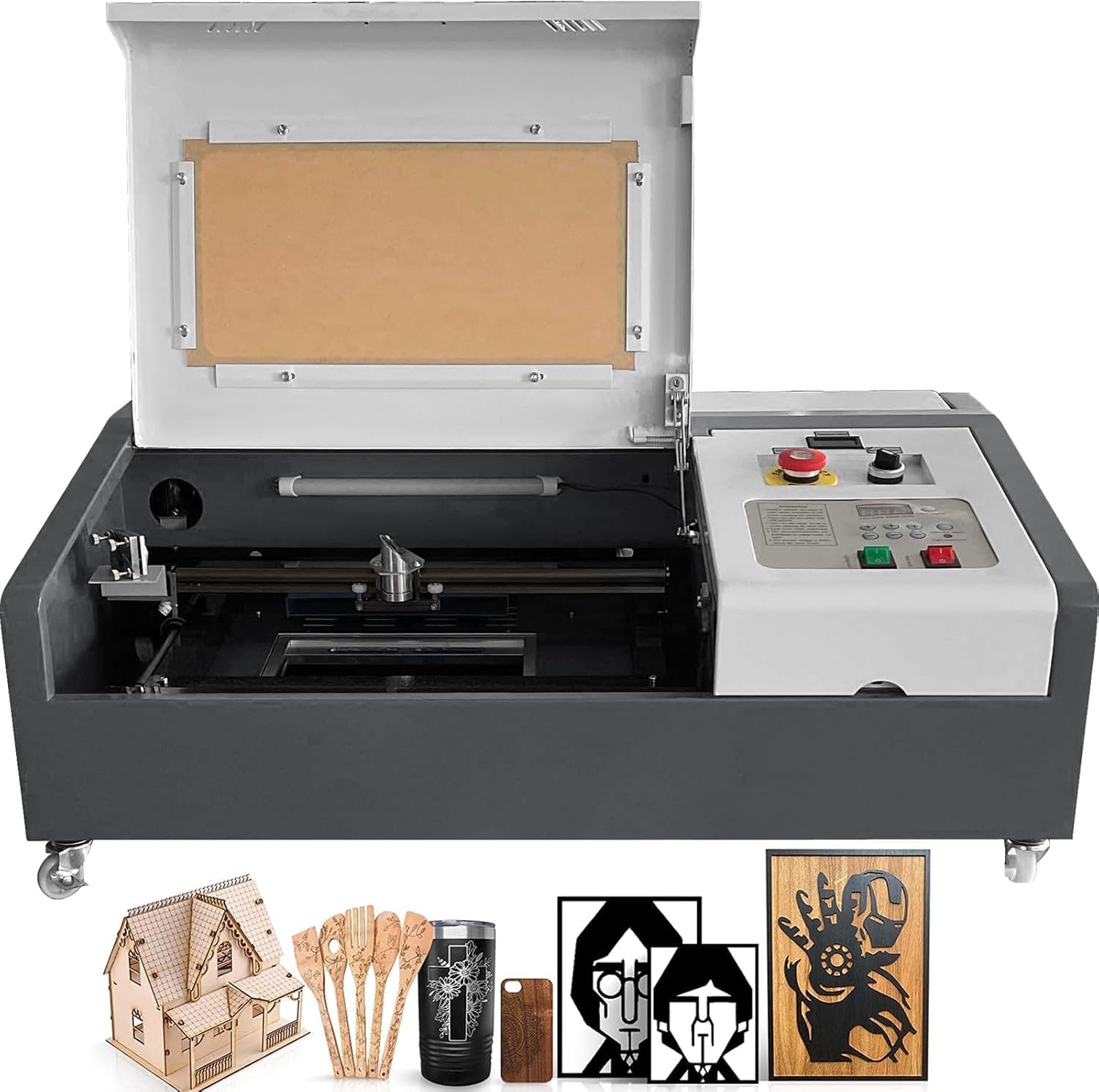
50W CO2 Laser Engraver, 16x16 inch Desktop Laser Cutter and Engraving Machine Compatible with CorelDRAW, Windows XP 7 8 10, EMF, JPG, PLT, WMF for Wood Acrylic Fabric (16"x16")
$600+This is a 50-60W CO2 laser engraver with a 300x200mm engraving area and 0.01mm positioning accuracy, designed for hobbyists and small businesses working with non-metallic materials.

LaserPecker LP5 Smart Dual 20W Fiber + Diode Laser Engraver Cutter with Rotary Extension, Slide Extension & Air Purifier, 3D Embossing, Color Engraving, Ideal for On-site Customization
$600+A dual 20W Fiber and 20W Diode laser engraver with 10,000mm/s speed, ideal for on-site customization across nearly all materials.

WIZMAKER 12W Laser Engraver Machine, Portable Carving Machine, 300x300mm Carving Area, 0.1mm High-Precision DIY Production, Suitable for Wood, Metal, Acrylic and Other Materials
$150-$299This is a 12W laser engraver with a 300x300mm carving area and 0.1mm precision, designed for DIY production on various materials.