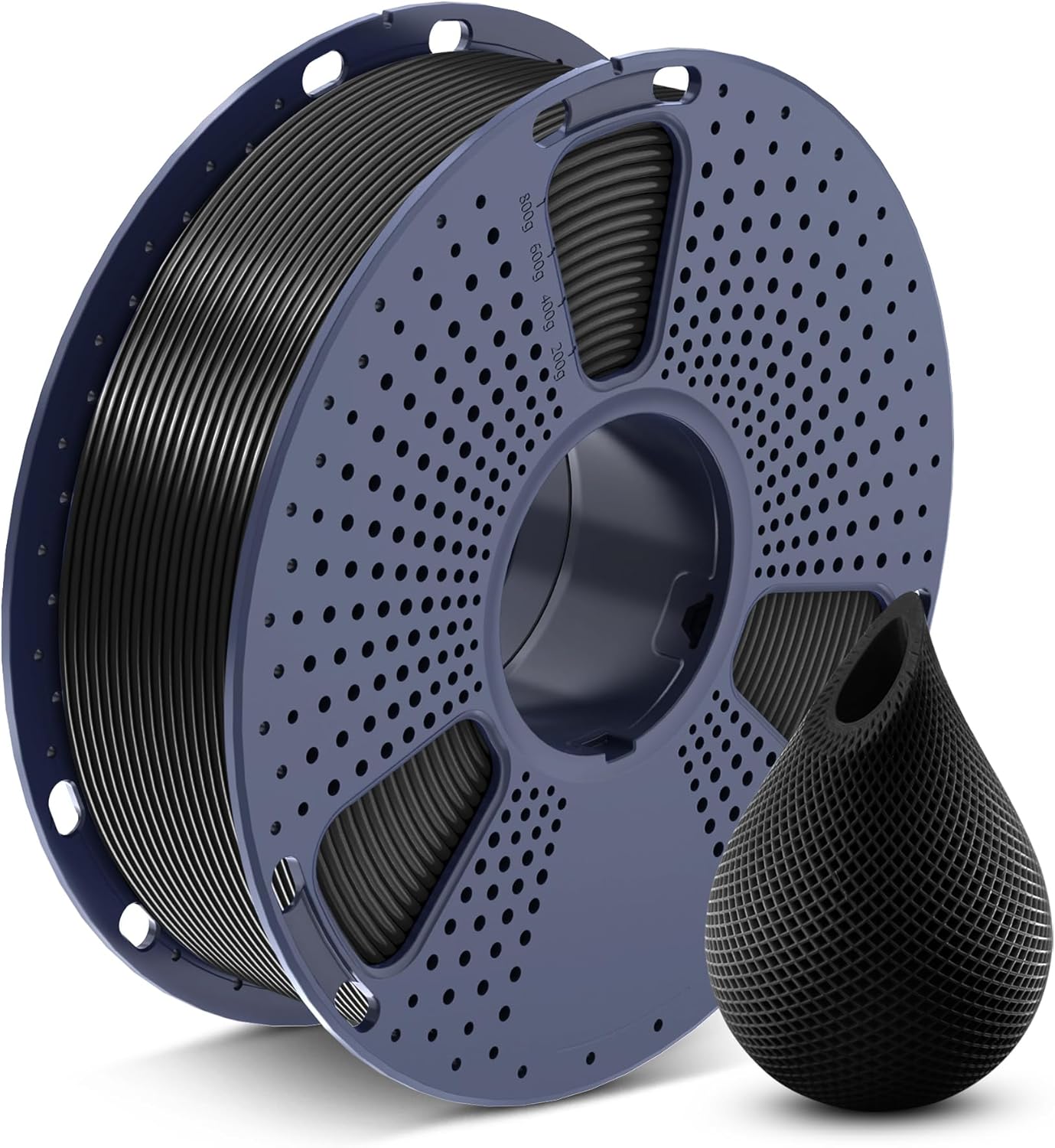
SUNLU PETG Filament 1.75mm,Strong 3D Printer Filament,Ultra-Low Stringing,Exceptional Layer Adhesion & High Toughness,Dimensional Accuracy +/- 0.02 mm,Fit Most FDM 3D Printers,1kg Spool(Black).
Want the best price and purchase timing?
Our AI advisor analyzes real-time pricing across all channels to find you the best deal.
AI Verdict
A 1.75mm PETG filament with +/- 0.02mm dimensional accuracy, designed for durable prints with reduced stringing and strong layer adhesion.
This SUNLU PETG filament is a situational fit for makers who need a material with enhanced toughness and durability compared to PLA, especially for functional parts or outdoor use. Its stated dimensional accuracy of +/- 0.02mm and focus on reduced stringing are appealing, but PETG generally requires more careful tuning than PLA. The lack of specific user reviews for this exact ASIN means potential buyers should be prepared for typical PETG printing challenges.
If you need easier printing with similar strength, look for a 'PETG-CF' (Carbon Fiber) variant for increased rigidity and potentially less stringing, or a 'PLA+' for a simpler experience with improved strength over standard PLA.
Regret Score™
Very Low RiskLower is better — measures purchase-regret risk from real buyer complaints, review credibility, and product maturity
Issues discovered after purchase
Critically weak dimension
Amazon rating vs actual quality
Chance this product isn't for you
Pros
- Engineered for minimal stringing and reduced clogging, aiming for consistent extrusion.
- Offers excellent layer adhesion, which helps prevent warping and contributes to structural integrity.
- Provides enhanced toughness and high impact strength for resilient items that can withstand stress and drops.
- Maintains properties over time, making it suitable for both indoor and outdoor applications due to robust durability and UV resistance.
- Combines characteristics of both PLA (ease of use) and ABS (strength, heat resistance) for a balanced printing experience.
- Features a consistent 1.75mm diameter with a tight +/- 0.02mm dimensional accuracy, crucial for reliable extrusion.
Cons
- PETG is hygroscopic, meaning it absorbs moisture and requires proper storage in a dry box to maintain print quality.
- Some users report SUNLU PETG can be tricky to print, requiring careful dialing in of settings to avoid issues like stringing.
- Optimal print settings, especially temperature (nozzle 220-260°C, bed 60-80°C) and speed (40-600mm/s), have a wide recommended range, which can require experimentation.
Dimension Scores
The filament boasts a tight dimensional accuracy of +/- 0.02mm, which is above average for budget filaments and critical for consistent extrusion.
While engineered for less stringing and no blocking, PETG is inherently more challenging to print than PLA, often requiring more tuning of settings and moisture management.
PETG combines the benefits of PLA and ABS, offering toughness, impact strength, and durability suitable for both indoor and outdoor functional parts.
Known for enhanced toughness, high impact strength, and robust durability, PETG outperforms many other filaments in creating resilient items that withstand stress and environmental factors.
Best For
- Printing functional prototypes that need to endure bumps and drops.
- Creating mechanical components requiring impact resistance and moderate flexibility.
- Outdoor fixtures or parts needing weather and UV resistance.
- Makers needing a material stronger than PLA but easier to print than ABS.
Not Recommended For
- Users unwilling to manage filament moisture or experiment with print settings.
- Applications requiring extreme heat resistance beyond 70-80°C thermal stability.
Watch Out For
- PETG is known to absorb moisture from the air; if not stored in a sealed container with desiccant or a dry box, print quality will degrade.
- Achieving minimal stringing can be challenging with PETG; users may need to adjust retraction settings, print speed, and temperature to find the optimal balance.
- Layer adhesion, while generally strong, can be compromised if bed temperature is not adequately maintained (recommended 60-80°C) or if the print surface isn't clean.
Full Specifications
| ASIN | B0DJS3PJVX |
| Size | 1 KG |
| Brand | SUNLU |
| Color | 1000g Black |
| Material | 3D Printer Filament, Polyethylene Terephthalate Glycol |
| Item Weight | 2.2 pounds |
| Manufacturer | SUNLU |
| Item Diameter | 1.75 Millimeters |
| Material Type | 3D Printer Filament, Polyethylene Terephthalate Glycol |
| Number of Items | 1 |
| Item model number | PETG Filament |
| Product Dimensions | 7.68 x 2.09 x 2.32 inches |
| Manufacturer Part Number | SLUS-PETG-BK-1KG-NEW |
What Buyers Say
Since this product's 'Date First Available' is in the future (October 11, 2024), there are no direct user reviews for this specific ASIN. However, general feedback on SUNLU PETG filament from other products and discussions indicates a mixed but generally positive reception. Users often praise its consistent quality and value, while some find it requires more effort to dial in print settings compared to PLA. The filament is frequently noted for its strong layer adhesion and reduced stringing when properly configured, making it a contender for functional prints. Its hygroscopic nature means proper storage is a must for successful prints.
“Man, this SUNLU PETG is pretty good once you get it dialed in, but seriously, dry it out first or you'll be pulling strings all day. My outdoor parts are holding up though!”
Common Praise
- Consistent 1.75mm diameter with +/- 0.02mm accuracy, leading to reliable extrusion.
- Achieves strong layer adhesion, reducing print failures due to warping.
- Prints exhibit enhanced toughness and impact resistance, making parts durable.
- Spools are often neatly wound, preventing tangles and feeding issues during long prints.
- Produces prints with a smooth, glossy finish, which is aesthetically pleasing.
- Offers a good balance of properties, combining ease of use with strength and heat resistance.
Common Complaints
- Can be tricky to print, requiring careful calibration of retraction and temperature settings to prevent stringing.
- Like all PETG, it's prone to moisture absorption, which can lead to bubbling, poor adhesion, and brittle prints if not dried.
- Some users report needing to experiment extensively with print speeds and temperatures to find optimal settings for their specific printer.
- While engineered for less stringing, it can still string more than PLA if settings are not perfectly tuned.
Ownership Tips
- You'll need a filament dryer or a sealed container with desiccant to keep this PETG performing its best, especially in humid environments.
- Expect to spend some time fine-tuning your retraction settings; even with 'ultra-low stringing' claims, PETG can be finicky.
- The material's inherent flexibility and impact resistance become apparent in printed parts, making them less brittle than typical PLA prints.
- The surface finish can be quite glossy, which might not be ideal for all aesthetic applications.
- Adhesion to the print bed is crucial; a clean PEI sheet or other appropriate surface with the right bed temperature (60-80°C) makes a huge difference.
Frequently Asked Questions
What temperature settings are recommended for printing this PETG filament?
SUNLU recommends a nozzle temperature between 220-230°C and a bed temperature of 60-70°C. Other sources suggest a wider range, with nozzle temperatures up to 260°C and bed temperatures up to 80°C, depending on your printer.
Is this PETG filament suitable for outdoor use?
Yes, SUNLU PETG prints are described as robust and maintain their properties over time, making them suitable for outdoor applications where weather resistance is needed. It is also UV-resistant.
Does this filament require a dry box?
Yes, PETG is hygroscopic, meaning it absorbs moisture. It's recommended to store it in a sealed container with desiccant or a filament dry box after opening to maintain print quality and prevent issues like bubbling or poor adhesion.
What is the dimensional accuracy of this filament?
The filament has a dimensional accuracy of +/- 0.02 mm, which helps ensure consistent extrusion and compatibility with most 1.75mm FDM 3D printers.
Can this PETG filament be used with high-speed 3D printers?
While some SUNLU PETG variants are marketed for high-speed printing up to 600mm/s, the general recommendation for PETG is often slower, around 40-100mm/s for optimal results. You may need to experiment with settings for high-speed machines.
Buying Guide
When you're looking at 3D printer filament, especially PETG, you need to think about what you're actually making. PETG is like the middle child between easy-to-print PLA and super-strong but tricky ABS. It's tougher and can handle more abuse than PLA, and it's better for things that might get wet or be outside. But that extra strength often means you have to work a bit harder to get perfect prints, mainly by managing moisture and tweaking your printer settings.
Dimensional Accuracy +/- 0.02 mm
This tells you how consistent the filament's thickness is. Imagine trying to draw a perfect line with a pencil that keeps changing how thick its lead is – your drawing would be messy. For a 3D printer, consistent filament diameter means consistent material flow, which translates to smoother layers and more accurate parts.
Excellent Layer Adhesion
This is about how well each printed layer sticks to the one below it. If layers don't stick well, your print will be weak and can easily break apart, like a stack of poorly glued papers. Strong layer adhesion means your finished object will be robust and less likely to delaminate.
Enhanced Toughness & High Impact Strength
These specs tell you how much abuse your printed parts can take before breaking. If you're printing something that might get dropped, bumped, or needs to flex a bit, toughness and impact strength are key. Think of it like a plastic toy that bends a little instead of shattering when it hits the floor.
Alternatives
If you need something even easier to print, look for PLA+ filament. If you require higher temperature resistance or extreme rigidity, search for ABS or specialized engineering filaments like Nylon or Carbon Fiber reinforced options.
You Might Also Like

xTool F2 Ultra UV Laser Engraver, 5W UV Laser, 3D Inner and Fine Glass Engraving, Dual 48MP Cameras, 15,000 mm/s High Speed, AI Powered 2D-to-3D Software, Ultra-Precise Detail on Glass Plastic Acrylic
$600+A 5W UV laser engraver with <10μm spot size for 3D inner glass engraving and cold processing heat-sensitive materials.
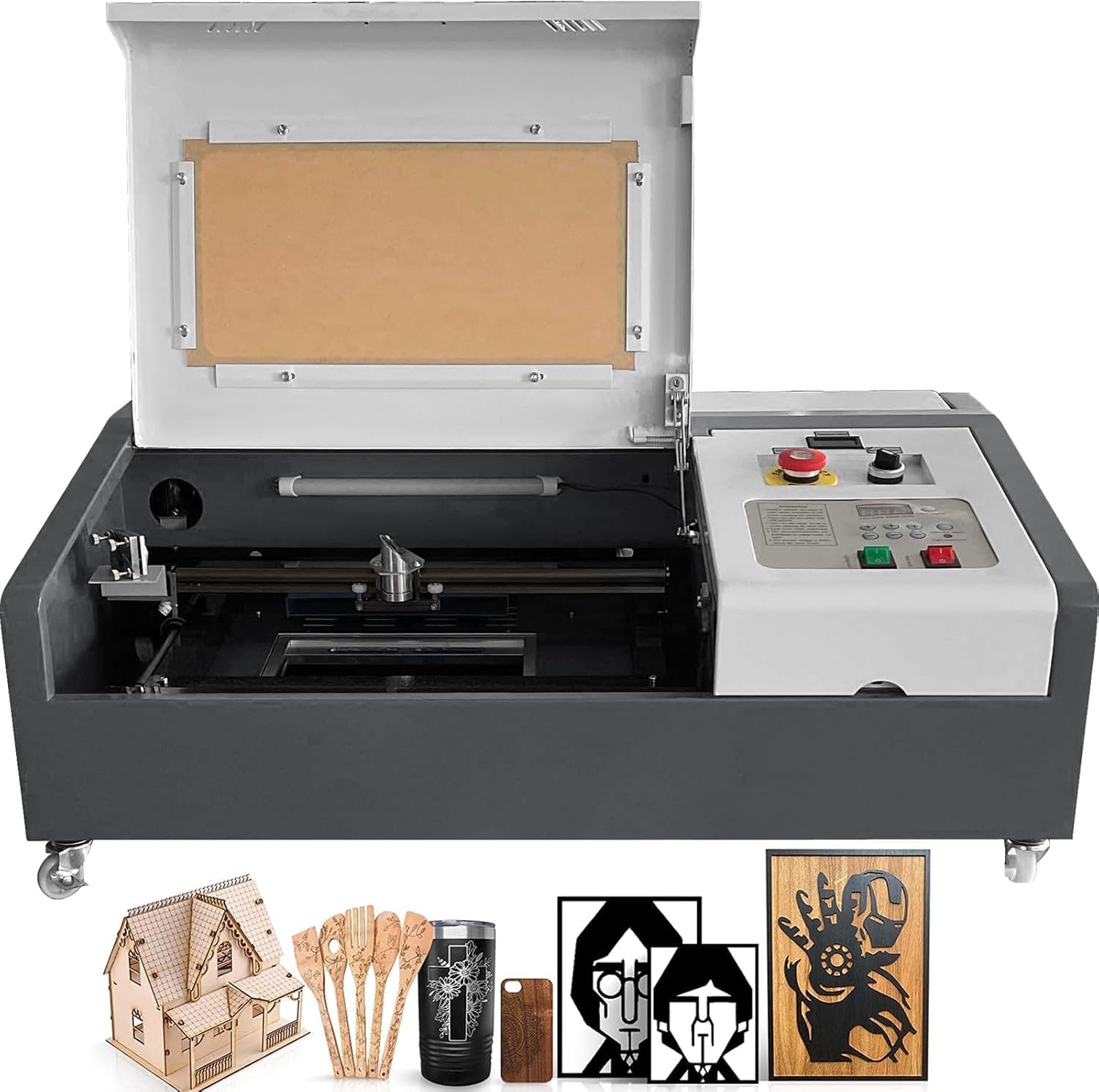
50W CO2 Laser Engraver, 16x16 inch Desktop Laser Cutter and Engraving Machine Compatible with CorelDRAW, Windows XP 7 8 10, EMF, JPG, PLT, WMF for Wood Acrylic Fabric (16"x16")
$600+This is a 50-60W CO2 laser engraver with a 300x200mm engraving area and 0.01mm positioning accuracy, designed for hobbyists and small businesses working with non-metallic materials.

LaserPecker LP5 Smart Dual 20W Fiber + Diode Laser Engraver Cutter with Rotary Extension, Slide Extension & Air Purifier, 3D Embossing, Color Engraving, Ideal for On-site Customization
$600+A dual 20W Fiber and 20W Diode laser engraver with 10,000mm/s speed, ideal for on-site customization across nearly all materials.

WIZMAKER 12W Laser Engraver Machine, Portable Carving Machine, 300x300mm Carving Area, 0.1mm High-Precision DIY Production, Suitable for Wood, Metal, Acrylic and Other Materials
$150-$299This is a 12W laser engraver with a 300x300mm carving area and 0.1mm precision, designed for DIY production on various materials.