
DEEPLEE PLA+ 1.75mm 3D Printer Filament, PLA Plus with Dimensional Accuracy +/- 0.02mm, Higher Strength and Toughness, Neatly Wound, No Clogging, Fits for Most FDM 3D Printers, 1KG White
Want the best price and purchase timing?
Our AI advisor analyzes real-time pricing across all channels to find you the best deal.
AI Verdict
A 1.75mm PLA+ filament with a stated +/- 0.02mm dimensional accuracy and increased toughness, designed for FDM 3D printers, offering a budget-friendly option for functional and decorative prints.
This Deeplee PLA+ filament is a situational fit because its advertised dimensional accuracy of +/- 0.02 mm and increased toughness are appealing for a budget filament, but user reports of inconsistent diameter on other Deeplee PLA spools introduce a potential variable in print quality. It's a strong contender if you're willing to potentially monitor filament diameter or fine-tune settings.
If consistent diameter is paramount for your projects, look for brands with a verified track record of tight tolerances across many user reviews, even if it means a higher price point.
Regret Score™
Medium RiskLower is better — measures purchase-regret risk from real buyer complaints, review credibility, and product maturity
Issues discovered after purchase
Critically weak dimension
Amazon rating vs actual quality
Chance this product isn't for you
Pros
- Advertised dimensional accuracy of +/- 0.02 mm supports consistent feeding and stable printing, potentially improving print success rates.
- Boasts increased toughness and superior mechanical strength compared to standard PLA, making it suitable for functional parts.
- Mechanically wound spools with manual inspection aim to prevent tangles and ensure smooth feeding.
- Utilizes high-quality pigments for uniform and vibrant colors in printed models.
- Offers superior fluidity and layer bonding, designed to prevent clogging and bubbles during printing.
- Vacuum-sealed packaging helps keep the filament dust-proof and dry, preserving material quality.
Cons
- Some users have reported inconsistent filament diameter, with measurements deviating significantly from the advertised 1.75mm and +/- 0.02mm tolerance on other Deeplee PLA spools.
- May require adjusting print settings, such as volumetric speed, to achieve faster print times compared to some premium filaments.
- One reviewer noted that almost 50% of tested Deeplee spools did not meet expectations regarding consistency.
- While generally praised for adhesion, some users might experience minor stringing or sagging if filament is not dried or settings are not optimized.
Dimension Scores
Advertised +/- 0.02 mm dimensional accuracy is above average, but some user reports of inconsistent diameter on other Deeplee PLA spools lower the score.
Neatly wound spools and stated clog-free printing contribute to ease of use, though some users might need to adjust settings for optimal speed.
PLA+ material offers increased toughness over standard PLA, making it suitable for both functional and decorative parts.
The 'Stronger Toughness' feature compared to standard PLA indicates improved durability for printed objects.
Best For
- Printing functional prototypes requiring higher strength than standard PLA.
- Creating decorative parts where uniform and vibrant colors are desired.
- Hobbyists and small businesses seeking a cost-effective PLA+ option for FDM printers.
- Users who prioritize neatly wound spools to minimize printing interruptions.
Not Recommended For
- Users requiring guaranteed diameter consistency for highly precise, critical engineering parts without pre-measurement.
- Those unwilling to fine-tune print settings for optimal speed and print quality.
Watch Out For
- Inconsistent filament diameter has been reported in some Deeplee PLA spools, with one test showing an average diameter of 1.714 mm and a standard deviation of 0.135 mm, significantly outside the +/- 0.02 mm claim.
- Achieving optimal print speeds may require calibration of volumetric speed, as some users found it prints slower than other brands with generic settings.
- Despite vacuum sealing, filament can still absorb moisture over time, potentially leading to stringing or sagging if not properly dried before use.
- Quality control appears to be a concern for some users, with reports of a high percentage of spools not meeting expectations.
Full Specifications
| ASIN | B0DCP1FCTM |
| Size | PLA+ |
| Brand | Deeplee |
| Color | 1*white |
| Material | Polylactic Acid |
| Item Weight | 2.2 pounds |
| Manufacturer | DEEPLEE |
| Item Diameter | 1.75 Millimeters |
| Material Type | Polylactic Acid |
| Number of Items | 1 |
| Package Dimensions | 8.43 x 8.39 x 2.83 inches |
| Manufacturer Part Number | DP-PP002 |
What Buyers Say
This Deeplee PLA+ filament currently holds a 4.5/5 rating across 1,995 reviews, suggesting a generally positive user experience, though specific complaints for this white 1KG ASIN (B0DCP1FCTM) are not readily available. Users frequently praise Deeplee PLA+ for its neat winding, which helps prevent tangles during printing. The filament is often noted for its strong layer adhesion and minimal stringing, contributing to cleaner prints. However, some general feedback on Deeplee PLA products points to potential inconsistencies in filament diameter, which could impact print precision. Additionally, some users have found that achieving faster print speeds requires adjusting settings beyond generic profiles.
“This Deeplee PLA+ is seriously good for the price, prints come out looking clean and strong, and I haven't had any tangles yet, which is a huge win for me!”
Common Praise
- Spools are neatly wound, preventing tangles during printing.
- Exhibits strong layer adhesion, resulting in prints that hold together well.
- Produces prints with minimal stringing, leading to cleaner models.
- Offers vibrant and uniform colors in finished prints.
- Provides increased toughness compared to standard PLA, making parts more durable.
Common Complaints
- Inconsistent filament diameter has been observed in some Deeplee PLA spools, deviating from the advertised +/- 0.02 mm tolerance.
- May require calibration of volumetric speed to match the print speeds of some other filament brands.
- One reviewer reported that 50% of tested Deeplee spools did not meet expectations for consistency.
- Some users noted minor sagging or stringing, which they attributed to printer settings or not drying the filament.
Ownership Tips
- Even with vacuum sealing, consider drying the filament before use, especially if you live in a humid environment, to prevent potential print quality issues like stringing.
- Experiment with print settings, particularly volumetric speed, to optimize print times for your specific printer and desired quality.
- Periodically check the filament diameter with calipers if you are printing highly precise parts, as some users have noted inconsistencies.
- Ensure your printer's nozzle is clean and properly seated, as this can often be a source of print issues regardless of filament quality.
Frequently Asked Questions
What is the difference between PLA and PLA+?
PLA+ (or PLA Plus) generally offers increased toughness and superior mechanical strength compared to standard PLA, making prints more durable and less prone to breakage.
What does +/- 0.02 mm dimensional accuracy mean?
This specification indicates the maximum deviation from the nominal 1.75 mm diameter. A lower number suggests more consistent filament thickness, which helps ensure stable extrusion and better print quality.
Is this filament compatible with my 3D printer?
This filament is designed for FDM 3D printers that use 1.75 mm filaments, making it compatible with most mainstream FDM printers.
Do I need to dry this filament before use?
While the package is vacuum-sealed to keep filaments dry, all PLA can absorb moisture over time. Drying the filament before printing, especially if you notice issues like stringing or popping, can improve print quality.
Will this filament clog my printer nozzle?
The filament is designed with superior fluidity and layer bonding to ensure printing without clogging. However, proper printing temperatures and a clean nozzle are always important to prevent clogs.
Buying Guide
When buying 3D printer filament, you're essentially buying the raw material for your creations. The material type, like PLA+, dictates the physical properties of your finished prints, such as strength and flexibility. The diameter, usually 1.75mm, needs to match your printer. Dimensional accuracy is crucial because inconsistent filament thickness can lead to clogs or uneven layers, ruining prints. Finally, how the filament is wound on the spool affects how smoothly it feeds into your printer. A messy spool means tangles and failed prints.
Material: Polylactic Acid (PLA+)
PLA+ is a common 3D printing plastic, but the 'Plus' means it's been modified to be tougher and stronger than basic PLA. Think of it like a stronger version of the plastic used in disposable cups, but for 3D printing. This means your printed objects will be more durable and less likely to break under stress.
Diameter: 1.75 Millimeters
This is the thickness of the filament strand. It's like choosing the right size of pencil lead for your mechanical pencil – it has to fit your printer's extruder. Most FDM 3D printers use 1.75mm filament, so this is a standard size.
Dimensional Accuracy: +/- 0.02mm
This tells you how consistent the filament's diameter is along its entire length. Imagine trying to draw a perfect line with a pencil that keeps changing thickness; your line would be uneven. Similarly, a tight accuracy like +/- 0.02mm means the filament feeds smoothly and consistently, leading to more precise and reliable prints without clogs or under/over-extrusion.
Neatly Wound
This refers to how the filament is spooled. A neatly wound spool is like a well-organized fishing line – it unwinds smoothly without tangling. A tangled spool can cause your printer to stop mid-print, ruining hours of work, so this is a big deal for print reliability.
Alternatives
If you need even higher impact resistance or temperature resistance, look for filaments like PETG or ABS. For projects requiring extreme precision, prioritize brands with independently verified, consistently tight dimensional accuracy, even if it means a higher price.
You Might Also Like

xTool F2 Ultra UV Laser Engraver, 5W UV Laser, 3D Inner and Fine Glass Engraving, Dual 48MP Cameras, 15,000 mm/s High Speed, AI Powered 2D-to-3D Software, Ultra-Precise Detail on Glass Plastic Acrylic
$600+A 5W UV laser engraver with <10μm spot size for 3D inner glass engraving and cold processing heat-sensitive materials.
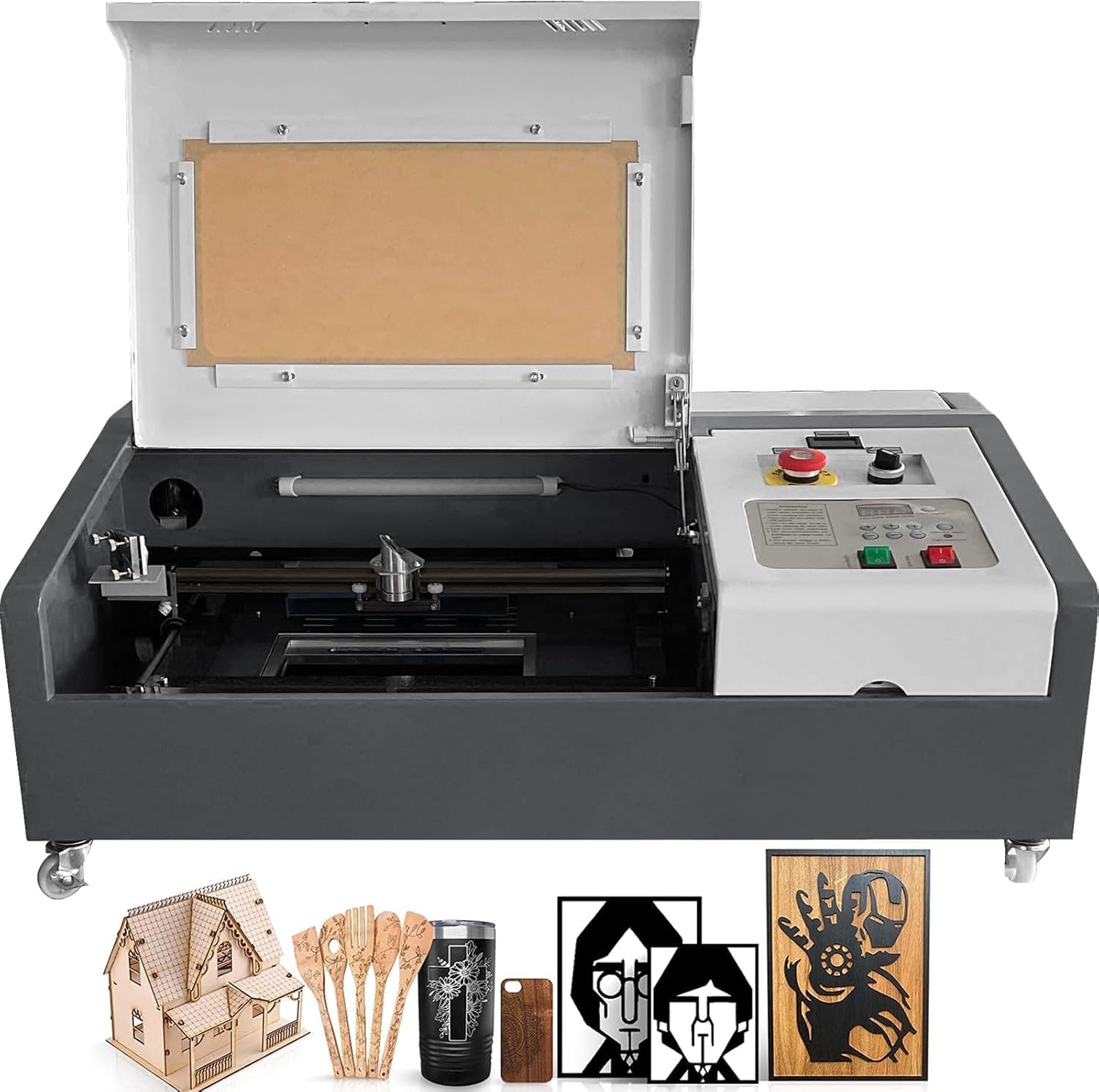
50W CO2 Laser Engraver, 16x16 inch Desktop Laser Cutter and Engraving Machine Compatible with CorelDRAW, Windows XP 7 8 10, EMF, JPG, PLT, WMF for Wood Acrylic Fabric (16"x16")
$600+This is a 50-60W CO2 laser engraver with a 300x200mm engraving area and 0.01mm positioning accuracy, designed for hobbyists and small businesses working with non-metallic materials.

LaserPecker LP5 Smart Dual 20W Fiber + Diode Laser Engraver Cutter with Rotary Extension, Slide Extension & Air Purifier, 3D Embossing, Color Engraving, Ideal for On-site Customization
$600+A dual 20W Fiber and 20W Diode laser engraver with 10,000mm/s speed, ideal for on-site customization across nearly all materials.

WIZMAKER 12W Laser Engraver Machine, Portable Carving Machine, 300x300mm Carving Area, 0.1mm High-Precision DIY Production, Suitable for Wood, Metal, Acrylic and Other Materials
$150-$299This is a 12W laser engraver with a 300x300mm carving area and 0.1mm precision, designed for DIY production on various materials.