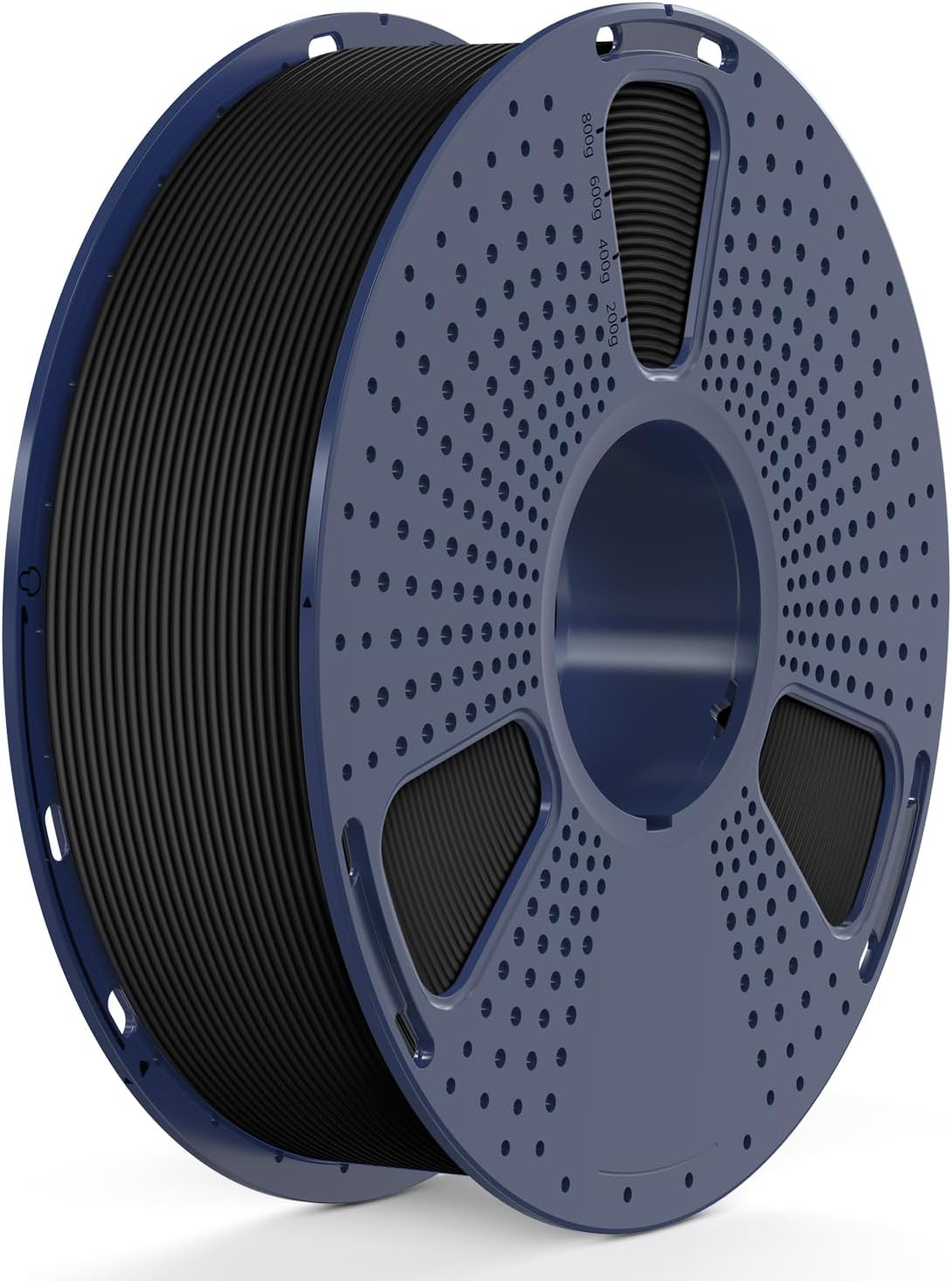
SUNLU High Speed PETG 3D Filament 1.75mm, 30mm/s - 600mm/s Print Range, High Flow Speedy 3D Printer Filament, Fit Most FDM Printers, Bambu Labs Printer etc, 1kg Spool, (Black)
Want the best price and purchase timing?
Our AI advisor analyzes real-time pricing across all channels to find you the best deal.
AI Verdict
This 1.75mm PETG filament offers high-speed printing up to 600mm/s with enhanced toughness, but often demands extensive calibration to manage stringing and oozing.
This filament is a strong contender if you need the durability of PETG and want to push print speeds up to 600mm/s, especially on high-flow printers. However, its high fluidity makes it very sensitive to moisture and requires significant effort to dial in settings to avoid stringing and oozing. It's not a 'plug-and-play' option.
If consistent, high-quality prints with minimal calibration are your priority, look for standard PETG formulations or those specifically marketed for ease of printing, even if they offer lower maximum print speeds.
Regret Score™
Medium RiskLower is better — measures purchase-regret risk from real buyer complaints, review credibility, and product maturity
Issues discovered after purchase
Critically weak dimension
Amazon rating vs actual quality
Chance this product isn't for you
Pros
- Achieves print speeds up to 600mm/s due to enhanced fluidity, allowing for faster project completion.
- Combines the ease of use found in PLA with the durable strength of ABS filament.
- Offers enhanced toughness, outperforming many other filaments in durability for sturdy items.
- Provides high impact strength, making it suitable for parts that need to endure bumps and drops without breaking.
- Emits minimal odor during printing, making it more suitable for indoor environments compared to ABS.
- Maintains a dimensional accuracy of ±0.02 mm, contributing to precise print results.
Cons
- Frequently causes significant stringing and oozing, especially at higher print speeds or if not thoroughly dried.
- Highly susceptible to moisture absorption due to increased flowability, requiring consistent drying to prevent print quality issues.
- Requires extensive calibration of temperature, speed, and retraction settings to achieve consistent print quality and minimize defects.
- Can exhibit inconsistent surface finish, including pitting and blobbing, particularly with matte variants and varying print speeds.
- Bed adhesion can be excessively strong, potentially damaging build plates if a release agent is not used.
Dimension Scores
While it boasts a ±0.02 mm dimensional accuracy, user reports of inconsistent surface finish, pitting, and blobbing at varying speeds prevent a higher score.
Despite claims of 'PLA-like ease,' users frequently report extensive calibration, drying, and troubleshooting are necessary to mitigate stringing and oozing.
The filament supports a wide print speed range from 30mm/s to 600mm/s and combines properties of PLA and ABS, making it adaptable for various project types.
It is specifically highlighted for enhanced toughness and high impact strength, making it ideal for sturdy and resilient items.
Best For
- Users with high-speed 3D printers (like Bambu Lab) looking to maximize print throughput for functional parts.
- Printing sturdy, resilient items that need to withstand stress, impact, or outdoor conditions.
- Makers who are comfortable with extensive filament calibration to fine-tune print settings.
- Projects requiring a material with low odor compared to ABS, suitable for home or office use.
Not Recommended For
- Beginners seeking a 'print-and-forget' filament without needing to adjust many settings.
- Users who prioritize aesthetic perfection and consistent surface finish without significant calibration effort.
- Environments where filament drying is not consistently managed, as it's prone to moisture absorption.
Watch Out For
- Many users report significant stringing and oozing, even after drying the filament for 12+ hours at 60-65°C.
- One user experienced the filament diameter being off by up to 0.5mm (measuring 2.25mm instead of 1.75mm) in several spots, leading to clogs.
- Bed adhesion can be so strong that it pulled PEI sparkles off a textured build plate, indicating a need for a release agent like glue stick.
- Some users report weak layer adhesion, where the plastic won't adhere to itself, even after trying various temperature settings.
- Inconsistent colors and surface finish, especially with matte variants, can occur due to variations in speed and temperature during printing.
Full Specifications
| ASIN | B0D9NFF2T8 |
| Size | 1KG |
| Brand | SUNLU |
| Color | 1000g Black |
| Material | Polyethylene Terephthalate Glycol |
| Item Weight | 1.8 pounds |
| Manufacturer | SUNLU |
| Item Diameter | 1.75 Millimeters |
| Material Type | Polyethylene Terephthalate Glycol |
| Number of Items | 1 |
| Item model number | High Speed PETG Filament 1.75mm |
| Package Dimensions | 8.54 x 8.39 x 3.27 inches |
| Manufacturer Part Number | HSMPETG-BK-1KG |
What Buyers Say
The biggest surprise with this filament is how much effort it takes to get it printing cleanly, despite being marketed as 'high-speed' and 'easy to use.' Many users find themselves battling persistent stringing and oozing, even after rigorous drying and calibration. While some achieve fantastic results, it seems to be a filament that demands patience and fine-tuning, especially on Bambu Lab printers. The promise of high speed is there, but often at the cost of print quality or requiring significant parameter adjustments.
“Man, this stuff strings like crazy! I dried it for 12 hours, ran all the calibrations, and it still looks like a spider web. My Elegoo PETG prints perfect, why is this so hard?!”
Common Praise
- Prints are strong and durable, holding up well to stress and impact.
- Achieves very fast print speeds when settings are dialed in correctly.
- Minimal odor during printing, making it comfortable for indoor use.
- Good bed adhesion, with prints sticking reliably to various build plates.
- Some users report it performs as well as or better than more expensive brands once optimized.
Common Complaints
- Excessive stringing and oozing are frequent issues, even after drying and retraction tuning.
- Requires extensive calibration (temp towers, flow rates, retraction) to achieve acceptable print quality.
- Inconsistent surface finish, including pitting and blobbing, can appear on prints.
- Filament is very sensitive to moisture, leading to print defects if not kept bone dry.
- Bed adhesion can be too aggressive, potentially damaging build plates without a release agent.
Ownership Tips
- You'll need a dedicated filament dryer and might have to dry it for longer than typical recommendations (e.g., 24+ hours at 65°C) to combat moisture-related issues.
- Be prepared to spend a lot of time running calibration prints (temp towers, retraction tests, flow cubes) to find the sweet spot for your specific printer and environment.
- Consider using a release agent like glue stick on your build plate, especially textured PEI, to prevent prints from adhering too strongly and damaging the surface.
- Even with optimized settings, some users still report minor imperfections like blobbing or inconsistent surface texture, particularly with matte colors.
- The 'high speed' claim is achievable, but often requires higher temperatures and careful tuning, and might still result in more stringing than slower prints.
Frequently Asked Questions
What print speeds can I achieve with this filament?
You can print with SUNLU High Speed PETG filament at speeds ranging from 30mm/s up to 600mm/s. However, optimal results for detail and surface finish are often achieved at moderate speeds around 40-60mm/s.
Does this PETG filament produce a lot of odor?
No, one of the benefits of using SUNLU High Speed PETG filament is that it emits minimal odor during printing, making it more user-friendly for home or office environments compared to materials like ABS.
Do I need to dry this filament before use?
Yes, due to its enhanced fluidity for high-speed printing, this PETG is more susceptible to moisture absorption. Drying the filament at 65°C for at least 8 hours before printing is highly recommended to prevent issues like stringing and oozing.
What are the recommended printing temperatures?
Recommended hot bed temperature is 70-80℃. Print temperature varies with speed: 230-240℃ for 50-100mm/s, 240-255℃ for 100-300mm/s, and 255-270℃ for 300-600mm/s.
Is this filament prone to stringing?
Yes, many users report significant stringing and oozing with this filament, especially if it's not perfectly dry or if print settings are not meticulously calibrated.
Can this filament be used for outdoor applications?
Yes, its robust durability and resistance to impact make it suitable for both indoor and outdoor applications where weather resistance is a necessity.
Buying Guide
When you're looking at PETG filament, especially 'high-speed' versions, you need to understand that it's a balancing act. You're trying to get the strength and heat resistance of PETG, but with the speed of faster materials. This often means the filament is more fluid when melted, which can lead to issues like stringing or oozing if your printer settings aren't perfect or if the filament isn't bone dry. Don't just assume 'high speed' means 'easy high speed.'
30mm/s - 600mm/s Print Speed
This range tells you how fast the filament can theoretically be extruded. A wider range, especially up to 600mm/s, means it's designed for modern, fast printers. Think of it like a car's top speed – it's capable, but you might not always drive that fast for the best control.
Enhanced Fluidity
This is what allows for the high print speeds. The filament melts and flows more easily. However, this also means it's more likely to 'drip' or 'string' from the nozzle when it shouldn't, much like a very runny honey compared to a thicker syrup.
Enhanced Toughness & High Impact Strength
These specs mean your printed parts will be strong and resistant to breaking if dropped or stressed. It's like the difference between a brittle plastic toy and a durable, flexible phone case – the latter can take a hit.
1.75 Millimeters Diameter
This is the standard thickness of the filament. It needs to match your 3D printer's extruder, otherwise, it simply won't feed correctly, like trying to put a thick rope through a small hole.
Alternatives
If you want easier printing with less stringing and oozing, look for standard PETG filaments without the 'high-speed' designation, or consider PLA+ for good strength with simpler printing. If you need maximum impact resistance and don't mind the fumes and warping, ABS is an option.
You Might Also Like

xTool F2 Ultra UV Laser Engraver, 5W UV Laser, 3D Inner and Fine Glass Engraving, Dual 48MP Cameras, 15,000 mm/s High Speed, AI Powered 2D-to-3D Software, Ultra-Precise Detail on Glass Plastic Acrylic
$600+A 5W UV laser engraver with <10μm spot size for 3D inner glass engraving and cold processing heat-sensitive materials.
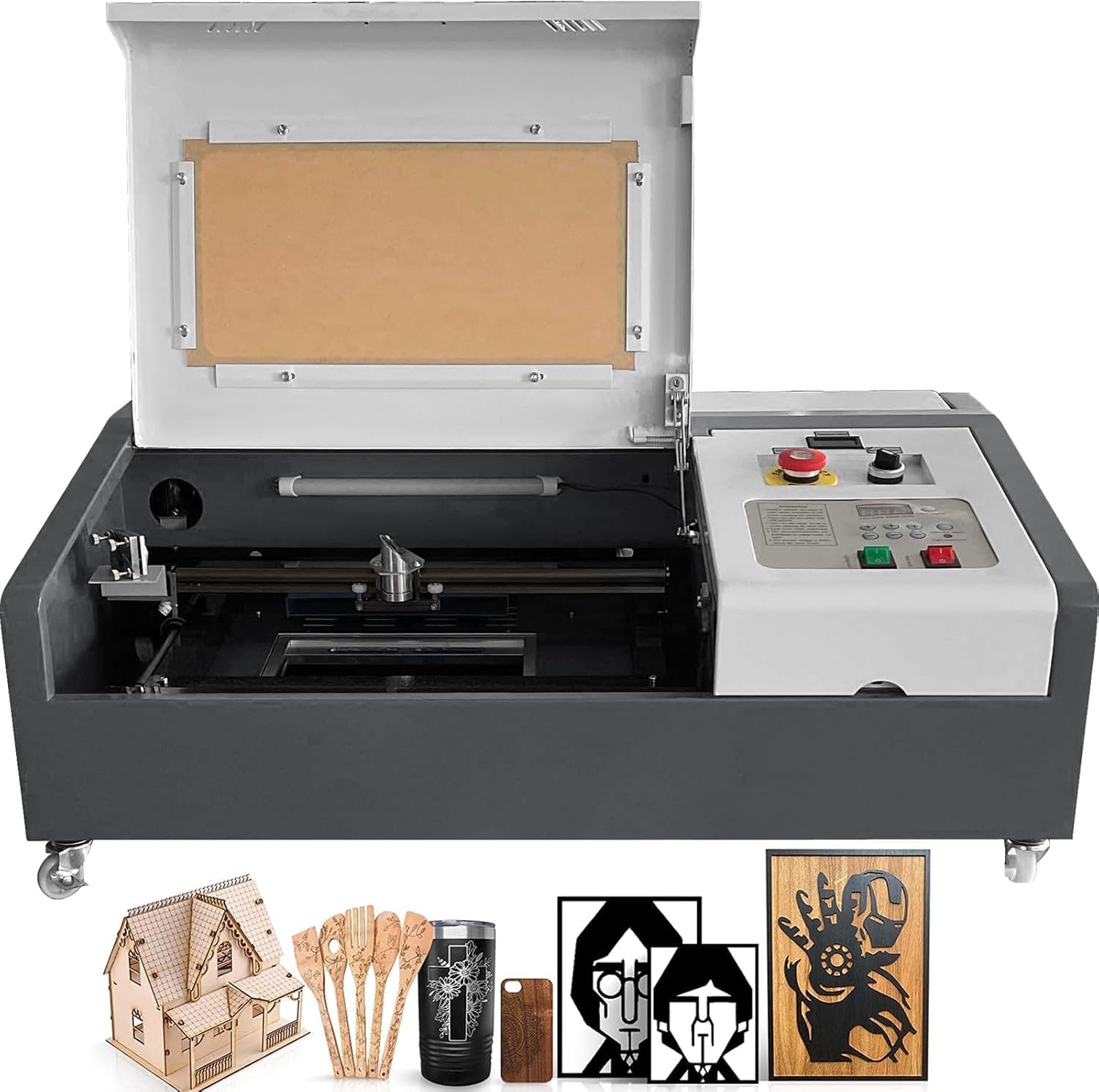
50W CO2 Laser Engraver, 16x16 inch Desktop Laser Cutter and Engraving Machine Compatible with CorelDRAW, Windows XP 7 8 10, EMF, JPG, PLT, WMF for Wood Acrylic Fabric (16"x16")
$600+This is a 50-60W CO2 laser engraver with a 300x200mm engraving area and 0.01mm positioning accuracy, designed for hobbyists and small businesses working with non-metallic materials.

LaserPecker LP5 Smart Dual 20W Fiber + Diode Laser Engraver Cutter with Rotary Extension, Slide Extension & Air Purifier, 3D Embossing, Color Engraving, Ideal for On-site Customization
$600+A dual 20W Fiber and 20W Diode laser engraver with 10,000mm/s speed, ideal for on-site customization across nearly all materials.

WIZMAKER 12W Laser Engraver Machine, Portable Carving Machine, 300x300mm Carving Area, 0.1mm High-Precision DIY Production, Suitable for Wood, Metal, Acrylic and Other Materials
$150-$299This is a 12W laser engraver with a 300x300mm carving area and 0.1mm precision, designed for DIY production on various materials.