
Bambu Lab A1 3D Printer, Support Multi-Color 3D Printing, High Speed & Precision, Full-Auto Calibration & Active Flow Rate Compensation, ≤48 dB Quiet FDM 3D Printers 256 * 256 * 256mm³ Build Volume
Want the best price and purchase timing?
Our AI advisor analyzes real-time pricing across all channels to find you the best deal.
AI Verdict
A 256mm³ FDM 3D printer with 10,000 mm/s² acceleration and multi-color capability (with AMS lite) for users prioritizing automated calibration and speed.
This printer is a strong contender for beginners and those prioritizing speed and automated setup, thanks to its 10,000 mm/s² acceleration and full-auto calibration. However, the recurring 'Filament Failure to Feed' issues with the AMS lite and inconsistent bed adhesion make it a situational fit for users who need a truly 'set it and forget it' multi-color experience or consistent first-layer reliability.
If multi-color reliability is paramount, consider models with a more enclosed AMS system or a different multi-material solution, or be prepared for potential troubleshooting with the AMS lite.
Regret Score™
High RiskLower is better — measures purchase-regret risk from real buyer complaints, review credibility, and product maturity
Issues discovered after purchase
Critically weak dimension
Amazon rating vs actual quality
Chance this product isn't for you
Pros
- Achieves 10,000 mm/s² acceleration for fast prints while maintaining detail.
- Features full-auto calibration for Z-offset, bed-leveling, vibration resonance, and nozzle pressure, eliminating manual tuning.
- Supports multi-color printing with the AMS lite, bringing designs to life with up to 4 colors.
- Operates at ≤48 dB with active motor noise canceling, offering a quieter printing environment.
- Offers a spacious 256 x 256 x 256mm³ build volume, allowing for larger prints.
- Includes a 1-Clip quick swap nozzle for convenient maintenance and versatile printing options.
Cons
- AMS lite frequently experiences 'Filament Failure to Feed' errors, especially during multi-color changes.
- Users report bed adhesion issues, with prints not sticking to the build plate even after cleaning or temperature adjustments.
- Integrated camera has a low frame rate (less than 1 FPS), hindering effective print monitoring and AI fault detection.
- Fan noise can be louder than advertised, with some users measuring it at 55 dBA, particularly at 100% speed.
- Software requires the Bambu App for basic functions like excluding print objects and lacks visibility into failed print layers.
Dimension Scores
The printer achieves 10,000 mm/s² acceleration while delivering smooth surfaces and sharp details, with users reporting top-tier print quality.
Full-auto calibration for Z-offset, bed-leveling, and active flow rate compensation significantly simplifies the printing process, making it user-friendly for beginners.
Multi-color printing with AMS lite and a 1-Clip quick swap nozzle offer expanded creative options, but frequent 'Filament Failure to Feed' issues limit its practical multi-color reliability.
Constructed with hardened steel, stainless steel, and extruded aluminum, but user reports of recurring AMS lite failures, clogged nozzles, and bed adhesion problems suggest potential long-term reliability concerns.
Best For
- Beginners seeking a highly automated 3D printing experience with minimal manual calibration.
- Makers who need to print multi-color objects and are willing to troubleshoot AMS lite issues.
- Users prioritizing fast print speeds for functional prototypes or rapid iteration.
- Individuals with limited space who benefit from a printer with a relatively quiet operation (when not at max fan speed).
Not Recommended For
- Users who require a completely silent printer for shared living spaces or bedrooms.
- Those needing a reliable multi-material system without frequent filament feeding errors.
- Individuals who rely on high-quality camera monitoring for remote print supervision or AI fault detection.
Watch Out For
- The AMS lite can be a headache, with multiple reports of 'Filament Failure to Feed' errors across different slots and filament types, even after replacing components.
- Bed adhesion can be inconsistent, with some users experiencing prints detaching or only sticking in certain areas, even with clean plates and adjusted settings.
- Despite active motor noise canceling, the fan noise, especially the part cooling fan, can reach 55 dBA, which is noticeably louder than the advertised ≤48 dB.
- The integrated camera's sub-1 FPS frame rate makes real-time monitoring frustrating and prevents effective AI fault detection.
- Frequent clogged nozzles and extruder skipping have been reported by some users, leading to print failures and requiring troubleshooting.
Full Specifications
| ASIN | B0D17TMWFB |
| Brand | BAMBULAB |
| Color | Grey |
| Material | Hardened Steel,Stainless Steel,Extruded Aluminum |
| Item Weight | 18.26 pounds |
| Manufacturer | BAMBULAB |
| Item model number | PF002-A |
| Product Dimensions | 21.76 x 20.83 x 12.87 inches |
What Buyers Say
The Bambu Lab A1 is a fast and user-friendly 3D printer that automates many of the tedious calibration steps, making it appealing for newcomers. However, the AMS lite, while offering multi-color printing, is a frequent source of frustration due to 'Filament Failure to Feed' errors. Many users also struggle with inconsistent bed adhesion, requiring constant cleaning or adjustments. The camera's low frame rate is a letdown for remote monitoring, and while advertised as quiet, fan noise can be surprisingly loud.
“Ugh, this AMS lite is driving me nuts with all the filament jams! I just want my multi-color prints to work without babysitting it every five minutes. The prints look amazing when they actually finish, but getting there is a battle.”
Common Praise
- Setup is incredibly easy, making it accessible for first-time 3D printer owners.
- Prints are fast with impressive acceleration, reducing overall project time.
- Automatic calibration features like bed leveling and vibration resonance work seamlessly.
- Print quality is high, with smooth surfaces and sharp details, often comparable to more expensive printers.
- The Bambu Studio slicer and Handy app create a cohesive and easy-to-use ecosystem.
Common Complaints
- The AMS lite consistently jams or fails to feed filament, especially during multi-color changes, across multiple units.
- Prints frequently suffer from bed adhesion issues, lifting corners or detaching entirely, even on clean plates.
- Fan noise is much louder than the advertised ≤48 dB, with some users measuring it at 55 dBA, making it unsuitable for quiet environments.
- The integrated camera's sub-1 FPS frame rate makes it nearly useless for real-time monitoring or AI fault detection.
- Some users experience recurring clogged nozzles and extruder skipping, leading to failed prints.
Ownership Tips
- You'll probably spend more time troubleshooting AMS lite filament feeding issues than actually printing multi-color designs.
- Be prepared to constantly clean your build plate and potentially experiment with adhesives to combat bed adhesion problems.
- The 'quiet' claim is misleading; the fans can be quite loud, especially during faster prints, so don't plan on it running silently in a living space.
- The camera is more of a novelty than a useful monitoring tool due to its extremely low frame rate.
- Even with auto-calibration, some users report recurring issues like clogged nozzles, indicating ongoing maintenance might be needed.
Frequently Asked Questions
Does the Bambu Lab A1 come with AMS lite for multi-color printing?
The Bambu Lab A1 supports multi-color printing, but the AMS lite is required and sold separately or as part of the A1 Combo package.
How quiet is the Bambu Lab A1?
The A1 is advertised with a noise level of ≤48 dB due to active motor noise canceling. However, some users report fan noise, particularly at higher speeds, can be louder, reaching around 55 dBA.
What is the build volume of the Bambu Lab A1?
The Bambu Lab A1 offers a build volume of 256 x 256 x 256mm³, which is considered spacious for an entry-level FDM printer.
Does the A1 require manual calibration?
No, the A1 features full-auto calibration for processes like Z-offset, bed-leveling, vibration resonance, and nozzle pressure, aiming for a hassle-free printing experience.
Can I monitor prints remotely with the A1's camera?
The A1 has an integrated camera, but its frame rate is less than 1 FPS, making real-time, detailed remote monitoring challenging.
Buying Guide
When looking at 3D printers like the Bambu Lab A1, you're buying into an ecosystem that promises ease of use and speed. The 'multi-color' feature sounds cool, but you need to understand it relies on an accessory, the AMS lite, which has its own quirks. Pay close attention to user feedback on recurring issues like filament jams and bed adhesion, as these can turn a seemingly easy-to-use machine into a frustrating one. Don't just look at the top-line speed and noise figures; consider how they translate to real-world use and potential compromises.
Acceleration (10,000 mm/s²)
This isn't just a number; it means your prints will finish much faster than on many other FDM printers. High acceleration allows the print head to change direction quickly without losing momentum, directly impacting overall print time.
Full-Auto Calibration
This is a huge time-saver. Instead of manually adjusting the print bed or nozzle height, the printer does it all for you before each print, reducing failed prints due to improper setup. Think of it like a self-driving car handling the tricky parking for you.
Build Volume (256 x 256 x 256mm³)
This defines the maximum size of objects you can print. A 256mm³ cube is a decent size for many projects, from functional parts to decorative items. If you plan to print large helmets or intricate models in one piece, this is a good starting point.
Active Flow Rate Compensation
This feature helps ensure consistent extrusion of filament, leading to smoother surfaces and more accurate dimensions. It's like having a smart faucet that always delivers the perfect water pressure, preventing blobs or gaps in your print.
Alternatives
If multi-color printing without constant filament issues is your top priority, look for printers with more robust or enclosed multi-material systems. If you need a truly quiet machine for a bedroom, prioritize models with lower reported fan noise or consider an enclosed printer.
You Might Also Like

xTool F2 Ultra UV Laser Engraver, 5W UV Laser, 3D Inner and Fine Glass Engraving, Dual 48MP Cameras, 15,000 mm/s High Speed, AI Powered 2D-to-3D Software, Ultra-Precise Detail on Glass Plastic Acrylic
$600+A 5W UV laser engraver with <10μm spot size for 3D inner glass engraving and cold processing heat-sensitive materials.
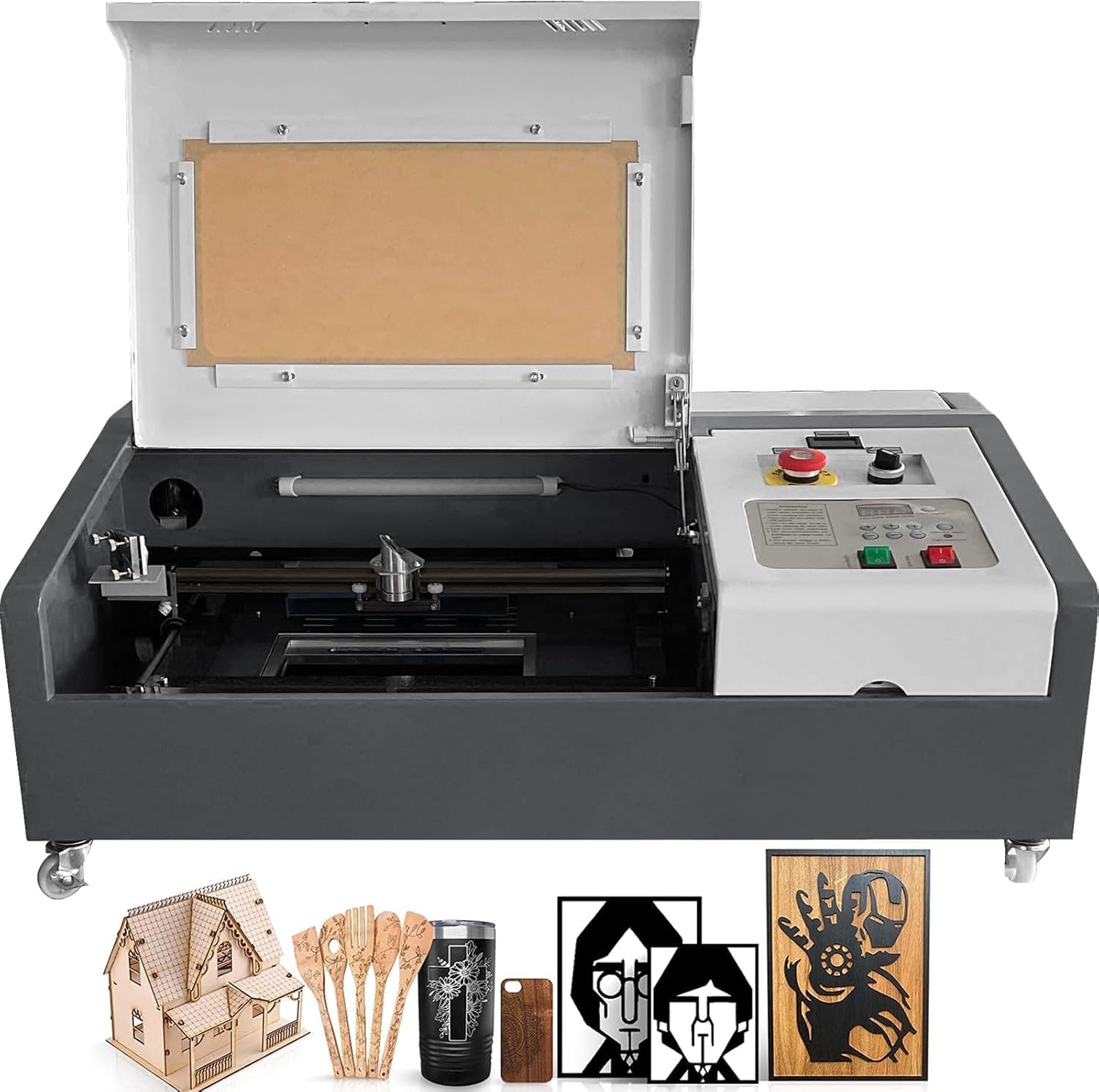
50W CO2 Laser Engraver, 16x16 inch Desktop Laser Cutter and Engraving Machine Compatible with CorelDRAW, Windows XP 7 8 10, EMF, JPG, PLT, WMF for Wood Acrylic Fabric (16"x16")
$600+This is a 50-60W CO2 laser engraver with a 300x200mm engraving area and 0.01mm positioning accuracy, designed for hobbyists and small businesses working with non-metallic materials.

LaserPecker LP5 Smart Dual 20W Fiber + Diode Laser Engraver Cutter with Rotary Extension, Slide Extension & Air Purifier, 3D Embossing, Color Engraving, Ideal for On-site Customization
$600+A dual 20W Fiber and 20W Diode laser engraver with 10,000mm/s speed, ideal for on-site customization across nearly all materials.

WIZMAKER 12W Laser Engraver Machine, Portable Carving Machine, 300x300mm Carving Area, 0.1mm High-Precision DIY Production, Suitable for Wood, Metal, Acrylic and Other Materials
$150-$299This is a 12W laser engraver with a 300x300mm carving area and 0.1mm precision, designed for DIY production on various materials.