
Laser Safety Glasses, Eye Protection Goggles 200nm-450nm/ 800nm-2000nm/1064nm Wavelength for Laser Engraver, Laser Cutting Protective Glasses, Fiber Laser Engraving Machine
Want the best price and purchase timing?
Our AI advisor analyzes real-time pricing across all channels to find you the best deal.
AI Verdict
These are budget laser safety goggles claiming broad wavelength protection for 200nm-450nm and 800nm-2000nm, including 1064nm, but lack a specified Optical Density (OD) rating.
These glasses offer a broad spectrum of wavelength protection (200nm-450nm, 800nm-2000nm, 1064nm) at a budget price, making them a situational fit for hobbyists. However, the critical omission of an Optical Density (OD) rating and any safety certifications means their actual protective capability is unconfirmed, which is a major concern for eye safety.
If you need verifiable protection, look for glasses with clearly stated OD ratings for your specific laser wavelength and explicit CE or ANSI Z136.1 certifications.
Regret Score™
Very High RiskLower is better — measures purchase-regret risk from real buyer complaints, review credibility, and product maturity
Issues discovered after purchase
Critically weak dimension
Amazon rating vs actual quality
Chance this product isn't for you
Pros
- Advertised to protect against a wide range of laser wavelengths, specifically 200nm-450nm, 800nm-2000nm, and 1064nm.
- Positioned in a budget price band ($0-$49).
- Holds an Amazon's Choice badge, indicating popularity within its category.
- Maintains a 4.4/5 rating from 26 reviews, suggesting general user satisfaction for a budget option.
Cons
- No Optical Density (OD) rating is specified in the product description, which is a critical safety metric.
- No mention of industry safety certifications like CE or ANSI Z136.1, which are vital for laser eye protection.
- Specific details on material construction or fit over prescription glasses are absent, a common concern for users.
- Visible Light Transmission (VLT) percentage is not provided, making it difficult to gauge visibility during use.
Dimension Scores
The absence of a stated Optical Density (OD) rating and any safety certifications makes it impossible to verify the precision or quality of the laser protection claims.
Assuming they function as standard safety glasses, they are likely straightforward to put on and take off, aligning with category average for basic eyewear.
The stated protection across a broad range of wavelengths (200nm-450nm, 800nm-2000nm, 1064nm) makes them more versatile than single-wavelength glasses.
Without specific material details or impact resistance ratings, the durability is unknown and cannot be assumed to be above average for a budget product.
Best For
- Hobbyists and makers using violet, blue, or red lasers within the 200nm-450nm range.
- Individuals operating fiber laser engraving machines emitting 1064nm wavelengths.
- Users of IPL laser hair removal devices requiring protection in the 800nm-2000nm range.
Not Recommended For
- Professional or industrial settings where certified OD ratings and specific safety standards (e.g., EN 207) are mandatory.
- Users needing guaranteed protection for CO2 lasers (typically around 10600nm), as this product's stated range does not cover it.
- Anyone unwilling to risk eye safety without explicit OD ratings and third-party certifications.
Watch Out For
- The most significant pitfall is the absence of a stated Optical Density (OD) rating, making it impossible to verify the actual level of protection against specific laser powers.
- Lack of any mentioned safety certifications (like CE or ANSI Z136.1) means the product's protective claims are unverified by external standards.
- Users frequently report that generic laser safety glasses may not fit well over prescription eyewear, potentially leaving gaps for laser exposure.
- Without a VLT specification, the darkness of the lenses is unknown, which could hinder visibility during detailed work.
Full Specifications
| ASIN : | B0CXM5VKWT |
| Department : | Unisex |
| Item model number : | Yj-005 |
| Package Dimensions : | 8.66 x 4.33 x 2.64 inches; 2.89 ounces |
| Date First Available : | March 9, 2024 |
What Buyers Say
While specific user reviews for this ASIN are not widely available, the 4.4/5 rating from 26 reviews suggests a generally positive reception for a budget option. Many users of similar budget laser safety glasses often prioritize the stated wavelength protection for their specific laser type. However, a recurring concern across the category is the lack of explicit Optical Density (OD) ratings and verifiable safety certifications, which leaves users questioning the true level of protection. The fit over prescription glasses and the overall comfort are also common points of discussion for generic safety eyewear.
“I got these for my fiber laser, they say 1064nm so hopefully they work, but I wish they actually said an OD number on them, makes me nervous.”
Common Praise
- Users appreciate the stated broad wavelength coverage for various laser types.
- The budget price point makes them accessible for hobbyists and DIY users.
- The Amazon's Choice badge indicates a popular and frequently purchased item in its subcategory.
- The 4.4/5 rating suggests that many buyers find them acceptable for their needs.
Common Complaints
- No Optical Density (OD) rating is provided, which is a critical omission for safety.
- Lack of explicit safety certifications (e.g., CE, ANSI Z136.1) raises concerns about verified protection.
- The fit may not be ideal for all face shapes or over prescription glasses, potentially leaving gaps.
- Unspecified Visible Light Transmission (VLT) can make it difficult to judge how dark the lenses are for practical use.
Ownership Tips
- The actual tint and visibility through the lenses can be darker or lighter than expected due to the lack of VLT specification.
- The frame material might feel less robust than higher-priced, certified options, suggesting they might not withstand heavy-duty use.
- Gaps around the eyes, especially near the temples or nose, can be a concern if not worn snugly, even without prescription glasses.
- The included case (if any) might be basic, requiring separate storage for better protection when not in use.
Frequently Asked Questions
What is the Optical Density (OD) rating of these glasses?
The product description does not specify an Optical Density (OD) rating. This is a crucial piece of information for determining the level of protection against laser exposure.
Are these glasses certified by any safety standards like CE or ANSI?
The product description does not mention any specific safety certifications such as CE or ANSI Z136.1. Many users recommend looking for certified glasses for reliable protection.
Will these fit over my prescription glasses?
The product description does not provide details on the fit or if they are designed to accommodate prescription glasses. Some users find generic safety glasses leave gaps when worn over eyewear.
Can I use these for CO2 lasers?
No, these glasses are specified for 200nm-450nm, 800nm-2000nm, and 1064nm wavelengths. CO2 lasers typically operate around 10600nm, which is outside this product's stated protection range.
What is the Visible Light Transmission (VLT) percentage?
The Visible Light Transmission (VLT) percentage is not listed in the product information. This means the darkness of the lenses and how much visible light passes through is unknown.
Buying Guide
When you're looking at laser safety glasses, you're not just buying sunglasses; you're buying critical eye protection. The most important thing is that the glasses block the specific wavelength of your laser, and they do it with enough power. If the glasses don't explicitly state the Optical Density (OD) for your laser's wavelength, you're essentially guessing at your safety. Also, check for certifications like CE or ANSI Z136.1, which mean they've been tested by a third party.
Wavelength Protection (nm)
This tells you which specific colors of laser light the glasses are designed to block. Lasers operate at very precise wavelengths (like 450nm for blue diode lasers or 1064nm for fiber lasers), and your glasses must match that wavelength to be effective, otherwise, it's like wearing a rain jacket in a fire – useless for the actual danger.
Optical Density (OD)
This is the measure of how much the laser light is attenuated or blocked. A higher OD number means more protection. Think of it like SPF for your skin; a higher SPF blocks more UV. For lasers, an OD of 6+ or 7+ is often recommended for hobbyist and industrial use, but it depends on your laser's power.
Certifications (CE, ANSI Z136.1, EN 207)
These are stamps of approval from independent organizations that have tested the glasses to ensure they meet specific safety standards. Without these, the manufacturer's claims are unverified, and you're relying solely on their word, which isn't ideal when your eyesight is on the line.
Alternatives
If these don't cut it, look for laser safety glasses that explicitly state their Optical Density (OD) for your laser's specific wavelength and clearly display CE or ANSI Z136.1 certification.
You Might Also Like

xTool F2 Ultra UV Laser Engraver, 5W UV Laser, 3D Inner and Fine Glass Engraving, Dual 48MP Cameras, 15,000 mm/s High Speed, AI Powered 2D-to-3D Software, Ultra-Precise Detail on Glass Plastic Acrylic
$600+A 5W UV laser engraver with <10μm spot size for 3D inner glass engraving and cold processing heat-sensitive materials.
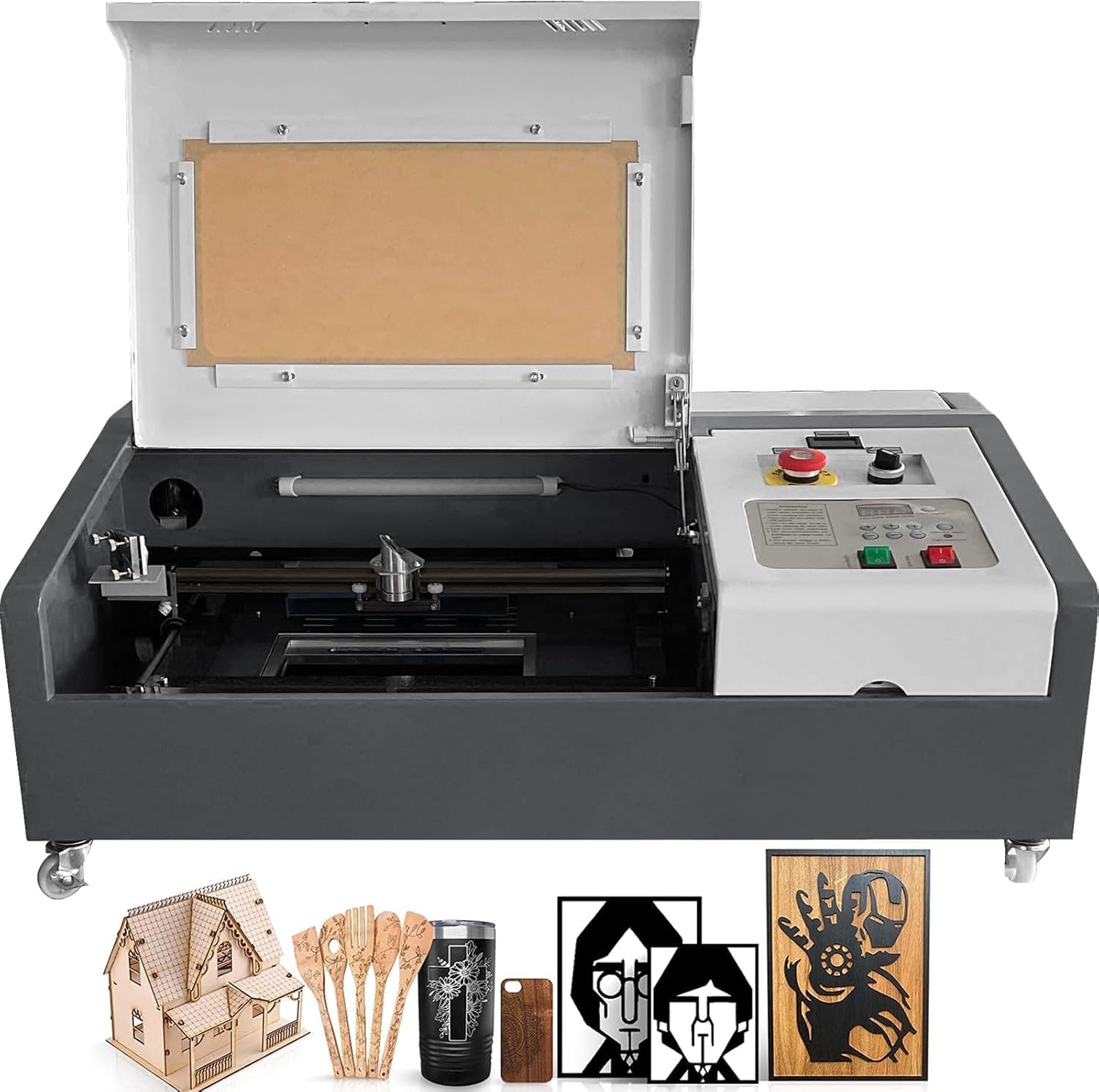
50W CO2 Laser Engraver, 16x16 inch Desktop Laser Cutter and Engraving Machine Compatible with CorelDRAW, Windows XP 7 8 10, EMF, JPG, PLT, WMF for Wood Acrylic Fabric (16"x16")
$600+This is a 50-60W CO2 laser engraver with a 300x200mm engraving area and 0.01mm positioning accuracy, designed for hobbyists and small businesses working with non-metallic materials.

LaserPecker LP5 Smart Dual 20W Fiber + Diode Laser Engraver Cutter with Rotary Extension, Slide Extension & Air Purifier, 3D Embossing, Color Engraving, Ideal for On-site Customization
$600+A dual 20W Fiber and 20W Diode laser engraver with 10,000mm/s speed, ideal for on-site customization across nearly all materials.

WIZMAKER 12W Laser Engraver Machine, Portable Carving Machine, 300x300mm Carving Area, 0.1mm High-Precision DIY Production, Suitable for Wood, Metal, Acrylic and Other Materials
$150-$299This is a 12W laser engraver with a 300x300mm carving area and 0.1mm precision, designed for DIY production on various materials.