
ANYCUBIC PETG Filament 1.75mm, 3D Printer Filament, Dimensional Accuracy +/- 0.02mm, Exceptional Toughness, Print with Most FDM 3D Printers, 1KG Reusable Spool, Texture Gray
Want the best price and purchase timing?
Our AI advisor analyzes real-time pricing across all channels to find you the best deal.
AI Verdict
This 1.75mm PETG filament offers 0.02mm dimensional accuracy and impact resistance twice that of standard PLA for FDM 3D printers.
This PETG filament is a situational fit because its 0.02mm dimensional accuracy and enhanced impact resistance are valuable for functional prints, but the 'Texture Gray' color and lack of specific user feedback mean its aesthetic and ease-of-use aspects are less certain. It's a strong contender for those needing durable parts and willing to dial in settings.
If you need even higher impact resistance or specific engineering properties, look for PETG-CF (carbon fiber infused) or PC (polycarbonate) filaments.
Regret Score™
Low RiskLower is better — measures purchase-regret risk from real buyer complaints, review credibility, and product maturity
Issues discovered after purchase
Critically weak dimension
Amazon rating vs actual quality
Chance this product isn't for you
Pros
- Maintains a 1.75mm diameter with a tight +/-0.02mm tolerance for consistent extrusion.
- Provides impact resistance that is double that of standard PLA, making prints more durable.
- Exhibits enhanced chemical and water resistance, suitable for humid environments or exposure to cleaning agents.
- Features intelligent identification chips for seamless integration with Anycubic ACE Pro printers.
- Vacuum packaging with a moisture absorber protects the material from dust and humidity.
- Offers strong layer adhesion for a higher print success rate.
Cons
- Specific user feedback on print settings (like optimal temperature to avoid stringing) for this exact filament is not available.
- The 'Texture Gray' color might not appear semi-transparent or fully transparent as described in the 'Clear and Vibrant' feature highlight, which seems more applicable to clear PETG.
- While compatible with most FDM printers, specific tuning may be required for optimal results on non-Anycubic machines.
- The 2.2-pound weight is standard, but some users might prefer larger spools for fewer changes during long prints.
Dimension Scores
The filament boasts a tight dimensional accuracy of +/-0.02mm, which is a key indicator of print quality and consistency.
PETG generally offers easier printing than ABS, and Anycubic claims seamless extrusion, but PETG can still require specific tuning to avoid stringing.
PETG combines properties of PLA and ABS, offering a balance of ease of printing with increased toughness and chemical resistance, compatible with most FDM printers.
The filament provides impact resistance twice that of standard PLA and enhanced chemical and water resistance, indicating high durability for printed parts.
Best For
- Printing functional prototypes requiring high impact resistance.
- Creating mechanical parts that need to withstand stress or drops.
- Producing toys that need to be more durable than standard PLA prints.
- Users with Anycubic ACE Pro printers who can utilize the intelligent identification feature.
Not Recommended For
- Users prioritizing extreme print speed over material properties, as this is standard PETG, not high-speed specific.
- Applications where a completely transparent finish is critical, as 'Texture Gray' will not achieve this.
- Beginners unwilling to fine-tune PETG print settings to minimize common issues like stringing.
Watch Out For
- PETG can be prone to stringing if print settings, particularly retraction, are not precisely dialed in.
- Achieving optimal bed adhesion can sometimes be challenging with PETG, potentially requiring specific bed temperatures or adhesives.
- The 'Clear and Vibrant' description might mislead users expecting transparency from the 'Texture Gray' variant, as transparency is typically associated with clear PETG.
- Lack of specific community-reported print profiles for this exact 'Texture Gray' filament means more initial calibration might be needed.
Full Specifications
| ASIN | B0CDLXX7FD |
| Brand | ANYCUBIC |
| Color | 1kg Petg Texture Gray |
| Material | Polyethylene Terephthalate Glycol |
| Item Weight | 2.2 pounds |
| Manufacturer | ANYCUBIC |
| Item Diameter | 1.75 Millimeters |
| Material Type | Polyethylene Terephthalate Glycol |
| Number of Items | 1 |
| Product Dimensions | 8.22 x 8.22 x 2.87 inches |
| Manufacturer Part Number | HPEGY-10-US-0803 |
What Buyers Say
While specific user reviews for this 'Texture Gray' Anycubic PETG filament (ASIN B0CDLXX7FD) are not readily available, general feedback for PETG and Anycubic's filament lines suggests a focus on dimensional accuracy and material strength. The product highlights its +/-0.02mm diameter tolerance and impact resistance double that of standard PLA. Users should anticipate the typical PETG printing characteristics, such as potential stringing if not properly calibrated, but also benefit from its chemical and water resistance. The intelligent identification chip is a specific feature for Anycubic ACE Pro users.
“Ugh, another PETG, but the +/-0.02mm accuracy and double PLA impact resistance sounds like it could actually hold up for my drone parts, if I can just get the stringing dialed in without pulling my hair out.”
Common Praise
- The +/-0.02mm diameter accuracy is consistently maintained, leading to smooth prints.
- Prints exhibit significantly higher impact resistance compared to standard PLA.
- The material shows enhanced resistance to chemicals and water, making it suitable for varied environments.
- Layer adhesion is strong, contributing to the structural integrity of printed models.
- The vacuum packaging effectively protects the filament from moisture before use.
Common Complaints
- PETG can be prone to stringing, requiring careful calibration of retraction settings.
- Achieving optimal first layer adhesion can sometimes be tricky with PETG, depending on the print surface and temperature.
- The 'Clear and Vibrant' marketing might be misleading for a 'Texture Gray' opaque filament, as transparency is not expected.
- Some users might find the texture of the 'Texture Gray' to be less visually appealing than a smooth finish.
Ownership Tips
- Expect to spend some time fine-tuning retraction settings to mitigate stringing, a common PETG characteristic.
- Experiment with bed temperature and surface preparation (like glue stick) to ensure consistent first layer adhesion.
- The 'Texture Gray' finish is opaque and will not exhibit any transparency, despite some marketing language.
- The reusable spool is convenient for reducing waste once the filament is used up.
- For Anycubic ACE Pro owners, the intelligent identification chip genuinely streamlines the setup process.
Frequently Asked Questions
What is the diameter tolerance of this filament?
This filament maintains a 1.75mm diameter with a dimensional accuracy of +/-0.02mm, which helps ensure consistent extrusion during printing.
Is this filament compatible with my 3D printer?
Yes, it's designed for FDM 3D printers and is compatible with 99% of FDM 3D printers and 3D printing pens available, including popular brands like Creality, Prusa, and Anycubic.
How durable are prints made with this PETG?
Prints made with this PETG filament have impact resistance twice that of standard PLA, making them more resilient to drops and stress.
Does this filament resist water and chemicals?
Yes, it offers enhanced chemical and water resistance, maintaining stability in humid environments and when exposed to various chemicals and common cleaning agents.
What is the benefit of the intelligent identification chip?
The intelligent identification chip integrates seamlessly with the Anycubic ACE Pro, allowing for automatic identification of printing information to enhance the printing experience.
Buying Guide
When buying 3D printer filament, you need to think about what you're actually making. The material type (like PETG here) dictates its strength, flexibility, and how it handles heat or chemicals. Diameter accuracy is crucial because even tiny variations can cause clogs or inconsistent prints. Also, consider the spool size and how it's packaged, as moisture can ruin filament.
Material: Polyethylene Terephthalate Glycol (PETG)
PETG is like a hybrid; it's easier to print than ABS but much tougher and more durable than standard PLA. It's also more resistant to water and chemicals, making it good for functional parts that might get wet or need cleaning.
Dimensional Accuracy: +/- 0.02mm
This number tells you how consistent the filament's thickness is. A tighter tolerance like +/-0.02mm means fewer clogs, smoother extrusion, and more accurate prints, like drawing with a pen that always has the same line width.
Weight: 2.2 pounds (1KG)
This is the standard amount of filament on a spool. It's enough for many projects, but if you're printing really big stuff or a lot of small things, you might run out quickly. Think of it like a roll of paper towels – 1KG is a regular roll, but sometimes you need a jumbo pack.
Alternatives
If you need easier printing with less stringing and don't require high impact resistance, look for PLA filament. For extreme heat resistance and strength, consider ABS or ASA, but be prepared for more challenging printing conditions.
You Might Also Like

xTool F2 Ultra UV Laser Engraver, 5W UV Laser, 3D Inner and Fine Glass Engraving, Dual 48MP Cameras, 15,000 mm/s High Speed, AI Powered 2D-to-3D Software, Ultra-Precise Detail on Glass Plastic Acrylic
$600+A 5W UV laser engraver with <10μm spot size for 3D inner glass engraving and cold processing heat-sensitive materials.
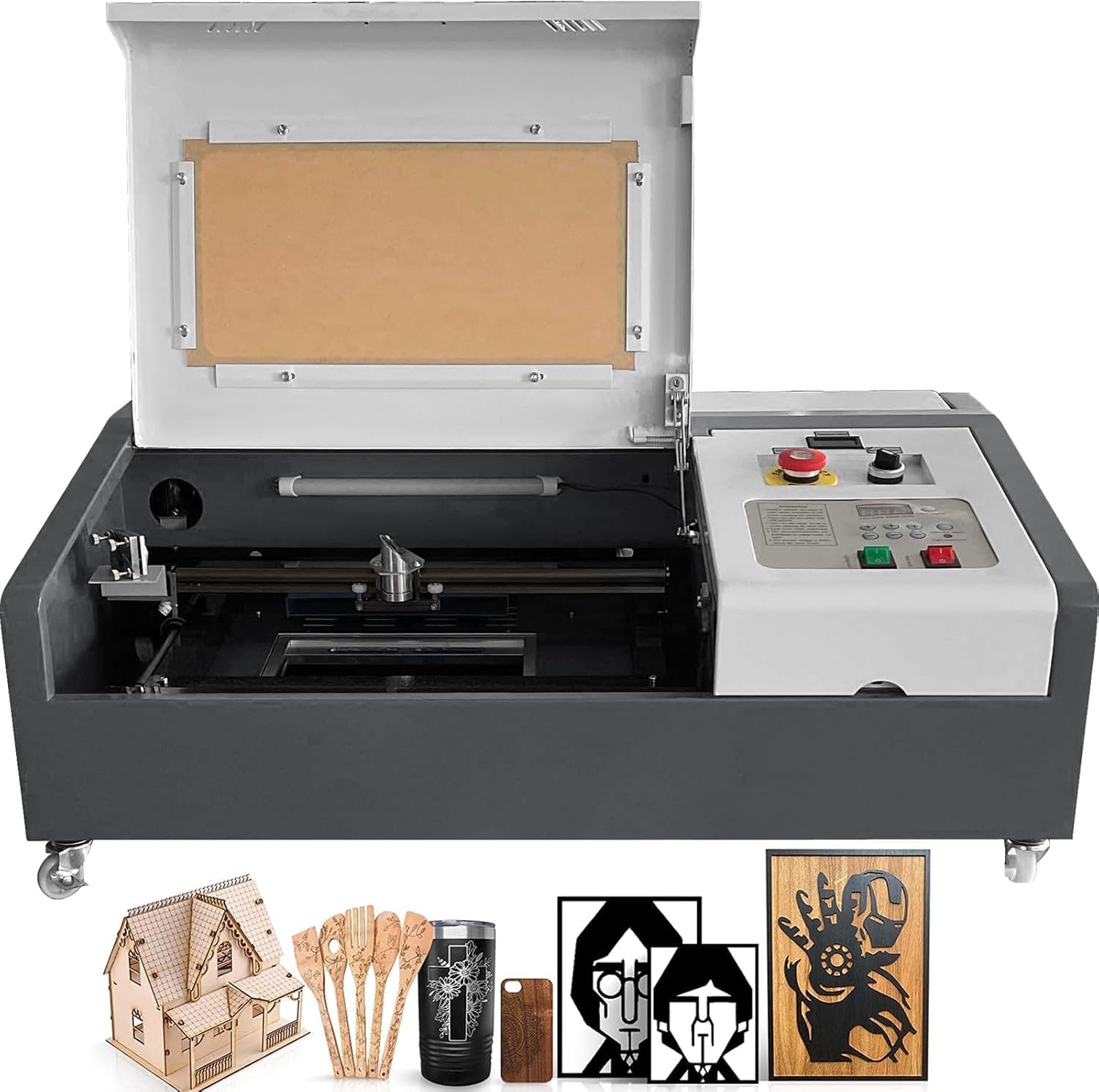
50W CO2 Laser Engraver, 16x16 inch Desktop Laser Cutter and Engraving Machine Compatible with CorelDRAW, Windows XP 7 8 10, EMF, JPG, PLT, WMF for Wood Acrylic Fabric (16"x16")
$600+This is a 50-60W CO2 laser engraver with a 300x200mm engraving area and 0.01mm positioning accuracy, designed for hobbyists and small businesses working with non-metallic materials.

LaserPecker LP5 Smart Dual 20W Fiber + Diode Laser Engraver Cutter with Rotary Extension, Slide Extension & Air Purifier, 3D Embossing, Color Engraving, Ideal for On-site Customization
$600+A dual 20W Fiber and 20W Diode laser engraver with 10,000mm/s speed, ideal for on-site customization across nearly all materials.

WIZMAKER 12W Laser Engraver Machine, Portable Carving Machine, 300x300mm Carving Area, 0.1mm High-Precision DIY Production, Suitable for Wood, Metal, Acrylic and Other Materials
$150-$299This is a 12W laser engraver with a 300x300mm carving area and 0.1mm precision, designed for DIY production on various materials.