
FLASHFORGE Adventurer 5M 3D Printer with Fully Auto Leveling System, Max 600mm/s High-Speed, 280℃ Quick-Detach Nozzle, CoreXY Structure for Superior Print Quality, Rookies & Experts Smart Choice
Want the best price and purchase timing?
Our AI advisor analyzes real-time pricing across all channels to find you the best deal.
AI Verdict
A 600mm/s CoreXY 3D printer with fully automatic leveling and a 280°C quick-detach nozzle, built for beginners wanting fast, easy prints.
This printer is a strong fit for beginners and speed-focused hobbyists due to its 600mm/s print speed, fully automatic leveling, and quick-detach nozzle system. However, its lack of an integrated enclosure for ABS/ASA and reported software/stability quirks make it a situational fit for users with more advanced material needs or those who prefer a completely seamless software experience.
If you need to print high-temperature materials regularly or require a more robust, integrated software experience, look for printers with a fully enclosed build volume and a more mature software ecosystem.
Regret Score™
Medium RiskLower is better — measures purchase-regret risk from real buyer complaints, review credibility, and product maturity
Issues discovered after purchase
Critically weak dimension
Amazon rating vs actual quality
Chance this product isn't for you
Pros
- Achieves print speeds up to 600mm/s with 20,000 mm/s² acceleration, significantly reducing print times.
- Features a fully automatic one-click leveling system, eliminating manual calibration for consistent first layers.
- Utilizes a CoreXY all-metal motion structure for stable, low-noise printing and reduced vibration.
- Offers a quick-detachable nozzle system with 0.25/0.4/0.6/0.8 mm options, allowing 3-second changes for different print needs.
- Includes a flexible double-sided PEI steel plate for easy model removal, with one side optimized for PETG.
- Can resume prints after power outages, preventing lost progress on longer jobs.
Cons
- Lacks an integrated camera for remote monitoring, requiring users to add a separate webcam for checking long prints.
- The Flashforge version of Orca Slicer can feel less polished or 'crappy' compared to other slicers, leading some users to flash Klipper firmware.
- The printer can cause significant shaking, with some users recommending placing it on the floor or a very stable surface.
- Some users reported the nozzle crashing into the print bed and scratching it if leveling isn't consistently enabled or due to software bugs.
- Printing ABS/ASA materials requires an external enclosure, as the printer itself is not enclosed for temperature control. [cite: product data]
Dimension Scores
The CoreXY all-metal structure and vibration compensation technology contribute to smooth, precise prints, with users reporting 'fantastic' quality.
Its fully automatic one-click leveling system, 10-minute setup, and quick-detach nozzle make it highly accessible for beginners.
Supports PLA, PETG, TPU, PLA-CF, PETG-CF filaments and offers multiple nozzle diameters, but requires an external enclosure for ABS/ASA. [cite: product data, 2]
Built with an all-metal CoreXY structure, but some users reported 'Overflow' and 'Host Error' issues, indicating potential instability.
Best For
- Beginners new to 3D printing who need a straightforward setup and automatic calibration.
- Hobbyists prioritizing rapid prototyping and quick print turnaround times with its 600mm/s speed.
- Users primarily printing with PLA, PETG, or TPU filaments. [cite: product data]
- Anyone looking for a 'plug and play' experience for basic to moderately complex models.
Not Recommended For
- Users who require an integrated enclosure for printing high-temperature materials like ABS or ASA. [cite: product data]
- Those expecting a fully integrated remote monitoring solution with a built-in camera.
- Advanced users who demand highly refined slicing software out-of-the-box without needing to explore alternative firmware.
Watch Out For
- The printer can smash the nozzle into the print bed, causing scratches, if the leveling process isn't consistently enabled or due to firmware issues.
- Users have reported 'Overflow' and 'Host Error' messages, leading to instability and requiring printer restarts.
- Filament can stop extruding mid-print on larger models, even after checking for tangles and unclogging, which can ruin long prints.
- The printer generates significant vibration, with one user stating it 'would shake most tables apart if not mounted to the wall'.
- Flashforge support response times can be inconsistent, with some users experiencing radio silence for days after issues.
Full Specifications
| ASIN | B0CD78PTVX |
| Brand | FLASHFORGE |
| Color | black |
| Material | PLA/PETG/TPU/PLA-CF/PETG-CF (ABS/ASA Enclosure Needed) |
| Item Weight | 29 pounds |
| Manufacturer | Zhejiang Flashforge 3D Technology Co., Ltd |
| Product Dimensions | 14.29 x 15.83 x 19.21 inches |
What Buyers Say
The most surprising finding is how many users, even experienced ones, praise its 'plug and play' nature and speed for the price, often comparing it favorably to more expensive machines. Many appreciate the automatic bed leveling and quick nozzle changes. However, the Flashforge slicer can be a sticking point, with some users finding it clunky and opting for Klipper firmware. There are also recurring reports of the printer shaking aggressively and occasional software errors that halt prints.
“Dude, this thing is FAST, like seriously fast, and the auto-leveling just works, which is a lifesaver for a noob like me, but man, it shakes my whole desk and the software is kinda meh, wish it had a camera built in.”
Common Praise
- Achieves advertised print speeds of up to 600mm/s, significantly faster than many competitors in its price range.
- The automatic bed leveling system works reliably, ensuring consistent first layers without manual intervention.
- Setup is quick, often taking less than 10 minutes from unboxing to first print.
- Produces 'fantastic' print quality, even with generic filaments, surprising many users given its price.
- The quick-detach nozzle system makes changing nozzles or clearing clogs a fast, tool-free process.
- The flexible PEI build plate makes removing finished prints effortless by simply bending it.
Common Complaints
- The Flashforge version of Orca Slicer is often criticized for being less intuitive or 'crappy' compared to other slicers like Bambu Studio.
- The printer can shake violently during operation, necessitating a very sturdy surface or even placement on the floor.
- Lack of an integrated camera means users can't visually monitor prints remotely without adding a third-party solution.
- Occasional 'Overflow' and 'Host Error' messages can cause prints to stop unexpectedly, requiring a restart.
- Some users experienced the nozzle crashing into the print bed, causing damage, particularly if auto-leveling wasn't consistently engaged.
- Filament has been reported to stop extruding mid-print on larger models, even after troubleshooting for clogs or tangles.
Ownership Tips
- Always ensure the leveling function is enabled before printing to prevent the nozzle from crashing into the bed.
- Consider investing in a cheap webcam and setting it up if you want to monitor prints remotely, as there isn't one built-in.
- Be prepared for the printer to vibrate significantly; a very stable surface or floor placement is advisable.
- If you're having software issues, exploring community-developed Klipper firmware might improve your experience.
- Drying your PETG filament, even new spools, can prevent misprints and improve quality.
Frequently Asked Questions
Can the Flashforge Adventurer 5M print ABS or ASA?
Yes, it can print ABS and ASA, but you will need an external enclosure to maintain a stable printing environment for these materials. The printer itself does not have an enclosed build volume. [cite: product data]
How easy is it to set up for someone new to 3D printing?
It's designed for beginners, with many users reporting a setup time of 10 minutes or less. It's often described as 'plug and play' due to its automatic leveling system.
What is the maximum printing speed of this printer?
The Flashforge Adventurer 5M can achieve a maximum printing speed of 600mm/s and an acceleration of 20,000 mm/s².
Does it have automatic bed leveling?
Yes, it features a fully automatic one-click leveling system that measures the nozzle-to-build plate distance, eliminating manual Z-axis calibration.
Can I monitor my prints remotely?
You can use the Flash Maker APP to manage devices and view print status in real-time from anywhere. However, the printer does not include an integrated camera for visual remote monitoring, which some users wished for.
Buying Guide
When looking at 3D printers like this one, you need to understand that 'high-speed' means your projects finish way faster, but it relies on a stable structure to keep things from getting messy. 'Auto-leveling' is a huge deal because it means you don't have to fiddle with the print bed to get that crucial first layer right. The nozzle temperature and quick-change feature tell you what materials you can print and how easy maintenance will be.
Max 600mm/s High-Speed
This is how fast the print head moves. Think of it like a car's top speed; a higher number means your 3D models will be completed much quicker, turning hours into minutes for smaller prints.
Fully Auto Leveling System
This system automatically adjusts the distance between the nozzle and the print bed. It's like having a robot perfectly set up your canvas every time, ensuring your first layer sticks properly and doesn't warp, which is critical for print success.
280℃ Quick-Detach Nozzle
The 280°C indicates the maximum temperature the nozzle can reach, which determines the types of filaments it can melt (higher temps for tougher materials). 'Quick-Detach' means you can swap out nozzles in seconds without tools, making maintenance or changing nozzle sizes super easy.
CoreXY Structure
This refers to the printer's motion system. A CoreXY structure is known for its stability and precision at high speeds, reducing vibrations and leading to smoother, more accurate prints, especially when the printer is moving fast.
Alternatives
If this printer doesn't fit your needs, look for models with an integrated, heated enclosure for printing advanced engineering materials, or those with a larger build volume if you plan on making bigger objects. Also, consider printers known for their robust, feature-rich slicing software out-of-the-box.
You Might Also Like

xTool F2 Ultra UV Laser Engraver, 5W UV Laser, 3D Inner and Fine Glass Engraving, Dual 48MP Cameras, 15,000 mm/s High Speed, AI Powered 2D-to-3D Software, Ultra-Precise Detail on Glass Plastic Acrylic
$600+A 5W UV laser engraver with <10μm spot size for 3D inner glass engraving and cold processing heat-sensitive materials.
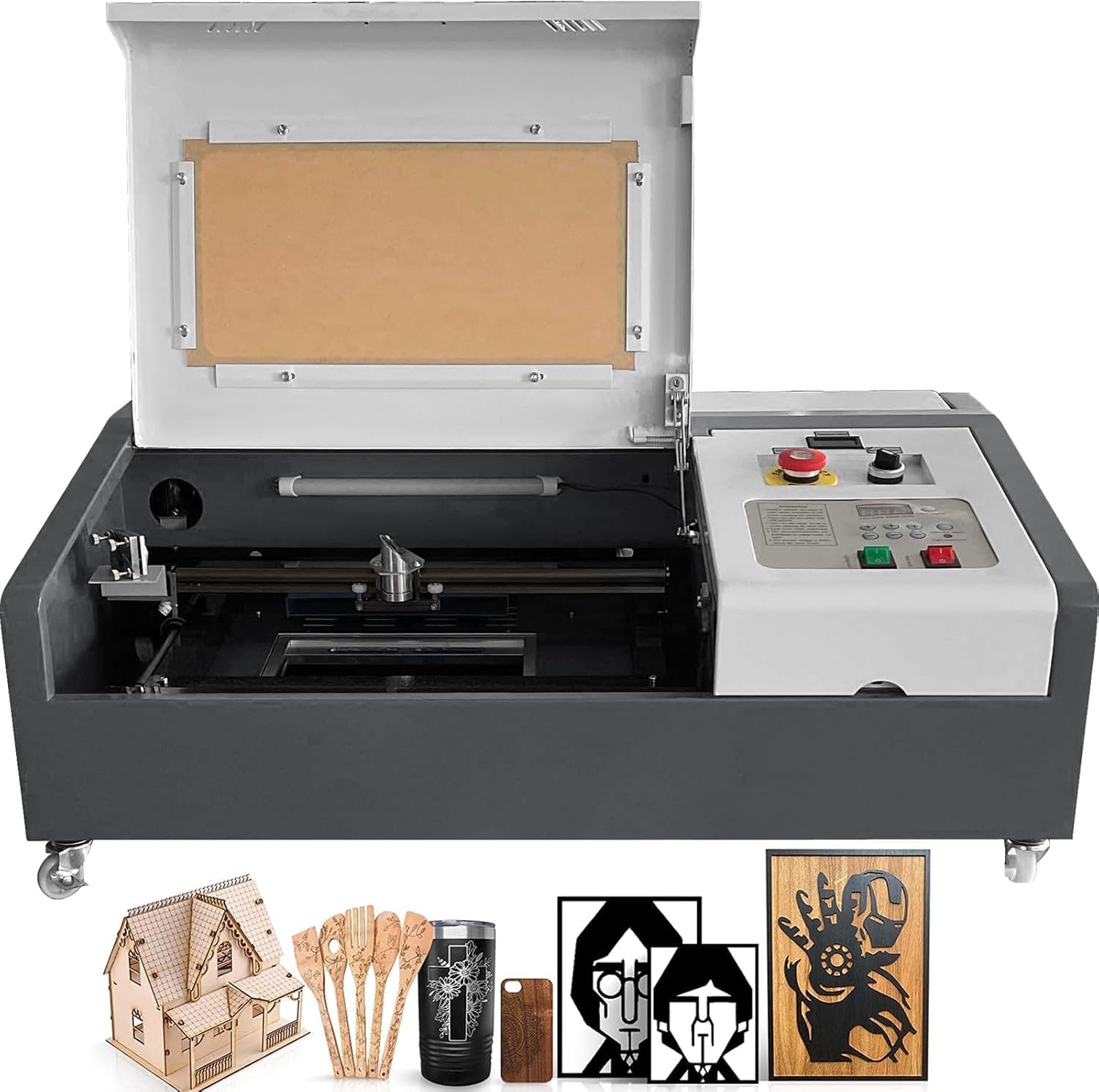
50W CO2 Laser Engraver, 16x16 inch Desktop Laser Cutter and Engraving Machine Compatible with CorelDRAW, Windows XP 7 8 10, EMF, JPG, PLT, WMF for Wood Acrylic Fabric (16"x16")
$600+This is a 50-60W CO2 laser engraver with a 300x200mm engraving area and 0.01mm positioning accuracy, designed for hobbyists and small businesses working with non-metallic materials.

LaserPecker LP5 Smart Dual 20W Fiber + Diode Laser Engraver Cutter with Rotary Extension, Slide Extension & Air Purifier, 3D Embossing, Color Engraving, Ideal for On-site Customization
$600+A dual 20W Fiber and 20W Diode laser engraver with 10,000mm/s speed, ideal for on-site customization across nearly all materials.

WIZMAKER 12W Laser Engraver Machine, Portable Carving Machine, 300x300mm Carving Area, 0.1mm High-Precision DIY Production, Suitable for Wood, Metal, Acrylic and Other Materials
$150-$299This is a 12W laser engraver with a 300x300mm carving area and 0.1mm precision, designed for DIY production on various materials.