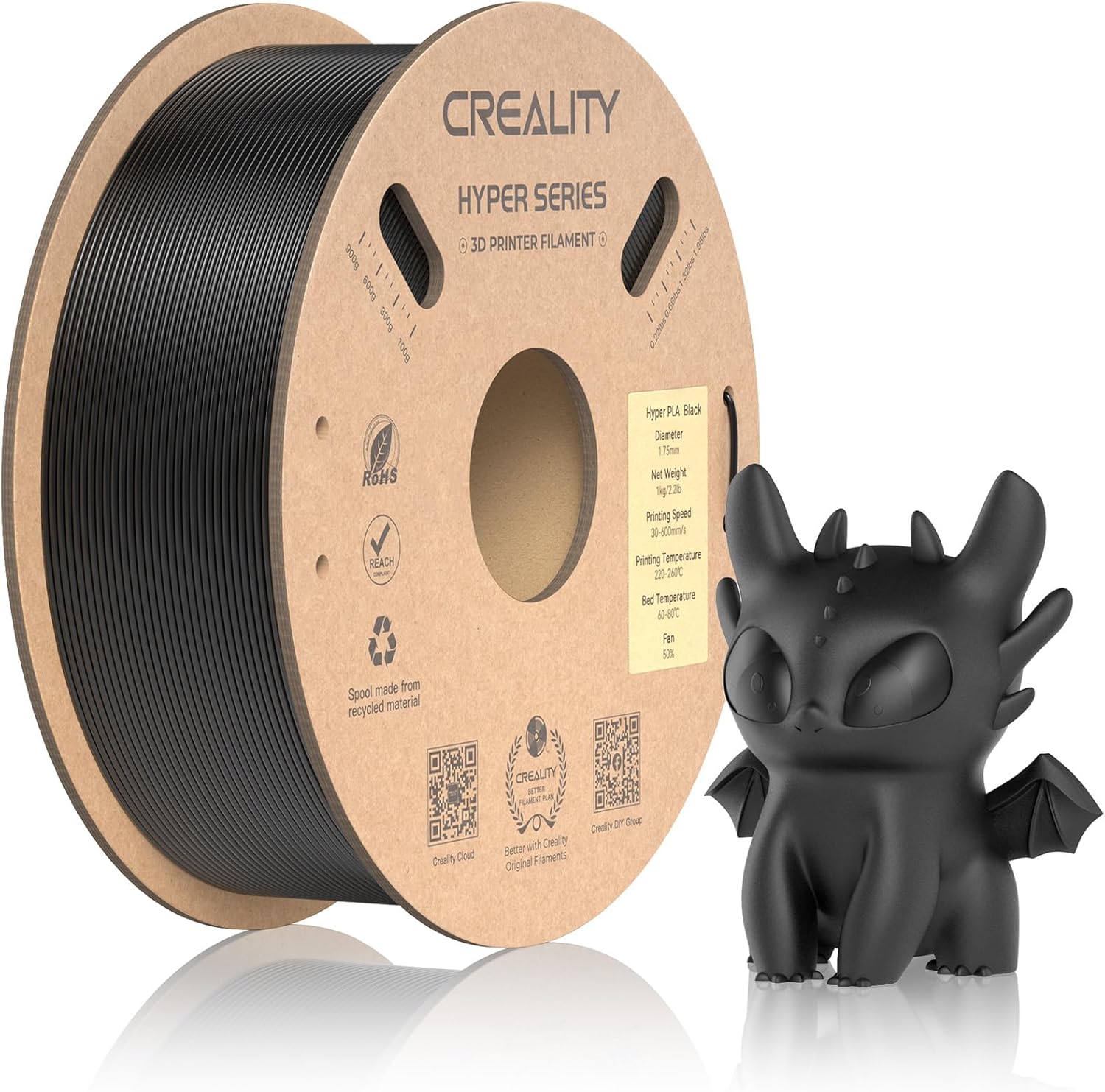
Official CREALITY Hyper PLA Filament 1.75mm, High Speed PLA 30-600mm/s Rapid 3D Printer Filament, Dimensional Accuracy +/-0.02mm, Fit Most FDM 3D Printers, 1KG(2.2lbs) Spool Black
Want the best price and purchase timing?
Our AI advisor analyzes real-time pricing across all channels to find you the best deal.
AI Verdict
This 1.75mm Polylactic Acid filament supports 30-600mm/s print speeds with +/-0.02mm diameter accuracy, designed for users prioritizing print speed and structural strength.
This filament is a strong contender for users with high-speed 3D printers, offering claimed speeds up to 600mm/s and enhanced material properties like higher tensile strength than ABS. However, its 'Hyper' speed capabilities are not universally achievable, with some users reporting print quality degradation above 250mm/s. It's a good fit if your printer can handle it, but not a guaranteed performance boost for every setup.
If you need guaranteed high-speed performance, look for filaments specifically validated for your printer's maximum volumetric flow rate, not just linear speed.
Regret Score™
Medium RiskLower is better — measures purchase-regret risk from real buyer complaints, review credibility, and product maturity
Issues discovered after purchase
Critically weak dimension
Amazon rating vs actual quality
Chance this product isn't for you
Pros
- Supports print speeds up to 600mm/s due to high fluidity and fast cooling formula.
- Offers higher tensile strength than ABS and increased toughness compared to traditional PLA.
- Maintains a consistent diameter accuracy of 1.75±0.02mm for smoother extrusion.
- Formulated from eco-friendly materials, free from harmful toxins and odors.
- Exhibits strong layer adhesion, contributing to durable prints.
- Compatible with a wide range of 1.75mm FDM 3D printers, including Creality, Anycubic, and Bambu.
Cons
- Some users report difficulty reaching advertised 600mm/s speeds without issues like blobbing or under-extrusion, especially above 250mm/s on certain printers.
- Occasional under-extrusion after retract/extend movements, particularly with thinner layer lines, has been noted by users.
- Users have experienced poor bed adhesion, even with this filament, requiring bed leveling and adhesion aids.
- One user reported a debris or lump found within the middle of a filament roll.
- Cardboard spool design can lead to increased friction and feed issues for some setups.
Dimension Scores
The filament boasts a tight dimensional accuracy of 1.75±0.02mm, contributing to consistent extrusion and detailed prints.
It's marketed as beginner-friendly with wide temperature and speed ranges, but some users report needing to fine-tune settings to avoid issues at higher speeds or with bed adhesion.
The filament is universally compatible with most 1.75mm FDM 3D printers and offers improved toughness and fluidity for various printing needs.
It offers higher tensile strength than ABS and superior toughness compared to traditional PLA, leading to more structurally sound models.
Best For
- High-speed 3D printing on compatible machines like Creality K1 series or Bambu Lab printers.
- Printing functional parts requiring increased structural bearing capacity and toughness.
- Users seeking a PLA filament with minimal warping and low shrinkage properties.
- Beginner and expert users looking for a filament with wide temperature and speed ranges.
Not Recommended For
- Users expecting consistent 600mm/s print speeds on older or non-high-speed optimized printers without extensive tuning.
- Applications requiring specific material properties beyond standard PLA, such as extreme flexibility or high-temperature resistance.
- Users who prefer plastic spools over cardboard due to potential friction or re-spooling challenges.
Watch Out For
- Printing above 250mm/s can result in blobbing, under-extrusion, and print messes for some users, despite the 600mm/s claim.
- Poor bed adhesion has been reported, with prints detaching from the hotbed, sometimes requiring bed temperature adjustments to 65-70°C or adhesion aids.
- One user discovered a black chunk of debris or a lump within the filament roll, potentially fouling the printer.
- The cardboard spool can create more friction than typical plastic spools, leading to feed issues and grinding at the end of a print.
- Under-extrusion can occur immediately after retract/extend movements, especially with thinner layer lines, which might require tweaking extrusion parameters.
Full Specifications
| ASIN | B0C2BFHX5Y |
| Size | 1.75mm |
| Brand | Creality |
| Color | Black |
| Material | Polylactic Acid |
| Ink Color | Hyper Black |
| Sheet Size | 1.75 Millimeters |
| Item Weight | 2.2 pounds |
| Manufacturer | Creality 3D |
| Item Diameter | 1.75 Millimeters |
| Material Type | Polylactic Acid |
| Number of Items | 1 |
| Item model number | Creality Hyper PLA Filaments 1.75mm |
| Product Dimensions | 7.9 x 7.9 x 2.7 inches |
| Manufacturer Part Number | HYZ-HyperPLA-BK-US |
What Buyers Say
Many users are stoked about this filament's ability to print fast and produce strong parts, especially on newer Creality machines like the K1 series. However, don't expect to just slap it in and hit 600mm/s on every printer; some folks found print quality drops off significantly above 250mm/s, leading to blobbing and under-extrusion. There are also scattered reports of poor bed adhesion and even finding debris in a roll, so it's not a completely flawless experience for everyone. The cardboard spool, while eco-friendly, can also cause friction issues for some setups.
“Man, this Hyper PLA is fast on my K1, but I tried pushing it past 300mm/s and it just started blobbing everywhere, like what's the point of 600mm/s if it can't even handle half that consistently? Still, the prints are tough when it works.”
Common Praise
- Prints smoothly and consistently, even at speeds over 250mm/s on high-speed printers.
- Produces prints with strong layer adhesion and minimal stringing for many users.
- Models printed with it exhibit higher tensile strength and toughness than standard PLA.
- The filament diameter is consistent at 1.75±0.02mm, leading to stable extrusion.
- The spool is often well-wound, reducing tangling issues.
- Offers a wide range of compatible printers, making it accessible to many users.
Common Complaints
- Difficulty achieving consistent print quality at speeds exceeding 250mm/s, with issues like blobbing and under-extrusion.
- Poor bed adhesion reported by some users, even on new printers, requiring adjustments or adhesion aids.
- Occasional under-extrusion after retraction movements, especially with fine details or thin layers.
- The cardboard spool can create friction, potentially leading to feeding problems or filament grinding.
- One user found a black chunk of foreign material or a lump embedded in the filament roll.
Ownership Tips
- You might need to dry this filament, even if new, as moisture can cause stringing and rough surfaces.
- Be prepared to tweak your retraction settings and potentially increase bed temperature if you encounter stringing or poor adhesion.
- The cardboard spool can be a hassle for some setups, potentially causing friction or making re-spooling difficult.
- While it boasts high speeds, your printer's actual volumetric flow rate will dictate the real-world speed you can achieve without sacrificing quality.
- The increased toughness is noticeable, making printed parts feel more robust than with standard PLA.
Frequently Asked Questions
What print speeds can I expect with this filament?
The filament is designed to support print speeds up to 600mm/s. However, actual achievable speeds without quality issues may vary depending on your printer, with some users reporting problems above 250mm/s.
Is this filament stronger than standard PLA?
Yes, it offers higher tensile strength than ABS and increased toughness compared to traditional PLA, PLA+, and PLA Pro filaments.
Will this filament work with my non-Creality 3D printer?
Yes, it's designed for universal compatibility with most 1.75mm FDM 3D printers on the market, including brands like Anycubic, Elegoo, Bambu, and Prusa.
What are the recommended printing temperatures?
Recommended printing temperatures are between 190-230°C for the nozzle and 25-60°C for the heated bed.
Does this filament have issues with stringing or bed adhesion?
While some users report no stringing or warping, others have experienced stringing and poor bed adhesion, which can often be mitigated by optimizing retraction settings, ensuring the filament is dry, and adjusting bed temperature or using adhesion aids.
Buying Guide
When buying 3D printer filament, you're not just picking a color; you're choosing a material that dictates how your prints will perform. For PLA, especially 'Hyper' versions, the key is balancing speed with print quality. Don't just look at the maximum advertised speed; consider if your printer can actually handle that volumetric flow without issues like under-extrusion or blobbing. Also, remember that even the best filament needs proper storage to prevent moisture absorption, which can ruin prints.
Print Speed (30-600mm/s)
This isn't just about how fast your printer moves, but how quickly the filament can melt and cool without deforming. Higher numbers mean faster prints, but only if your printer's hotend can keep up and your cooling is efficient enough to solidify the plastic quickly.
Dimensional Accuracy (±0.02mm)
Think of this like the consistency of a wire. A smaller tolerance means the filament's diameter is very uniform, which helps your printer extrude a consistent amount of plastic. If it varies too much, you'll get inconsistent lines, leading to weaker prints or clogs.
Toughness & Tensile Strength
This tells you how much abuse your printed parts can take before breaking. Higher toughness means it's less brittle, and higher tensile strength means it can withstand more pulling force. If you're printing functional parts, these specs are crucial for durability.
Alternatives
If this filament doesn't fit, look for standard PLA for easier printing at lower speeds, or PETG for increased temperature resistance and flexibility, or ABS for higher impact strength and heat resistance, but be aware of its printing challenges.
You Might Also Like

xTool F2 Ultra UV Laser Engraver, 5W UV Laser, 3D Inner and Fine Glass Engraving, Dual 48MP Cameras, 15,000 mm/s High Speed, AI Powered 2D-to-3D Software, Ultra-Precise Detail on Glass Plastic Acrylic
$600+A 5W UV laser engraver with <10μm spot size for 3D inner glass engraving and cold processing heat-sensitive materials.
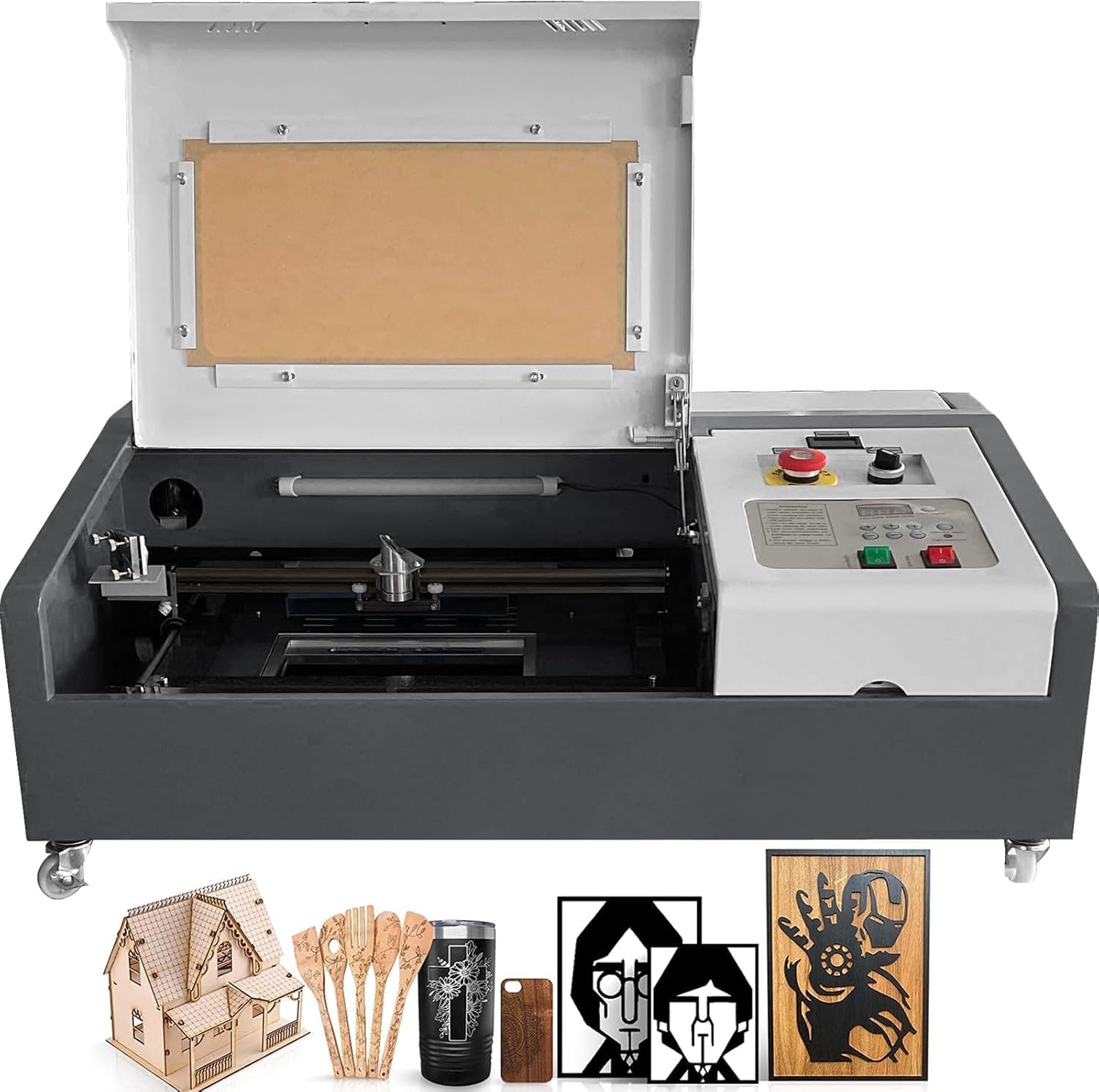
50W CO2 Laser Engraver, 16x16 inch Desktop Laser Cutter and Engraving Machine Compatible with CorelDRAW, Windows XP 7 8 10, EMF, JPG, PLT, WMF for Wood Acrylic Fabric (16"x16")
$600+This is a 50-60W CO2 laser engraver with a 300x200mm engraving area and 0.01mm positioning accuracy, designed for hobbyists and small businesses working with non-metallic materials.

LaserPecker LP5 Smart Dual 20W Fiber + Diode Laser Engraver Cutter with Rotary Extension, Slide Extension & Air Purifier, 3D Embossing, Color Engraving, Ideal for On-site Customization
$600+A dual 20W Fiber and 20W Diode laser engraver with 10,000mm/s speed, ideal for on-site customization across nearly all materials.

WIZMAKER 12W Laser Engraver Machine, Portable Carving Machine, 300x300mm Carving Area, 0.1mm High-Precision DIY Production, Suitable for Wood, Metal, Acrylic and Other Materials
$150-$299This is a 12W laser engraver with a 300x300mm carving area and 0.1mm precision, designed for DIY production on various materials.