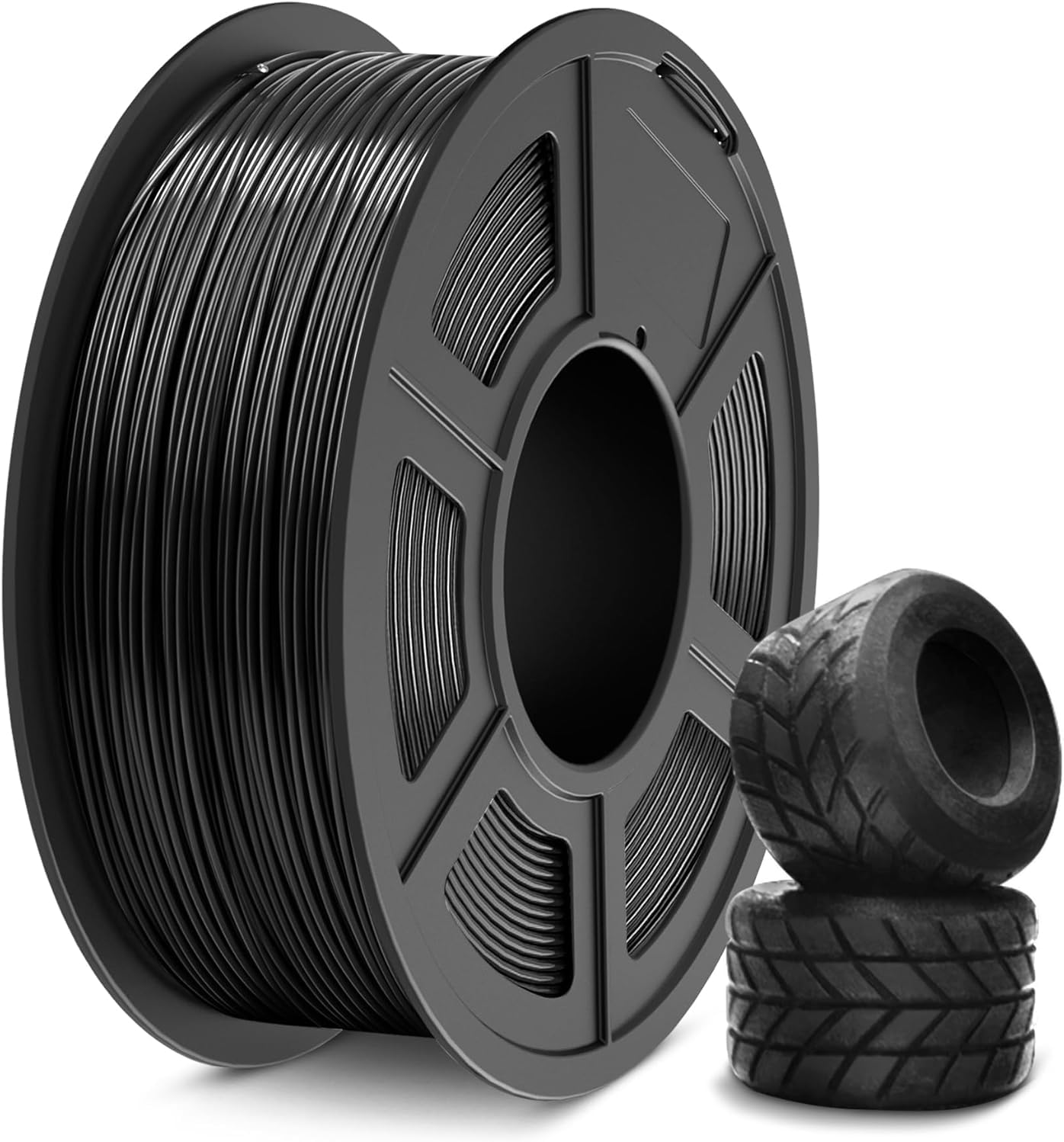
SUNLU TPU 3D Printer Filament 1.75mm, High Speed 95A TPU Filament, 1KG Flexible 3D Filament for Fast Printing, Dimensional Accuracy +/- 0.03mm, Suitable for Most FDM 3D Printers. (Black)
Want the best price and purchase timing?
Our AI advisor analyzes real-time pricing across all channels to find you the best deal.
AI Verdict
This 95A TPU filament prints up to 3 times faster than standard TPU, offering 0.03mm dimensional accuracy for FDM 3D printer users needing flexible, durable parts.
This filament is a strong fit for users seeking a 95A Shore hardness TPU that balances flexibility and durability. Its advertised ability to print up to 3 times faster than standard TPU, with a dimensional accuracy of +/- 0.03mm, directly addresses the common desire for efficient and precise flexible printing. It's designed for FDM 3D printers and is suitable for a range of flexible applications.
If you need even softer prints, look for TPU filaments with a lower Shore hardness rating, such as 85A or 70A.
Regret Score™
Very Low RiskLower is better — measures purchase-regret risk from real buyer complaints, review credibility, and product maturity
Issues discovered after purchase
Critically weak dimension
Amazon rating vs actual quality
Chance this product isn't for you
Pros
- Prints at speeds up to 120mm/s, which is 3 times faster than typical TPU filaments.
- Maintains a tight diameter tolerance of +/- 0.03mm, contributing to consistent extrusion and fewer print failures.
- Exhibits Shore hardness of 95A, balancing flexibility with enough rigidity for functional parts like phone cases or hinges.
- Demonstrates excellent layer adhesion and a smooth finish, leading to strong, aesthetically pleasing prints.
- Users report clog-free and bubble-free performance, reducing common printing frustrations.
- Resistant to wear, oil, and aging, suggesting printed items will hold up to daily use and collisions.
Cons
- Requires careful moisture management; users recommend airtight storage with desiccant to maintain print quality.
- May need a brim or raft for optimal bed adhesion, especially on glass or PEI surfaces.
- First layers might require a slower print speed (10-15mm/s) to ensure proper bed adhesion.
- While compatible with most FDM printers, flexible filaments generally demand more dialed-in settings and potentially direct drive extruders for best results, though some users report success with Bowden setups.
Dimension Scores
The filament boasts a dimensional accuracy of +/- 0.03mm and users consistently report clog-free, bubble-free extrusion with excellent layer adhesion.
While it's 'very easy to print' for a TPU, flexible filaments inherently require more dialed-in settings and moisture management than rigid materials, and some users need brims or slower first layers.
The 95A Shore hardness is a good middle ground, making it suitable for a wide range of flexible applications from phone cases to robotics, and it's compatible with most 1.75mm FDM printers.
The material is wear-resistant, oil-resistant, anti-aging, and items printed with it can withstand severe collisions and daily use, retaining shape under moderate stress.
Best For
- Printing flexible phone cases, keyrings, or insoles that need to withstand daily wear.
- Creating functional prototypes or parts for robotics requiring both flexibility and resilience.
- Hobbyists and professionals needing to produce impact-resistant items like toys or fashion accessories.
- Users with FDM 3D printers looking to experiment with faster flexible filament printing speeds up to 120mm/s.
Not Recommended For
- Beginners who are not prepared to fine-tune printer settings for flexible materials.
- Applications requiring extreme softness or elasticity beyond 95A Shore hardness.
- Users unwilling to manage filament moisture, as it can degrade print quality.
Watch Out For
- Moisture absorption can lead to inconsistent extrusion and print quality issues; you'll need to store it in an airtight container with desiccant.
- Some users found that a slow start speed of 10-15mm/s for the first few layers was necessary to prevent adhesion problems on the print bed.
- While it claims high-speed printing, achieving the maximum 120mm/s might still require specific printer configurations or direct drive extruders for consistent results.
Full Specifications
| ASIN | B0BXNWK6NS |
| Size | 95A TPU |
| Brand | SUNLU |
| Color | 1000g Tpu Black |
| Material | Thermoplastic Polyurethane |
| Item Weight | 2.2 pounds |
| Manufacturer | SUNLU |
| Item Diameter | 1.75 Millimeters |
| Material Type | Thermoplastic Polyurethane |
| Number of Items | 1 |
| Item model number | Flexible 95A TPU Filament |
| Product Dimensions | 7.68 x 2.24 x 7.68 inches |
| Manufacturer Part Number | SLDE-TPU-BK-1KG |
What Buyers Say
What really stands out is how many people say this TPU actually prints fast without turning into a stringy mess, which is a huge win for flexible filaments. Users frequently mention its consistent diameter and how that translates to fewer failed prints. The 95A hardness seems to hit a sweet spot for functional parts, not too squishy, not too stiff. The main recurring advice is to keep it dry, like, really dry, or you'll be fighting print quality issues.
“Dude, this SUNLU TPU is actually legit for fast flexible stuff! I was so over stringy prints but this one just works, though you gotta keep it in a dry box or it's game over.”
Common Praise
- Prints up to 3 times faster than other TPU filaments without sacrificing quality.
- Dimensional accuracy of +/- 0.03mm results in consistent extrusion and reliable prints.
- Excellent layer adhesion creates strong, unified printed objects.
- Clog-free and bubble-free performance, reducing common flexible filament headaches.
- The 95A Shore hardness provides a good balance of flexibility and structural integrity for functional parts.
- Printed items are wear-resistant, oil-resistant, and anti-aging, holding up well over time.
Common Complaints
- Requires diligent moisture control; if not kept dry, print quality suffers noticeably.
- Some users found they needed to use a brim or raft to get the first layer to stick properly, especially on certain build surfaces.
- Achieving optimal bed adhesion often involves a very slow first layer speed, around 10-15mm/s.
- While compatible with Bowden setups, some users still suggest direct drive for the most consistent flexible printing.
Ownership Tips
- After a few weeks, you'll realize how crucial proper dry storage is; even slight humidity makes a difference in print quality.
- The 'high speed' claim isn't just marketing; it genuinely cuts down print times for flexible parts compared to other TPUs I've used.
- The 95A hardness is perfect for phone cases; they feel durable but still have that satisfying give.
- You might need to tweak your retraction settings more than with other filaments to completely eliminate stringing, even with the 'bubble-free' claim.
- Don't skip the slow first layer; it saves so much frustration with bed adhesion on larger prints.
Frequently Asked Questions
What are the recommended printing temperatures for this filament?
SUNLU recommends a nozzle temperature between 210-230°C and a bed temperature of 50-60°C for optimal results. Some users have found 220-240°C for the nozzle to work well.
Can this TPU filament be printed quickly?
Yes, it's designed for high-speed printing, with recommended speeds of 80-120mm/s, which is up to 3 times faster than ordinary TPU filaments.
Is this filament compatible with most 3D printers?
Yes, with a 1.75mm diameter and +/- 0.03mm dimensional accuracy, it's suitable for almost all 1.75mm FDM 3D printers.
Does this filament have good layer adhesion?
Users report excellent layer adhesion, contributing to strong and smooth printed objects.
How flexible is this filament?
It has a Shore hardness of 95A, offering a balance between softness and resilience, making it suitable for items that need to bend without cracking but still retain shape.
Do I need to dry this filament?
While it's considered resistant to aging, exposure to moisture can affect print quality. It's recommended to store spools in airtight containers with silica gel packs.
Buying Guide
When you're looking at TPU filament, you need to understand that 'flexible' doesn't mean 'easy.' You'll be dealing with material that likes to stretch and sometimes clog, so your printer settings matter a lot. The Shore hardness (like 95A here) tells you how squishy it is; higher numbers are stiffer. Dimensional accuracy is super important because inconsistent filament diameter will mess up your prints, especially with flexible materials.
95A Shore Hardness
This number tells you how firm the flexible material is. 95A is like a firm rubber tire – it's flexible and can bend a lot, but it's not super squishy. This balance is good for things that need to be durable and hold their shape under some stress, like a phone case or a gasket, rather than something super soft like a gel insole.
Dimensional Accuracy +/- 0.03mm
Think of this like the consistent thickness of a piece of string. If your filament's diameter varies too much, your printer won't be able to push out a consistent amount of plastic, leading to weak spots, clogs, or uneven layers. A tight tolerance like +/- 0.03mm means your prints will be more reliable and look cleaner.
High Speed Printing (80-120mm/s)
Flexible filaments are notoriously slow to print because they're hard for the extruder to push. This 'high speed' rating means the filament is formulated to be pushed through your printer faster than typical TPUs, potentially cutting down print times significantly. It's like comparing a regular car to a sports car – both drive, but one gets you there quicker.
Alternatives
If this filament doesn't quite fit, look for TPU with a lower Shore hardness (e.g., 85A) for more pliability, or consider a different material entirely if you need something rigid with minimal flex.
You Might Also Like

xTool F2 Ultra UV Laser Engraver, 5W UV Laser, 3D Inner and Fine Glass Engraving, Dual 48MP Cameras, 15,000 mm/s High Speed, AI Powered 2D-to-3D Software, Ultra-Precise Detail on Glass Plastic Acrylic
$600+A 5W UV laser engraver with <10μm spot size for 3D inner glass engraving and cold processing heat-sensitive materials.
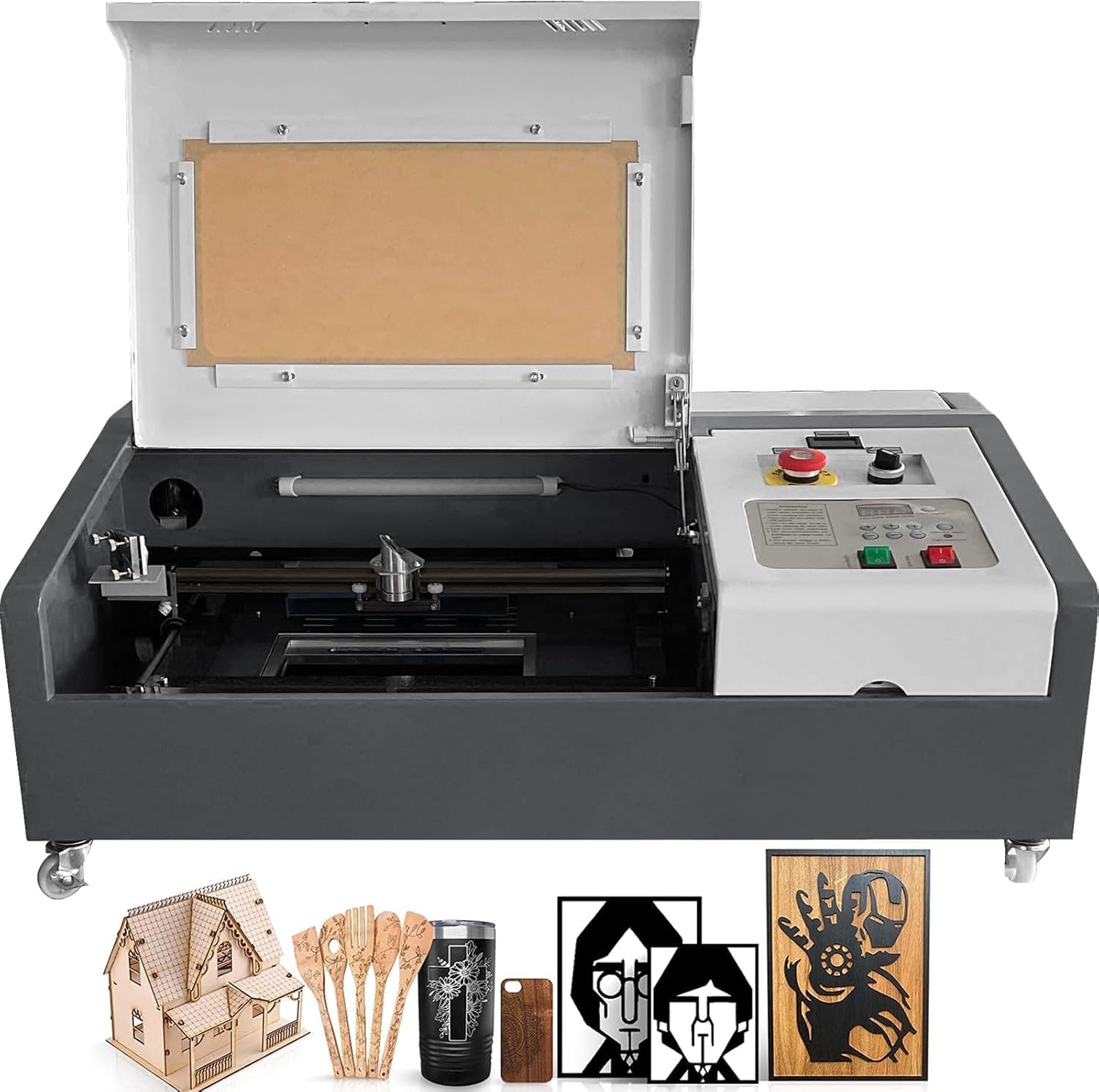
50W CO2 Laser Engraver, 16x16 inch Desktop Laser Cutter and Engraving Machine Compatible with CorelDRAW, Windows XP 7 8 10, EMF, JPG, PLT, WMF for Wood Acrylic Fabric (16"x16")
$600+This is a 50-60W CO2 laser engraver with a 300x200mm engraving area and 0.01mm positioning accuracy, designed for hobbyists and small businesses working with non-metallic materials.

LaserPecker LP5 Smart Dual 20W Fiber + Diode Laser Engraver Cutter with Rotary Extension, Slide Extension & Air Purifier, 3D Embossing, Color Engraving, Ideal for On-site Customization
$600+A dual 20W Fiber and 20W Diode laser engraver with 10,000mm/s speed, ideal for on-site customization across nearly all materials.

WIZMAKER 12W Laser Engraver Machine, Portable Carving Machine, 300x300mm Carving Area, 0.1mm High-Precision DIY Production, Suitable for Wood, Metal, Acrylic and Other Materials
$150-$299This is a 12W laser engraver with a 300x300mm carving area and 0.1mm precision, designed for DIY production on various materials.