
ANYCUBIC Tough Resin 2.0, 3D Printer Resin with Upgraded High Toughness and High Precision, 365-405nm Fast Curing 3D Resin for 4K 8K LCD/DLP/SLA 3D Printing (Grey, 1kg)
Want the best price and purchase timing?
Our AI advisor analyzes real-time pricing across all channels to find you the best deal.
AI Verdict
This 2.2-pound thermoplastic resin offers high flexural strength and elongation, making it suitable for functional 3D prints requiring impact resistance and flexibility.
This resin is a strong fit for users prioritizing durability and flexibility in their 3D prints, especially for functional parts. Its flexural strength of 42-52 MPa and elongation at break between 60-72% directly address the need for models that can withstand bending and impact without cracking.
If you need even higher impact resistance or specific engineering-grade properties, look for resins with higher Shore D hardness (this one is 82-84 Shore D) and tensile strength values.
Regret Score™
Low RiskLower is better — measures purchase-regret risk from real buyer complaints, review credibility, and product maturity
Issues discovered after purchase
Critically weak dimension
Amazon rating vs actual quality
Chance this product isn't for you
Pros
- Demonstrates enhanced toughness, making it less prone to fracture for miniature components and thin models.
- Exhibits strong elongation and flexibility, effectively resisting peeling, cracking, and stress marks from cyclic vibrations.
- Features a low odor and non-irritating composition, reducing volatile organic compounds for a comfortable printing environment.
- Boasts high precision and a low shrinkage rate (5.1-6.2%), resulting in smooth surfaces and clear details.
- Compatible with most LCD Resin 3D Printers, optimized for 365nm to 405nm wavelengths.
- Offers a tensile strength of 30-42 MPa and elongation at break between 60-72%, ensuring models endure bending and impact without cracking.
Cons
- Some users report needing to experiment with exposure settings to achieve optimal print quality.
- Impact resistance can be reduced in cold conditions; prints may require warming for improved flexibility.
- A user noted it feels denser, almost slimy, compared to standard resins, which might affect handling.
- There's user discussion about whether it maintains the same level of detail as standard resins, though some report similar precision.
Dimension Scores
The resin boasts high precision with a low shrinkage rate (5.1-6.2%) and produces clear texture details and smooth surfaces.
It has a low odor and wide compatibility with 365-405nm printers, but some users report needing to fine-tune exposure settings for optimal results.
Applicable for industrial spare parts, building models, DIY, and high-strength model production, compatible with most LCD/DLP/SLA printers.
Offers exceptional toughness, high flexural strength (42-52 MPa), strong elongation (60-72%), and resistance to breakage, peeling, and cracking.
Best For
- Industrial spare parts and building models requiring durability.
- DIY and maker design projects where high-strength components are needed.
- Functional prototypes and mechanical assemblies that will experience stress or drops.
- Parts that will be handled frequently and need to resist breakage.
Not Recommended For
- Applications where extreme, uncompromised fine detail is the absolute top priority, if a slight trade-off for toughness occurs.
- Printing in consistently cold environments without temperature control, as impact resistance may decrease.
Watch Out For
- You might need to adjust your printer's exposure settings; some users found the recommended settings on the bottle were a middle ground, and experimentation was needed for their specific setup.
- Prints can be more brittle in cold temperatures (around 11°C); warming the part to 30°C can significantly improve its flexibility and impact resistance.
- The resin has a viscosity of 450-500 cP at 25°C, which is denser than some standard resins, potentially requiring different handling or mixing.
- While marketed for high precision, some users switching from standard resins question if there's a slight loss in detail when gaining toughness.
Full Specifications
| ASIN | B096MMLWVT |
| Brand | ANYCUBIC |
| Color | Grey |
| Material | Thermoplastic Resin |
| Department | Unisex Adult |
| Unit Count | 35.27 Ounce |
| Item Weight | 2.2 pounds |
| Manufacturer | ANYCUBIC |
| Package Dimensions | 9.37 x 4.02 x 3.94 inches |
What Buyers Say
Users frequently highlight the resin's ability to produce prints that are significantly less brittle than those made with standard resins, often noting a noticeable improvement in impact resistance. Many appreciate the added flexibility, which prevents parts from snapping easily, even when dropped. However, some discussions revolve around the need to dial in print settings, with exposure times sometimes requiring adjustment beyond initial recommendations. There's also a recurring question about whether the increased toughness comes at the expense of minute detail, though many report maintaining good print quality.
“Man, this stuff actually holds up! I dropped a print off my desk and it just bounced, didn't shatter like the cheap resin. Still gotta tweak my exposure though, but it's worth it for parts that actually survive.”
Common Praise
- Prints have a lot more flex, preventing brittleness.
- Models are less prone to breakage even when dropped from a height.
- The durability advantage is noticeable compared to standard resins.
- Produces clear texture details and smooth surface finishes.
- Low odor makes for a more pleasant printing experience.
Common Complaints
- Impact resistance can decrease in cold conditions, requiring prints to be warmed for better performance.
- Some users need to experiment with exposure settings to get optimal results, as default settings might not be perfect for every printer.
- The resin can feel denser or 'slimy' compared to standard resins, potentially affecting handling.
- A few users wonder if there's a trade-off in fine detail when switching from standard resin for toughness.
Ownership Tips
- After a few weeks, you'll notice parts that used to snap are now just bending a bit, which is a game-changer for functional prints.
- You might find yourself needing to keep your print area a bit warmer, especially in winter, to get the best flexibility out of the cured parts.
- Cleaning prints might feel a little different due to the resin's slightly higher viscosity compared to very thin standard resins.
- The low odor is a real plus for longer print sessions, not having that headache-inducing smell.
Frequently Asked Questions
Is this resin compatible with my 3D printer?
Yes, it's designed to be compatible with most LCD Resin 3D Printers that use UV wavelengths between 365nm and 405nm.
Does this resin have a strong smell?
No, it features a low odor and non-irritating composition, formulated to reduce volatile organic compounds for a more comfortable printing environment.
Will prints made with this resin break easily?
Anycubic Tough Resin 2.0 is specifically upgraded for high toughness and flexibility, making models less prone to fracture, peeling, or cracking, even when dropped.
How does this resin compare to standard resins in terms of detail?
It boasts high precision and a low shrinkage rate, producing smooth surfaces and clear details. While some users question if there's a trade-off, others report similar detail to standard resins.
Do I need special settings for this resin?
Anycubic provides recommended settings, but some users find that optimizing exposure duration (e.g., 1.5-3 seconds normal exposure) for their specific printer can improve results.
Buying Guide
When you're looking at 3D printer resins, especially 'tough' ones, you're essentially balancing how rigid a print is against how much it can bend or absorb impact before breaking. If your printed parts are just for display, standard resin is fine. But if you need something that will be handled, used as a functional component, or might take a tumble, you need a resin like this that's engineered to flex rather than snap. Pay attention to specs like flexural strength and elongation at break; these tell you how much abuse the material can take.
Flexural Strength
Think of this like how much force you can apply to a printed beam before it bends and breaks. A higher flexural strength (like this resin's 42-52 MPa) means your parts can withstand more bending stress without failing, similar to how a strong plastic ruler bends before it snaps.
Elongation at Break
This tells you how much a material can stretch or deform before it breaks, expressed as a percentage (this resin has 60-72%). Imagine pulling a rubber band versus a piece of hard candy; the rubber band has high elongation, the candy has very little. High elongation means your prints are less brittle and can absorb impacts better.
Wavelength Compatibility (365-405nm)
This is crucial because it tells you if the resin will cure properly with your specific 3D printer. Most common LCD/DLP/SLA resin printers use UV light in this range, so this resin is broadly compatible, like a universal charger for your phone.
Alternatives
If this resin doesn't meet your needs, look for resins with even higher Shore D hardness for increased rigidity, or specific 'ABS-like' formulations if you need a balance of toughness and strength with potentially easier post-processing.
You Might Also Like

xTool F2 Ultra UV Laser Engraver, 5W UV Laser, 3D Inner and Fine Glass Engraving, Dual 48MP Cameras, 15,000 mm/s High Speed, AI Powered 2D-to-3D Software, Ultra-Precise Detail on Glass Plastic Acrylic
$600+A 5W UV laser engraver with <10μm spot size for 3D inner glass engraving and cold processing heat-sensitive materials.
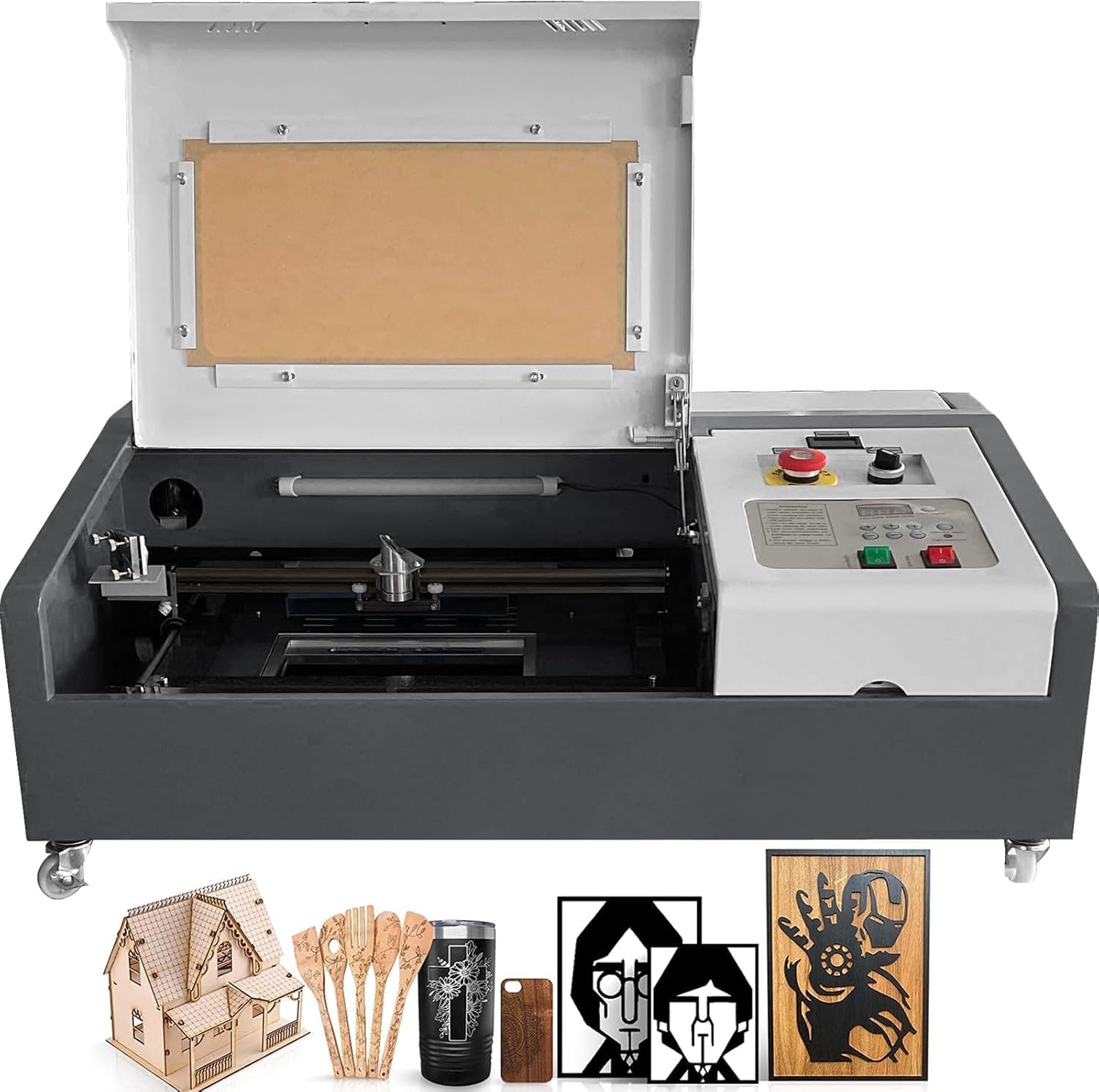
50W CO2 Laser Engraver, 16x16 inch Desktop Laser Cutter and Engraving Machine Compatible with CorelDRAW, Windows XP 7 8 10, EMF, JPG, PLT, WMF for Wood Acrylic Fabric (16"x16")
$600+This is a 50-60W CO2 laser engraver with a 300x200mm engraving area and 0.01mm positioning accuracy, designed for hobbyists and small businesses working with non-metallic materials.

LaserPecker LP5 Smart Dual 20W Fiber + Diode Laser Engraver Cutter with Rotary Extension, Slide Extension & Air Purifier, 3D Embossing, Color Engraving, Ideal for On-site Customization
$600+A dual 20W Fiber and 20W Diode laser engraver with 10,000mm/s speed, ideal for on-site customization across nearly all materials.

WIZMAKER 12W Laser Engraver Machine, Portable Carving Machine, 300x300mm Carving Area, 0.1mm High-Precision DIY Production, Suitable for Wood, Metal, Acrylic and Other Materials
$150-$299This is a 12W laser engraver with a 300x300mm carving area and 0.1mm precision, designed for DIY production on various materials.