
OVERTURE TPU High Speed Filament 1.75mm Flexible Roll, 95A Soft 3D Printer Filament, 1kg Spool (2.2 lbs), Fit Most FDM Printer (HS TPU Black)
Want the best price and purchase timing?
Our AI advisor analyzes real-time pricing across all channels to find you the best deal.
AI Verdict
This 1.75mm, 95A Shore hardness Thermoplastic Polyurethane filament is for FDM users needing to print functional, flexible parts up to 5x faster.
This filament is a strong fit for users specifically seeking a 95A Shore hardness TPU that can print at significantly higher speeds than typical flexible materials. Its pre-drying and vacuum-sealing address common TPU moisture issues, making it a more consistent option for functional parts. The 1.75mm diameter ensures compatibility with most FDM printers.
If you need even softer, more rubber-like parts, look for TPU filaments with a lower Shore hardness rating, such as 85A or 90A.
Regret Score™
Very Low RiskLower is better — measures purchase-regret risk from real buyer complaints, review credibility, and product maturity
Issues discovered after purchase
Critically weak dimension
Amazon rating vs actual quality
Chance this product isn't for you
Pros
- Engineered to print up to 5x faster than standard TPU filaments
- 95A Shore hardness provides a balance of softness and toughness for functional parts
- Patented clog-free formula minimizes jams during fast extrusion
- Pre-dried for 24 hours and vacuum-sealed to be bubble-free and moisture-protected
- Ensures optimal layer bonding and a smooth surface finish even at high velocities
- Offers reliable oil resistance and consistent mechanical stability
Cons
- Some users report stringing and oozing, requiring careful retraction tuning
- Can be slightly harder to print with compared to some other high-speed TPUs
- Requires proper storage (sealed with desiccants or dried for >8 hours at 65°C) to maintain optimal performance and 1-year shelf life
Dimension Scores
The filament boasts a dimensional accuracy of +/- 0.02 mm and ensures optimal layer bonding for smooth finishes.
While designed for high-speed printing and clog-free performance, flexible filaments like TPU inherently require more careful tuning, and some users report stringing issues.
The 95A Shore hardness offers a broad range of applications from functional prototypes to protective components, compatible with most FDM printers.
It provides excellent impact absorption, rebound elasticity, reliable oil resistance, and maintains durability through repeated stress.
Best For
- Creating functional prototypes and end-use parts requiring flexibility and durability
- Printing protective cases, gaskets, seals, and flexible hinges
- Users with high-speed capable FDM 3D printers looking to reduce print times
- Applications needing impact absorption and rebound elasticity
Not Recommended For
- Beginners to flexible filament printing without prior experience or willingness to fine-tune settings
- Applications requiring extreme softness (e.g., Shore hardness below 95A)
- Users unwilling to manage filament moisture diligently
Watch Out For
- Some users experience stringing and oozing, indicating that optimal retraction settings are crucial and may require experimentation.
- Despite being a 'high-speed' TPU, some find it marginally more challenging to print than other high-speed TPU options on the market.
- To maintain its 1-year shelf life and prevent issues, the filament requires proper storage in a sealed container with desiccants or drying for over 8 hours at 65°C before use.
Full Specifications
| ASIN | B08BC654PS |
| Brand | OVERTURE |
| Color | 1kg Hs Tpu Black |
| Material | Thermoplastic Polyurethane |
| Item Weight | 2.2 pounds |
| Manufacturer | OVERTURE |
| Item Diameter | 1.75 Millimeters |
| Material Type | Thermoplastic Polyurethane |
| Number of Items | 1 |
| Item model number | UK-MATTEPLA17511 |
| Product Dimensions | 8.78 x 2.95 x 8.23 inches |
| Manufacturer Part Number | OVTPU175 |
What Buyers Say
Many users are genuinely surprised by how much faster this TPU prints compared to other flexible filaments, often achieving speeds up to 5x quicker. The pre-drying and vacuum-sealing are frequently mentioned as effective in preventing common moisture-related print failures. While it generally performs well, some users still wrestle with stringing and oozing, suggesting that 'high-speed' doesn't eliminate the need for careful printer calibration, especially retraction settings. It seems to strike a decent balance for those wanting functional flexibility without the snail's pace of traditional TPU.
“Okay, so this 'high speed' TPU actually IS faster, but I still had to mess with my retraction a bunch to stop the stringing. My phone case came out pretty sweet though, so I guess it's worth it.”
Common Praise
- Prints significantly faster, up to 5x the speed of standard TPU filaments
- Achieves good layer adhesion and a smooth surface finish
- Comes pre-dried and vacuum-sealed, effectively preventing bubbles and clogs
- Works surprisingly well even in Bowden tube setups for some users
- Maintains its shape and durability even after repeated bending and stress
Common Complaints
- Can be prone to stringing and oozing, requiring extensive fine-tuning of retraction settings
- Some users find it slightly more challenging to print than other 'high-speed' TPU brands
- Moisture absorption is still a concern if not stored correctly after opening, impacting print quality
Ownership Tips
- Even though it's pre-dried, re-drying before printing, especially after the spool has been open for a while, can significantly improve print quality.
- Print speeds advertised are often achievable, but depend heavily on your specific printer's capabilities and direct vs. Bowden drive setup.
- Retraction distance and speed are critical settings to dial in for minimizing stringing and blobs, even with its clog-free claims.
- Leaving the spool exposed to ambient air for even a few days can lead to moisture absorption, causing popping sounds during printing and degraded part quality.
Frequently Asked Questions
What is the Shore hardness of this TPU filament?
The Shore hardness of this Overture TPU is 95A, providing a balance between flexibility and printability.
Can this filament be printed at high speeds?
Yes, this filament is engineered to print up to 5 times faster than standard TPU filaments while maintaining its flexibility and durability.
Is this filament prone to clogging or bubbles?
No, it features a patented clog-free formula and is pre-dried for 24 hours and vacuum-sealed to minimize jams and bubbles.
What are the recommended printing temperatures for this filament?
Recommended settings are a nozzle temperature of 210-230°C and a bed temperature of 50-60°C.
What is the shelf life of an unopened spool?
Unopened spools have a 1-year shelf life, provided they are stored properly.
Buying Guide
When you're looking at TPU filament, you're basically choosing how squishy you want your prints to be and how easy it'll be to print. A higher Shore hardness number, like this 95A, means it's less like a rubber band and more like a firm rubber, which usually makes it easier to push through your printer without tangling. The 'high speed' part means you won't be waiting forever for your flexible parts to finish.
material: Thermoplastic Polyurethane
This is the type of plastic that gives your prints their flexibility and elasticity, allowing them to bend, stretch, and absorb impacts without breaking, unlike rigid plastics like PLA.
amps: 95A
This 'Shore hardness' rating tells you how firm the flexible material is. 95A is on the firmer side for TPU, meaning it's easier to print and holds its shape better than softer TPUs, while still being very flexible.
diameter: 1.75 Millimeters
This is the thickness of the filament strand. Almost all consumer FDM 3D printers use 1.75mm filament, so you need to match this to your printer's specifications.
Alternatives
If you need a much softer, more elastic material, look for TPU filaments with a lower Shore hardness (e.g., 85A or 90A); if print speed is your absolute top priority and flexibility is secondary, consider a rigid filament like PETG or a specialized high-speed PLA.
You Might Also Like

xTool F2 Ultra UV Laser Engraver, 5W UV Laser, 3D Inner and Fine Glass Engraving, Dual 48MP Cameras, 15,000 mm/s High Speed, AI Powered 2D-to-3D Software, Ultra-Precise Detail on Glass Plastic Acrylic
$600+A 5W UV laser engraver with <10μm spot size for 3D inner glass engraving and cold processing heat-sensitive materials.
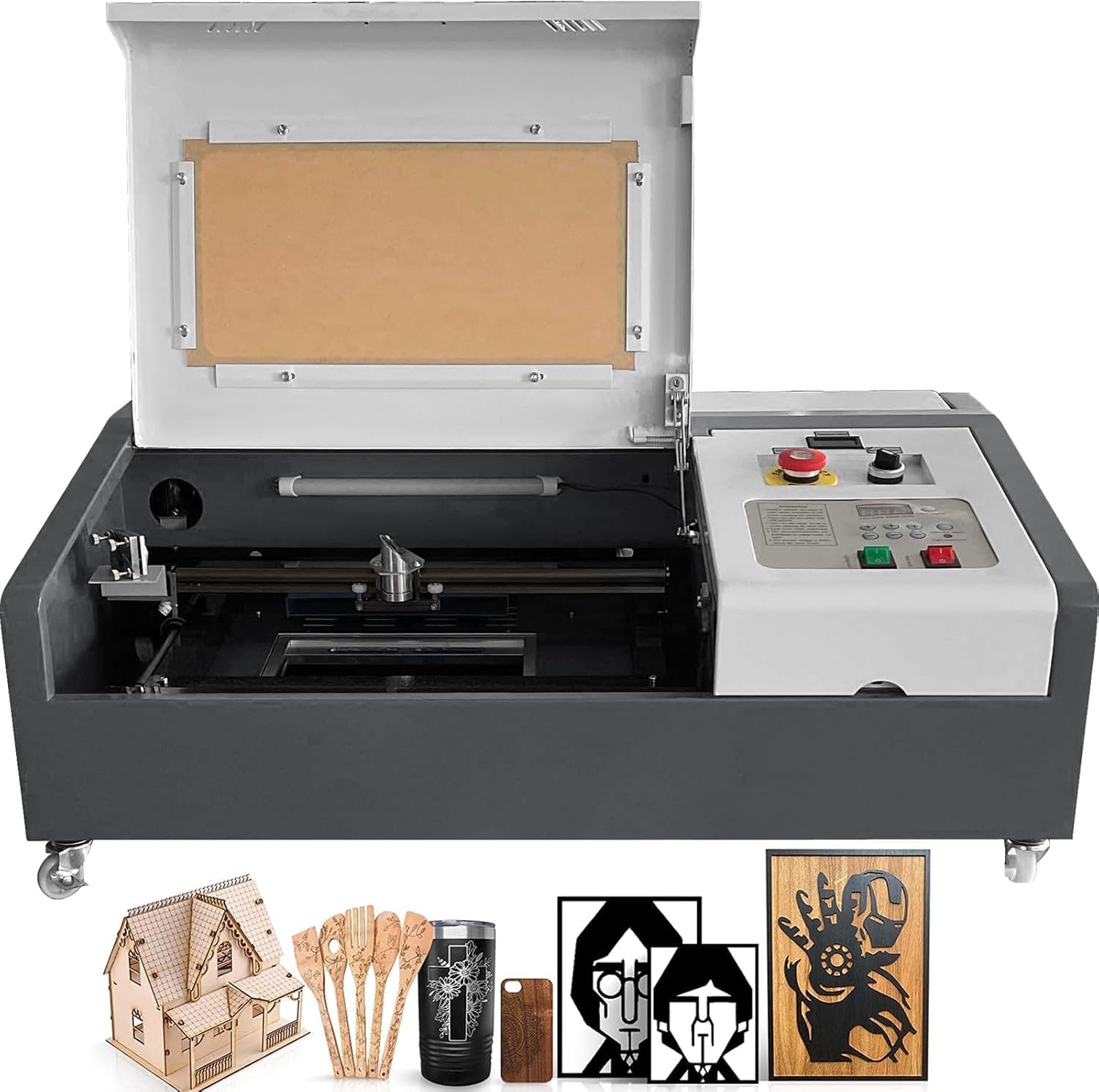
50W CO2 Laser Engraver, 16x16 inch Desktop Laser Cutter and Engraving Machine Compatible with CorelDRAW, Windows XP 7 8 10, EMF, JPG, PLT, WMF for Wood Acrylic Fabric (16"x16")
$600+This is a 50-60W CO2 laser engraver with a 300x200mm engraving area and 0.01mm positioning accuracy, designed for hobbyists and small businesses working with non-metallic materials.

LaserPecker LP5 Smart Dual 20W Fiber + Diode Laser Engraver Cutter with Rotary Extension, Slide Extension & Air Purifier, 3D Embossing, Color Engraving, Ideal for On-site Customization
$600+A dual 20W Fiber and 20W Diode laser engraver with 10,000mm/s speed, ideal for on-site customization across nearly all materials.

WIZMAKER 12W Laser Engraver Machine, Portable Carving Machine, 300x300mm Carving Area, 0.1mm High-Precision DIY Production, Suitable for Wood, Metal, Acrylic and Other Materials
$150-$299This is a 12W laser engraver with a 300x300mm carving area and 0.1mm precision, designed for DIY production on various materials.