
SUNLU ABS Filament 1.75mm 3D Printer Filament, Highly Resistant Durable, Heat Resistance, Excellent Toughness, Compatible with 99% FDM 3D Printers, 1kg Spool (2.2lbs), Black
Want the best price and purchase timing?
Our AI advisor analyzes real-time pricing across all channels to find you the best deal.
AI Verdict
This 1.75mm ABS filament is for experienced 3D printer users needing strong, heat-resistant parts, but expect to dial in settings.
This SUNLU ABS filament is a situational fit because its inherent material properties offer high strength and heat resistance up to 270°C, which is valuable for specific applications. However, user reports of brittleness, inconsistent diameter, and poor layer adhesion mean it requires careful calibration and may not be reliable for all users or print jobs.
If you need more consistent print quality and easier handling, look for ABS filament with a guaranteed ±0.02mm diameter tolerance and user reviews specifically praising spooling and layer adhesion.
Regret Score™
Medium RiskLower is better — measures purchase-regret risk from real buyer complaints, review credibility, and product maturity
Issues discovered after purchase
Critically weak dimension
Amazon rating vs actual quality
Chance this product isn't for you
Pros
- Manufactured with a tight ±0.02mm diameter tolerance for consistent extrusion.
- Offers heat resistance up to 270°C, suitable for functional parts exposed to higher temperatures.
- Designed for impact resistance, resisting breakage or deformation when impacted or squeezed.
- Resists surface damage like friction and scratches, maintaining appearance after long-term use.
- Available in multiple color options to suit various project requirements.
- Comes in a 1kg package, offering more material per spool.
Cons
- Users report issues with filament randomly snapping or becoming brittle during printing.
- Some users experience poor layer adhesion, leading to prints that easily snap apart, especially for larger models.
- Filament diameter can be inconsistent, with reports of spools being significantly under 1.75mm.
- Spooling quality is inconsistent, leading to tangles and filament getting stuck during prints.
- Requires a heated bed and proper temperature control to prevent warping, which is common with ABS.
Dimension Scores
While advertised with ±0.02mm diameter accuracy, user reports of inconsistent diameter and poor layer adhesion suggest variable quality.
ABS is inherently harder to print than other materials, requiring specific temperature controls and ventilation, making it challenging for many users.
The material's strength, impact resistance, and heat resistance make it suitable for functional parts, but its printing difficulty limits its broad appeal.
The filament is designed for high impact resistance and can withstand long-term use without wear or damage, resisting friction and scratches.
Best For
- Printing functional prototypes requiring high strength and heat resistance.
- Creating mechanical components that need to withstand impact and wear.
- Experienced 3D printer users with enclosed printers and good ventilation.
- Projects where post-processing with acetone for a smooth finish is desired.
Not Recommended For
- Beginners to 3D printing due to ABS's specific printing requirements and fume considerations.
- Indoor printing without adequate ventilation or an enclosure, as ABS can emit fumes.
- Low-end 3D printers that cannot maintain the required high nozzle (250-260°C) and bed (80-100°C) temperatures.
Watch Out For
- Filament can randomly snap or become brittle, with some users reporting this issue after 12 hours of drying at 50°C.
- Poor layer adhesion can result in prints that crumble apart, even when printing at 230°C, 15°C higher than the suggested range.
- Diameter inconsistency can cause printer errors, with one user measuring filament at 1.51mm instead of 1.75mm.
- Spooling can be messy, leading to tangles and filament getting stuck between the spool and the rest of the filament.
- Customer service has been reported as unhelpful, requiring pictures of filament tangled *in the printer* to process complaints.
Full Specifications
| ASIN | B07XF5KM74 |
| Size | 1KG |
| Brand | SUNLU |
| Color | 1000g Abs Black |
| Material | Acrylonitrile Butadiene Styrene |
| Item Weight | 2.2 pounds |
| Manufacturer | SUNLU |
| Item Diameter | 1.75 Millimeters |
| Material Type | Acrylonitrile Butadiene Styrene |
| Number of Items | 1 |
| Item model number | ABS Filament 1.75mm |
| Package Dimensions | 8.03 x 7.99 x 2.72 inches |
| Manufacturer Part Number | SLUS-ABS-BK-1KG-2 |
What Buyers Say
Many users report frustration with this SUNLU ABS filament, citing issues like random snapping and poor layer adhesion, even when trying to optimize print settings. The filament's diameter can be inconsistent, leading to printer errors and failed prints. Spooling problems, including tangles and filament getting caught, are also frequently mentioned, making unattended printing risky. While the material itself offers good strength and heat resistance, these manufacturing and consistency issues often overshadow its benefits.
“This stuff is a headache, I spent hours trying to get good prints, but it just kept snapping or the layers wouldn't stick, and then the spool tangled mid-print! Never again.”
Common Praise
- Adheres well to the print bed when settings are dialed in.
- Offers good strength and toughness for printed parts.
- Provides heat resistance up to 270°C for functional applications.
- Compatible with a wide range of FDM 3D printers (99%).
- Can be smoothed with acetone for a professional finish.
Common Complaints
- Filament randomly snaps or becomes brittle, even after drying.
- Poor layer adhesion causes prints to easily snap, especially larger ones.
- Inconsistent filament diameter (e.g., 1.51mm instead of 1.75mm) leads to printing failures.
- Spooling is often messy, resulting in tangles and filament getting stuck.
- Requires significant calibration and specific settings to achieve acceptable print quality.
- Customer service is unhelpful with quality issues, demanding specific evidence like tangled filament in the printer.
Ownership Tips
- Expect to spend considerable time calibrating print settings for each new spool to mitigate layer adhesion and brittleness issues.
- Always dry the filament before use, and consider an active drying system during printing, as it seems prone to moisture absorption.
- Monitor prints closely for tangles or filament getting caught on the spool, as inconsistent winding is a recurring problem.
- Be prepared for potential diameter variations that can cause clogs or under-extrusion, requiring manual intervention.
- Ensure your printing area is well-ventilated or use an enclosure due to the fumes produced by ABS.
Frequently Asked Questions
What are the recommended print temperatures for this filament?
The recommended nozzle print temperature is between 250-260℃, and the print platform temperature should be 80-100℃.
Is this filament compatible with all 3D printers?
It is compatible with most FDM 3D printers that use 1.75mm filament, specifically 99% of them.
Can this filament be used for outdoor parts?
ABS can degrade under UV exposure and extreme weather, so it is not suitable for outdoor use.
Does this ABS filament produce fumes?
Yes, ABS can produce fumes during printing, so it's advisable to use it in a well-ventilated area or with an enclosure.
What is the dimensional accuracy of this filament?
The filament has a dimensional accuracy of ±0.02mm.
Buying Guide
When buying 3D printer filament, you're essentially buying the raw material for your creations. For ABS, you need to know it's strong and can handle heat, making it good for functional parts. However, it's not as easy to print as something like PLA; you'll likely need a heated print bed and maybe even an enclosure to prevent warping. Also, ABS can give off fumes, so make sure your printing space is well-ventilated.
Material: Acrylonitrile Butadiene Styrene (ABS)
ABS is a tough plastic, like what LEGO bricks are made from. It's strong, impact-resistant, and can handle higher temperatures than common PLA, making it suitable for parts that need to be durable or exposed to some heat.
Diameter: 1.75 Millimeters
This is the thickness of the filament strand. Your 3D printer is designed for a specific diameter (usually 1.75mm or 2.85mm), so getting the right size is crucial for the filament to feed correctly and for your prints to come out accurately.
Nozzle Print Temperature: 250-260℃, Print Platform Temperature: 80-100℃
These are the temperatures your printer's hot end (nozzle) and print bed need to reach for the filament to melt and adhere properly. ABS requires higher temperatures than many other filaments, and a heated bed is almost always necessary to prevent the print from curling up off the bed (warping).
Alternatives
If you need easier printing with less warping and fumes, look for PLA or PETG filament. If you need similar strength and heat resistance but with better UV stability for outdoor use, search for ASA filament.
You Might Also Like

xTool F2 Ultra UV Laser Engraver, 5W UV Laser, 3D Inner and Fine Glass Engraving, Dual 48MP Cameras, 15,000 mm/s High Speed, AI Powered 2D-to-3D Software, Ultra-Precise Detail on Glass Plastic Acrylic
$600+A 5W UV laser engraver with <10μm spot size for 3D inner glass engraving and cold processing heat-sensitive materials.
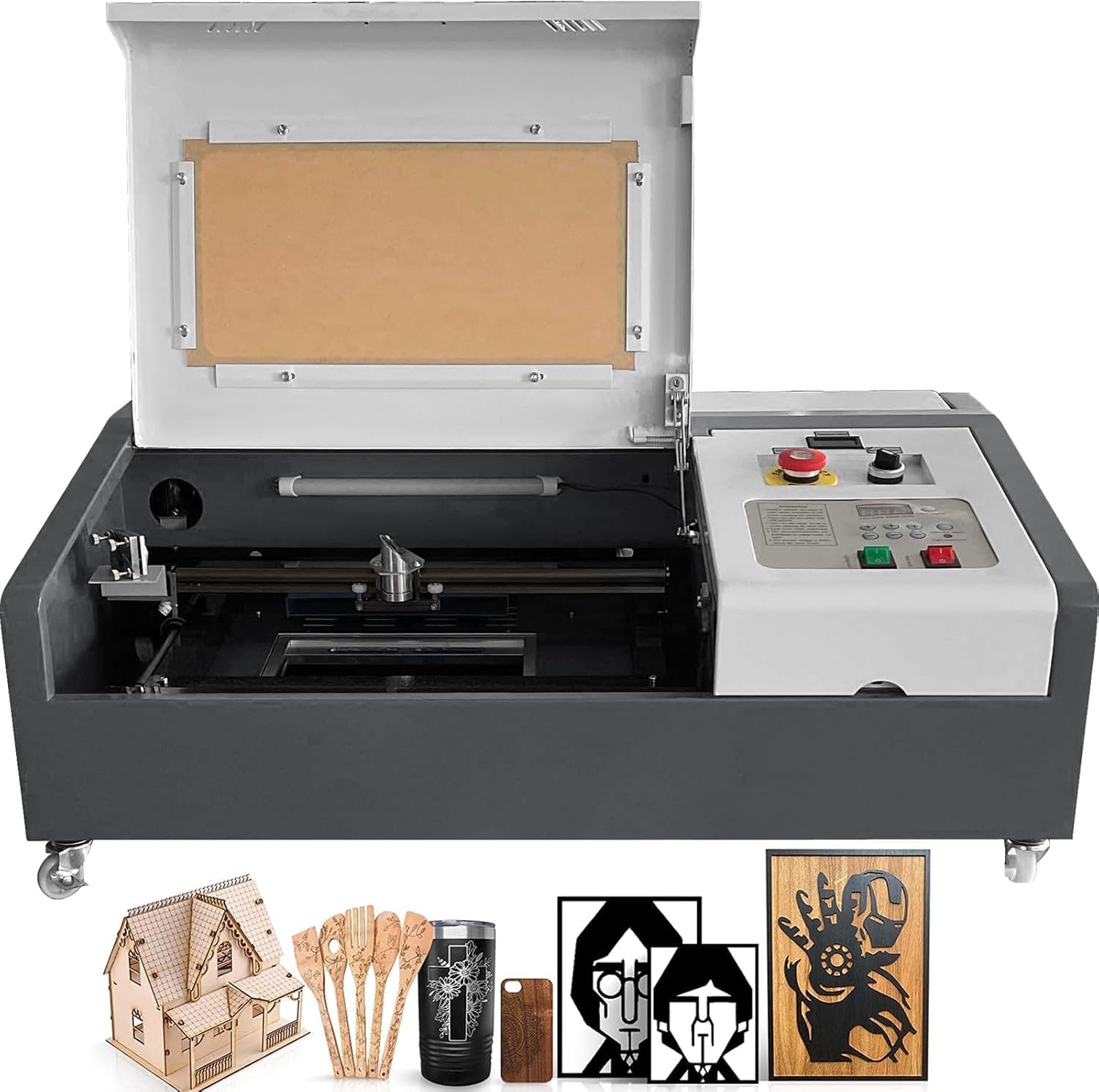
50W CO2 Laser Engraver, 16x16 inch Desktop Laser Cutter and Engraving Machine Compatible with CorelDRAW, Windows XP 7 8 10, EMF, JPG, PLT, WMF for Wood Acrylic Fabric (16"x16")
$600+This is a 50-60W CO2 laser engraver with a 300x200mm engraving area and 0.01mm positioning accuracy, designed for hobbyists and small businesses working with non-metallic materials.

LaserPecker LP5 Smart Dual 20W Fiber + Diode Laser Engraver Cutter with Rotary Extension, Slide Extension & Air Purifier, 3D Embossing, Color Engraving, Ideal for On-site Customization
$600+A dual 20W Fiber and 20W Diode laser engraver with 10,000mm/s speed, ideal for on-site customization across nearly all materials.

WIZMAKER 12W Laser Engraver Machine, Portable Carving Machine, 300x300mm Carving Area, 0.1mm High-Precision DIY Production, Suitable for Wood, Metal, Acrylic and Other Materials
$150-$299This is a 12W laser engraver with a 300x300mm carving area and 0.1mm precision, designed for DIY production on various materials.