
OVERTURE PETG 3D Printer Filament 1.75mm, Neatly Wound Durable PETG 1kg Spool (2.2lbs), Strong Toughness Filament, Dimensional Accuracy +/- 0.02mm, Fit Most FDM Printers (Red)
Want the best price and purchase timing?
Our AI advisor analyzes real-time pricing across all channels to find you the best deal.
AI Verdict
This is a 1.75mm PETG filament with +/- 0.02mm dimensional accuracy, offering more durability than PLA and easier printing than ABS for functional parts.
This PETG filament is a strong fit for makers needing prints with higher durability and impact resistance than PLA, while still being more manageable to print than ABS. Its +/- 0.02mm dimensional accuracy and neatly wound spool directly address common filament pain points, making it a reliable choice for functional parts.
If you need even higher temperature resistance or extreme chemical inertness, look for specialized engineering filaments like ASA or Nylon.
Regret Score™
Very Low RiskLower is better — measures purchase-regret risk from real buyer complaints, review credibility, and product maturity
Issues discovered after purchase
Critically weak dimension
Amazon rating vs actual quality
Chance this product isn't for you
Pros
- Offers higher impact strength and toughness compared to PLA, making it suitable for robust prints.
- Engineered for excellent layer adhesion and low shrinkage, reducing warping risks.
- Spools are precision-wound to minimize tangles during printing.
- Less prone to warping and emits fewer hazardous fumes than ABS, making it safer for indoor use.
- Maintains a consistent 1.75mm diameter with a tight +/- 0.02mm dimensional accuracy.
Cons
- While easier than ABS, PETG can still be more challenging to print than PLA, especially regarding stringing and bed adhesion for some users.
- Requires specific temperature settings (nozzle 220-230°C, bed 60-70°C) which might be higher than typical PLA setups.
- May require bed adhesive if printing without a heated bed, or if bed temperature is not consistently maintained.
- The 1-year shelf life for unopened spools requires proper storage to maintain quality.
Dimension Scores
The filament maintains a tight dimensional accuracy of +/- 0.02mm, which is above average for budget filaments and contributes to consistent extrusion.
While advertised as 'easier than ABS,' PETG still requires more careful tuning for retraction and bed adhesion compared to PLA, placing it at an average difficulty level for the material type.
Its combination of strength, impact resistance, and suitability for outdoor use makes it more versatile than PLA for a wider range of functional and durable applications.
PETG offers enhanced toughness and high impact strength, outperforming PLA significantly and making it suitable for parts that need to withstand stress and bumps.
Best For
- Printing functional prototypes and mechanical components that need to withstand stress and use.
- Creating parts for outdoor applications due to its resistance to moisture and chemicals.
- Users transitioning from PLA who need more durable prints but want to avoid the difficulties of ABS.
Not Recommended For
- Beginners looking for the absolute easiest printing experience without any tuning, as PETG can be trickier than PLA.
- Applications requiring extreme heat resistance beyond 70°C, where specialized filaments might be necessary.
Watch Out For
- Some users report stringing issues, which is common with PETG and may require careful retraction tuning on your specific printer setup.
- Achieving optimal bed adhesion can be inconsistent; a heated bed at 60-70°C is recommended, and some setups might need glue for unheated beds.
- Printing on open-frame printers can be more challenging with PETG compared to PLA, potentially leading to more headaches without an enclosure.
Full Specifications
| ASIN | B07PFSJVFQ |
| Size | 1.75 mm Diameter, 1 Kg ( 2.2lb ) Spool |
| Brand | OVERTURE |
| Color | Red |
| Material | Polyethylene Terephthalate Glycol |
| Item Weight | 2.2 pounds |
| Manufacturer | OVERTURE |
| Item Diameter | 1.75 Millimeters |
| Material Type | Polyethylene Terephthalate Glycol |
| Number of Items | 1 |
| Item model number | OVPETG175 |
| Package Dimensions | 8.78 x 8.19 x 2.83 inches |
| Manufacturer Part Number | OVPETG175 |
What Buyers Say
This Overture PETG filament is frequently highlighted as a budget-friendly option that still delivers on its promises of strength and ease of printing, especially for those moving beyond PLA. Many users find it surprisingly consistent for the price, with good layer bonding and reduced brittleness. While PETG can be tricky, this specific filament is often recommended for its balance of cost and performance, though some users still need to dial in settings for stringing.
“Okay, so I needed something stronger than PLA but ABS was just too much of a pain, and this Overture PETG actually delivered, like, my parts are holding up way better than I expected for the price, even if I had to mess with the retraction a bit.”
Common Praise
- Provides a good balance of strength and printability, bridging the gap between PLA and ABS.
- Shows excellent layer adhesion, resulting in strong and structurally sound prints.
- The spools are consistently wound, preventing frustrating tangles during long prints.
- Produces prints with a good surface finish, even for a budget-friendly option.
- Offers high impact resistance, making printed parts resilient to drops and bumps.
Common Complaints
- Some users report needing to fine-tune retraction settings to minimize stringing, a common PETG characteristic.
- Bed adhesion can be inconsistent for some, occasionally requiring additional adhesives or careful bed temperature calibration.
- Printing on open-frame printers can present challenges, as PETG benefits from a more controlled environment to prevent issues like warping.
Ownership Tips
- After a few weeks, I noticed that keeping the filament dry is crucial; even slight moisture can lead to more stringing and popping sounds during printing.
- Finding the sweet spot for bed temperature and Z-offset is key for the first layer, otherwise, adhesion can be a headache.
- The red color is consistent across different batches I've used, which is nice for multi-part projects.
- It's pretty forgiving with print speeds, I've pushed it a bit faster than recommended and still got decent results, though slower is always cleaner.
- The spool itself fits my printer's holder without any issues, which isn't always the case with other brands.
Frequently Asked Questions
What is OVERTURE PETG Filament used for?
It's primarily used for 3D printing functional parts, mechanical components, and outdoor applications due to its durability, flexibility, and resistance to impact, moisture, and chemicals.
How does OVERTURE PETG Filament compare to PLA?
OVERTURE PETG offers higher durability and is less brittle than PLA, making it better for items needing strength. PLA is generally easier to print, but PETG provides a step up in material properties.
How does OVERTURE PETG Filament compare to ABS?
PETG is easier to print than ABS, with less warping and no hazardous fumes, making it safer for indoor use. ABS typically offers higher heat resistance, but PETG provides a good balance of strength and printability.
Is OVERTURE PETG Filament compatible with all 3D printers?
It is designed to fit most FDM 3D printers with a 1.75mm diameter, ensuring wide compatibility.
What are the recommended printing settings for OVERTURE PETG?
Recommended settings are a nozzle temperature of 220-230°C, a bed temperature of 60-70°C, and a printing speed of 40-600mm/s.
Buying Guide
When you're looking at 3D printer filament, you're essentially choosing the raw material that will become your printed object. The type of filament dictates the final part's strength, flexibility, heat resistance, and how easy it is to print. For functional parts, you need something that can take a beating, not just look pretty. Pay attention to the material type and its specific properties, as they directly impact what you can make and how well it will perform.
Material: Polyethylene Terephthalate Glycol (PETG)
This isn't just a fancy name; PETG is a middle-ground material. Think of it as a stronger, more durable version of the common PLA, but without the fumes and extreme warping issues of ABS. It's like upgrading from a plastic toy car to one that can actually handle some bumps.
Dimensional Accuracy: +/- 0.02mm
This number tells you how consistent the filament's thickness is. Imagine trying to draw a perfect line with a pencil that keeps changing thickness – your drawing would be messy. For 3D printing, consistent diameter means smooth, reliable extrusion and fewer clogs, leading to better-looking and stronger prints.
Neatly Wound Spool
This sounds minor, but it's a huge deal. A poorly wound spool can lead to tangles, which means your printer stops mid-print, often ruining hours of work. A neatly wound spool ensures a smooth, uninterrupted flow of material, like a well-organized garden hose that never kinks.
Alternatives
If you need easier printing for display pieces, look for PLA filament. If you require higher temperature resistance and don't mind a more challenging print, search for ABS or ASA filaments.
You Might Also Like

xTool F2 Ultra UV Laser Engraver, 5W UV Laser, 3D Inner and Fine Glass Engraving, Dual 48MP Cameras, 15,000 mm/s High Speed, AI Powered 2D-to-3D Software, Ultra-Precise Detail on Glass Plastic Acrylic
$600+A 5W UV laser engraver with <10μm spot size for 3D inner glass engraving and cold processing heat-sensitive materials.
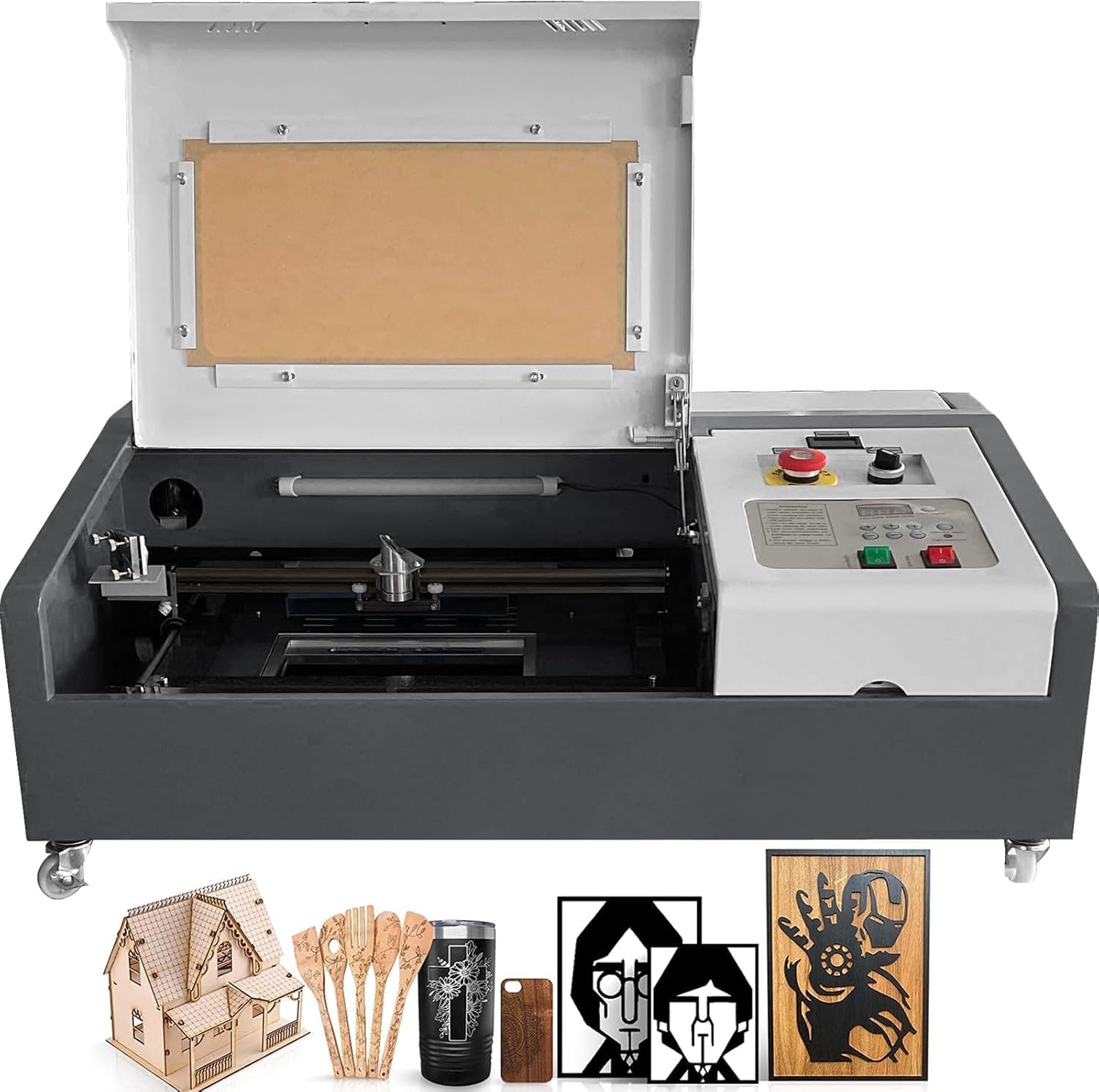
50W CO2 Laser Engraver, 16x16 inch Desktop Laser Cutter and Engraving Machine Compatible with CorelDRAW, Windows XP 7 8 10, EMF, JPG, PLT, WMF for Wood Acrylic Fabric (16"x16")
$600+This is a 50-60W CO2 laser engraver with a 300x200mm engraving area and 0.01mm positioning accuracy, designed for hobbyists and small businesses working with non-metallic materials.

LaserPecker LP5 Smart Dual 20W Fiber + Diode Laser Engraver Cutter with Rotary Extension, Slide Extension & Air Purifier, 3D Embossing, Color Engraving, Ideal for On-site Customization
$600+A dual 20W Fiber and 20W Diode laser engraver with 10,000mm/s speed, ideal for on-site customization across nearly all materials.

WIZMAKER 12W Laser Engraver Machine, Portable Carving Machine, 300x300mm Carving Area, 0.1mm High-Precision DIY Production, Suitable for Wood, Metal, Acrylic and Other Materials
$150-$299This is a 12W laser engraver with a 300x300mm carving area and 0.1mm precision, designed for DIY production on various materials.