
KINESIS Freestyle2 Ergonomic Keyboard w/ VIP3 Lifters for Mac (9" Separation)
Want the best price and purchase timing?
Our AI advisor analyzes real-time pricing across all channels to find you the best deal.
AI Verdict
This is a USB-connected membrane ergonomic keyboard with up to 9" split and 15-degree tenting, built for Mac users seeking wrist pain relief.
This keyboard is a strong fit for Mac users prioritizing ergonomic adjustability to alleviate or prevent wrist and forearm strain. Its split design with up to 9 inches of separation and 5, 10, or 15 degrees of tenting directly addresses common ergonomic issues. The pre-installed VIP3 accessory with palm rests further enhances comfort for specific body types.
If you need a more premium typing experience or advanced customization, look for split mechanical keyboards with hot-swappable switches and programmable layouts.
Regret Score™
Medium RiskLower is better — measures purchase-regret risk from real buyer complaints, review credibility, and product maturity
Issues discovered after purchase
Critically weak dimension
Amazon rating vs actual quality
Chance this product isn't for you
Pros
- Split design with up to 9 inches of separation allows for individualized hand and forearm positioning.
- VIP3 tenting accessory provides 5, 10, or 15 degrees of tenting with integrated palm rests for neutral wrist posture.
- Low-force membrane key switches offer tactile feedback, reducing finger fatigue.
- Mac layout includes hotkeys for Cut, Copy, Paste, multimedia controls, and a 2-port USB hub.
- Many users report significant relief from RSI and wrist pain.
Cons
- Wired-only USB connectivity limits placement flexibility.
- Membrane switches, while tactile, are described by some as requiring a harder push than expected.
- The keyboard occupies a significant amount of desk space due to its split design and integrated palm rests.
- No integrated numeric keypad, requiring a separate purchase for number entry.
- Some users report durability issues with USB connections or dead keys over time.
Dimension Scores
The custom membrane switches offer low-force activation and tactile feedback, but some users find them "heavy" or requiring a harder push compared to mechanical switches.
As a wired USB keyboard, it provides a consistent connection, though some users have reported long-term durability issues with the USB port itself.
It has single-color backlighting, which is functional but lacks the customization or brightness of higher-end keyboards.
Many users report years of use, though some complaints exist regarding USB port failures and dead keys over time.
Best For
- Mac users experiencing wrist or forearm discomfort from traditional keyboards.
- Individuals needing adjustable keyboard separation and tenting for personalized ergonomics.
- Office environments where quiet typing is preferred over mechanical switch noise.
Not Recommended For
- Users who require a wireless keyboard for a clutter-free or mobile setup.
- Gamers or typists who prefer the distinct feel and responsiveness of mechanical switches.
- Desks with limited surface area due to the keyboard's spread-out footprint.
Watch Out For
- The hotkeys on the left side can disrupt muscle memory, causing users to inadvertently hit them instead of standard keys.
- Some users reported issues with USB connections failing or individual keys dying after extended use.
- The membrane switches, despite being low-force, are noted by some to feel "heavy" or require a "harder push" than anticipated.
- The keyboard does not include a numeric keypad, which means frequent number entry requires an additional purchase.
Full Specifications
| ASIN | B009ZNBJK8 |
| Brand | KINESIS |
| Color | Black |
| Style | Mac Layout |
| Item Weight | 2.12 pounds |
| Manufacturer | Kinesis |
| Special Feature | Ergonomic |
| Item model number | KB820HMB-US |
| Compatible Devices | Mac OS X 10.4 or newer Apple iOS Devices (iPhone, iPad) |
| Product Dimensions | 15.4 x 7.1 x 0.9 inches |
| Keyboard Description | Ergonomic |
| Connectivity Technology | USB |
| Recommended Uses For Product | Office |
| Is Discontinued By Manufacturer | No |
| Keyboard backlighting color support | Single Color |
What Buyers Say
Many users turn to the Freestyle2 after experiencing wrist pain, and a recurring theme is the significant relief it provides through its adjustable split and tenting features. However, the membrane switches are a point of contention; while designed for low force, some find them less satisfying than mechanical alternatives, describing them as "heavy" or requiring a firm press. The keyboard's physical footprint is also a frequent mention, as the split design and integrated palm rests take up considerable desk space.
“My wrists were killing me, and this thing actually helped, but man, those keys feel a bit squishy, and it takes up half my desk. Still, no pain is worth it.”
Common Praise
- The ability to separate the keyboard halves up to 9 inches significantly reduces wrist pronation.
- Adjustable tenting at 5, 10, or 15 degrees with palm rests helps maintain neutral wrist posture.
- Many users report a reduction or elimination of RSI symptoms and wrist pain.
- The low-force membrane switches are quieter than most mechanical keyboards, suitable for office environments.
- The Mac-specific layout with hotkeys and a 2-port hub is convenient for Apple users.
Common Complaints
- The keyboard is wired-only, limiting its portability and placement options.
- Some users find the membrane keys require a "harder push" than expected, despite being low-force.
- The hotkeys on the left side can lead to accidental presses and a learning curve.
- The overall footprint of the keyboard, especially with the palm rests, consumes a lot of desk space.
- Durability concerns, including reports of USB port failures and dead keys, have been mentioned by some long-term users.
Ownership Tips
- The learning curve for the split layout and tenting can take a few weeks to adjust to.
- The integrated palm rests are crucial for comfort, and the VIP3 accessory is considered essential by many.
- The lack of a built-in numpad becomes apparent quickly for anyone doing data entry.
- The cable connecting the two halves can sometimes get in the way if not managed properly.
Frequently Asked Questions
Is this keyboard mechanical?
No, the Kinesis Freestyle2 uses custom membrane key switches, not mechanical switches. They are designed for low activation force and tactile feedback.
Can I use this keyboard with a PC?
While designed for Mac OS X 10.4 or newer, it is reported to work out of the box with Windows for basic typing functions.
Does it have backlighting?
Yes, it features single-color backlighting.
Does it come with a numeric keypad?
No, a numeric keypad is not integrated and must be purchased separately if needed.
How much separation can the two halves have?
The key modules can be separated by up to 9 inches.
Are the palm rests removable?
The VIP3 accessory includes integrated cushioned palm supports that are pre-installed, but the adhesive cushioned palm pads are detachable.
Is it wireless?
No, this keyboard connects via a USB cable.
Buying Guide
When looking at ergonomic keyboards, you're trying to find something that fits *your* body, not the other way around. The key is adjustability: how much can you split the keyboard, and can you tilt it to keep your wrists straight? Don't just look for "ergonomic" in the name; check the actual separation distance and tenting angles.
Split Design (up to 9" separation)
Imagine holding your hands naturally in front of you – they're not glued together. A split design lets you position each hand independently, aligning your wrists and shoulders more comfortably, like adjusting your car seat for a long drive.
Adjustable Tenting (5, 10, or 15 degrees)
Tenting lifts the inside edge of each keyboard half, reducing forearm pronation (the twisting of your forearms). Think of it like tilting your steering wheel slightly to get a better grip – it takes strain off your wrists and elbows.
Membrane Key Switches (low-force, tactile)
This refers to how the keys feel when you press them. Membrane switches are generally quieter and require less force to actuate than many mechanical switches, which can reduce finger fatigue over long typing sessions. It's like the difference between a soft-touch button and a clicky one.
Alternatives
If this keyboard's membrane switches aren't responsive enough, look for split keyboards with mechanical switches for a more distinct keypress feel. If you need wireless freedom, search for split ergonomic keyboards with Bluetooth connectivity.
You Might Also Like

Logitech MK270 Wireless Keyboard and Mouse Combo for Windows, 2.4 GHz, 8 Multimedia Keys, PC, Laptop, Wireless Keyboard Compact Mouse Combo - Black
This is a 2.4 GHz wireless keyboard and mouse combo with a full-size QWERTY layout and 8 multimedia keys, built for basic Windows PC tasks on a tight budget.

Logitech MK270 Wireless Keyboard and Mouse Combo for Windows, 2.4 GHz, 8 Multimedia Keys, PC, Laptop, Wireless Keyboard Compact Mouse Combo - Rose
This is a 2.4 GHz RF membrane keyboard and mouse combo with a full-size layout, best suited for basic Windows PC tasks on a tight budget.

Logitech K270 Wireless Keyboard for Windows, 2.4 GHz Wireless, Full-Size, Number Pad, 8 Multimedia Keys, 2-Year Battery Life, Compatible with PC, Laptop - Rose
This is a full-size, 2.4 GHz wireless membrane keyboard with 8 multimedia keys and a number pad, designed for basic PC and laptop use.
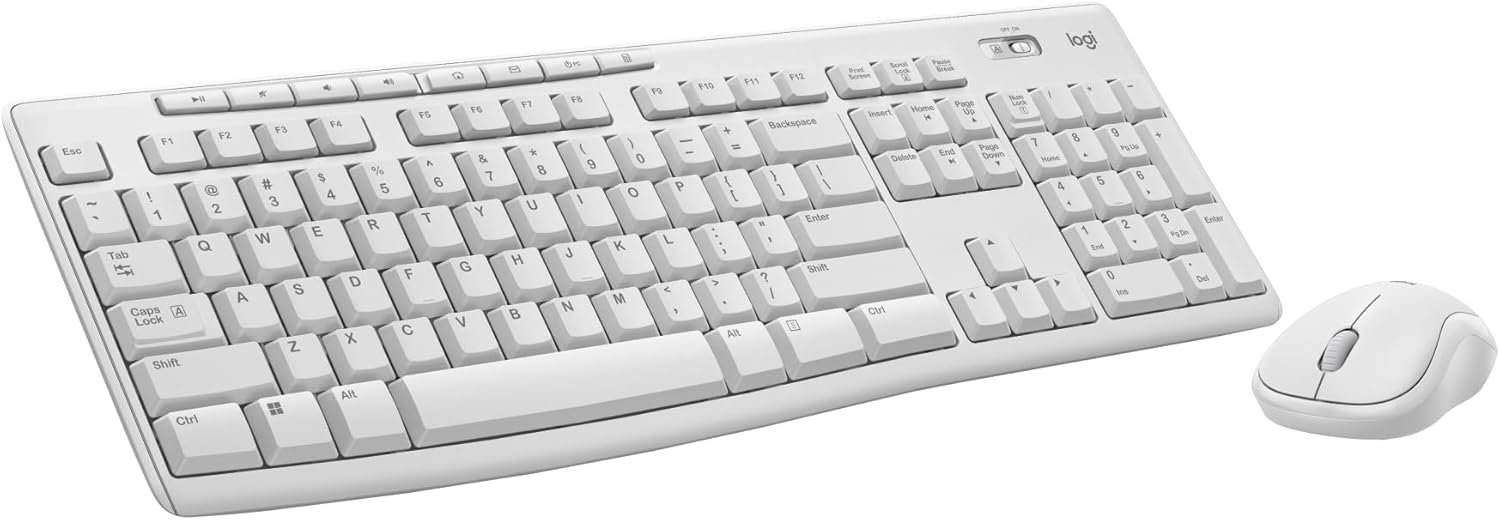
Logitech MK270 Wireless Keyboard and Mouse Combo for Windows, 2.4 GHz, 8 Multimedia Keys, PC, Laptop, Wireless Keyboard Compact Mouse Combo - White
This is a budget 2.4 GHz wireless membrane keyboard and mouse combo with a full-size layout, 8 multimedia keys, and a compact mouse, best for basic PC tasks.