
KINESIS Freestyle2 USB-A Ergonomic Keyboard w/ VIP3 Lifters for PC (9" Separation) (KB820PB-US)
Want the best price and purchase timing?
Our AI advisor analyzes real-time pricing across all channels to find you the best deal.
AI Verdict
A 2-pound, USB-A wired, membrane split ergonomic keyboard with 9" separation and 5/10/15-degree tenting, designed for PC users seeking wrist and forearm comfort.
This keyboard is a strong fit for users prioritizing ergonomic adjustability and comfort over mechanical key feel or wireless convenience. Its 9-inch split and 5/10/15-degree tenting directly address common ergonomic issues like ulnar deviation and pronation, which many users confirm helps with RSI.
If you need a more premium typing experience or wireless freedom, look for split ergonomic keyboards with mechanical switches and Bluetooth connectivity.
Regret Score™
Medium RiskLower is better — measures purchase-regret risk from real buyer complaints, review credibility, and product maturity
Issues discovered after purchase
Critically weak dimension
Amazon rating vs actual quality
Chance this product isn't for you
Pros
- Split design allows up to 9 inches of separation, enabling natural hand, wrist, and forearm positioning for individual body types.
- VIP3 tenting accessory provides 5, 10, or 15 degrees of tenting with integrated cushioned palm supports, promoting neutral forearm and wrist posture.
- Low-force membrane key switches offer tactile feedback, which users report reduces finger fatigue and strain.
- Standard Windows layout includes dedicated hotkeys for Cut, Copy, Paste, multimedia controls, and an embedded numeric 10-key for productivity.
- Plug-and-play USB-A connectivity requires no software or special drivers for Windows 7, 8, 10, and Linux compatibility.
- Many users report significant relief from RSI symptoms after switching to this keyboard.
Cons
- Wired USB-A connectivity means no wireless options like Bluetooth, which some users find inconvenient for minimalist setups.
- Membrane key switches, while tactile, do not offer the distinct feel or durability of mechanical switches, which some users prefer.
- Single color backlighting is basic compared to keyboards offering multi-color or per-key RGB customization.
- The left-side hotkeys (Cut, Copy, Paste) can disrupt muscle memory for users accustomed to standard Ctrl+C/V shortcuts.
- The integrated wrist rests may be too low for some users, potentially causing wrists to bend rather than remain straight.
Dimension Scores
The low-force membrane key switches provide tactile feedback and are reported as responsive and quiet, reducing finger fatigue for many users.
The wired USB-A connection ensures consistent and reliable performance without concerns for battery life or wireless interference.
The keyboard features only single-color backlighting, which is basic compared to the multi-color or per-key RGB options available on many modern keyboards.
Weighing 2 pounds and described as 'solidly built,' users report the keyboard holds up well over many years of daily use, with some owning it for 7-10 years.
Best For
- Individuals experiencing wrist, hand, or forearm discomfort from traditional keyboard use.
- Desk setups where customizable hand and wrist angles are prioritized for long typing sessions.
- PC users who require a standard Windows layout with multimedia hotkeys and an embedded numpad.
- Environments where a simple, reliable plug-and-play USB connection is preferred over wireless.
Not Recommended For
- Users who prefer the distinct feel, sound, and durability of mechanical key switches.
- Setups requiring wireless connectivity, such as Bluetooth, for reduced cable clutter.
- Gamers needing advanced features like macro programming, per-key RGB, or extremely low latency.
- Users who frequently use a dedicated numpad and do not wish to purchase a separate accessory.
Watch Out For
- The learning curve for the split layout and the left-side hotkeys can be disruptive to muscle memory for several weeks.
- The wrist rests, while cushioned, are reported by some to be too low, potentially causing wrists to bend instead of staying neutral.
- No dedicated numpad, requiring an additional purchase for users who frequently enter numbers, as the embedded 10-key can be cumbersome.
- Using the tilt feature can prevent the keyboard from being compatible with some keyboard trays due to increased height.
- Some users have reported issues with key responsiveness when certain key combinations are held down, such as 'Y' not registering when 'T' and 'R' are pressed simultaneously.
Full Specifications
| ASIN | B0089ZLENA |
| Brand | KINESIS |
| Color | Black |
| Style | PC Layout |
| Item Weight | 2 pounds |
| Manufacturer | Kinesis Corporation |
| Special Feature | Ergonomic |
| Item model number | KB820PB-US |
| Compatible Devices | Windows 7, 8, 10, Linux |
| Product Dimensions | 19 x 12.5 x 3.5 inches |
| Keyboard Description | Ergonomic, Multimedia, Membrane |
| Connectivity Technology | USB |
| Recommended Uses For Product | Office |
| Is Discontinued By Manufacturer | No |
| Keyboard backlighting color support | Single Color |
What Buyers Say
Many users report the Kinesis Freestyle2 significantly alleviates wrist and forearm pain, with some experiencing relief from RSI symptoms after years of discomfort. The ability to customize the split distance up to 9 inches and the 5/10/15-degree tenting options are consistently praised for allowing personalized ergonomic setups. However, the non-mechanical membrane keys and the learning curve associated with the unique layout and left-side hotkeys are common discussion points.
“Okay, so my wrists were screaming after 8 hours at the computer, and this weird-looking thing actually stopped the pain. The split took a minute to get used to, and those left-side buttons still mess me up sometimes, but seriously, my hands don't ache anymore. Worth every penny, even if it's not fancy mechanical.”
Common Praise
- Helped reduce or eliminate wrist and forearm pain, including RSI symptoms.
- Customizable split design (up to 9 inches) allows for natural hand and shoulder positioning.
- VIP3 tenting accessory provides effective wrist pronation relief at 5, 10, or 15 degrees.
- Low-force keys with tactile feedback are comfortable for long typing sessions and quieter than mechanical keyboards.
- Solid construction and durability, with many users reporting years of trouble-free use.
Common Complaints
- The left-side hotkeys (Cut, Copy, Paste) interfere with established muscle memory for standard shortcuts.
- Lack of a dedicated numpad is inconvenient for frequent number entry, often necessitating a separate purchase.
- Wired USB-A connection is seen as a drawback by users desiring a wireless, clutter-free desk setup.
- Wrist rests are sometimes perceived as too low, causing wrists to bend rather than maintaining a straight line.
- Some users find the membrane key feel less satisfying than mechanical switches.
Ownership Tips
- There's a noticeable learning curve for adapting to the split layout and retraining muscle memory for the hotkeys, which can take several weeks.
- For heavy numeric data entry, a separate Kinesis numeric keypad is almost essential, as the embedded 10-key is not ideal for speed.
- The VIP3 accessory, which provides the tenting and palm supports, is considered crucial for maximizing the ergonomic benefits, and some users initially thought it was sold separately.
- The cable connecting the two halves can be replaced, and some users have opted for longer ones to achieve greater separation.
- Sluggish or stuck keys can often be resolved with a blower and a peroxide-dampened Q-tip, indicating maintenance can extend lifespan.
Frequently Asked Questions
Is this a mechanical keyboard?
No, it uses custom low-force membrane key switches with tactile feedback. Users describe the typing feel as responsive and quiet, but it is not mechanical.
Does it require special drivers or software?
No, the keyboard is plug-and-play via USB-A and does not require any additional software or drivers for Windows 7, 8, 10, or Linux operating systems.
What are the available tenting angles?
The included VIP3 lifters allow you to set the keyboard halves at 5, 10, or 15 degrees of tenting, which helps reduce forearm pronation.
Can I use this keyboard with a Mac?
The product is specified for PC (Windows 7, 8, 10, Linux). While it might function for basic typing on a Mac, full compatibility with all hotkeys and features is not guaranteed.
Is this keyboard wireless?
No, this model connects via a USB-A cable. There is no Bluetooth or other wireless connectivity option.
Does it have a numeric keypad?
It has an embedded numeric 10-key, meaning you access numbers via a function layer. For frequent number entry, Kinesis recommends purchasing a separate dedicated numeric keypad.
Buying Guide
When looking at ergonomic keyboards like this, you're primarily trying to reduce strain on your wrists, hands, and shoulders. The key is finding a setup that lets your body stay in a neutral, relaxed position. This often means getting your hands wider apart and tilting them upwards slightly. Don't expect instant comfort; there's usually an adjustment period as your body adapts to the new posture.
Split Design Separation (up to 9 inches)
This lets you move the two halves of the keyboard apart, aligning them with your shoulders. Think of it like adjusting your car's steering wheel so your arms aren't awkwardly close together, reducing inward wrist bending (ulnar deviation).
Adjustable Tenting (5, 10, or 15 degrees)
Tenting raises the inner edges of the keyboard halves, lifting your thumbs higher than your pinky fingers. This helps reduce forearm pronation, which is like twisting your forearms flat against a table, and keeps your wrists in a more natural, handshake-like position.
Low-Force Membrane Key Switches
This refers to how much pressure you need to apply to register a keypress. 'Low-force' means less effort per key, which can reduce finger fatigue over long typing sessions. Membrane keys are generally quieter and softer than mechanical keys, but lack the distinct 'click' or 'thock' feel.
Connectivity (USB-A)
This keyboard uses a standard USB-A cable to connect to your computer. It means a reliable, lag-free connection and no batteries to charge, but it also means you'll have a cable on your desk, unlike wireless options.
Alternatives
If this keyboard doesn't quite fit, consider models with mechanical key switches for a different typing feel, or look for wireless (Bluetooth) split keyboards for a cleaner desk setup and more portability.
You Might Also Like

Logitech MK270 Wireless Keyboard and Mouse Combo for Windows, 2.4 GHz, 8 Multimedia Keys, PC, Laptop, Wireless Keyboard Compact Mouse Combo - Black
This is a 2.4 GHz wireless keyboard and mouse combo with a full-size QWERTY layout and 8 multimedia keys, built for basic Windows PC tasks on a tight budget.

Logitech MK270 Wireless Keyboard and Mouse Combo for Windows, 2.4 GHz, 8 Multimedia Keys, PC, Laptop, Wireless Keyboard Compact Mouse Combo - Rose
This is a 2.4 GHz RF membrane keyboard and mouse combo with a full-size layout, best suited for basic Windows PC tasks on a tight budget.

Logitech K270 Wireless Keyboard for Windows, 2.4 GHz Wireless, Full-Size, Number Pad, 8 Multimedia Keys, 2-Year Battery Life, Compatible with PC, Laptop - Rose
This is a full-size, 2.4 GHz wireless membrane keyboard with 8 multimedia keys and a number pad, designed for basic PC and laptop use.
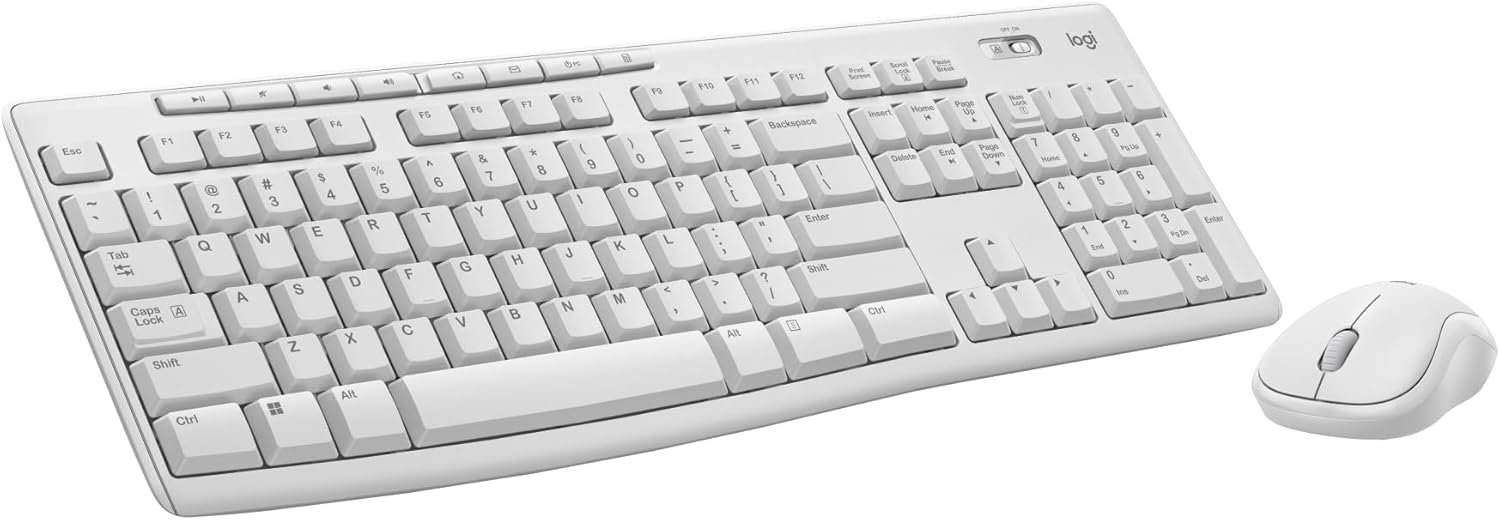
Logitech MK270 Wireless Keyboard and Mouse Combo for Windows, 2.4 GHz, 8 Multimedia Keys, PC, Laptop, Wireless Keyboard Compact Mouse Combo - White
This is a budget 2.4 GHz wireless membrane keyboard and mouse combo with a full-size layout, 8 multimedia keys, and a compact mouse, best for basic PC tasks.