
GIGABYTE GeForce RTX 5060 Ti Gaming OC 8G Graphics Card, 8GB 128-bit GDDR7, PCIe 5.0, WINDFORCE Cooling System, GV-N506TGAMING OC-8GD Video Card
Want the best price and purchase timing?
Our AI advisor analyzes real-time pricing across all channels to find you the best deal.
AI Verdict
This 8GB GDDR7 RTX 5060 Ti with a 2647 MHz boost clock is for 1080p gamers who prioritize frame rates over texture quality in new titles.
This card is a situational fit because its 8GB GDDR7 VRAM and PCIe 5.0 x8 interface limit its utility. While it offers a 2647 MHz clock speed and efficient cooling, the VRAM capacity restricts its performance in modern games beyond 1080p, and the x8 interface can bottleneck older systems.
If you need more VRAM for 1440p gaming or future-proofing, look for a GPU with at least 12GB or 16GB GDDR7 memory.
Regret Score™
Medium RiskLower is better — measures purchase-regret risk from real buyer complaints, review credibility, and product maturity
Issues discovered after purchase
Critically weak dimension
Amazon rating vs actual quality
Chance this product isn't for you
Pros
- Achieves a 2647 MHz boost clock out of the box, slightly higher than reference cards.
- Features 8GB GDDR7 memory with a 28000 MHz memory speed, providing 448 GB/s bandwidth.
- WINDFORCE cooling system with three 80mm fans keeps temperatures around 70°C under full load.
- Includes 1x HDMI 2.1b and 3x DisplayPort 2.1b outputs, supporting up to 7680x4320 resolution.
- Power consumption is low, with a 180W TDP, requiring only a single 8-pin PCIe power connector.
Cons
- 8GB VRAM is frequently insufficient for modern games at 1440p or higher settings, causing stuttering and texture pop-in.
- PCIe 5.0 x8 interface can reduce performance by 14-17% on PCIe 4.0 systems due to bandwidth limitations.
- Power connector placement at the front of the card near the I/O bracket complicates cable management.
- Some users report past Gigabyte cards experiencing thermal gel leaks, raising concerns about long-term reliability.
Dimension Scores
The RTX 5060 Ti offers a 2647 MHz clock speed and DLSS 4, but its 8GB VRAM severely limits its performance in modern games at 1440p and above.
The WINDFORCE cooling system with three 80mm fans keeps the GPU around 70°C under full load, with reports of quiet operation.
With a 180W TDP and requiring only a single 8-pin PCIe power connector, it's quite power-efficient for its class.
8GB GDDR7 VRAM is a critical bottleneck for modern gaming, frequently causing stuttering and texture issues, even at 1080p in some demanding titles.
Best For
- 1080p gaming with high refresh rates, especially in less VRAM-intensive titles.
- Esports titles where frame rate stability is more important than maxed-out textures.
- Systems with PCIe 5.0 motherboards to minimize performance loss from the x8 interface.
- Users with a 650W power supply looking for a power-efficient GPU.
Not Recommended For
- 1440p or 4K gaming in demanding new release titles without significant settings compromises.
- Users who prioritize maxing out texture quality in all games.
- Content creation or professional applications that require substantial VRAM.
- Systems with older PCIe 3.0 or 4.0 motherboards seeking full performance potential.
Watch Out For
- 8GB VRAM frequently causes texture pop-in and stuttering in new games, even at 1080p with certain settings.
- The PCIe 5.0 x8 connection means a 14-17% performance hit if your motherboard only supports PCIe 4.0.
- The 8-pin power connector is awkwardly placed at the front of the card, making clean cable routing difficult.
- Some users have reported issues with Gigabyte cards having thermal gel leaks, though this might be less prevalent in newer models.
Full Specifications
| ASIN | B0F5B89RF5 |
| Brand | GIGABYTE |
| Color | Information Not Available |
| Series | RTX 5060 Ti |
| Item Weight | 2.59 pounds |
| Manufacturer | GIGABYTE |
| Memory Speed | 28000 MHz |
| Chipset Brand | NVIDIA |
| GPU Clock Speed | 2647 MHz |
| Card Description | Dedicated |
| Graphics Ram Size | 8 GB |
| Item model number | GV-N506TGAMING OC-8GD |
| Product Dimensions | 11.06 x 4.69 x 1.57 inches |
| Graphics Coprocessor | RTX 5060TI |
| Max Screen Resolution | 7680x4320 Pixels |
| Graphics Card Ram Size | 8 GB |
| Item Dimensions LxWxH | 11.06 x 4.69 x 1.57 inches |
| Video Output Interface | DisplayPort, HDMI |
What Buyers Say
The biggest takeaway from user feedback is the constant struggle with the 8GB VRAM, which many feel is simply not enough for current and future games, especially at 1440p. While the card performs well at 1080p and has efficient cooling, the VRAM limitation and the PCIe x8 interface are recurring points of frustration. Some users who bought it on sale for 1080p are content, but others express regret over the VRAM and price-to-performance ratio compared to higher-VRAM alternatives.
“Dude, this 8GB VRAM is a joke for anything past 1080p, I'm constantly dropping settings and still getting stutters in new games, should've just saved up for the 16GB version or something else entirely.”
Common Praise
- Runs quietly and efficiently, with a 180W TDP.
- Effective WINDFORCE cooling system maintains temperatures around 70°C under load.
- Performs well for 1080p gaming, especially in less demanding titles.
- Includes a full suite of modern display outputs: 1x HDMI 2.1b and 3x DisplayPort 2.1b.
Common Complaints
- 8GB VRAM is insufficient for many modern games, leading to stuttering and reduced texture quality at 1440p and sometimes even 1080p.
- The PCIe 5.0 x8 interface causes a noticeable performance drop (14-17%) on PCIe 4.0 systems.
- Awkward placement of the 8-pin power connector at the front of the card makes cable management difficult.
- Concerns about Gigabyte's thermal gel leak issues from previous generations, though some say QC has improved.
Ownership Tips
- You'll be constantly monitoring VRAM usage in newer games, especially at 1440p, and adjusting settings down.
- The PCIe x8 interface means you might not get full performance if your system isn't PCIe 5.0, which is a hidden cost.
- Cable management can be a pain due to the power connector's position, making your build look less clean.
- DLSS 4 becomes a necessity, not an option, to maintain playable frame rates in many titles.
Frequently Asked Questions
Is 8GB VRAM enough for current games?
For 1080p gaming, 8GB VRAM can be enough for many titles, especially if you adjust settings. However, for newer, more demanding games or higher resolutions like 1440p, 8GB is often insufficient and can lead to performance issues like stuttering and reduced texture quality.
Does this card support PCIe 5.0?
Yes, it supports PCIe 5.0, but it only uses an x8 interface, not x16. This means if you put it in a PCIe 4.0 slot, you could see a performance reduction of 14-17% compared to a full x16 connection.
What kind of power supply do I need?
NVIDIA recommends at least a 650W power supply for this GPU. The card itself has a 180W TDP and uses a single 8-pin PCIe power connector.
How is the cooling on this card?
The GIGABYTE WINDFORCE cooling system with three 80mm fans is effective. Users report average thermal performance around 70°C under full load, with some achieving 61°C with undervolting.
Can this card handle 1440p gaming?
While it can run games at 1440p, you'll likely need to rely heavily on DLSS 4 and reduce graphical settings to maintain playable frame rates, especially in VRAM-intensive titles. Many reviewers suggest 8GB VRAM is a significant limitation for 1440p.
Buying Guide
When you're looking at a graphics card like this, don't just stare at the 'Ti' or the '5060' number. You need to think about what resolution you play at and what games you're into. The VRAM (that 8GB number) is super important because it dictates how many textures and graphical assets your card can hold at once. If it's too low, your games will stutter and look blurry, no matter how fast the core clock is. Also, check your motherboard's PCIe slot version; this card's x8 interface can be a hidden bottleneck if you're not on PCIe 5.0.
VRAM (8GB GDDR7)
This is like the short-term memory of your graphics card. More VRAM means the card can store more game textures and data, which is crucial for higher resolutions (like 1440p or 4K) and games with detailed graphics. 8GB is becoming a tight squeeze for new games, even at 1080p with high settings, leading to performance drops if exceeded.
Clock Speed (2647 MHz)
This is how fast the GPU's processing core runs. A higher clock speed generally means more calculations per second, translating to higher frame rates. However, a high clock speed can't compensate for insufficient VRAM if the card can't load the necessary game assets.
PCIe 5.0 x8
This describes the connection interface between the graphics card and your motherboard. PCIe 5.0 is the latest standard, but 'x8' means it uses half the lanes of a full 'x16' slot. If your motherboard is older (PCIe 4.0 or 3.0), this limited number of lanes can become a bottleneck, reducing the card's effective performance.
Alternatives
If this card doesn't fit, look for GPUs with at least 12GB or 16GB of VRAM for better longevity in demanding games, and consider cards with a full PCIe x16 interface if you have an older motherboard.
You Might Also Like

HP NVIDIA GeForce RTX 3070 8GB OEM Graphics Card (Renewed)
$150-$299This is a renewed HP OEM NVIDIA GeForce RTX 3070 with 8GB VRAM, a gamble for budget-conscious 1440p gamers who understand the risks of refurbished hardware.

ZOTAC Gaming GeForce RTX 5070 Twin Edge OC DLSS 4 12GB GDDR7 192-bit 28 Gbps PCIE 5.0 Gaming Graphics Card, IceStorm 2.0 Cooling, SFF-Ready, ZT-B50700H-10A
$600+This is a 2-slot, SFF-ready NVIDIA RTX 5070 with 12GB GDDR7 and a 2542 MHz boost clock, built for compact gaming rigs needing high 1440p performance.

ZOTAC Gaming GeForce RTX 5080 Solid CORE OC DLSS 4 16GB GDDR7 256-bit 30 Gbps PCIE 5.0 Gaming Graphics Card, IceStorm 3.0 Advanced Cooling, Spectra RGB Lighting, ZT-B50800J2-10A
$600+This ZOTAC RTX 5080 with 16GB GDDR7 and a 2640 GHz clock speed is built for high-end 4K gaming and content creation on the NVIDIA Blackwell architecture.
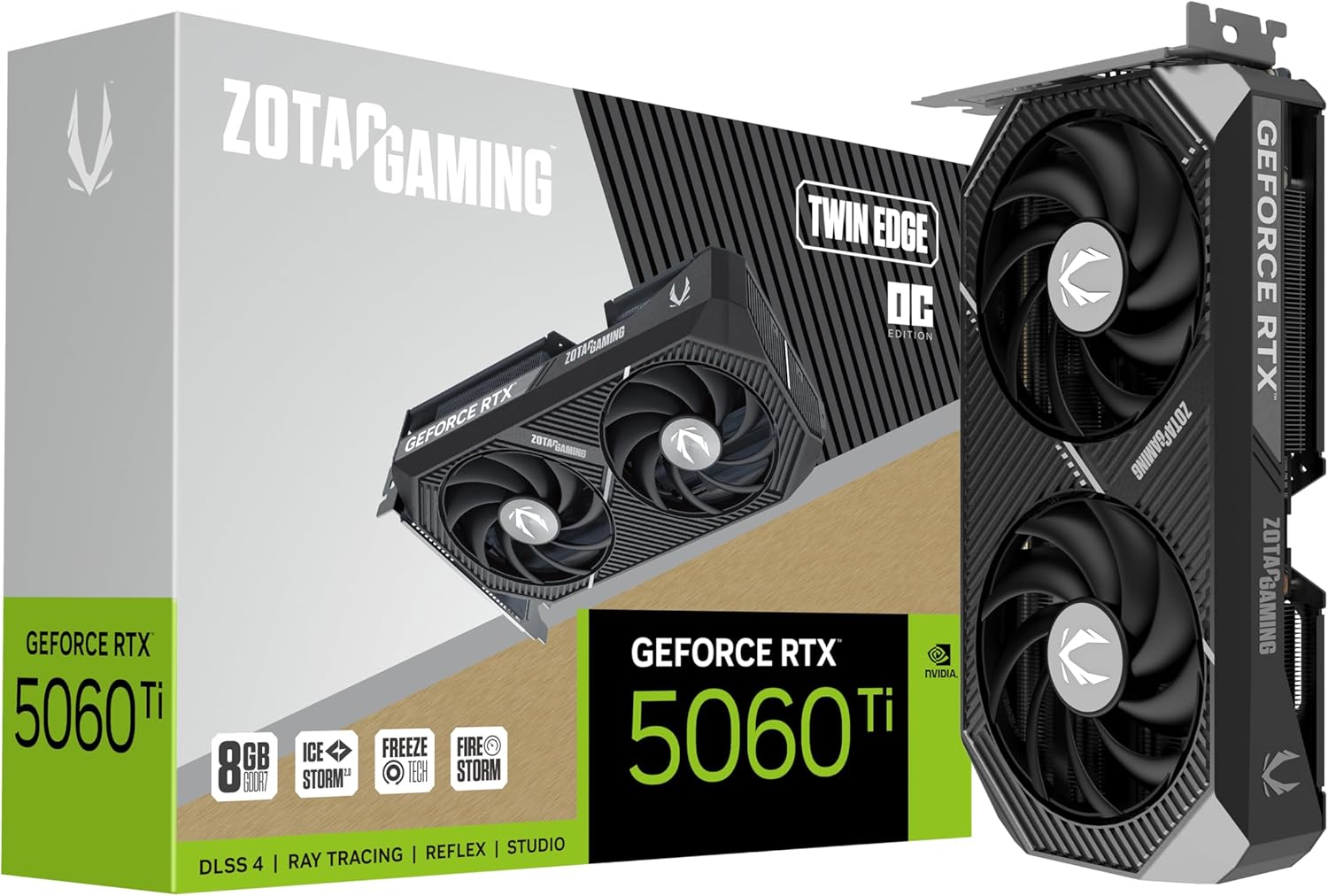
ZOTAC Gaming GeForce RTX 5060 Ti 8GB Twin Edge OC DLSS 4 8GB GDDR7 128-bit 28 Gbps PCIE 5.0 Gaming Graphics Card, IceStorm 2.0 Cooling, SFF-Ready, ZT-B50610H-10A
$300-$599This is a compact, 2-slot RTX 5060 Ti with 8GB GDDR7 and a 2602 MHz clock, built for SFF gaming rigs.