
msi Gaming RTX 5060 Ti 8G Ventus 2X OC Plus Graphics Card (8GB GDDR7,TBA-bit, Extreme Performance: TBA MHz, DisplayPort x3 2.1a, HDMI 2.1b, NVIDIA Blackwell Architecture)
Want the best price and purchase timing?
Our AI advisor analyzes real-time pricing across all channels to find you the best deal.
AI Verdict
This is an 8GB GDDR7 NVIDIA Blackwell architecture card for 1080p gaming, with potential for 1440p at moderate settings.
This card is a strong contender for 1080p gaming due to its NVIDIA Blackwell architecture and DLSS 4 support, offering significant performance uplift over the previous generation. However, its 8GB VRAM capacity, while featuring fast GDDR7 memory, positions it as a situational fit for 1440p, where it might struggle in future demanding titles.
If you're aiming for consistent 1440p or any 4K gaming, look for a GPU with 12GB or 16GB of VRAM to ensure longevity.
Regret Score™
Medium RiskLower is better — measures purchase-regret risk from real buyer complaints, review credibility, and product maturity
Issues discovered after purchase
Critically weak dimension
Amazon rating vs actual quality
Chance this product isn't for you
Pros
- Powered by the NVIDIA Blackwell architecture and DLSS 4, offering next-gen features and performance.
- Features 8GB GDDR7 VRAM with 448 GB/s bandwidth, a 55% improvement over RTX 4060 Ti's GDDR6 bandwidth.
- Includes TORX Fan 5.0 with linked fan blades for high-pressure airflow, aiding cooling efficiency.
- Utilizes a nickel-plated copper baseplate and square Core Pipes to maximize heat transfer from the GPU and memory.
- Projected to offer a 26% performance gain over the RTX 4060 Ti 8GB in synthetic benchmarks.
Cons
- 8GB VRAM might become a limitation for demanding 1440p or 4K gaming, especially with ray tracing enabled.
- The Ventus line typically lacks features like RGB lighting or VBIOS toggles, focusing on essentials.
- Early analyses suggest the fans might be loud under load, despite the compact design.
- Requires a minimum 650W power supply, which might necessitate an upgrade for older systems.
Dimension Scores
The NVIDIA GeForce RTX 5060 Ti is projected to offer a 26% performance gain over the RTX 4060 Ti 8GB in synthetic tests, making it a strong performer for 1080p and capable at 1440p.
It features TORX Fan 5.0, a nickel-plated copper baseplate, and Core Pipes for efficient heat transfer, but early reports for similar models suggest fans can be loud under load.
With a 180W TGP and requiring a single 8-pin power connector, it demonstrates improved efficiency compared to older generations.
The 8GB GDDR7 VRAM is adequate for 1080p gaming, but it might become a limiting factor for higher resolutions or future demanding titles with ray tracing.
Best For
- Gamers targeting high refresh rate 1080p experiences.
- Users seeking a GPU with NVIDIA's latest Blackwell architecture and DLSS 4 capabilities.
- Compact PC builds, given its SFF-Ready Enthusiast GeForce Card designation.
Not Recommended For
- Enthusiasts demanding uncompromised 4K gaming at ultra settings.
- Users who prioritize extensive RGB customization or advanced VBIOS options.
- Budget builds with power supplies under 650W.
Watch Out For
- The 8GB GDDR7 VRAM, while fast, could be a bottleneck for future games at higher resolutions or with intensive ray tracing.
- Without user reviews, specific noise levels under sustained load are unknown, but early reports for similar models suggest potentially loud fans.
- The card requires a single 8-pin power connector and a minimum 650W PSU, which could be an unexpected upgrade cost.
Full Specifications
| ASIN | B0F4LQ216W |
| Brand | msi |
| Item Weight | 1.78 pounds |
| Manufacturer | MSI |
| GPU Clock Speed | 28.0 |
| Graphics Ram Size | 8 GB |
| Package Dimensions | 12.01 x 8.19 x 3.39 inches |
| Graphics Coprocessor | NVIDIA GeForce RTX 5060 Ti |
| Video Output Interface | DisplayPort |
What Buyers Say
As of its 'Date First Available' being April 11, 2025, there are no actual user reviews or complaints available for this specific product. Information is based on product specifications and pre-release analyses from tech publications. Therefore, common praise, complaints, and ownership notes from real users cannot be provided at this time.
“Can't give a real user quote yet, this card isn't even out!”
Frequently Asked Questions
What kind of gaming performance can I expect at 1080p?
Based on early analyses, this card is expected to deliver strong 1080p rasterization performance, with near-identical results to a 16GB variant at medium-to-high settings.
Does this card support ray tracing?
Yes, it's powered by NVIDIA's Blackwell architecture, which includes fourth-gen RT Cores for enhanced ray tracing capabilities and DLSS 4 for improved performance.
What power supply do I need for this graphics card?
You'll need a power supply with at least 650W and a single 8-pin power connector to run this card.
What is DLSS 4?
DLSS 4 is NVIDIA's latest deep learning super sampling technology, which uses AI to boost frame rates and generate high-quality images in supported games.
Is this card suitable for small form factor (SFF) PC builds?
Yes, it's designated as an 'SFF-Ready Enthusiast GeForce Card,' indicating it's designed to fit into more compact cases.
Buying Guide
When looking at a graphics card like this, you need to think about what resolution you play at most. This 8GB RTX 5060 Ti is built for 1080p, and it'll handle that well, even pushing into 1440p if you're okay with tweaking settings. Don't expect it to be a 4K monster, especially with its VRAM. Also, consider your current power supply; this card needs a 650W unit.
8GB GDDR7 VRAM
This is the card's dedicated memory. 8GB is plenty for 1080p gaming, but for higher resolutions like 1440p or 4K, especially with ray tracing, games can demand more memory, like how a big desk helps you spread out more work.
NVIDIA Blackwell Architecture and DLSS 4
This is the core technology behind the card. Blackwell is NVIDIA's latest design, bringing performance improvements and new features. DLSS 4 is like a smart upscaling tech that uses AI to make games look better and run faster, similar to how a skilled artist can make a small sketch look like a detailed painting.
180W TGP (Total Graphics Power)
This tells you how much power the card consumes. A lower TGP means less heat and potentially less noise, but you still need a power supply that can handle it, like making sure your house's electrical system can handle all your appliances.
Alternatives
If this card doesn't quite fit your needs, look for GPUs with 12GB or 16GB of VRAM if you're planning on 1440p or 4K gaming, and consider models with a higher TGP if raw performance at those resolutions is your top priority.
You Might Also Like

HP NVIDIA GeForce RTX 3070 8GB OEM Graphics Card (Renewed)
$150-$299This is a renewed HP OEM NVIDIA GeForce RTX 3070 with 8GB VRAM, a gamble for budget-conscious 1440p gamers who understand the risks of refurbished hardware.

ZOTAC Gaming GeForce RTX 5070 Twin Edge OC DLSS 4 12GB GDDR7 192-bit 28 Gbps PCIE 5.0 Gaming Graphics Card, IceStorm 2.0 Cooling, SFF-Ready, ZT-B50700H-10A
$600+This is a 2-slot, SFF-ready NVIDIA RTX 5070 with 12GB GDDR7 and a 2542 MHz boost clock, built for compact gaming rigs needing high 1440p performance.

ZOTAC Gaming GeForce RTX 5080 Solid CORE OC DLSS 4 16GB GDDR7 256-bit 30 Gbps PCIE 5.0 Gaming Graphics Card, IceStorm 3.0 Advanced Cooling, Spectra RGB Lighting, ZT-B50800J2-10A
$600+This ZOTAC RTX 5080 with 16GB GDDR7 and a 2640 GHz clock speed is built for high-end 4K gaming and content creation on the NVIDIA Blackwell architecture.
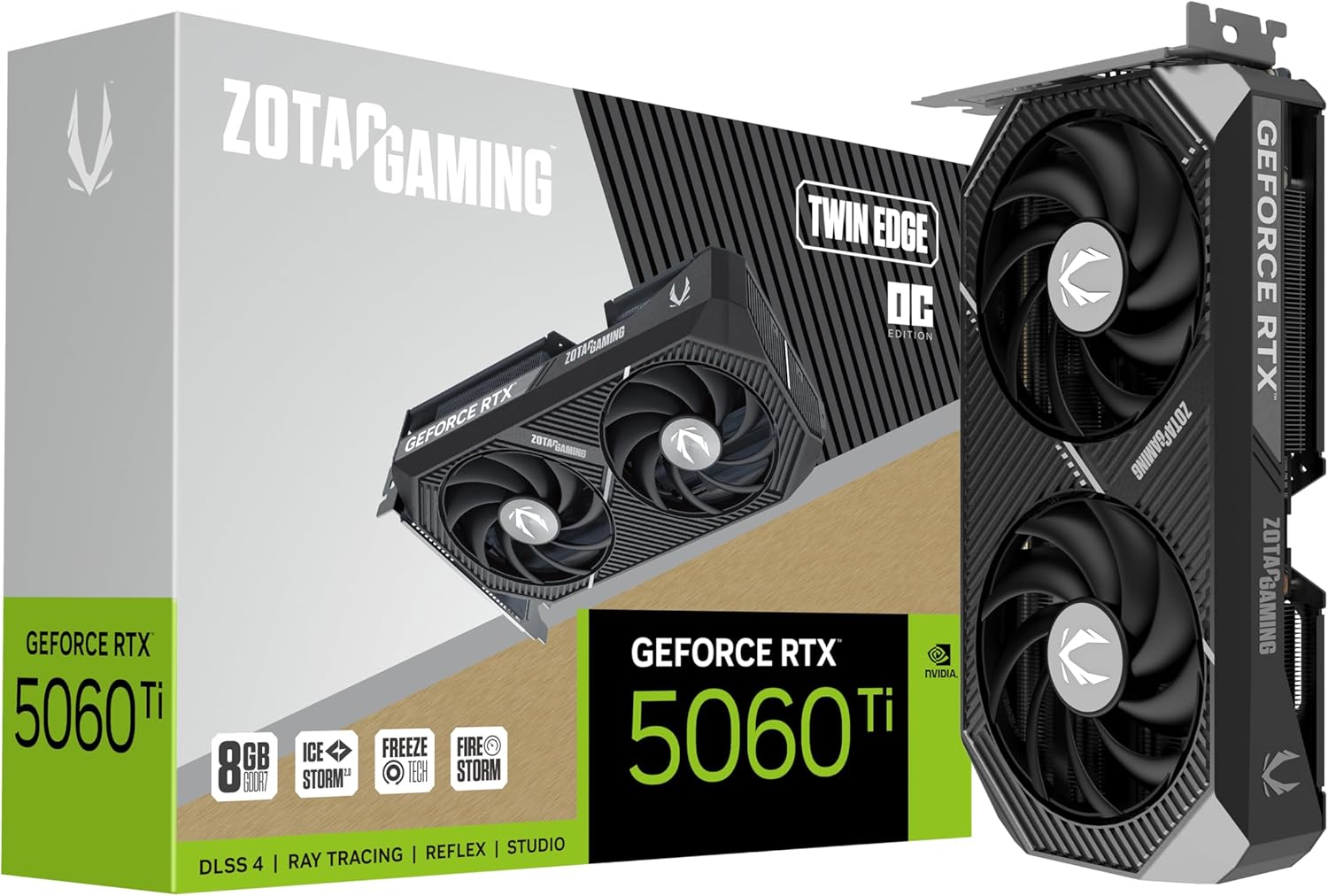
ZOTAC Gaming GeForce RTX 5060 Ti 8GB Twin Edge OC DLSS 4 8GB GDDR7 128-bit 28 Gbps PCIE 5.0 Gaming Graphics Card, IceStorm 2.0 Cooling, SFF-Ready, ZT-B50610H-10A
$300-$599This is a compact, 2-slot RTX 5060 Ti with 8GB GDDR7 and a 2602 MHz clock, built for SFF gaming rigs.