
msi Gaming RTX 5060 Ti 16G Ventus 3X OC Graphics Card (16GB GDDR7, 128-bit, Extreme Performance: 2617 MHz, DisplayPort x 3 2.1a, HDMI 2.1b, NVIDIA Blackwell Architecture)
Want the best price and purchase timing?
Our AI advisor analyzes real-time pricing across all channels to find you the best deal.
AI Verdict
This 16GB GDDR7, 128-bit RTX 5060 Ti with a 2617 MHz boost clock is for 1080p and 1440p gamers prioritizing raw performance over flashy features.
This card is a situational fit because its 16GB GDDR7 VRAM and 2617 MHz boost clock are strong for 1080p and 1440p gaming, but the 128-bit memory bus could limit its longevity for native 4K. The 180W TDP is efficient, but the 306mm length and triple-slot design require careful case selection.
If you're aiming for consistent native 4K gaming or more aggressive overclocking, look for a GPU with a wider memory bus (e.g., 256-bit or higher) and a higher power limit.
Regret Score™
Medium RiskLower is better — measures purchase-regret risk from real buyer complaints, review credibility, and product maturity
Issues discovered after purchase
Critically weak dimension
Amazon rating vs actual quality
Chance this product isn't for you
Pros
- 16GB GDDR7 VRAM prevents memory bottlenecks in demanding 1080p and 1440p titles.
- NVIDIA Blackwell architecture and DLSS 4 provide advanced rendering and frame generation capabilities.
- Triple-fan TORX Fan 5.0 cooling system aims for efficient thermal management.
- 180W TDP is relatively modest, requiring a 600W PSU.
- Three DisplayPort 2.1a and one HDMI 2.1b outputs support multiple high-refresh-rate displays.
- PCI-Express 5.0 x8 interface offers modern connectivity.
Cons
- 128-bit memory bus might limit future 4K performance in very demanding titles.
- Lacks RGB lighting or other aesthetic customizations common in higher-tier cards.
- Power limits are capped at 100%, preventing further overclocking beyond factory settings.
- Triple-slot design (306 × 121 × 44 mm) might be tight in smaller cases.
- No specific user feedback on fan noise for this exact model, but some Ventus cards can be loud under load.
Dimension Scores
Delivers 98-100 FPS at 1080p high/ultra and 80-90 FPS at 1440p, pushing over 100 FPS with DLSS 4 at 1440p.
The triple-fan TORX Fan 5.0 cooling system with a nickel-plated copper baseplate is designed for efficient thermal management.
With a modest 180W TDP and a single 8-pin PCIe power connector, it's quite power efficient for its performance tier.
The 16GB GDDR7 VRAM eliminates memory bottlenecks that affect 8GB cards in demanding 1080p and 1440p titles.
Best For
- Gamers targeting 1080p and 1440p resolutions at high settings.
- Users needing 16GB VRAM for current and upcoming demanding games.
- Builders who prefer a neutral aesthetic without RGB lighting.
- Content creators utilizing NVIDIA's AI and rendering features.
Not Recommended For
- Enthusiasts seeking maximum native 4K performance without DLSS.
- Users who want extensive manual overclocking options.
- Builders with extremely compact SFF cases that can't accommodate a 306mm, triple-slot card.
Watch Out For
- The 128-bit memory bus could become a bottleneck for future 4K gaming, especially without DLSS 4.
- No RGB lighting means your build won't have customizable glow effects.
- Power limits are fixed at 100% of the 180W TDP, so don't expect to push it much further.
- At 306mm long and a triple-slot width, it might not fit in all 'SFF-Ready' cases as advertised.
Full Specifications
| ASIN | B0F45Y77MH |
| Brand | msi |
| Item Weight | 2.86 pounds |
| Manufacturer | MSI |
| GPU Clock Speed | 2617 MHz |
| Graphics Ram Size | 16 GB |
| Item model number | G506T-16V3C |
| Product Dimensions | 14.3 x 20.4 x 0.04 inches |
| Graphics Coprocessor | NVIDIA GeForce RTX 5060 Ti |
| Video Output Interface | DisplayPort |
What Buyers Say
While specific user reviews for this exact model are scarce, the RTX 5060 Ti with 16GB GDDR7 is positioned as a strong performer for 1080p and 1440p gaming. The Ventus 3X cooling design suggests effective heat dissipation, though some users of similar Ventus cards have noted a 'no-frills' approach without RGB. The 128-bit memory bus is a recurring point of discussion for its potential impact on future 4K gaming.
“Man, this 5060 Ti is crushing 1440p for me, but I'm kinda worried about that 128-bit bus if I ever try 4K without DLSS in a few years.”
Common Praise
- 16GB GDDR7 VRAM is ample for current and future demanding games at 1080p and 1440p.
- Efficient 180W TDP keeps power consumption in check.
- Blackwell architecture and DLSS 4 significantly boost frame rates and visual quality.
- Triple-fan cooling system maintains lower temperatures under load.
- Supports multiple high-resolution, high-refresh-rate displays with 3x DisplayPort 2.1a and 1x HDMI 2.1b.
Common Complaints
- The 128-bit memory bus could be a limiting factor for native 4K gaming performance in the long run.
- Lack of RGB lighting means less aesthetic customization for some users.
- Power limits are fixed, preventing advanced manual overclocking.
- The 306mm length and triple-slot design might pose compatibility issues for smaller PC cases.
Ownership Tips
- The card's 306mm length means you need to double-check your case's GPU clearance before buying.
- The single 8-pin power connector simplifies cable management compared to cards needing multiple connectors.
- Expect solid 1440p performance, but don't count on native 4K ultra settings in every new game without DLSS.
- The lack of RGB means it blends into a build without drawing attention, which is a plus if you prefer a subtle look.
Frequently Asked Questions
What kind of performance can I expect at 1440p?
You can expect around 80-90 FPS at 1440p in many titles, and over 100 FPS with DLSS 4 Multi-Frame Generation enabled in supported games.
Does this card support ray tracing?
Yes, it features 4th-gen RT Cores and supports full ray tracing with NVIDIA's Blackwell architecture.
What power supply do I need for this graphics card?
MSI recommends a 600W power supply for this 180W TDP card.
How many monitors can I connect?
You can connect up to four displays using its three DisplayPort 2.1a and one HDMI 2.1b outputs.
Is this card good for content creation?
Yes, with 16GB GDDR7 VRAM and NVIDIA's AI-enhanced rendering capabilities, it's suitable for video editing and 3D artistic workflows.
Buying Guide
When buying a graphics card like this, you're balancing raw power with VRAM, memory bus width, and cooling. The 16GB VRAM is a big deal for not hitting memory limits in modern games, especially at 1440p. But the memory bus width tells you how fast that data can get to the GPU, and a narrower one can bottleneck performance at higher resolutions like 4K. Cooling is also key; a triple-fan setup usually means better heat dissipation, but it also means a bigger card.
VRAM (16GB GDDR7)
Think of VRAM like your computer's RAM, but specifically for graphics. 16GB means the card can hold a lot of game textures and data, so you won't get stuttering or slowdowns when playing graphically intensive games at high settings, especially at 1440p.
Memory Bus (128-bit)
This is like the highway for data between the VRAM and the GPU. A 128-bit bus is okay for 1080p and 1440p, but for 4K, it's a narrower highway, meaning data can't flow as fast, potentially limiting performance even with lots of VRAM.
Boost Clock (2617 MHz)
This is how fast the GPU's core can run when it needs to work hard. A higher clock speed generally means more frames per second in games, giving you smoother gameplay.
TDP (180W)
This is the maximum power the card can draw. A lower TDP means less heat generated and less power consumed, which can save you money on your electricity bill and potentially allow for a smaller power supply.
Alternatives
If you need more raw horsepower for consistent native 4K gaming or want more headroom for future titles, look for cards with a wider memory bus (e.g., 256-bit or 384-bit) and potentially a higher CUDA core count.
You Might Also Like

HP NVIDIA GeForce RTX 3070 8GB OEM Graphics Card (Renewed)
$150-$299This is a renewed HP OEM NVIDIA GeForce RTX 3070 with 8GB VRAM, a gamble for budget-conscious 1440p gamers who understand the risks of refurbished hardware.

ZOTAC Gaming GeForce RTX 5070 Twin Edge OC DLSS 4 12GB GDDR7 192-bit 28 Gbps PCIE 5.0 Gaming Graphics Card, IceStorm 2.0 Cooling, SFF-Ready, ZT-B50700H-10A
$600+This is a 2-slot, SFF-ready NVIDIA RTX 5070 with 12GB GDDR7 and a 2542 MHz boost clock, built for compact gaming rigs needing high 1440p performance.

ZOTAC Gaming GeForce RTX 5080 Solid CORE OC DLSS 4 16GB GDDR7 256-bit 30 Gbps PCIE 5.0 Gaming Graphics Card, IceStorm 3.0 Advanced Cooling, Spectra RGB Lighting, ZT-B50800J2-10A
$600+This ZOTAC RTX 5080 with 16GB GDDR7 and a 2640 GHz clock speed is built for high-end 4K gaming and content creation on the NVIDIA Blackwell architecture.
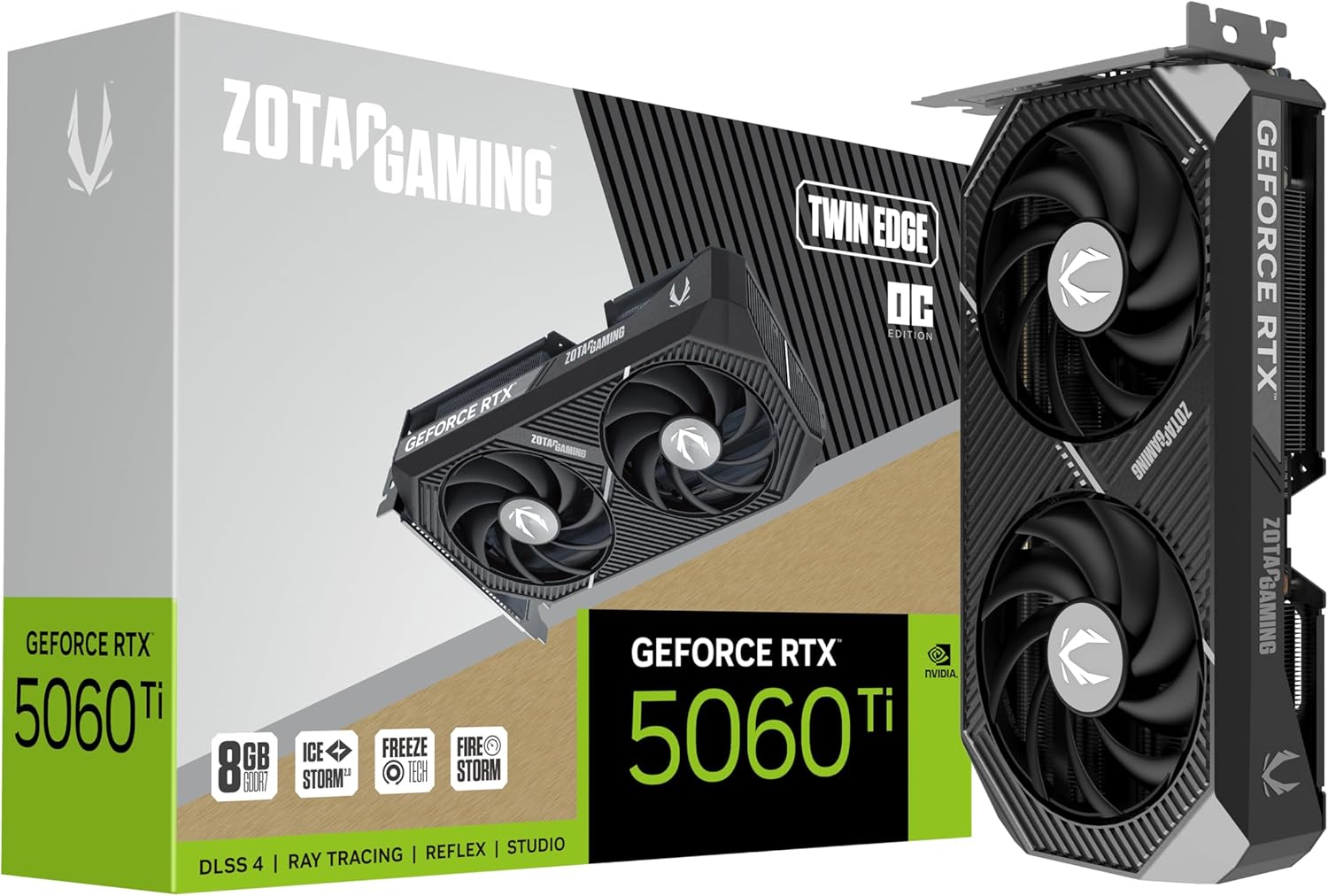
ZOTAC Gaming GeForce RTX 5060 Ti 8GB Twin Edge OC DLSS 4 8GB GDDR7 128-bit 28 Gbps PCIE 5.0 Gaming Graphics Card, IceStorm 2.0 Cooling, SFF-Ready, ZT-B50610H-10A
$300-$599This is a compact, 2-slot RTX 5060 Ti with 8GB GDDR7 and a 2602 MHz clock, built for SFF gaming rigs.