
Sapphire 11348-03-20G Pulse AMD Radeon™ RX 9070 XT Gaming Graphics Card with 16GB GDDR6, AMD RDNA 4
Want the best price and purchase timing?
Our AI advisor analyzes real-time pricing across all channels to find you the best deal.
AI Verdict
This Sapphire Pulse RX 9070 XT is a 16GB GDDR6 card with a 2970 MHz boost clock, built for serious 1440p and light 4K gaming.
This GPU is a strong contender for 1440p and light 4K gaming, offering 16GB GDDR6 VRAM and a 2970 MHz boost clock. However, reported driver instability and potential memory temperature issues for some users, alongside market price fluctuations above its $599 MSRP, make it a situational choice.
If driver stability is a primary concern, research user feedback on alternative AMD cards or consider options from other manufacturers.
Regret Score™
Medium RiskLower is better — measures purchase-regret risk from real buyer complaints, review credibility, and product maturity
Issues discovered after purchase
Critically weak dimension
Amazon rating vs actual quality
Chance this product isn't for you
Pros
- Delivers strong performance for 1440p and light 4K gaming.
- Features a triple-slot cooling solution with three AeroCurve axial fans that run quietly under full load.
- Offers greatly improved ray-tracing performance compared to previous AMD generations.
- Equipped with 16GB GDDR6 VRAM, providing ample memory for modern games.
- Includes a sturdy design with a metal backplate and removable fans for cleaning.
- Many users report no coil whine and good undervolting capabilities.
Cons
- Some users report constant driver timeouts and instability, even with undervolting.
- One user experienced memory temperatures exceeding 85°C.
- FSR4 reportedly does not work in Game Pass games for some users.
- Its AI performance lags behind competitors in LLM benchmarks.
- Often sold significantly above its $599 MSRP due to scalping, making it a less compelling value.
Dimension Scores
The RX 9070 XT provides strong performance for 1440p and light 4K gaming, often outperforming the Nvidia GeForce RTX 5070 in gaming benchmarks.
The Sapphire Pulse model features an outstanding triple-slot cooler with three fans that runs whisper-quiet at full load and maintains good temperatures.
With a 304-watt TDP and requiring two 8-pin power connectors, its power draw is within the expected range for a premium GPU, but not exceptionally low.
The 16GB GDDR6 VRAM is generous for current and future 1440p and 4K gaming, ensuring longevity.
Best For
- Gamers targeting high refresh rate 1440p gameplay.
- Users wanting to experience ray tracing with improved AMD performance.
- PC builds that prioritize quiet operation under load.
- Systems with sufficient space for a triple-slot, 12.6-inch long graphics card.
Not Recommended For
- Professionals heavily reliant on AI/LLM workloads.
- Users with compact PC cases due to its triple-slot, 12.6-inch length.
- Budget-conscious buyers if the price is significantly above MSRP.
Watch Out For
- One user reported memory temps of 85°C+, indicating potential thermal issues under specific loads.
- Driver stability can be an issue, with reports of constant driver timeouts and instability even after troubleshooting.
- FSR4 functionality is inconsistent, with one user noting it doesn't work in Game Pass titles.
- The card's street price frequently exceeds its $599 MSRP, sometimes reaching $900-$1049, diminishing its value proposition.
Full Specifications
| ASIN | B0DTHMPWFR |
| Brand | Sapphire |
| Color | black |
| Series | RX 9070 XT |
| Item Weight | 4.09 pounds |
| Manufacturer | Sapphire Technology |
| Memory Speed | 20 GHz |
| Chipset Brand | AMD |
| GPU Clock Speed | 2970 MHz |
| Card Description | AMD Radeon RX 9070 XT with 16GB GDDR6 |
| Graphics Ram Size | 16 GB |
| Item model number | 11348-03-20G |
| Product Dimensions | 12.6 x 4.73 x 0.04 inches |
| Graphics Coprocessor | AMD Radeon RX 9070 XT |
| Max Screen Resolution | 3840x2160 |
| Graphics Card Ram Size | 16 GB |
| Item Dimensions LxWxH | 12.6 x 4.73 x 0.04 inches |
| Video Output Interface | DisplayPort, HDMI |
What Buyers Say
The biggest surprise is how often this card is praised for its quiet operation and effective cooling, even under heavy loads. Many users report a positive experience with strong 1440p performance and improved ray tracing. However, a recurring concern is driver stability, with some users experiencing frequent timeouts and issues with features like FSR4 in certain games. The card's market price often significantly exceeds its MSRP, which impacts its perceived value.
“Look, the card itself is a beast for 1440p, super quiet, but these driver issues and memory temps are driving me nuts, especially when I paid way over MSRP.”
Common Praise
- The card runs extremely quiet, even when under full load.
- Offers fantastic frametimes in games, leading to smooth gameplay.
- Stays cool under load, with good temperatures reported by many users.
- The physical build is sturdy, and the power cable setup is clean.
- Capable of pushing 4K resolution with 120+ FPS in titles like Warzone and F1 2024.
- Many users report no coil whine and successful undervolting.
Common Complaints
- Frequent driver timeouts and general instability are reported by some users.
- FSR4 does not function in Game Pass games for some owners.
- Memory temperatures can reach 85°C+ for certain users.
- The card is often sold for much more than its $599 MSRP, sometimes over $1000.
- Undervolting can sometimes lead to even more instability.
Ownership Tips
- Long-term use can reveal persistent driver stability issues, requiring ongoing troubleshooting.
- Monitoring memory temperatures is crucial, as some users experience high readings under load.
- The card's physical size (triple-slot, 12.6 inches) needs to be accounted for in case compatibility with smaller cases.
- Performance gains from undervolting might be offset by increased instability for some users.
Frequently Asked Questions
What resolution is the Sapphire RX 9070 XT best suited for?
It's primarily designed for serious 1440p gaming and can handle light 4K gaming at fairly high settings, even with ray tracing enabled.
How much power does this graphics card require?
The card has a Board Power (TDP) of 304 watts and requires two 8-pin power connectors.
Is the cooling system effective and quiet?
Yes, it features a triple-slot cooling solution with three AeroCurve axial airflow fans, five 6mm-thick heat pipes, and a copper baseplate, designed to run whisper-quiet at full load with good temperatures.
Does this card support ray tracing?
Yes, with the new RDNA 4 architecture, AMD made a concerted effort to vastly improve ray tracing performance, reducing its performance cost.
What are the physical dimensions of the card?
It is a triple-slot card with a length of 12.6 inches.
Buying Guide
When you're looking at a GPU like this, you need to think about what games you play and at what resolution. This card is built for high-performance 1440p gaming, meaning you'll get smooth frame rates on a QHD monitor. If you're still on 1080p, it's overkill; if you're strictly 4K, it'll handle many games but might require some settings tweaks for the absolute highest frame rates. Also, make sure your PC case has enough room for its triple-slot design.
VRAM (16GB GDDR6)
This is like the GPU's short-term memory. 16GB is a lot, meaning the card can handle high-resolution textures and complex game worlds without stuttering, especially important for modern titles and future-proofing.
Clock Speed (2970 MHz)
Think of this as how fast the GPU's 'brain' is working. A higher clock speed generally means more calculations per second, translating to better performance and higher frame rates in games.
Output (2 x HDMI, 2 x DisplayPort)
These are the ports you'll use to connect your monitor(s). Having multiple HDMI and DisplayPort options gives you flexibility for connecting different displays, including high-refresh-rate gaming monitors.
Alternatives
If you need more consistent driver stability or superior AI performance, look for cards with a focus on those aspects, potentially with different architectures. If you're on a tighter budget, consider cards with slightly less VRAM or lower clock speeds that target 1080p or entry-level 1440p gaming.
You Might Also Like

HP NVIDIA GeForce RTX 3070 8GB OEM Graphics Card (Renewed)
$150-$299This is a renewed HP OEM NVIDIA GeForce RTX 3070 with 8GB VRAM, a gamble for budget-conscious 1440p gamers who understand the risks of refurbished hardware.

ZOTAC Gaming GeForce RTX 5070 Twin Edge OC DLSS 4 12GB GDDR7 192-bit 28 Gbps PCIE 5.0 Gaming Graphics Card, IceStorm 2.0 Cooling, SFF-Ready, ZT-B50700H-10A
$600+This is a 2-slot, SFF-ready NVIDIA RTX 5070 with 12GB GDDR7 and a 2542 MHz boost clock, built for compact gaming rigs needing high 1440p performance.

ZOTAC Gaming GeForce RTX 5080 Solid CORE OC DLSS 4 16GB GDDR7 256-bit 30 Gbps PCIE 5.0 Gaming Graphics Card, IceStorm 3.0 Advanced Cooling, Spectra RGB Lighting, ZT-B50800J2-10A
$600+This ZOTAC RTX 5080 with 16GB GDDR7 and a 2640 GHz clock speed is built for high-end 4K gaming and content creation on the NVIDIA Blackwell architecture.
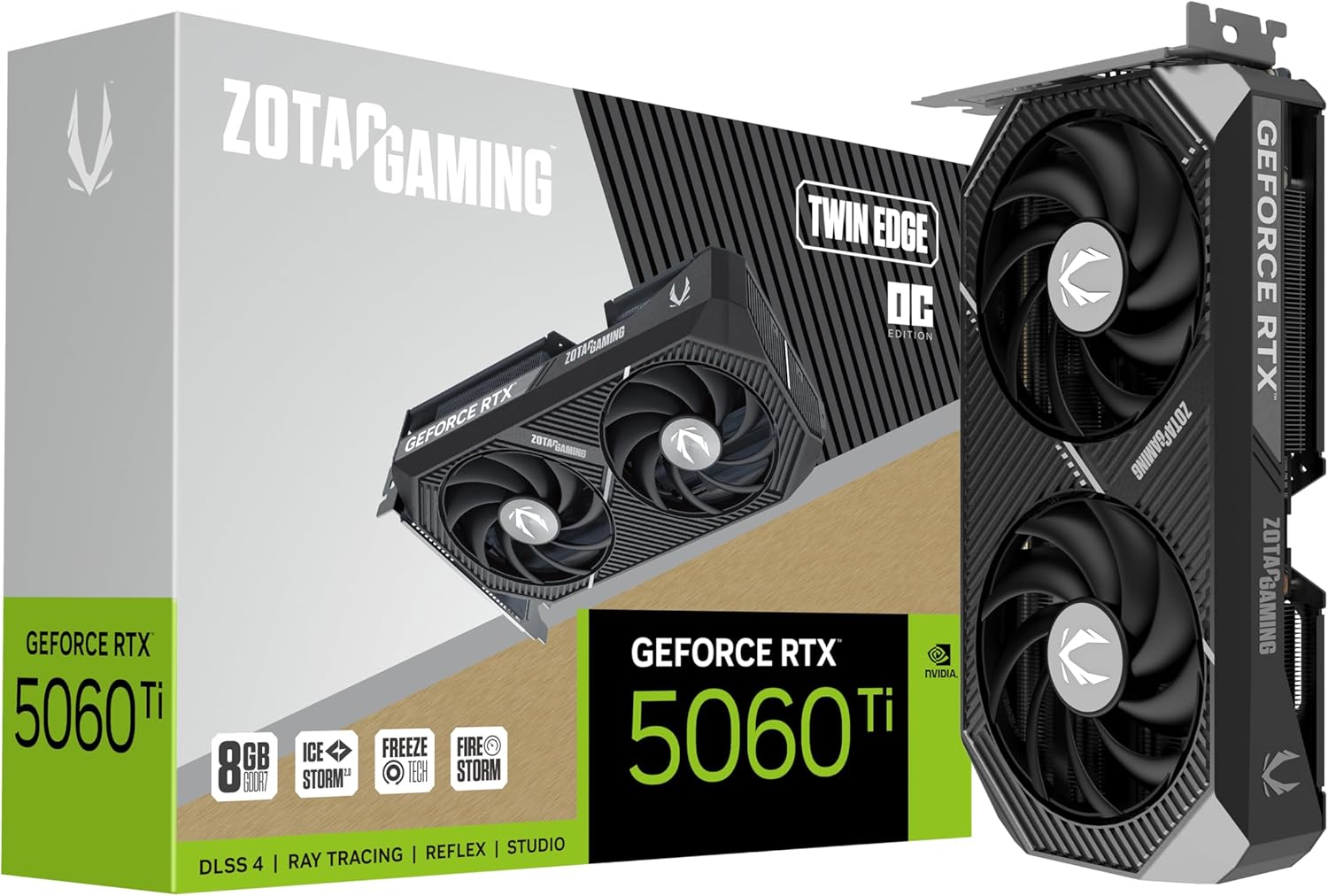
ZOTAC Gaming GeForce RTX 5060 Ti 8GB Twin Edge OC DLSS 4 8GB GDDR7 128-bit 28 Gbps PCIE 5.0 Gaming Graphics Card, IceStorm 2.0 Cooling, SFF-Ready, ZT-B50610H-10A
$300-$599This is a compact, 2-slot RTX 5060 Ti with 8GB GDDR7 and a 2602 MHz clock, built for SFF gaming rigs.