
ASRock Intel Arc B580 Challenger 12GB OC Graphics Card, 2740 MHz GPU Clock, 12GB GDDR6, DisplayPort 2.1, HDMI 2.1a, Dual Fan Cooling, 0dB Silent Operation
Want the best price and purchase timing?
Our AI advisor analyzes real-time pricing across all channels to find you the best deal.
AI Verdict
This ASRock Intel Arc B580 Challenger 12GB OC is a 2740 MHz GPU with 12GB GDDR6, targeting 1440p gaming and content creation, but requires a modern CPU with ReBAR.
This GPU is a strong contender for 1440p gaming and content creation due to its 12GB GDDR6 and 2740 MHz GPU clock. However, its performance is highly dependent on a modern system with Resizable BAR enabled, and users should be prepared for potential driver and fan curve adjustments.
If you need more consistent performance across a wider range of system configurations or prioritize streaming, look for GPUs with more mature driver ecosystems and dedicated encoding hardware.
Regret Score™
Medium RiskLower is better — measures purchase-regret risk from real buyer complaints, review credibility, and product maturity
Issues discovered after purchase
Critically weak dimension
Amazon rating vs actual quality
Chance this product isn't for you
Pros
- Delivers smooth 1440p gaming performance in many titles, with one user reporting 150 fps in RDR2 at 1440p high settings.
- Features 12GB GDDR6 memory on a 192-bit bus, providing ample VRAM for high-resolution gaming and future titles.
- Includes Intel Xe Super Sampling 2 (XeSS 2) and Xe Matrix Extensions (XMX) for enhanced gaming performance and image quality.
- Supports hardware-accelerated Ray Tracing, with performance noted as better than direct competitors in its price range.
- Equipped with DisplayPort 2.1 and HDMI 2.1a outputs, supporting high-resolution, high-refresh-rate displays.
- The dual-fan cooling system, combined with a metal backplate, keeps the card cool, with one user reporting temperatures below 60°C under heavy load.
Cons
- Can suffer significant performance drops and stuttering on older systems, especially those without Resizable BAR (ReBAR) support, making it a poor upgrade for such setups.
- Users report driver instability, crashes in specific games (like Warframe, Genshin Impact, Doom Eternal), and issues with driver updates, sometimes requiring DDU or Windows reinstallation.
- The 0dB Silent Operation feature can lead to fans constantly cycling on and off at idle temperatures around 50-51°C, which users find annoying.
- Idle power consumption can be higher than expected, with user reports ranging from 15W to 40W, particularly with higher resolution/refresh rate monitors.
- Streaming performance is reported as poor, with significant FPS drops (to 30s) when streaming and QuickSync quality issues.
Dimension Scores
The GPU delivers smooth 1440p gaming performance in many titles, with one user reporting 150 fps in RDR2 at 1440p high settings.
The dual-fan design keeps the card below 60°C under heavy load, but the 0dB idle feature can cause fans to cycle on/off at 50-51°C, creating noticeable noise.
While a 650W PSU is recommended, idle power draw can be higher than expected (15-40W) depending on monitor setup, compared to a theoretical 7W.
With 12GB GDDR6 memory on a 192-bit bus, this card offers ample VRAM, which is beneficial for high-resolution gaming and future titles, especially as modern games use more than 8GB even at 1080p.
Best For
- 1440p gaming in modern AAA titles with XeSS enabled.
- Content creation workloads that benefit from 12GB GDDR6 memory.
- PC builds with modern Intel CPUs (10th Gen or newer) and motherboards supporting Resizable BAR (ReBAR).
- Users willing to fine-tune fan curves for quieter idle operation.
Not Recommended For
- Systems with older CPUs or motherboards lacking Resizable BAR (ReBAR) support.
- Users who frequently stream games or require robust encoding performance.
- Those expecting a 'plug-and-play' experience without potential driver troubleshooting.
Watch Out For
- Driver updates can introduce instability, causing crashes in games like Warframe, Genshin Impact, and Doom Eternal, sometimes requiring reverting to older drivers or a fresh Windows install.
- Performance can be severely impacted on older systems without Resizable BAR (ReBAR) enabled, with one test showing performance no better than a GTX 1660 Super in some games.
- Idle power draw can be as high as 35-40W with certain monitor setups (e.g., 4K 120Hz), significantly higher than the theoretical 7W, even with power-saving settings.
- The 0dB fan mode can cause fans to constantly spin up and down at idle temperatures around 50-51°C, creating an annoying noise profile that requires manual fan curve adjustments.
- Streaming performance is reported to be 'awful,' with frame rates dropping to the 30s during streaming and QuickSync quality being 'way off'.
Full Specifications
| ASIN | B0DNV4NWF7 |
| Brand | ASRock |
| Item Weight | 2.2 pounds |
| Manufacturer | ASRock |
| Graphics Ram Size | 12 GB |
| Item model number | B580 CL 12GO |
| Product Dimensions | 7.87 x 5.91 x 3.94 inches |
| Graphics Coprocessor | Intel Arc B580 |
| Video Output Interface | DisplayPort, HDMI |
| Graphics Processor Manufacturer | Intel |
What Buyers Say
Many users report that the ASRock Intel Arc B580 Challenger is a strong performer for 1440p gaming, often exceeding expectations for its price point, especially when XeSS is utilized. However, the experience isn't always seamless; driver stability can be a recurring concern, leading to crashes in certain games and requiring troubleshooting. The '0dB Silent Operation' feature, intended to keep fans off during light use, sometimes results in an annoying fan on/off cycling at idle temperatures around 50-51°C, which many users address by setting a custom fan curve. Furthermore, the card's performance is heavily reliant on a modern system with Resizable BAR (ReBAR) enabled, and it can struggle significantly on older platforms.
“Man, this B580 is a beast for 1440p when it works, but those driver updates are a headache, and the fans keep kicking on and off at idle, which is super annoying. Had to mess with fan curves just to get some peace. Still, 12GB VRAM is sweet for the price.”
Common Praise
- Achieves around 150 fps in RDR2 at 1440p high settings.
- 12GB GDDR6 VRAM provides longevity for modern games, which are starting to use more than 8GB even at 1080p.
- XeSS and XeFG (Frame Generation) are effective at boosting performance without visual compromise.
- The card stays cool, with temperatures below 60°C even under heavy load.
- The metal backplate contributes to a premium look and aids in heat dissipation.
Common Complaints
- Driver updates can cause crashes in games like Warframe, Genshin Impact, and Doom Eternal, sometimes necessitating DDU or Windows reinstallation.
- Fans constantly cycle on and off at idle temperatures around 50-51°C, despite the 0dB silent operation feature.
- Performance is significantly reduced on older systems or those without Resizable BAR (ReBAR) enabled, making it a poor upgrade for such setups.
- Idle power consumption can be higher than expected, with reports of 15-40W, especially with high-resolution/refresh-rate monitors.
- Streaming performance is described as 'awful,' with major FPS drops and poor QuickSync quality.
Ownership Tips
- Requires a modern CPU (10th Gen Intel or newer) and motherboard with Resizable BAR (ReBAR) enabled for optimal performance; older systems will likely see significant performance degradation.
- Be prepared to potentially use Display Driver Uninstaller (DDU) or even reinstall Windows if driver updates cause instability or game crashes.
- Consider setting a custom fan curve to prevent the fans from constantly cycling on and off during light usage, as the 0dB mode can be inconsistent.
- Monitor idle power draw, especially with multi-monitor or high-refresh-rate setups, as it can be higher than expected.
- Not recommended for users who frequently stream games due to reported poor streaming performance and QuickSync quality issues.
Frequently Asked Questions
Can this card handle 4K gaming?
Yes, the ASRock Intel Arc B580 is capable of handling 4K gaming, thanks to its 12GB GDDR6 memory and 2740 MHz GPU clock speed. It supports DisplayPort 2.1 and HDMI 2.1a for high frame rates and resolutions on 4K displays.
Is Resizable BAR (ReBAR) necessary for this GPU?
Yes, Resizable BAR (ReBAR) is crucial for optimal performance with the Intel Arc B580. Without it, performance can be significantly reduced, especially on older systems.
How is the fan noise at idle?
The 0dB Silent Operation feature aims for silent performance during light usage, but some users report fans constantly turning on and off around 50-51°C, which can be annoying. Custom fan curves can mitigate this.
What kind of power supply do I need?
ASRock recommends a minimum 650W power supply for this graphics card, which requires one 8-pin power connector.
Does this GPU have good driver support now?
Intel has made significant strides in driver development, but some users still report occasional instability, crashes in specific games, and issues with driver updates. It often works well, but troubleshooting might be necessary.
Buying Guide
When buying a GPU, you're looking for a balance of raw processing power, memory, and features that match how you'll use it. Don't just chase the highest clock speed; consider how much VRAM you need for your resolution, the efficiency of its cooling, and importantly, the stability of its software (drivers). A powerful card with buggy drivers is a frustrating experience. Also, check if your current system components, like your CPU and motherboard, can actually keep up with a newer GPU to avoid bottlenecks.
GPU Clock (2740 MHz)
This is how fast the graphics chip processes information. A higher clock speed generally means more frames per second in games, but it's not the only factor. Think of it like the engine's RPM in a car; higher RPM means more power, but the car's overall speed depends on other parts too.
VRAM (12GB GDDR6)
This is the dedicated memory the GPU uses to store game textures and data. More VRAM is crucial for higher resolutions (like 1440p or 4K) and graphically demanding games, preventing stutters and allowing for higher texture settings. It's like the RAM in your computer, but specifically for graphics.
DisplayPort 2.1, HDMI 2.1a
These are the ports you connect your monitor to. Newer versions like 2.1 and 2.1a support higher resolutions and refresh rates (e.g., 4K at 120Hz or higher), ensuring your monitor can display everything the GPU is capable of. It's like having a highway with more lanes and a higher speed limit for your video signal.
Resizable BAR (ReBAR)
This is a technology that allows your CPU to access the GPU's entire VRAM at once, rather than in smaller chunks. For Intel Arc GPUs, enabling ReBAR can significantly boost performance, sometimes by a large margin, making it a critical feature for getting the most out out of the card. It's like giving your CPU a direct, wide pipeline to the GPU's memory instead of a narrow hose.
Alternatives
If this card doesn't fit, look for GPUs with more established driver ecosystems and better streaming encoder performance, or those that are less sensitive to Resizable BAR support if you have an older system.
You Might Also Like

HP NVIDIA GeForce RTX 3070 8GB OEM Graphics Card (Renewed)
$150-$299This is a renewed HP OEM NVIDIA GeForce RTX 3070 with 8GB VRAM, a gamble for budget-conscious 1440p gamers who understand the risks of refurbished hardware.

ZOTAC Gaming GeForce RTX 5070 Twin Edge OC DLSS 4 12GB GDDR7 192-bit 28 Gbps PCIE 5.0 Gaming Graphics Card, IceStorm 2.0 Cooling, SFF-Ready, ZT-B50700H-10A
$600+This is a 2-slot, SFF-ready NVIDIA RTX 5070 with 12GB GDDR7 and a 2542 MHz boost clock, built for compact gaming rigs needing high 1440p performance.

ZOTAC Gaming GeForce RTX 5080 Solid CORE OC DLSS 4 16GB GDDR7 256-bit 30 Gbps PCIE 5.0 Gaming Graphics Card, IceStorm 3.0 Advanced Cooling, Spectra RGB Lighting, ZT-B50800J2-10A
$600+This ZOTAC RTX 5080 with 16GB GDDR7 and a 2640 GHz clock speed is built for high-end 4K gaming and content creation on the NVIDIA Blackwell architecture.
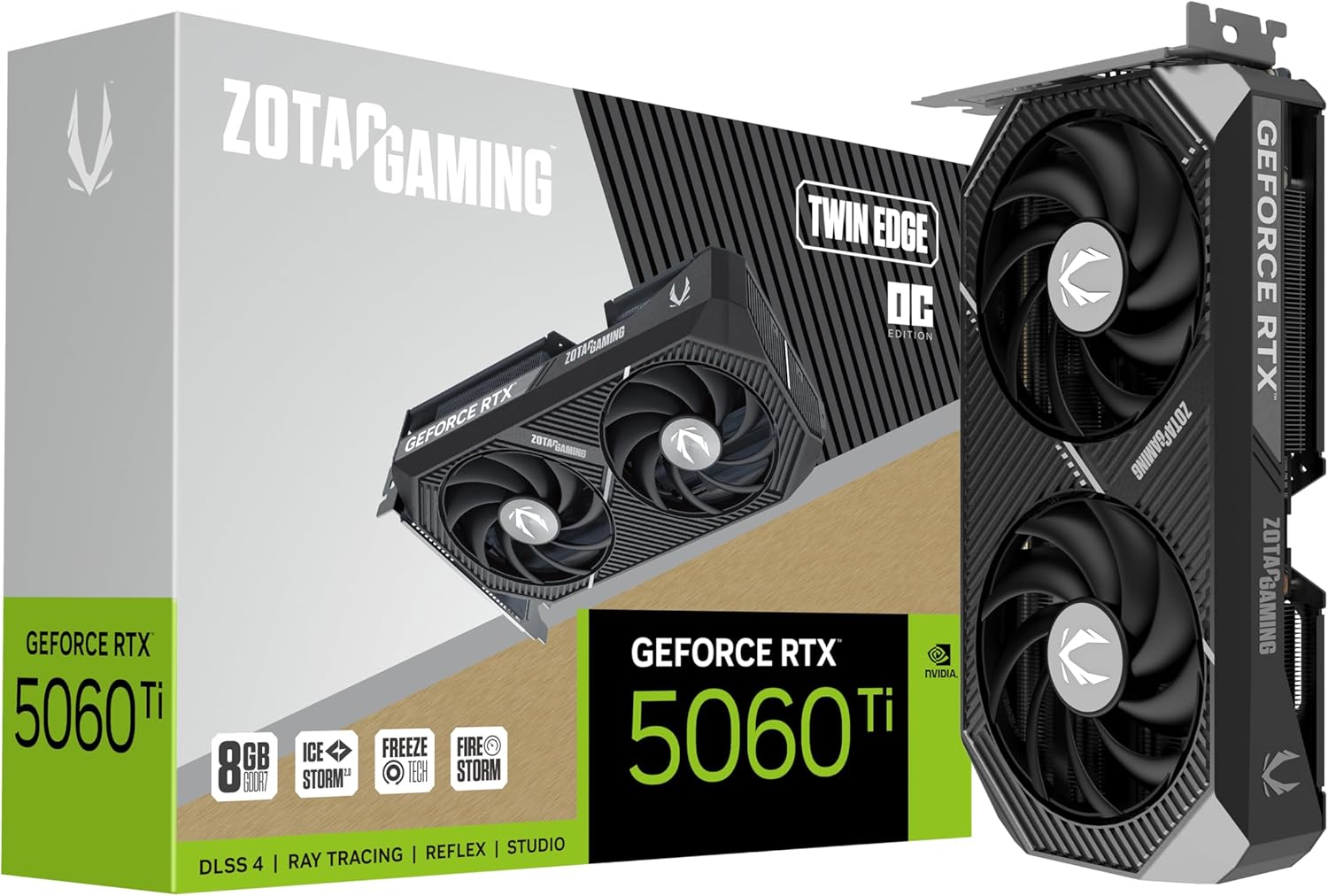
ZOTAC Gaming GeForce RTX 5060 Ti 8GB Twin Edge OC DLSS 4 8GB GDDR7 128-bit 28 Gbps PCIE 5.0 Gaming Graphics Card, IceStorm 2.0 Cooling, SFF-Ready, ZT-B50610H-10A
$300-$599This is a compact, 2-slot RTX 5060 Ti with 8GB GDDR7 and a 2602 MHz clock, built for SFF gaming rigs.