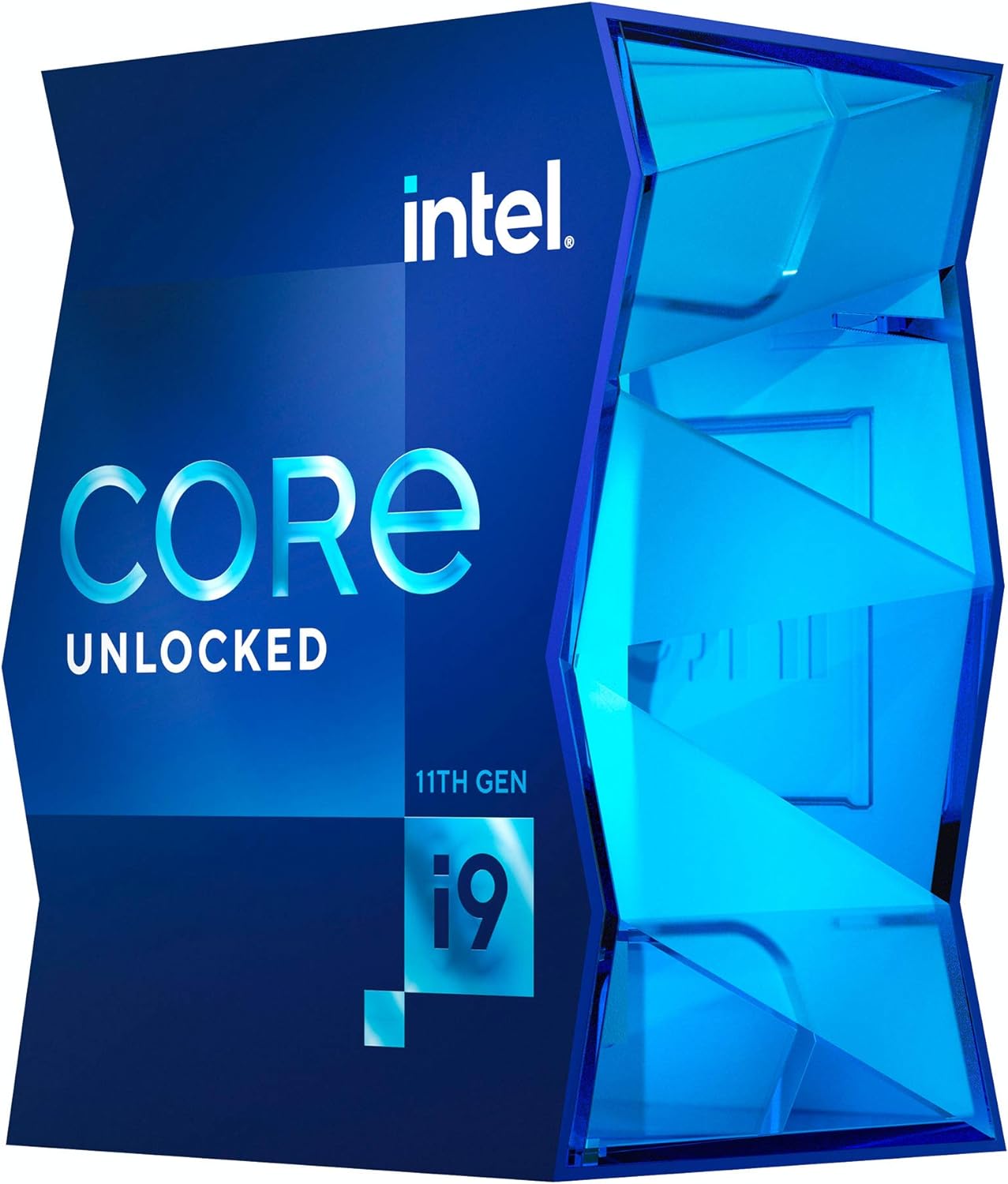
Intel Core i9-11900K Desktop Processor 8 Cores up to 5.3 GHz Unlocked LGA1200 (Intel 500 Series & Select 400 Series Chipset) 125W
Want the best price and purchase timing?
Our AI advisor analyzes real-time pricing across all channels to find you the best deal.
AI Verdict
An 8-core, 5.3 GHz CPU for gamers prioritizing single-thread speed, but it demands significant cooling and power.
This 8-core, 16-thread processor delivers high single-core boost speeds up to 5.3 GHz, which benefits specific gaming scenarios. However, its 125W TDP (often exceeding 300W in practice) and reduced core count compared to its predecessor limit its appeal for multi-threaded workloads and make cooling a significant challenge. It's a niche choice for those prioritizing raw single-thread speed above all else.
If multi-core performance for tasks like rendering or heavy content creation is a priority, look for CPUs with higher core/thread counts and better power efficiency.
Regret Score™
Medium RiskLower is better — measures purchase-regret risk from real buyer complaints, review credibility, and product maturity
Issues discovered after purchase
Critically weak dimension
Amazon rating vs actual quality
Chance this product isn't for you
Pros
- Achieves high single-threaded speeds up to 5.3 GHz.
- Supports PCIe Gen 4.0, offering faster storage and GPU bandwidth.
- Includes Intel Turbo Boost Max Technology 3.0 for enhanced performance.
- Features integrated UHD Graphics 750 (based on Iris Xe architecture).
- Compatible with Intel 500 series and select 400 series chipset motherboards.
Cons
- Runs hot and consumes substantial power, potentially exceeding 300W under heavy loads.
- Offers fewer cores (8 cores, 16 threads) than the previous generation i9-10900K (10 cores, 20 threads).
- Multi-threaded performance is often slower than the previous i9 and competing AMD processors.
- Does not include a thermal solution, requiring a separate purchase of a high-end cooler.
- Was considered pricey for its performance compared to alternatives at its launch.
Dimension Scores
Achieves high boost clocks up to 5.3 GHz, resulting in strong single-core benchmark results and competitive gaming frame rates.
With 8 cores and 16 threads, it often performs worse than its 10-core predecessor and significantly trails AMD's 12-core offerings in multi-threaded tasks.
It can pull over 300W under heavy loads, consuming 118% more power than some AMD competitors for less multi-threaded performance.
While offering PCIe Gen 4.0, its LGA 1200 socket was superseded by LGA 1700 in the next generation, limiting future upgrade paths on the same motherboard.
Best For
- Gaming at 1080p or 1440p where single-core clock speed is a primary factor.
- Users upgrading from much older Intel platforms who specifically need PCIe Gen 4.0 support.
- Enthusiasts focused on achieving top single-core benchmark scores.
Not Recommended For
- Heavy multi-threaded productivity tasks like video rendering or complex simulations.
- Users sensitive to high power consumption or needing a low-heat system.
- Budget-conscious builders seeking the best performance per dollar.
Watch Out For
- Requires a robust cooling solution, such as a 360mm AIO liquid cooler, to manage temperatures, especially when Intel ABT mode is enabled, which can push power draw over 300W.
- Adaptive Boost Technology (ABT) has been reported by some users to cause system instability and blue screens.
- Multi-core performance can be 14% slower than the AMD 5900X while consuming 118% more power.
- Can be 8% slower than the 10900K in applications like Blender, despite being a newer generation.
Full Specifications
| ASIN | B08X6PPTTH |
| Brand | Intel |
| Series | Core i9 |
| CPU Model | Intel Core i9 |
| CPU Speed | 3.5 GHz |
| Processor | 3.5 GHz intel_core_i9 |
| CPU Socket | LGA 1200 |
| Item Weight | 2.39 ounces |
| Manufacturer | Intel |
| Processor Brand | Intel |
| CPU Manufacturer | Intel |
| Item model number | BX8070811900K |
| Product Dimensions | 5.98 x 5 x 2.68 inches |
| Number of Processors | 8 |
| Item Dimensions LxWxH | 5.98 x 5 x 2.68 inches |
What Buyers Say
Many users found the 11900K a confusing release, often performing worse in multi-threaded tasks than the previous 10-core i9-10900K, despite a higher price point. It runs exceptionally hot and demands substantial cooling, with some users reporting over 300W power draw in specific modes. While it can achieve high single-core speeds, this often comes at a significant cost in power consumption and heat, making it a questionable upgrade for many.
“Man, this thing runs hot as hell, had to get a 360mm AIO just to keep it from throttling when I game, and it's still not faster than my buddy's AMD in Blender, kinda regret it.”
Common Praise
- Fast single-threaded speeds.
- Achieves high frame rates in select games.
- Provides a noticeable improvement in gaming experience for some users.
- Includes PCIe Gen 4.0 support.
Common Complaints
- Runs hot and consumes a lot of power.
- Like-priced AMD processors outperform it in multi-threaded tasks.
- Slower than the 10900K in applications like 7zip compression and Blender.
- Adaptive Boost Technology (ABT) can cause system instability and blue screens.
- Requires a high-end liquid cooling solution for optimal operation.
- Was considered overpriced for an 8-core desktop solution at its release.
Ownership Tips
- Requires a high-end liquid cooler (like a 360mm AIO) to manage temperatures under load, especially with overclocking.
- Power consumption can spike dramatically, exceeding 300W, necessitating a robust power supply.
- Overclocking potential can be limited by thermal headroom and silicon lottery, despite being an unlocked K-series chip.
- The performance difference in gaming over previous generations or competing AMD chips might be minimal at higher resolutions (1440p and above).
Frequently Asked Questions
Does the Intel Core i9-11900K come with a cooler?
No, a thermal solution is not included in the box, so you will need to purchase one separately.
What motherboards are compatible with this processor?
It is compatible with Intel 500 series and select Intel 400 series chipset based motherboards. Always check with your motherboard vendor for specific compatibility details.
Is the i9-11900K a good processor for gaming?
It offers strong single-threaded performance and high boost clocks, which can lead to high frame rates in games, sometimes showing slight improvements over previous generations.
How does the i9-11900K compare to the previous i9-10900K?
The 11900K has 8 cores and 16 threads, while the 10900K has 10 cores and 20 threads. This often results in the 11900K being slower in multi-threaded applications, despite architectural improvements.
Does this CPU support PCIe 4.0?
Yes, the Intel Core i9-11900K features PCIe Gen 4.0 support, allowing for faster data transfer with compatible components like NVMe SSDs and graphics cards.
Buying Guide
When you're looking at a CPU like this, don't just focus on the clock speed. The number of cores and how efficiently they work together for your specific tasks matters more. For gaming, single-core speed is often king, but for anything involving heavy multitasking or content creation, more cores and better multi-threaded performance will make a bigger difference. Also, remember that a powerful CPU needs a powerful cooler and a motherboard that can handle its power delivery.
Cores/Threads
Think of cores as individual workers and threads as tasks each worker can handle simultaneously. More cores and threads mean the CPU can juggle more complex tasks at once, like rendering a video while browsing, without slowing down.
Clock Speed (GHz)
This is how many operations a core can perform per second. Higher numbers usually mean faster individual task execution, which is crucial for games that often rely on a few very fast cores rather than many slower ones.
TDP (Thermal Design Power)
This tells you how much heat the CPU is expected to generate under typical workloads. A higher TDP means you'll need a more capable (and often more expensive) cooling solution to prevent the CPU from overheating and slowing down.
Socket (LGA 1200)
This is the physical interface between the CPU and your motherboard. You need a motherboard with the exact same socket type for the CPU to fit. Different generations often use different sockets, meaning you can't always upgrade your CPU without also changing your motherboard.
Alternatives
If you need stronger multi-threaded performance for professional applications or better power efficiency, search for CPUs with higher core counts (10 or more) and lower TDP ratings, or those from newer generations with architectural improvements.
You Might Also Like

INTEL INTEL XEON Gold 6246R Processor (35.75M Cache, 3.40 GHZ)
$600+This is a 1-core, 3.40 GHz Xeon Gold processor designed for highly specialized server tasks, not general computing.

INTEL INTEL XEON Gold 6250 Processor (35.75M Cache, 3.90 GHZ)
$600+This is a 1-core, 3.9 GHz Intel Xeon Gold processor with 35.75MB cache, making it an unusual fit for demanding data center workloads.

AMD Ryzen 5 3600 6-Core, 12-Thread Unlocked Desktop Processor with Wraith Stealth Cooler
This 6-core, 12-thread AM4 processor with a 4.2 GHz max boost is for budget PC builders needing 100+ FPS in 1080p games and basic multitasking.

AMD Ryzen 7 3700X 8-Core, 16-Thread Unlocked Desktop Processor with Wraith Prism LED Cooler
An 8-core, 16-thread AM4 processor with a 4.4 GHz max boost, bundled with an RGB cooler, suitable for multi-threaded tasks.