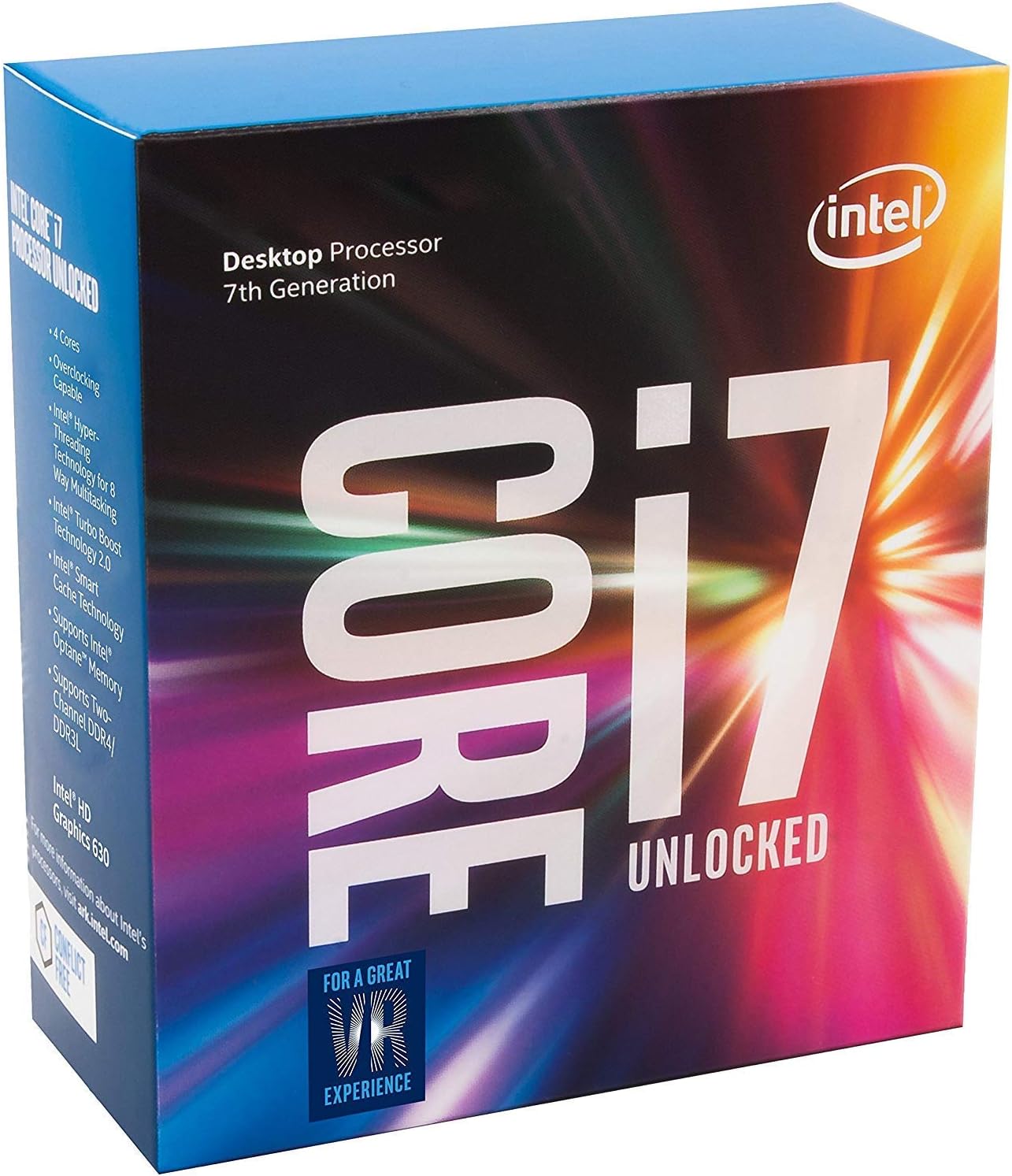
Intel BX80677I77700K 7th Gen Pentium Desktop Processor
Want the best price and purchase timing?
Our AI advisor analyzes real-time pricing across all channels to find you the best deal.
AI Verdict
This 4-core/8-thread Intel Core i7-7700K, with a 4.2 GHz base and 4.5 GHz turbo, is for users on an existing LGA 1151 (100/200 series chipset) platform needing a CPU for older games or light productiv
This Core i7-7700K is a situational fit because its 4 cores and 8 threads, combined with a 4.5 GHz turbo frequency, can still handle many tasks, but its age and platform limitations mean it's primarily suitable for specific upgrade scenarios on older LGA 1151 motherboards. It struggles with the multi-core demands of current software.
If you need more multi-core performance or a modern platform, look for CPUs with 6 or more cores and a newer socket type like LGA 1200 or AM4/AM5.
Regret Score™
High RiskLower is better — measures purchase-regret risk from real buyer complaints, review credibility, and product maturity
Issues discovered after purchase
Critically weak dimension
Amazon rating vs actual quality
Chance this product isn't for you
Pros
- Achieves 4.5 GHz Max Turbo Frequency, providing fast single-core performance for its generation.
- Features 4 cores and 8 threads, enabling 8-way multitasking for applications that can utilize it.
- Includes Intel UHD Graphics 630, offering integrated graphics capabilities.
- Unlocked multiplier allows for overclocking, with many users pushing it to 4.8GHz or 5.0GHz.
- Supports hardware decoding for 4K streaming and HDR content.
- Compatible with DDR4 SDRAM, which was standard for its release era.
Cons
- Limited to 4 cores, which struggles with modern CPU-intensive games and multi-threaded applications.
- Requires an older LGA 1151 motherboard with Intel 100 or 200 Series Chipsets, limiting upgrade paths.
- Platform longevity was cut short by the rapid release of 6-core CPUs, making it a less future-proof investment.
- Can bottleneck modern GPUs, especially in games that demand more CPU resources.
- Performance per watt is lower compared to newer CPU architectures.
Dimension Scores
The 4.5 GHz Max Turbo Frequency provided competitive single-thread performance at its release, but is now surpassed by newer architectures.
With only 4 cores and 8 threads, its multi-threaded performance is significantly behind modern CPUs, especially in core-heavy applications.
While considered efficient for its time, newer 14nm+ and smaller process nodes offer better performance per watt.
The LGA 1151 (100/200 series) platform was quickly superseded by 8th Gen CPUs, offering a very short upgrade path and limited future compatibility.
Best For
- Upgrading an existing 100/200 series Intel LGA 1151 system for a performance boost.
- Gaming at 1080p with less CPU-intensive titles from its era.
- Light productivity tasks and general desktop use on an older platform.
- Users who enjoy overclocking and want to maximize performance on an older system.
Not Recommended For
- Building a new PC, as newer platforms offer significantly better performance and longevity.
- Running demanding, CPU-intensive modern games at high refresh rates or resolutions.
- Heavy multi-threaded workloads like video rendering, 3D modeling, or complex simulations.
Watch Out For
- The 4-core architecture is a significant bottleneck for many modern games and applications that leverage more than 4 cores.
- Requires an LGA 1151 motherboard with a 100 or 200 series chipset; it won't work with newer 300 series or later LGA 1151 boards.
- Its release was quickly followed by Intel's 8th Gen CPUs with more cores, making the 7700K's platform obsolete faster than expected.
- While it can run Windows 11 with workarounds, it is not officially supported by Microsoft, potentially leading to compatibility issues down the line.
Full Specifications
| ASIN | B01MXSI216 |
| Brand | Intel |
| Language | English, English, English, English, English |
| Batteries | 1 Lithium Ion batteries required. |
| CPU Model | Core i7 |
| CPU Speed | 4.5 GHz |
| Processor | 4.5 GHz core_i7 |
| CPU Socket | LGA 1151 |
| Item Weight | 1.41 ounces |
| Manufacturer | Intel |
| Memory Speed | 4200 MHz |
| Wireless Type | 802.11b/n/ac |
| Processor Brand | Intel |
| CPU Manufacturer | Intel |
| Item model number | BX80677I77700K |
| Product Dimensions | 9.52 x 5 x 4.88 inches |
| Computer Memory Type | DDR4 SDRAM |
| Number of Processors | 4 |
| Item Dimensions LxWxH | 9.52 x 5 x 4.88 inches |
| Is Discontinued By Manufacturer | No |
What Buyers Say
Many users who bought the i7-7700K at launch found its platform longevity surprisingly short, as Intel released 6-core CPUs shortly after, making the 4-core architecture feel dated quickly. Despite this, it was initially praised for its gaming performance and overclocking potential, with many reaching 4.8-5.0GHz. However, current feedback indicates it struggles with modern CPU-intensive games and multi-threaded applications, often bottlenecking newer GPUs. It remains a viable option for those on existing compatible motherboards for less demanding tasks or older games.
“Man, I bought this thing thinking it was the best for gaming, and it was for like, a year, but then Intel dropped those 6-cores and now my 4-core feels like a potato trying to run Tarkov, seriously regret not waiting.”
Common Praise
- Achieved high clock speeds, with many users easily reaching 4.8GHz or 5.0GHz through overclocking.
- Provided strong single-core performance for gaming at its release.
- Handled 1080p gaming well for many titles, even years after its release.
- Ran cooler and quieter than some users expected, especially when not heavily overclocked.
- Integrated Intel UHD Graphics 630 was sufficient for basic display output and 4K video playback.
Common Complaints
- Became a bottleneck for modern GPUs in CPU-intensive games, leading to lower frame rates.
- The 4-core/8-thread count is insufficient for many current multi-threaded applications and games.
- The LGA 1151 (100/200 series) platform had a very limited upgrade path, quickly becoming obsolete.
- Performance gains over the previous generation (i7-6700K) were minimal at stock speeds.
- High temperatures were sometimes reported under heavy load or aggressive overclocking, requiring robust cooling solutions.
Ownership Tips
- The CPU runs hotter than expected under load, especially when overclocked, making a good aftermarket cooler essential.
- The integrated graphics are fine for basic tasks and troubleshooting, but not for serious gaming.
- Upgrading to a newer GPU eventually highlights the CPU's limitations in many modern titles.
- Finding compatible 100/200 series motherboards for replacements or new builds is increasingly difficult and expensive.
- Overclocking is straightforward on a Z270 motherboard and can extend its gaming life for less demanding titles.
Frequently Asked Questions
Is the Intel i7-7700K compatible with my motherboard?
The i7-7700K is only compatible with motherboards based on Intel 100 or 200 Series Chipsets with an LGA 1151 socket. It will not work with newer 300 series or later LGA 1151 boards.
Can the i7-7700K run modern games?
Yes, it can still run many modern games, especially at 1080p, but it may bottleneck newer GPUs in CPU-intensive titles due to its 4-core limit. Performance will vary significantly depending on the game.
Does the i7-7700K come with a cooler?
No, the 'K' series Intel processors, including the i7-7700K, do not typically come with a stock cooler. You will need to purchase an aftermarket CPU cooler separately.
Is the i7-7700K good for overclocking?
Yes, the 'K' in its name signifies it has an unlocked multiplier, making it suitable for overclocking. Many users were able to achieve stable overclocks of 4.8GHz or even 5.0GHz.
Does the i7-7700K support Windows 11?
Officially, Intel 7th Gen processors are not supported by Windows 11. While some users have installed it via workarounds, official support begins with 8th Gen Intel CPUs.
What RAM type does the i7-7700K use?
The i7-7700K supports DDR4 SDRAM. The specific speed and capacity will depend on your motherboard's capabilities.
Buying Guide
When looking at a CPU like this, you need to understand that core count and clock speed are crucial, but so is the generation. Older CPUs, even i7s, might have high clock speeds but fewer cores than modern mid-range options, which impacts performance in today's software. Your motherboard's chipset also dictates compatibility, so verify your existing board before buying. Don't expect a huge leap if you're already on a similar-era i5 or i7.
Cores / Threads
Think of cores as individual workers and threads as tasks each worker can handle simultaneously. This CPU has 4 workers that can each handle 2 tasks (8 threads total). More workers mean better performance in applications designed to split work among many cores, like video editing or modern games.
Socket (LGA 1151)
This is the physical connection type to your motherboard, like a specific plug for an appliance. An LGA 1151 CPU only fits LGA 1151 motherboards, and specifically, this 7th Gen CPU only works with 100 or 200 series chipsets, not newer LGA 1151 boards.
Max Turbo Frequency (4.5 GHz)
This is the highest speed a single core can reach under optimal conditions for short bursts, like a car's top speed. Higher numbers generally mean snappier performance in tasks that don't use many cores, like some older games or single-threaded applications.
Alternatives
If this CPU doesn't fit your needs, look for processors with 6 or more physical cores and a newer socket (like LGA 1200 or AM4/AM5) to ensure better multi-threaded performance and a longer upgrade path for modern applications and games.
You Might Also Like

INTEL INTEL XEON Gold 6246R Processor (35.75M Cache, 3.40 GHZ)
$600+This is a 1-core, 3.40 GHz Xeon Gold processor designed for highly specialized server tasks, not general computing.

INTEL INTEL XEON Gold 6250 Processor (35.75M Cache, 3.90 GHZ)
$600+This is a 1-core, 3.9 GHz Intel Xeon Gold processor with 35.75MB cache, making it an unusual fit for demanding data center workloads.

AMD Ryzen 5 3600 6-Core, 12-Thread Unlocked Desktop Processor with Wraith Stealth Cooler
This 6-core, 12-thread AM4 processor with a 4.2 GHz max boost is for budget PC builders needing 100+ FPS in 1080p games and basic multitasking.

AMD Ryzen 7 3700X 8-Core, 16-Thread Unlocked Desktop Processor with Wraith Prism LED Cooler
An 8-core, 16-thread AM4 processor with a 4.4 GHz max boost, bundled with an RGB cooler, suitable for multi-threaded tasks.